Archives For November 30, 1999

Families take an all-in approach to community transformation
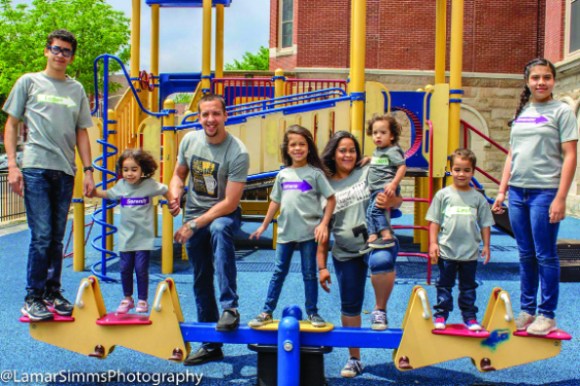
Rodriguez Family

In one of their city’s most dangerous neighborhoods, the Rodriguez family is advancing the gospel by building relationships and trusting God to work.

On a family prayer walk, Edgar Rodriguez helped his children see their neighborhood in a new light. The pastor of New City Fellowship in Chicago’s Humboldt Park asked his kids what they saw as they walked.

“Our oldest said, ‘I see children,’” Edgar said. His response: “This is your mission right here.”

In the second-deadliest neighborhood in Chicago, Edgar and his wife, Sonia, are raising their seven children to play an integral role in transforming their community by sharing—and living— the gospel.

They’ve heard the questions about living in a dangerous place, Edgar said. “Why don’t you move out of there?”

“We believe that we have the solution to change their hearts, which is Jesus. Everything else is going to fall short,” said the church planter who launched New City Fellowship three years ago.

“We can’t leave.”

Sonia says, “If I’m giving my children the gospel, and they can give the gospel to another child, why wouldn’t I train them up for other people in the neighborhood to possibly know Christ?”

Life together
Edgar didn’t want to go back to his old neighborhood to plant a church. He was frustrated with the people—“his own people,” he said. Humboldt Park is undergoing gentrification, meaning coffee shops are popping up, along with more expensive housing. And a new demographic—hipsters—are joining large African-American and Hispanic populations.

Spiritually, though, religious tradition still had more influence than culture-impacting gospel ministry. But the couple sensed God was moving them back to the neighborhood where they both spent at least part of their childhoods.

“God, forgive me for being like Jonah,” Edgar remembers praying.

“We knew the mess that existed, but through prayer and counsel and things of that nature, we just kept telling one another that it makes sense. If the darkness in this neighborhood is what it is, and we’re light, it’s actually kind of foolish and cowardice to leave it like it is.”

Three years ago, the Rodriguezes started New City Fellowship in their apartment. Once they outgrew the space, they moved into the Humboldt Park headquarters of the Chicago Metro Baptist Association.

Planting a church in a tough neighborhood has its challenges, especially when you open your own home like the Rodriguezes have tried to do. They’ve invited drug addicts and dealers to share meals at their table. When a former friend reached out for help and a place to stay, they let him live with them for a while. That particular encounter resulted in Edgar sustaining a blow to the head when the man threw his phone at him in anger.

Months later, Edgar saw the man again. He walked up to him and reached out his arms. “Who would I be if I would not extend to you what Jesus extended to me?” the pastor explains now.

As they engage their neighbors, the couple exercises wisdom when it comes to protecting their children, but they say total security is an unreachable goal. They move forward holding out the gospel, and trusting God to work.

“Even at my best as a husband, as a father, as a protector, I can’t bullet-proof my family,” Edgar says. “When you look at Scripture, God didn’t avoid putting his people in the world. He gave his son knowing what he was going to face.”

New City Fellowship meets on Sunday for worship, but the church also gathers several times during the week for Bible study and meals together. It’s an approach they call “life on life,” which Edgar admits sounds a little cliché, even to them. But it’s a way to describe how they’re trying to integrate gospel-centered community into the everyday rhythms of life—eating, shopping, laundry, etc. What can their small group of Christians do together, so that the gospel goes forward as they disciple each other?

Some people would say it’s too much, Edgar says, and it could be, if you’re going out of your way. But the things their church does together, they’re already doing.
“It’s not a burden for us, and it’s not too much for us. And other families are starting to realize, ‘I need this.’”

The Marshes

The Marshes of Macon are renovating an old church building to create a gathering space for their neighbors.

Opening their doors
Marsh church renovationIn a small community three hours from Humboldt Park, Alan and Marie Marsh are creating a permanent space to welcome their neighbors. When the Marshes moved to Macon, just south of Decatur, they didn’t settle in a traditional house. Instead, they purchased a century-old church building they plan to transform into a community center.

“We believe that wherever the Lord puts us is where we need to reach out,” said Marie, who, as a baker and artist, has big plans for the former Presbyterian church that sits in a neighborhood of quaint homes.

The Marshes live in an office/classroom wing that was added to the original sanctuary, and the family uses the sanctuary to host a “life group” of people from their church, Tabernacle Baptist in Decatur. Eventually, the space could include a library, coffee shop, and other spaces for people in Macon to come together and, as Marie put it, take a little break from their world.

“One thing that I feel like I’ve learned throughout the years is that there are hurting people everywhere,” she says. People might not want to walk into a church they’re new to, but her family can offer their neighbors a place to sit and read and relax. “I look at that as kind of our ministry,” Marie says. “They can walk in the door and they’re going to be loved.”

The Marshes share the space with daughters Grace, 12, and KatieAnn, 22, both of whom are invested in their parents’ outreach to the community. KatieAnn “is the one that goes all in when there’s an outreach that I’m a part of,” Marie says, “like helping with Grace or making, decorating, and packaging 600 cupcakes for our church’s Easter outreach. She has a giving heart that doesn’t stop.”

Sixth grader Grace also plays a key role in building relationships. She was the Marshes first foster child placement, and the couple adopted her when she was three. “To her, there’s no such thing as a stranger,” Marie says of her daughter.

Because the Marshes have fostered several children during her lifetime, Grace is accustomed to people coming and going. “And now when children come into her life, they’re her immediate friends. She welcomes them,” Marie says. “Her role is just to be herself.”

Macon is a small community, and quiet—except on the school bus Marie drives, she jokes. When the Marshes moved to Illinois, she homeschooled Grace. Once she enrolled in public school last fall, Marie got her bus license and a job as a route driver. The job has given her an opportunity to meet families in town.

It’s Marie’s own history as a child in need of a home that motivates her and her family to reach out to others with similar needs.

“I looked at it as people opening up their home for me,” she says of her years as a foster kid, “so opening up my home to someone else is a way for me to give back to God.” Her voice breaks when she acknowledges, “You can’t repay, except to do unto others as it was done unto you in that sense.”

The Marshes are taking the long view of renovating their new home and future community gathering place. They envision family movie nights, craft sessions, and maybe a place for a church to hold a worship service again. For now, their mission is to be open to the possibilities.

“We invest in people’s lives,” Marie says. “And how we do that is just by opening up our lives and our doors to them.”

-Meredith Flynn

Thank you

ib2newseditor —  April 2, 2018

Cooperative ProgramRecently I attended a meeting of state Baptist executive directors, like myself, from across the country. The format of the meeting included several panel discussions on topics ranging from missions giving to working with local associations, and from disaster relief ministry to ways Baptist state conventions can help one another.


One of the panels was comprised of four experienced leaders, and they were asked the question, “What have you discovered that encourages generous missions giving from churches through the Cooperative Program?”

It was a question that certainly got my attention. While Cooperative Program giving is up in Illinois so far this year, last year it dipped below the $6 million mark for the first time since 1998. Many churches understand and appreciate Cooperative Program missions and ministries, and are giving sacrificially. But many are giving nominally, or at a rate lower than in the past. That affects missions and ministries not only in Illinois, but throughout America and around the world.

Your missions giving is making a difference here in Illinois and around the world.

By the way, if you want to know how strong your church’s CP missions giving is, simply divide the amount your church gave through the Cooperative Program last year by the number of church members. Across all IBSA churches, that average is about $50 per member. The top 100 CP missions giving churches in Illinois give at least $100 per member. My home church here in Springfield isn’t large, but it gave about $200 per member last year. This “per capita” giving is really the most accurate way to compare churches of all sizes.

Anyway, so when I heard the panel discussion question about CP missions giving, I sat up straight and poised myself to take notes on whatever my colleagues might say about this important need. The first to speak was one of the most experienced and respected of all the executive directors.

“The first and most important thing is this,” he began. “Whenever I am in a church, whenever our staff is in a church, in fact whenever I have an opportunity to speak or write to pastors or churches in any setting, I always start with thank you. Thank you for prioritizing the Cooperative Program in your missions giving.”

I didn’t bother writing anything down. “I can remember that,” I thought. “What else will he suggest?” But he kept talking about gratitude.

“We all need to remember that churches, like church members, have a lot of demands on their resources. There are lots of ways they could spend their church’s offerings at home. Whatever they choose to send beyond their church field to the mission field and ministries of our state, nation, and world, deserves our humble gratitude. I always focus on saying thank you.”

Then, one by one, each of the experienced panelists began their remarks by affirming this foundational principle. “I agree, the most important thing you can do is say thank you.” “Yes, we must always remember to say thank you.” “We can never take a church’s missions giving for granted.”

Whatever else my colleagues said that morning, I came away with this note in my head. “The next time you write to Illinois Baptists, say thank you for their giving to Baptist missions and ministries through the Cooperative Program.”

So, thank you. Whatever your church is giving, it is making a difference here in Illinois and around the world, and it is deeply appreciated. In fact, I would love to come to your church and thank you personally, if you will invite me. Whether I deliver the morning message, or just share a brief word about Cooperative Program missions, you can be assured that my first words will be thank you.

Cooperative Program (CP) Sunday is April 8. Downloadable CP materials are available at IBSA.org/CP.

Nate Adams is executive director of the Illinois Baptist State Association. Respond at IllinoisBaptist@IBSA.org.

Engaging the lost requires a new level of commitment

At a recent evangelism workshop, one Southern Baptist pastor articulated a major struggle in many churches.

“I hear so many pastors say, ‘You’ve got to love the lost, you’ve got to win the lost.’ People in the pew think, ‘I should but I don’t know how.’”

One GRAND Sunday boxIBSA’s Pat Pajak equips pastors across Illinois to help the people in their pews answer that question: How do we share the gospel with the people around us? Pajak is leading an effort to see 1,000 baptisms in IBSA churches on April 8, the Sunday after Easter. In addition to the numerical goal, One GRAND Sunday is designed to help people begin thinking intentionally about evangelism.

“Who do they know that needs to hear the gospel?” asked Pajak, associate executive director for evangelism.

“Are they willing to step out of their comfort zone and share their faith with others?”

The call to renewed evangelistic commitment comes amid declining baptisms in IBSA churches—and the Southern Baptist Convention. In 2017, IBSA churches baptized 3,441 people, a 13% decrease from the previous year’s total of 3,953. And 352 churches reported zero baptisms. The national numbers for 2017 will be released this summer, but in 2016, baptisms in SBC churches declined nearly 5%. Despite the lower numbers, Pajak often notes there is much reason to rejoice when one person comes to faith in Christ.

Cliff Woodman is preparing his church for One GRAND Sunday with a strategy they’ve used before to boost personal evangelism. Woodman, pastor of Emmanuel Baptist Church in Carlinville, asked church members to commit to share their faith with one person by the Sunday before Easter. They were invited to make their commitment public by placing a commitment card on the church altar.

Woodman prays daily for the people in his church who filled out the cards and will follow up with them after March 25 as a way to remind them of the commitment, and to hear their stories.

The pastor shared the idea with other churches in his association and with the IBSA Pastors’ Evangelism Network that Pajak facilitates. Nine other congregations are using the commitment strategy along with Emmanuel.

Gospel conversations
At an Engage 24 workshop in Las Vegas in February, a panel of Southern Baptist leaders shared real-life stories of how churches are reaching people with the gospel. The training session was one of a series of workshops sponsored by the North American Mission Board and designed to give leaders practical ways they can create and foster a culture of evangelism in their churches.

Speaking at the workshop, SBC Executive Committee President Frank Page encouraged pastors to intentionally cross borders, risk negativity, and create a loving environment without compromising truth.

Referencing Jesus’ interaction with the Samaritan Woman in John 4, Page spoke about the responsibility and call of the church to be leaders in building and maintaining relationships with those who are currently a part of a congregation, as well as those who are not. He noted this requires proactive engagement and responding to the responsibility of the church.

“Christ was the great example of reaching across ethnic and gender boundaries, and so if we’re going to follow Christ, we have to be his hands and feet in doing that in the world,” Page said. “And what other organization is it? Is it education? Is it government? Who is it that should be leading the way? It ought to be the church, not following, not pulling up the rear, but leading in this.

“The church is duty-bound because of our allegiance to Christ to be like him in this world,” he said, “and that’s reaching across these barriers like Jesus did with the woman at the well.”

At Immanuel Baptist Church in Benton, people are learning specific tools to help overcome the barriers Page referenced. Every year, said Pastor Sammy Simmons, he and his staff focus on a tool people can use to share Christ. This year, they’re learning to share the gospel using their hand—a method they employ on mission trips to Africa.

Every Sunday between now and Easter, Simmons will explain the gospel-sharing strategy from the pulpit. He’s also using four consecutive Wednesday evening sessions to teach on gospel conversations, which he differentiates from religious conversations.

“A gospel conversation is when I am explicitly talking about the life of Christ, his death for our sins, his resurrection, and giving an invitation for them to turn from their sins and for Christ to be their savior,” Simmons said.

Church members are sharing about their gospel conversations in 60-second videos. One such testimony was from a stay-at-home mom who threw a Valentine’s Day party and connected it to God’s love, sharing the gospel with her friends.

IBSA and the North American Mission Board also are encouraging churches to focus on gospel conversations this year, with a goal of recording one million of them by the Southern Baptist Convention in Dallas this June. At gcchallenge.com, gospel-sharers can view 60-second videos on real-life gospel conversations, and upload their own.

With at least 8 million people in Illinois who don’t know Christ, the time for talking about Jesus is now, Pajak said. “We need to pray for lost people by name, train people in how to share their faith, and commit to witness to at least one person between now and Easter Sunday.”

– Meredith Flynn, with additional reporting from Baptist Press

New Places

By Van Kicklighter, Church Planting Team

Pioneering Spirit logoSo, you’ve made a “Go New Places” commitment. We believe that the Lord will honor this commitment in amazing ways. What comes next? If you already know what your commitment might be, great! If it is to Pray for a church planting need or for a church planter who is already at work, I encourage you to pray regularly. Include this in your weekly bulletin and newsletter. Have someone lead in prayer during your Sunday morning worship service. Call your church members to regular and focused prayer. If your commitment was to Partner, consider new and creative ways of partnering with a church planter. Send him an occasional gift card, send volunteers to help this new church carry out an evangelistic or ministry project, or baby sit their kids so he and his wife can have a date night. Gather your church family and make a Facetime or Skype call to pray for and encourage your church planter.
If you made a Go New Places Commitment and don’t know what to do next, here are some suggestions to help you take the next step.

Pray – We have 200 places around Illinois where we need a new church to be planted and that begins with prayer. We can help you in picking a place. If your church would rather connect with an existing church planter, contact us and we will help you connect. E-mail VanKicklighter@IBSA.org for a list of the 200 places in Illinois where a church needs to be planted.

Partner – We have church planters who would be blessed by the partnership of your church. Rural, urban, Anglo or ethnic, we can help you partner with a church planter. Learn how you can encourage a church planter.

Plant – We need churches that will give leadership to a new church planting project. Contact us and we will be glad to work with you in planting a new church. Learn more about becoming a church planter.

PA-33C-3

By Mark Emerson, Church Resources Team

Pioneering Spirit logoMore than 80 churches have committed to be more intentional at developing leaders as a part of the Pioneering Spirit Challenge. The leadership portion of this initiative has caused us to rethink and retool how we assist churches in developing future pastors, planters, and missionaries.

We are noticing that not every church is at the same level in regard to this process. Some of our churches have effective processes in place that are identifying, training, and sending leaders into various ministries, while others are starting these strategies from scratch. We are committed to resource every church no matter where they are in the process.

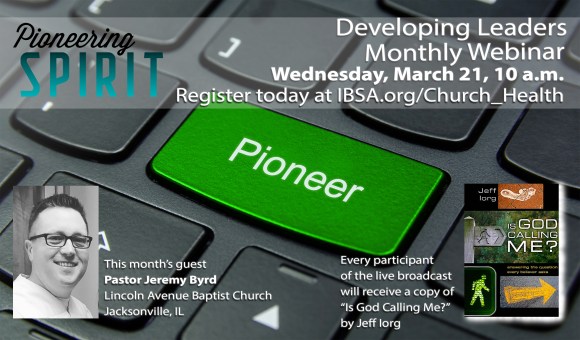
Try the webinar: One new resource that we have developed is a monthly webinar specifically for the churches that have made the commitment to develop leaders as part of the Pioneering Spirit Challenge. We will introduce you to an Illinois Baptist Pastor who is currently experiencing some success in developing missional leaders. He will share a few transferable principles that can be helpful to other churches. As a bonus, participants in the webinar will also be offered a free resource that can help develop leaders in their churches.

Our first webinar is Wednesday, March 21, at 10 a.m. Please register at IBSA.org/Church_Health. If you are unable to participate in the live broadcast, you will have the opportunity to watch a recording of the webinar at a later date.

We are excited about what God is doing in and through the churches that are making a commitment in the Pioneering Spirit challenge.

PSC Webinar2

PA-33C-3

By Eric Reed, Church Communication Team

Pioneering Spirit logoThank you for accepting the Pioneering Spirit challenge to “Make New Sacrifices.” This commitment is about doing whatever it takes to advance the gospel through missions. Specifically, it’s a commitment to increase missions giving through the Cooperative Program.

After signing up, one Illinois pastor shared the challenge with his church. In recent years the church had faced some financial difficulties, and the result had been cuts in CP giving. When he shared the challenge with them, the church agreed to double their CP giving from 3% of undesignated offerings to 6%, with a pledge to raise it by 1% each year until they reach 10%.

For churches on tight budgets (and aren’t we all!), that represents sacrifice. But when the pastor made need known, the church rose to the call.

April 8 is Cooperative Program Sunday. That Sunday, or any Sunday in April, will be a good time to start making the need known: 8 million or more people in Illinois do not know Jesus, 5 billion worldwide are lost. And Southern Baptists’ Cooperative Program is the most effective channel for sending missionaries and sharing Christ.

Encouragers: As you get started “making new sacrifices,” consider these ways to encourage your church:

  • Awareness of the need
  • Ability to make a difference
  • Actual stories through personal testimony and videos
  • Aspiration to greater service.

We’ll cover these topics in future newsletters. In the meantime, please think about how you will bring the need for sacrificial giving through CP before your church monthly, starting in April. Call on me, if we can help.

And if your church hasn’t made this commitment, please pray about it. God blesses those who support missions (Phil. 4:19).

Downloadable resources:

Meet Southern Baptists

Mission Illinois Bulletin Insert

Annual Report video

CP Rant video 2

PA-33C-3

By Pat Pajak, Evangelism Team

Pioneering Spirit logoFresh vision: I’m honored and encouraged to be leading the “Engage New People” evangelistic commitment of the IBSA’s “Pioneering Spirit Challenge.” I have been contacting the churches across the state that reported 7 or more baptisms, encouraging them to set a goal of seeing 12 baptisms in 2018. I believe that can be done as church members begin praying for lost friends and family members by name, having “Gospel Conversations” on a daily basis, and by being trained in how to share their faith. My prayer is that our IBSA churches will capture a fresh burden and passion for both evangelism and baptism.

Save the date: One of the launching events to help churches get started in engaging new people will be the “One GRAND Sunday” strategy to see 1,000 baptisms across the state on one day. That’s April 8, just three weeks away.

To assist you with this historic effort, the following resources are available:

The “One GRAND Sunday” promotional video

Spiritual Conversation Starters

How to Become a Frequently Baptizing Church

PS banner

Just three months into the new year, 115 churches have accepted the Pioneering Spirit Challenge. That’s more than halfway to IBSA’s 2018 goal of 200 or more churches. But for those churches—and for all of us—the work is just beginning.

The Pioneering Spirit Challenge, timed to coincide with Illinois’ bicentennial year, seeks to bring frontier fortitude to Baptist work today. Our forebears lived in trying times, meeting danger head-on, and forging a new state. Many of them brought solid Christian faith to the hard-won territory, and many of those first Illinoisans were Baptists.

If the concepts of wilderness, lostness, and battle seem familiar, it’s because they describe our spiritual frontier today—200 years later.

“It will take as much courage for today’s believers to bring the gospel to the millions in our cities, suburbs, and crossroads communities as it did for first founders to carve out those communities starting at the time of statehood,” said Van Kicklighter, IBSA’s associate executive director for church planting. “Winning over wilderness has gotten no easier in 200 years.”

“We have been encouraged by how many pastors and churches are taking this commitment—and the critical challenge to advance the gospel in our perilous times—seriously.”

Against the reality of at least 8 million lost people in Illinois, Pioneering Spirit engages IBSA churches in church planting, baptisms, missions giving, and leadership development.

Kicklighter and his team have identified 200 locations in Illinois in need of an evangelical church. So far, 82 churches have accepted the challenge to “Go new places,” praying for or partnering with a new church plant.

In addition, 111 churches have said they will “Engage new people,” taking steps to increase their church’s annual baptisms. The “One GRAND Sunday” emphasis on April 8, encourage 1,000 baptisms statewide, is one aspect of this “engagement.” It is led by Pat Pajak, associate executive director for evangelism.

Another 66 churches said they will “Make new sacrifices,” by increasing missions giving through the Cooperative Program. And 111 churches will “Develop new leaders,” preparing tomorrow’s pastors, missionaries, and church leaders to continue the work in the decades ahead.

In all, 115 churches accepted one or more of the challenges since the Pioneering Spirit initiative was announced at the IBSA Annual Meeting in November.

“We have been encouraged by how many pastors and churches are taking this commitment—and the critical challenge to advance the gospel in our perilous times—seriously,” said Kicklighter.

One example in the church planting area: Community Southern Baptist Church in Clay City has taken on the challenge of planting a church in Carroll County. That is one of 10 counties in Illinois with no Southern Baptist congregation. Pastor David Starr told Kicklighter that his church began praying about making the commitment after seeing IBSA’s “blue map” that illustrates lostness in the state.

To learn more about the four Pioneering Spirit challenges, and to register your own church’s commitment to one or more of them, visit PioneeringSpirit.org. Together, we will –

  • Go new places – praying for or partnering with a new church plant
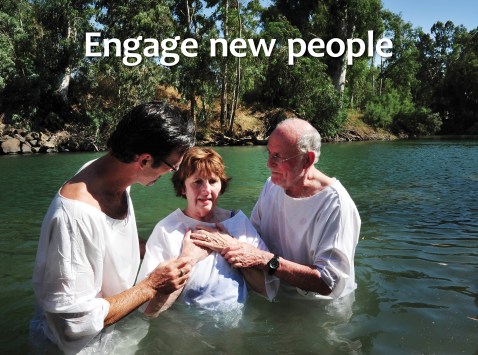
  • Engage new people – taking steps to increase your church’s annual baptisms
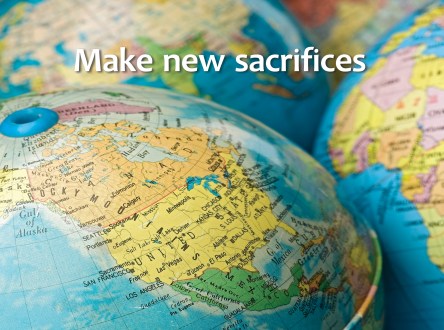
  • Make new sacrifices – increasing missions giving through the Cooperative Program
  • Develop new leaders – preparing tomorrow’s pastors, missionaries, and church leaders

– Eric Reed

Garden of Gethsemane.Jerusalem

Garden of Gethsemane. Thousand-year olive trees, Jerusalem.

The place of ‘crushing’ is not a destination, but it is a good pit stop.

A Baptist pastor said in an article I read recently that Maundy Thursday has become his favorite day of the Easter season. That was surprising, he admitted, since he didn’t grow up observing the day before Good Friday as anything special. Nor do many Baptist churches. But as he was called to pastor a church with a unique Thursday night Lord’s supper service prior to Resurrection Sunday, he took on the observance and came to appreciate it deeply.

I understood his experience. A couple of churches I served added Thursday services to their pre-Easter observance. At first, it was a matter of convenience for those who would travel on Good Friday to spend the weekend with grandma. But eventually we found we ourselves needed more time in the garden before we stood at the foot of the Cross, and ultimately at the vacated tomb.

“Maundy” Thursday may sound mournful, but the name itself comes from the Latin for “mandate.” A new commandment I give you, Jesus told his disciples in the upper room on that night, that you love one another. Maundy is a manmade term, as is the “Good” of Friday, but as for the events that happened that night, they are by God’s design.

After donning the servant’s towel and washing his followers’ feet, then giving them his body and blood in the first Lord’s Supper, Jesus led the crew, minus Judas, to the olive press on the other side of the temple grounds. Calling it Gethsemane, we forget that this was a working vineyard, where the crop was grown and at its maturity harvested, then crushed to release its treasure and fulfill its purpose. (Makes you have new respect for that bottle of oil in the cupboard, doesn’t it?) There, kneeling among the gnarled trees and the stone pressing floor, Jesus appears at his most human: suffering, knowing greater suffering was just ahead, wrestling, and yet willing.

And if we left the account there, we would miss several deep truths that make the events of Thursday night crucial to our understanding of Sunday’s victory. We might be tempted to think of Jesus as somehow less than fully human, that his deity abated his agony, if we did not see him wrestling in prayer while even his closest supporters a few yards away abandoned him in favor of sleep. We might miss a point of deep personal connection to Jesus that we need in our own times of crisis.

For Jesus Gethsemane was no rest. It is the place where one last time, his obedience and his surrender to the plans of his Father were tested. It is the place where God’s purpose and his own mission surpassed a momentary desire for relief from the pain of the night. And, blessedly, it is temporary.

In Gethsemane, the Father prepared the Son for the cross before him. Luke, who diagnosed Jesus’ suffering as bloody even in the garden, also tells us that God sent an angel to minister to Jesus.

The agony won’t last forever, but God knows we need help to get through it. And he sends it by his holy messengers. In our own seasons of crushing, we are lifted with the news that God has a purpose for the suffering he allows, and that it is temporary. God knows we hurt; God sends help; God sets a time limit.

In those times, it helps to know that Jesus suffered too. He cried over Lazarus. He cried out on the cross. And he endured in the garden where any remote possibility that he might put his relief ahead of our need was crushed: Not my will, but Yours be done, he said to the Father. We speak of “The Lord’s Prayer” as our model prayer. It, too, says, “Thy will be done.” But in Gethsemane, the prayer is tested and proven, and Jesus comes out the other side fully committed to finish his mission—at all personal cost to himself.

Finally, Gethsemane points to victory. To know the exhilaration of Jesus’ triumph over Satan and hell and sin and death, we must endure with him in his Gethsemane—and ours. In trial, we can be assured that Jesus has been here before. And though it hurts—a lot—we must not rush past Gethsemane, or we miss the magnitude of the victory, when the darkness of Thursday night surrenders to the brilliance of Sunday morning. And that light you see is the Son.

Eric Reed is editor of Illinois Baptist media. 

Kempton Turner

Former East St. Louis resident returns to plant a new church

Editor’s note: Kempton and Caryn Turner are two of the missionaries featured in the 2018 Annie Armstrong Easter Offering and Week of Prayer for North American Missions. The annual offering, collected in many IBSA churches this spring, supports missionaries appointed by the North American Mission Board.

East St. Louis | Kempton Turner grew up on the same streets where he now serves as a church planting missionary and pastor.

“Because I was raised here, I’ve got a real heart for the people,” says Turner (pictured above left, with youth director Zach Chike). He launched City of Joy Fellowship in East St. Louis in September 2016. “It’s a small city. It’s a dangerous, poor place, 85% fatherlessness. The houses, the buildings, and the roads show the desperate place that East St. Louis is in. The people know struggle.”

In East St. Louis, buildings sit abandoned. The public library, the McDonald’s Turner visited as a child, family-owned restaurants—all closed now. Though the decline in population started more than 100 years ago with an infamous race riot, recent years have seen the numbers dwindle from around 60,000 to 26,000.

“Jobs and police officers have left this city,” says Turner. “Downtown is kind of like a ghost town, but it’s ripe for the gospel. The Lord hasn’t forgotten this city.”

Faith on the rise
It is 6 a.m. and a group of men from City of Joy Fellowship are up before the sun, worshiping with an acoustic guitar. Says Turner, “As the psalmist looked around at the tragic condition of the people in his city, it appeared as though God was unaware, inactive, or asleep. So, he prays, ‘Arise, O Lord.’  “Likewise, we cry out in one way or another every Wednesday morning.”

The prayers ring out over a people facing poverty, gang violence, environmental contamination, and continued decline. Turner, his wife, Caryn, and their five children believe that change is possible. They are working side by side with other believers to show their neighbors that love is real and hope is alive.

Recognizing that teenagers here are in need of community and a safe place to gather, Turner and the team at City of Joy host a youth night on Tuesdays where they train young people how to serve others and hold down a job. The church also goes to the places where youth already gather during the week—schools and community centers—to establish consistency. Their desire is to show teens that they care and are invested in their well-being and future.

Turner names a long list of men and women who have moved to the area to help with the youth: Matt and Hannah, who moved their young family from Missouri; Staricia, who came from Indiana to work in the school system; Lydia, a nurse who has a heart for young people; Joel, a skilled basketball player and coach who uses the sport to connect with the youth; and Zach, who started a Bible study for the youth in his home that has already outgrown the space. The list goes on and on.

“These precious believers are a picture of Jesus, coming out of comfortable suburbs, moving into the heart of a 99.9% African-American city with danger, poverty, and fatherlessness,” Turner says. “They’re moving because Jesus is sending them as a reflection of his heart for this city, and God is blessing their efforts. It’s amazing.”

Building the future
Home renovation is another practical way City of Joy is connecting with their community. Hammers and nails, primer and paint—these are the tools that are allowing believers to build a relationship with people who live near the church.

“All we need is a way to start a conversation,” says Turner. He is training the members to intersect with nonbelievers, meet needs, and share their personal stories of redemption.
Dubbed R3, the outreach ministry is focused on community development, house restoration, business restoration, and employment. The goal is to work corner by corner and house by house throughout the city until each square foot has been covered in both repairs and improvements, as well as prayer.

In their business revitalization program, they work on providing local businesses with the resources to launch or relaunch. They also strive to connect young men and women from the youth program with job opportunities in these local businesses as a way to benefit the local economy and foster a sense of community.

As more people come to know Christ, City of Joy is celebrating more baptisms. And it all started with a very special one that healed a broken relationship from the past. Turner says, “The first baptism at the church was my birth mother who did not raise me. Praise the Lord!”

Indeed, the church is appropriately named. With prayers, planning, and consistent efforts, they are working toward bringing that same kind of joy into every home in East St. Louis. They want people to not only remember this place but to invest in it.

“Some of the neediest places in America are in the inner city,” Turner says. “We’re excited to join the momentum of what God is already doing in this city with so much potential. Acts 8:8—that’s our hope and prayer for East St. Louis: that the Lord will fill the city with joy.”

Turner explains that they are praying for the Lord of the Harvest to send more laborers. The vision for change is great—and so is the need for ministry partners.

“Psalm 127 says, ‘Unless the Lord builds the house, they labor in vain who build it,’” Turner noted. “And so, the Lord is the builder. The church is not about bricks and mortar and boards. He redeems his people and puts them in front of others in houses, on street corners, in Sunday school classes and in large- and small-group gatherings.

The Lord builds his people through the Word. And our vision is that the Word of God would so transform East St. Louis that multitudes of souls are saved and established in faith, families are restored, children can have a mom and dad in their house again, prevailing cultural brokenness—like drug addiction and gang violence—would be healed, and churches would be started near and far.

“Our house renovation ministry is just a small echo of the thunderclap of spiritual renovation that we see God doing,” Turner said, “one soul, one house, one block at a time in my hometown.”

– North American Mission Board

The official date for the annual Week of Prayer is the first Sunday in March through the second Sunday in March. Your church can choose this date or another time during the Easter season to participate. Learn more at www.AnnieArmstrong.com.