Archives For November 30, 1999

COMMENTARY | Chip Faulkner

As a missionary with the Southern Baptist International Mission Board, I served among people groups in which genuine Christ-followers made up a very low percentage of the population, and where governments were not supportive of evangelical churches or the public proclamation of the gospel. The level of persecution, while not extremely severe, was certainly more intense than what the majority of evangelical churches in America are facing.

Still, it doesn’t take much of a spiritual barometer to sense the cultural storm building here towards those who preach and apply Scriptural standards.
Callout_Aug14_edited-1At a recent meeting of pastors and Christian leaders in our area, we discussed how many politicians and governing bodies in our nation and state are taking a strong stance against Christian values—such as biblical marriage. The pastors and ministry leaders did not express fear or panic at the awareness of growing persecution, but there was concern that we must be better prepared to respond correctly to mounting attack.  

After that meeting, I came back to the office and began making notes that turned into a Bible study on persecution. Authentic followers of Christ Jesus that “desire to live a godly life” will be persecuted for their faith (2 Tim. 3:12). Since the New Testament was written to believers and local churches in a sensual society similar to that of modern America, we can appreciate the relevance of the Word in an era of mounting persecution.

First, we should be prepared. Jesus forewarned of persecution by saying that his disciples would be “delivered up” by their relatives and close friends (Luke 21:12-16). So, let us “not be surprised” at the fiery trials that come our way, and we should “rejoice and be glad” to suffer for the name of Christ (1 Peter 4:12-16).  

As Christian facing inevitable persecution, we also should be prayerful. Our human nature is to desire revenge and retaliation, but Jesus commands that we “pray for those who persecute you” (Matt. 5:44-45). Remember that the weapons at our disposal are “not of the world” (2 Cor. 10:4). Trials develop spiritual maturity in intercession. Suffering for the faith increases our empathy and specifies our prayer.

It is important that we be proactive. Since persecution is new to most American believers, we need to sharpen our skills in strategically and fearlessly going on the offense with the gospel. Churches are feeling threatened by the rapidly changing culture. There will be a temptation for churches to react with a “fort” mentality and seek safety behind closed doors.

However, similar to the Christians in pagan Rome, we must take the initiative in “blessing those who persecute you” (Rom. 12:14). Just like the Father sent the Son into the world, we are sent into the world as salt and light (John 17:18; Matt. 5:13-16).

As children of God, we are to be pure. Granted, wickedness is getting darker in our society, but if we are “blameless and innocent” we have the opportunity to “shine as lights” (Phil. 2:14-15). The distinctions of our Christian worldview, values and morals certainly draw attack, yet this persecution will result in a purer church. God does his best work through clean vessels.

In seasons of persecution, it is vital that genuine believers and true churches draw closer together and be in partnership (Phil 1:6). Persecution will sadly reveal that the majority of members on church rolls are phony professors. Likewise, persecution will expose the startling number of false prophets currently serving as church leaders. When it costs everything to follow Christ, many will deny the gospel and join the ranks in assailing the saints. As church attendance wanes and income falls, it will be imperative to pool our resources and draw encouragement from one another (Phil. 1:3-6).

May we Christians also be positive. The apocalyptic literature in the Bible is there to encourage us. Read it and rejoice because God wins in the end! Jesus actually said we are considered “blessed” to be persecuted and that you will receive the “kingdom of heaven” (Matt. 5:10-11). Even if we “suffer for righteousness’ sake” we should not be fearful or troubled as we positively defend our hope with “gentleness and respect” (1 Peter 3:14-15).

Finally, we should persevere in the surpassing power of our Savior. If we remain “steadfast under trial” and “faithful unto death” we will receive the “crown of life” (James 1:12; Rev. 2:10). Echoing the testimony of Paul: “When persecuted, we endure; when slandered, we entreat” (1 Cor. 4:11-13).

The first waves of persecution are only beginning to wash across our country. Even though the price of proclaiming truth will prove enormous, may we go with our Savior “outside the camp and bear the reproach he endured” (Heb. 13:12-15).

Chip Faulkner pastors First Baptist Church, Bethalto.

COMMENTARY | Josh Laxton

Last spring, my wife and I bought a used minivan. Honestly, I’m not a big fan of minivans, nor am I a fan of buying a much-older car. (I didn’t learn auto repair in seminary.) However, I am a big fan of making my wife happy.

Not long after purchasing the van, I was driving with our three small children when, suddenly, after a few mildly intense sputtering episodes, the van died. There I was, with a broken down car, stranded in the middle of the road, with no shoulder to move the vehicle to safety. As I tried to decide what to do, my 4-year-old daughter had her own breakdown. Her piercing cries of, “Daddy, Daddy!” were accompanied by heavy sobbing and huge tears. Ellie broke down because of our van’s condition.

Josh_Laxton_July31For many of us, our churches are like my minivan. Depending on the source, 80-90% of churches are in a state of plateau or decline. They were running fine, but something happened along the way, and now the church is not functioning and operating the way Jesus intended—as a God-glorifying, gospel-centered, mission-oriented, disciple-making, church-planting vehicle. Sure, the flashers, radio, horn, and air still work (worship and programs are still going, committees are still meeting). But there is a breakdown in the primary reason for the church’s existence—it’s literally not moving, not going anywhere.

The question is not whether our churches need a breakout to the next level of growth or ministry. Rather, it’s how we as leaders can get them there. To do so, like Ellie, we need to have a breakdown over the condition of the church.

Nehemiah is an excellent example of a leader who identified the need for breakout, and in doing so, had a breakdown. Although he had never been to Jerusalem, he had great affection and concern for his homeland; therefore, when his brothers came to visit, he asked how his countrymen were faring. The news he received was bad; the people and the city were broken. The Bible says that upon hearing this, Nehemiah “wept and mourned” for days. In addition, he “continued fasting and praying before the God of heaven.”

What led to Nehemiah’s breakdown? Two key truths stand out:

First, he knew the truth about God and what God had called His people to be and do (Genesis 12:3; Exodus 19:4-6). When Nehemiah learned that the wall was in ruins and the people lived in great trouble and shame, he recognized that they were not where they were supposed to be. That has implications for our ministry today: Do we know with certainty the honest, transparent conditions of our church in relation to God’s intended reality, rather than our own presuppositions, preferences, or traditions?

Second, not only did Nehemiah know the truth about God’s intended reality for his people, he also knew the heart of God. In other words, he not only knew about God and His plan, but he also knew God. Thus, when he heard about the condition of the city and the people, he went immediately to the Father, weeping, morning, fasting, and praying.

He was broken over their condition because God was broken over their condition. As a result, the Bible tells us, Nehemiah “continued” going to the Father.

Nehemiah led in a way that reflected the heart of God and how He viewed the condition of the people. As leaders, are we leading in a way that reflects the heart of God towards the people in our churches?

Breakout in Jerusalem didn’t happen until Nehemiah broke down. The good news is that God still works in our brokenness to lead his people to breakout.

Josh Laxton is lead pastor of Western Oaks Baptist Church in Springfield. His second column on Nehemiah will appear in the August 18 issue of the Illinois Baptist, online at http://ibonline.IBSA.org.

Editor’s note: Erich Bridges is global correspondent for the Southern Baptist International Mission Board. His “WorldView Conversation” posts, including this one, appear occasionally at BPNews.net.

COMMENTARY | Erich Bridges

No matter how long the school year dragged on, I knew that once summer came, I’d get to go to my grandmother’s beach house. Once there, I could count on her good cooking and unconditional love.

Praying ManWe would fish in the surf or from the boardwalk and watch the sun go down beyond the horizon as the ocean wind cooled our faces. We sometimes talked, but silence was just as good. Being together sufficed.

I think about those summers as today’s July heat begins to bake. Grandma is long gone, and I miss her. But my spirit still yearns for beaches, rivers, mountains and other places that offer respite from the daily routine.

It’s a desire common to humanity. It predates by millennia the idea of vacation, which is a modern phenomenon. We long for a break, however brief, from the daily grind, a pause from the familiar. We crave rest and renewal. A “separation from the world, a penetration to some source of power and a life-enhancing return,” the folklorist Arnold van Gennep described it.

Church folks call it a retreat. Modern-day retreats have become scheduled events with programs, speakers, themes and such. But the older concept of Christian spiritual retreat harks back to the holy men and women of the early church who went into the desert to seek the Lord. They followed the example of Christ, who sought out the wilderness to pray and be alone with His Father before returning to minister to the needy crowds.

The craving for retreat is never stronger than when the world seems to be falling apart. Wars that were supposed to be over aren’t. Old enemies remain and new ones emerge. Political and cultural disputes become more hateful by the day. People refuse to make peace with God or each other, holding onto their evil ways. Those closest to us let us down. We let them down. We disappoint the Lord. It’s time for a rest and a fresh start.

These are times for a retreat in the old sense. Jesus beckons us to come away with Him to a quiet place, there to rest with Him and renew our spirits. Vacationing is OK, but it’s a poor imitation of walking with Jesus in the wilderness.

The other great thing about true retreat is returning to the world. Vacations these days tend to be rushed, expensive, over-planned and more tiring than the demands they’re supposed to relieve. When you get home, you’re ready for a vacation from your vacation. But you return from a retreat with the Lord refreshed, renewed and ready to follow Him back into the fray.

That’s the real point of retreat — being with God, then returning to the world. He needs servants who have met with Him before they enter the global struggle for souls. If we try to serve Him in our own puny power, we’ll make no impact.

Seek Him in the wilderness and quiet, and renew yourself in His Spirit. Return to the world to shine His light into darkness.

COMMENTARY | Meredith Flynn

The Southern Baptist Convention’s summer annual meeting traditionally is a time for Baptists to make big statements together. And, in the past, many of those decisions have made a splash with national media.

The attention in those years made the annual meeting feel like a major event that held import for a large part of the culture, and not just for messengers meeting in the Convention city.

But this year’s Convention in Baltimore didn’t get that kind of reaction. Even the buzziest issues – a resolution on transgender
identity and possible action concerning a California church – received relatively few mentions from national media.

The quiet raises a question for Baptists: Was 2014 the year the SBC dropped off the national radar?

Throughout the years, SBC stories have dominated national headlines: The return to conservative theology in the 1980s, the decision to boycott Disney in 1997, and the election of Fred Luter as the SBC’s first African American president two years ago. We’ve made it a practice to include several bits from other media in the Convention issue of the Illinois Baptist, to widen our paper’s perspective and answer the question, “What do they think about what we think?” Reading the national news coverage
can be enlightening and a little dangerous, kind of like Googling your own name.

When we went to gather information for the section this year, we came up empty. There were a few stories about the resolution to affirm that gender is determined by biological sex, rather than self-perception. And some writers commented before the Convention about the likelihood of action against a California church that recently voted to change its stance on same-sex relationships. But it was nothing like in years past, when national coverage of the Convention was extensive.

The lack of attention seems to confirm fear that the SBC’s influence is waning. Or maybe it’s shifting.

One columnist did write a thorough piece on the SBC, just prior to the meeting in Baltimore. In a piece for Religion News Service, Jacob Lupfer said, “A generation after the ‘Conservative Resurgence,’ the SBC has capitalized on its remarkable unity….This is not to say there are no matters of controversy, but the nature and scope of disagreements make doctrinal and ideological cohesion – not infighting – hallmarks of today’s Southern Baptist Convention.”

Remarkable unity, doctrinal and ideological cohesion. A mouthful of a headline, but good news for Southern Baptists.

Meredith Flynn is managing editor of the Illinois Baptist newspaper.

Lisa Sergent holds a musket used by a private who served under General George Washington. It is owned by history buff and pastor Dan Fisher (left).

Lisa Sergent holds a musket used by a private who served under General George Washington. It is owned by history buff and pastor Dan Fisher (left).

COMMENTARY | Lisa Sergent

There’s an old song that says, “Don’t know much about history.” What Dan Fisher knows has been largely ignored – or forgotten – in our time. Clergymen were heroes in the American Revolution, said Fisher, himself a Southern Baptist pastor and Oklahoma state representative.

Fisher, the pastor of Trinity Baptist Church in Yukon, Okla., travels the country presenting “Bringing Back the Black Robed Regiment.” A term coined by British sympathizers, the “regiment” were the pastors – Presbyterian, Methodist, Lutheran, Baptist and Episcopalian – who helped lead the fight for liberty from the British. He shared his message to a gathering hosted by the Illinois Family Institute this spring.

Portraying Lutheran pastor Peter Muhlenberg, later a general in the Continental Army who rallied his congregation to fight, Fisher said, “If the church doesn’t speak out, then who will? We were the men of the book, we were the men of truth, we were the men of true liberty because we knew that ultimately true liberty can only come though an internal relationship with Christ. When you have true liberty, then you can defend external liberty.”

Fisher shared how many of these 18th century pastors gave their lives and livelihoods in the fight to defend liberty. He encouraged today’s pastors to stand boldly for religious liberty. “What price are you willing to pay?” he asked.

He applies this aspect of United States history, forgotten by many, to today’s cultural issues. “There comes a time when our liberty must be protected,” said Fisher. “Friends, if we lose our external liberty we lose our internal liberty to believe and preach.”

Urging Christians to take a stand, Fisher stated, “Some 50% of today’s evangelicals don’t even bother to vote. And out of those who do vote, 25% vote the opposite of what Christians believe. Not on political issues, but on moral issues…How do we justify that?”

Fisher repeated second U.S. President John Adams’ warning to America in 1798: “We have no government armed with power capable of contending with human passions unbridled by morality and religion…Our constitution was made only for a moral and religious people. It is wholly inadequate to the government of any other.”

Lisa Sergent is director of communications for the Illinois Baptist State Association and contributing editor of the Illinois Baptist.

Fred_Luter_revivalCOMMENTARY | Eric Reed

I’ve never been prouder – of Fred Luter or of the Southern Baptist Convention – than when, on the second day of the annual meeting in Baltimore, they suspended the agenda and spent most of an hour in prayer.

Will this be Bro. Fred’s lasting contribution to the SBC, I thought to myself, that he was willing to lay aside the fixed orders of business, to call us all to our knees, and to take our deep needs to the Lord?

Two years earlier, I sat on a bench in the cavernous lobby of the New Orleans Convention Center talking with a pastor-friend of mine. He’s African American. I seemed more excited by Luter’s election that day than he did. I posed a question about the new president’s lasting impact.

“We’ll have to wait and see,” was his response. “Will this be a one-time thing, or has the Convention really changed? Is there room for me in leadership?”

That has been the response of several people I’ve asked since then, even Luter himself. Many people, especially African American pastors, said they wanted to see what happened after Luter’s term. Would he really be able to increase the ethnic diversity on SBC boards and in leadership? Would there be a lasting place at the table for black, Hispanic, and Asian leaders?

Under Luter’s direction, the committees responsible for manning those boards have attempted to broaden representation. In fact, messengers at the Phoenix convention in 2011 had ordered the start of such a concentrated effort even before Luter’s election as the SBC’s first African American president.

It was good to see several African American pastors on the platform in 2014: Southern Seminary Professor Kevin Smith spoke for the Resolutions Committee. Chicago’s very own Marvin Parker of Broadview Missionary Baptist Church served with the Committee on Order of Business and Michael Allen of Uptown Baptist Church was elected “back-up preacher” for the 2015 annual meeting.

But it took a messenger from the floor to confirm what those watching the live video stream had noticed. There was not a lot cultural diversity on the worship platform. The messenger moved that the music teams next year be more diverse, because, he noted, while the choirs and bands were almost all white, the Convention isn’t anymore – and heaven won’t be either.

I saw a similar message in the official photograph of the incoming SBC officers: five middle-aged white guys in dark suits. Except for one goatee, that photograph could have been snapped in 1974.

Or 1954.

We missed an opportunity to extend Bro. Fred’s impact. Korean-American pastor Daniel Kim ran for president, and his showing as a late-entry against winner Ronnie Floyd was respectable. But both first and second vice-presidents ran unopposed. Why? Because no one else stepped up.

Fred Luter’s lasting impact may not be that he radically altered the composition of committees or platform personnel. Instead, he demonstrated the door is open and there’s room at the table. And he was willing to take the risk.

As a pastor in New Orleans, Luter suffered jeers for his embrace of the historically white denomination. And before he agreed to run for SBC president in 2012, one advisor warned, “Look at the racial make-up of the Convention, Fred. You might lose.”

But he won. In a big way. Unopposed. Twice. To cheers and tears and shouts of joy from a whole lot of people glad that a new day had arrived for Southern Baptists.

Successor Floyd called him “the most beloved president” in recent SBC history. Luter traveled widely and preached in churches of all sizes and ethnicities. He embodied the new spirit of the SBC, and he did it with characteristic joy and grace. For all that, he is deservedly and deeply appreciated.

But, for me, Fred Luter’s lasting impact is that he was willing to step up.

Eric Reed is editor of the Illinois Baptist.

Young people fill the pews at Capitol Hill Baptist Church in Washington, D.C., pastored by Mark Dever.

Young people fill the pews at Capitol Hill Baptist Church in Washington, D.C., pastored by Mark Dever.


COMMENTARY | Meredith Flynn

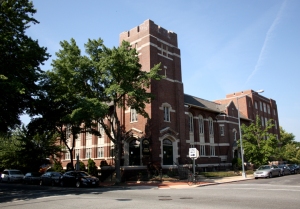
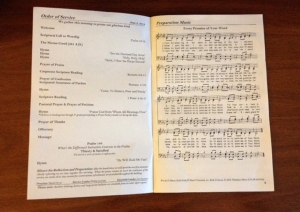
Mark_Dever_blogA 16-page church bulletin leaves little to the imagination. At Capitol Hill Baptist Church in Washington, D.C., worship attenders know exactly what they’re getting into from the time they walk into the split-level, high-ceilinged sanctuary, less than a mile from the U.S. Capitol.

The order of service, printed neatly on the inside cover page, lists every hymn, prayer, and Scripture reading. Every song is there in entirety – not just lyrics, but actual music.

Even the Nicene Creed gets its own page, with three paragraphs of explanation about where it came from and why we recite it. (“I said this in church for 28 years,” said one visitor, “and nobody ever explained it to me.”)

Your first impression is that this church is good at welcoming new people. They remember well that not everyone who walks in the door has been here before, and maybe they’ve never been in any church before. But it’s more than that. There’s a shrewdness here (in the nicest sense of the word), and an attention to detail that may be best matched just down the street under the Capitol Dome.

Capitol Hill Baptist Church is a church for its very unique city.

Capitol_Hill_exterior_blogWhat’s most interesting is that there are Millennials here – that elusive generation that’s giving churches fits around the country. A variety of ages are represented at Capitol Hill, but the congregation skews young. A few families sat in “bulkhead” seating at the back of the sanctuary, with a little extra leg room to accommodate a fidgety toddler. The rest of us were packed into crowded pews – between 900 and 1,000 are here for worship on Sunday mornings.
Capitol Hill isn’t doing what most churches do to try to reach Millennials. Lately, the normal prescription is a relaxed dress code, coffee bar in the lobby, and maybe a violinist in the worship band. But here in Washington, what’s reaching Millennials is orderliness. And 5-minute prayers (four of them). And a 55-minute sermon based on one chapter of Psalms.

Capitol_Hill_bulletin_blog“You will be bored if you don’t open your Bible and leave it open,” Pastor Mark Dever said before his message on Psalm 143. “All I’m gonna do is talk about what’s in the Bible.”

The service lasted more than two hours, but people still stuck around to chat afterward. Some milled around the small bookstore tucked into a corner of the overflow room just off the main sanctuary. Coffee and cookies and conversation were had downstairs.

There are few surprises at Capitol Hill, besides the fact that this church on a quiet tree-lined street is ministering effectively in a difficult place, using methods that you never would have thought would work. Combined with age-old truth.

“You may have come in here as an adversary of God’s, an enemy,” Dever said at the end of his sermon. “But there’s no reason you have to leave that way.”

Meredith Flynn is managing editor of the Illinois Baptist newspaper.

COMMENTARY | Eric Reed

Editor’s note: Leading up to the Southern Baptist Convention in Baltimore June 10-11, the staff of the Illinois Baptist will preview the annual meeting in “Baltimore Oracles,” a series of columns about SBC elections and key issues.

When there was but one candidate for SBC president, attendance at the Baltimore gathering seemed of little consequence in the outcome of the proceedings. The analysts would comment on the demographics and decline.

But now, with three candidates in the running, the convention promises a bit more of a horserace. And the headcount becomes more important.

The 2011 annual meeting in Phoenix is the lowest-attended in recent history, with only 4,814 messengers registered. Many would attribute the sad nadir to distance from the Southern-states home base – faraway conventions are rarely well attended.

And since 1985’s peak of 45,519 messengers in Dallas when Charles Stanley was elected president, there hasn’t been a political debate or theological wrestling match to draw ordinary church members in large quantities. Only the stalwarts have continued to make the annual trek, no matter how far from home the host city may be.

Attendance has declined steadily over the past two decades. When 7,484 registered in New Orleans in 2012, Fred Luter’s election as the first African American SBC president was the big draw and debate over renaming the convention received second billing. The following year, when it was thought the simmering dispute about Calvinism might boil over, only 5,103 showed up in Houston.

If the proponents of Reformed theology had put forth a candidate this year, then location and attendance could have significantly swayed a genuine two-man race. Location and attendance were big factors in Stanley’s win, when busloads of messengers from nearby states traveled to Texas to raise their ballots and secure conservative control of the denomination.

But after Southern Seminary president Al Mohler said he would nominate megachurch pastor Ronnie Floyd, it appeared there would be no duel over theology and no need to rally support from the Reformed bases near Baltimore. Convention attendance, except as a measure of personal investment,
wouldn’t be an issue.

Now, however, attendance becomes a factor with the announcement by Jared Moore that he will run against Floyd. With registration expected to be near record lows, a relative unknown running on a “small church” platform could muster a respectable showing when ballots are raised. And the late entry of Maryland pastor Dennis Kim makes every vote – cast in his home state – even more important.

It’s been a long time since the convention elected a president who wasn’t the pastor of a megachurch. Mississippi businessman Owen Cooper served two terms starting in 1973 with a win in Portland, Oregon, and only 8,871 messengers registered.

With the denomination’s recent voting history, such a dark-horse win seems unlikely. But the race for SBC president just became interesting.

COMMENTARY | Meredith Flynn

Editor’s note: Leading up to the Southern Baptist Convention in Baltimore June 10-11, the staff of the Illinois Baptist will preview the annual meeting in “Baltimore Oracles,” a series of columns about SBC elections and key issues.

Leaders of smaller Southern Baptist churches will be watching closely in June as the SBC Executive Committee considers a change to the denomination’s constitution. The article in question (Article III) governs how many voters – known as messengers – individual churches may send to the Convention’s annual meeting.

Here’s how Article III stands now:

  • Churches in friendly cooperation with the SBC can send one messenger to the annual meeting, as long as the church contributed any amount to SBC causes the previous year.
  • Additional messengers may be sent for every 250 members, or for each $250 given to Convention causes.

Under the proposed changes:

  • Churches may send a minimum of two messengers, provided they meetthe guidelines for friendly cooperation (including undesignated, financial contributions either through the Cooperative Program, toward Convention causes, or to Convention entities).
  • Additional messengers are based on contributions (one for every $6,000 or full percent of the church’s undesignated receipts, whichever results in more messengers).

Whew. What does all that math actually mean for churches? In the March issue of SBC Life, Executive Committee Chairman Ernest Easley explained the thinking behind the changes: The new version adjusts for inflation. The $250 figure was adopted 126 years ago. And the proposed wording is an opportunity to “lift up Cooperative Program as the preferred model of giving to Convention work.”

But what about smaller churches, some asked. Won’t the new giving standards make it more difficult for them to send additional messengers?

“…If the perception is that it will hurt small churches, this is DOA,” Executive Committee President Frank Page told EC members at their February meeting. “My heart is with small churches, and I don’t want anything that even seems to be in some way pejorative toward their involvement.”

The EC meets just prior to the Convention and will decide whether to bring the amendment to messengers for a vote during the meeting June 10-11.

Any debate surrounding the proposal, especially if it makes it to the convention floor, could have some bearing on the race for SBC president. Ronnie Floyd pastors a megachurch, while Jared Moore is from a smaller, rural congregation. Dennis Kim’s Maryland congregation of around 1,700 is somewhere in between.

If the conversation about messenger representation swings the momentum in favor of smaller churches or those in regions with fewer Baptists, Moore or Kim could gain some extra visibility at the Convention. If the measure doesn’t come up for a vote or passes without much debate, Floyd would remain the better known candidate with the most SBC leadership experience.

Math may make a difference when Baptists meet in Baltimore.

Previous Baltimore Oracles columns:
The Southern Baptist Convention’s new ‘traditionalists’
What a single-candidate election could mean for the SBC
Why geography matters


Nate_AdamsCOMMENTARY | Nate Adams

Just a few days ago, my wife, Beth, and I finally got around to doing something we had promised ourselves we would do for years. We updated our wills.

It’s only the second time in our married life that we have drawn up wills, and this time around it was quite different. For one thing, our young adult sons are now old enough to play significant, legal roles in matters such as our future healthcare decisions and finances. Frankly, it felt a little sobering this time around to assign those responsibilities to our children rather than our parents.

We also discovered that the people and causes to which we wish to entrust our earthly possessions at life’s end have, at least in some cases, evolved. Our confidence in the effectiveness of some ministries has increased, while in others it has decreased. Even within the ministries we have always planned to support with our estate, we now have more specific causes we want to empower.

But by far the biggest difference in updating our estate plan this time around was in the help we had doing it. This time we had a wonderful tool from the Baptist Foundation of Illinois called the “Life Stewardship Navigator.” And we had the expert help of our friend and BFI Executive Director Doug Morrow.

The Life Stewardship Navigator is simply a do-ityourself document that walks you through the different types of assets and decisions you need to consider as you form your estate plan. It helped us pull together our records and documents, and talk through key decisions we needed to make as a couple.

With that information in hand, we were ready to sit down with Doug and discuss the best ways to both
take care of our family and invest in Christian causes well beyond our lifetimes. Doug called it “taking
care of both the kids and the Kingdom.”

With Doug’s office here in Springfield where we live, having that conversation with him personally was easiest for us. But the Foundation also has qualified attorneys all over the state who make it relatively
easy for any Illinois Baptist to have that same helpful conversation.

Frankly, the hardest part of the entire process was not filling out the Life Stewardship Navigator, or
walking through the paperwork with Doug. The hardest part was simply sitting down as a couple and
making some of the biggest decisions of our lives about our life stewardship as disciples of Jesus
Christ.

Though we are lifelong tithers and seek to be generous with Kingdom causes beyond our tithe, we realized during this process that our estate plan would far exceed even our lifetimes of weekly giving
through our church. What we chose to do with the accumulated wealth of our lives, however large or
small that might be, would be our largest single opportunity ever to contribute financially to God’s
Kingdom on earth. So prayerfully, thoughtfully, we wrote out a plan that will care for our family, and that will support ministries that advance the Gospel and support Baptist churches and ministries, especially here in our Illinois mission field.

I realize now that the day I sat down with my spouse to outline our estate plan was, in effect, my own personal Memorial Day. It was the day I was able to intentionally choose the values that I want to
memorialize my life, and to stand the tests of time and eternity.

I know that my life is about far more than my material possessions. But I also know that where my
treasure is, there my heart is also. So I chose to communicate to God that the biggest giving opportunity of my life places His Kingdom as the top priority. We can all do that. After all, where there’s a will, there’s a way.

Nate Adams is executive director of the Illinois Baptist State Association.