Archives For November 30, 1999

Learning how to learn

Lisa Misner —  January 7, 2016

LeadershipIf you have been in a leadership role for very long, you have experienced organizational insanity! It can be described as doing what you have always done, the way you have always done it and expecting different results. We chuckle when we hear that because we know how easily it can happen.

It would be nice if annually articulating a clear vision based on the Great Commission, creating a strategy based on the five functions of the church, and then providing training for our staffs and volunteers were all it took to be effective in ministry. Unfortunately, it is not. In addition to these important leadership activities, we must help the churches we lead become learning organizations to prevent drifting off mission.

A church that is a learning organization will stay responsive to its ministry environment. It will learn better ways to meet the needs of its community and create new on-ramps for the gospel.

We see the principle of being a learning organization in Acts 6:1-7. When the early church had success in reaching Greek people with gospel, the need for reorganization and new staffing to meet the growing ministry needs became evident. These believers learned what needed realignment by looking at the ineffectiveness of their food distribution system and were able to transform their ministry structure, resulting in greater disciple-making capacity.

We live in a time when there is a lot of talk about church revitalization and church planting. I am for both. Let me suggest that when churches need revitalization, often it is because they have quit learning. They no longer know how to make adjustments to their mission efforts because they are not learning from their field efforts. They might not even think that it is necessary to learn from their results in the field. I contend that after we have done our theological homework, the next source for vital organizational learning is the mission field we are trying to reach.

Here are three ways churches can stop the insanity and become learning organizations.

1. Establish a supportive learning environment. Create opportunities for staff or volunteers to express their thoughts about the work they are currently doing without fear of being belittled. Help people become aware of opposing ideas that are present. Help them move beyond fixing problems to creating novel solutions. I have found asking these four questions about how things are going is a helpful place to start:

  • What is right about our methods and results?
  • What is confusing about our methods and results?
  • What is missing from our methods and results?
  • What is wrong about our methods and results?

2. Create helpful learning processes and practices. In order for an organization to learn, helpful facts and information must be gathered, processed, interpreted, shared and acted on. Probably the best known example of this approach is the U.S. Army’s After Action Review. It is a systematic debriefing after every mission:

  • What did we set out to do?
  • What actually happened?
  • Why did it happen?
  • What will we do next time?

3. Model learning at the senior leadership level. Senior leaders who model learning:

  • Invite input from peers and subordinates in critical discussions.
  • Ask probing questions.
  • Listen attentively.
  • Encourage multiple viewpoints.
  • Provide time, resources and venues for reflecting and improving past performance and for identifying challenges.

Remember, you will lead the organization that you allow or the one that you create.

Bob Bumgarner is executive pastor at Chets Creek Church in Jacksonville, Fla. He will be the featured speaker at the Illinois Leadership Summit, January 26-27, 2016. Reprinted by permission from the Florida Baptist Witness.

 

Heavenly peace

Lisa Misner —  December 24, 2015

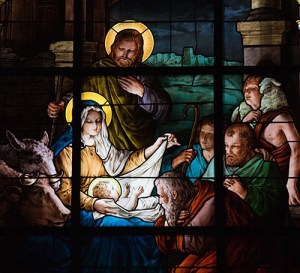
Nativity SceneFour months ago, my husband and I got the best gift we’ve ever received: Our daughter, Lucy, was born August 5, launching us on an amazing, sleep-deprived journey as parents.

When we held her for the first time, we saw her with new-parent eyes—she was squinty, puffy, wrinkled, splotchy perfection. I’d guess we got about 90 seconds of peace before the thought popped in my mind that has dominated the last four months: Oh, there are so many ways we can mess this up.

New and prospective parents, resist the temptation to Google. Because once you go down that road, there’s no coming back. Paci or no paci? Swaddle or free sleep? Is the fresh air good for her, or full of germs too mighty for her tiny immune system? If she fails at tummy time, is it because she’s nervous about performing well in front of me? (Believe it or not, this is a thing, even at four months. Google it.)

Those 21st century concerns are embarrassing to say the least when I think about what another, historical mom must have worried about in the days after her son was born. This stable is so dirty, Mary must have thought. There are so many goats.

And later, Who are these people from the east who have come to see him? Can I trust they have his best interest in mind?

And, ultimately, I know why he’s here. Can I really stand to watch him fulfill God’s purpose for his life? Can I really let him die?

How many ways can I mess this up? she must have wondered.

The worries of motherhood, which can spiral pretty quickly into downright terror, could have made Mary cling tightly to the gift she’d been given, and the heavy responsibility she must have felt. After experiencing four months of parenting-induced anxiety, I know that had I been Jesus’ mother, I would have kept him in the house and away from germs for as long as possible. Probably still in his swaddling clothes.

But instead, after submitting herself to what had to have been a numbing proclamation (Luke 1:38), Mary watched everything happening to her son and her family and treasured them all in her heart, meditating on them (Luke 2:19).

Instead of worry, she embraced the heavenly stillness and peace of knowing that while her human weakness and propensity to make mistakes lurked around every corner, God was in control.

He still is.

– MDF


Called to battle for souls

Lisa Misner —  December 10, 2015

Rankin exhorts planters in prayer, spiritual warfare

“There is no greater specialty than someone called and gifted by God” to bring the gospel of Jesus Christ to those who are lost, said former International Mission Board President Jerry Rankin at a recent gathering of church planters in St. Louis.

The acoustics inside Apostles Church were breathtaking as church planters began the day with worship.

The acoustics inside Apostles Church were breathtaking as church planters began the day with worship.

During two sessions on prayer and spiritual warfare, Rankin addressed planters at a quarterly PlantMidwest meeting—recognizing them for the level of sacrifice and dedication their work requires, reminding them of the spiritual target on their backs because of their calling, and equipping them with ways to combat the enemy’s attacks.

Rankin shared experiences from his years as a missionary, pastor, and organizational leader, including his family’s time in Indonesia, when he grew frustrated because people weren’t responding to the gospel as he had envisioned.

But reminded of 2 Corinthians 4:4, “In their case the god of this world has blinded the minds of the unbelievers, to keep them from seeing the light of the gospel of the glory of Christ, who is the image of God,” Rankin said he began realizing mission work is not just a matter of strategy or learning how to present Christianity cross-culturally. It’s about engaging in spiritual warfare with an enemy who has people and nations in bondage to darkness and sin. He quoted 1 John 5:19, “We are from God but the whole world lies in the power of the evil one.”

He urged planters to recognize the essence of their evangelistic calling—being conduits through which God can lead people from darkness to light. But “Satan is an adversary,” Rankin continued. “He is absolutely opposed to the church growing…He is opposed to missionaries going out to take the gospel to closed countries and nations and unreached people groups. He is adamantly opposed to the individual Christian discovering the victorious Christian life.

“And he is most of all opposed to anyone who would presume to take charge of reaching those nations and people with the gospel of Jesus Christ.”

Rankin outlined four strategies the devil typically employs to prevent people from a relationship with the Heavenly Father: he keeps places and countries closed through restrictive government policies, he keeps people groups hidden and neglected from a believer’s sight, and he deters Kingdom advancement through persecution.

Fourthly and most effective of all, Rankin said, “[He] creates indifference among Christians toward a lost world and our mission task.” Satan causes churches to become ingrown and self-centered, believing that missions is optional.

Just being aware of this spiritual warfare, though, is a huge part of claiming the victory in Christ, he said. “We are to engage the battle and put Satan on the run…We, in the power of our Lord, are to stand in the victory…And prayer is connecting to the one who provides that power, that authority.”

Boiled down, the nature of spiritual warfare is simple, said Rankin. God’s purpose through his people is to be glorified. Satan’s purpose is to deprive God of being glorified in the nations.

And the most effective way to combat the enemy’s lies and schemes is through prayer, the former president explained. Not just bringing God our list of wants and needs, but forming a deep, intimate relationship with him. Because Satan trembles in the presence of the Almighty Creator.

Satan is a defeated foe, Rankin exclaimed, so don’t let his deceit lead you astray discouraged and defeated. “You have the victory in Jesus Christ!”

Morgan Jackson is an intern at the Illinois Baptist.

Up to the challenge

Lisa Misner —  December 3, 2015

My substitute teaching career was short-lived, and carried me through a brief time between ministry opportunities. One particular day found me stepping in for an 8th grade biology teacher who had left a worksheet for her class to complete.

As the kids worked on the assignment, two boys called me over for help. I began to explain the process for solving the problem when one of the boys interrupted me.

“Our regular teacher usually just tells us the answer.” My response: “Well, your regular teacher isn’t here.”

But it’s often easier to tell instead of teach, isn’t it? Even in church, it’s so much easier to answer for the unresponsive Sunday school class. But how can we ever help people grow if we fail to challenge them?

We must help our members move beyond simply looking for a spiritual authority to provide the right answers. (This kind of thinking leads to Christians arguing against abortion or same-sex marriage with statements that begin, “My pastor told me…”)

We must move from telling to teaching, asking ourselves: Which is happening more regularly in my church?

This realization came to me as I spoke to a senior adult in my church soon after my arrival. During his recuperation from surgery, I encouraged him to stay faithful in reading the Bible. A few weeks later when I called to check in, he said, “I’m finishing 2 Corinthians.”

Since he and I had spoken, he had taken my challenge to read the book of John, and then he just kept on going. Several weeks later, he was back in church and finishing the book of Revelation. When I asked him about his Bible reading, he said it wasn’t that he had never been told to read his Bible. He said this was the first time he had a place to start.

This situation caused me to realize that I had been blaming the laity for far too long. It was time to point the finger at myself as a leader and ask, “Am I telling them what to do, or teaching them?”

In response, our church began two men’s accountability groups within the last year. The purpose of these groups is to make effective disciples. We challenge these men to be devotionally serious in prayer and reading the Bible. We encourage one another to apply the Bible to our lives and memorize Scripture. But the only way we can evaluate the results is from the lives of these men themselves.

One of our regular attenders from the start has been up and down in his application of God’s Word. I constantly taught him how to be more diligent in his effort to grow from his readings. The month it was his turn to teach the group from his Bible readings, his work situation changed and created a tighter financial situation.

As he worked to apply God’s Word, he read in 1 Timothy 6:7-10 to be encouraged in the sufficient provision God was supplying for his family. He didn’t learn this from the counsel of his pastor, but the counsel of God’s Word. And it gave him peace.

Mark is also in my group and recently told me that he often read the Bible before, but only recently has been more diligent in applying it to his life. And while he says memorization is something he never would have done, at times he is memorizing additional verses that are meaningful to him. Again, these are things he had been told to do before, but never taught to do.

So whether you’re a pastor preaching in the service or a Sunday school teacher moving through the curriculum, I challenge all of us to consider whether we are telling or teaching. Are people being equipped with answers, or with the tools to find those answers for themselves and to grow as confident disciples?

I truly believe those are the only kind of disciples that can build our churches to be stronger and win lost souls to the Lord Jesus Christ.

Heath Tibbetts is pastor of First Baptist Church, Machesney Park.


"Mayflower in Plymouth Harbor" by William Halsall, 1882

“Mayflower in Plymouth Harbor” by William Halsall, 1882 (Wikimedia Commons)

Visitors to London’s Westminster Abbey are transfixed by one tomb containing the remains of two women — sisters who were rivals in life but united in death.

Queen Mary is known to history as “Bloody Mary” because of the repressive persecution and martyrdom of Protestants in England during her reign. When she died, her half-sister Elizabeth I, a Protestant, became queen. Elizabeth was none too friendly with the Catholics during her long reign. Today, more than 400 years later, they are closer in death than they ever were in life, for they are buried together in one grave, which is marked by a Latin inscription reading (in English): “Partners in throne and grave, here we sleep. Elizabeth and Mary, in hope of the Resurrection.”

It was the see-sawing vacillations between religious factions during the 16th and 17th centuries that set the stage for the Pilgrim Fathers to seek out a new world for the exercise of their religious freedom. Those seeking to purify the church (the Puritans) were caught in the middle and opposed by both sides.

Eventually one group of faithful liberty-loving believers gathered in the small village of Scrooby in the Nottinghamshire region of central England. With great courage this group of religious dissenters declared themselves independent of the national church and of the monarchy’s jurisdiction as it related to spiritual matters. This was treasonous in its time, and soon informants were reporting to authorities about the Scrooby meetings, bringing harassment and persecution on the heads of the dissenters.

Most of the Scrooby worshippers fled to the Netherlands where they enjoyed the freedom to self-govern their churches and lives, first in Amsterdam and later in Leyden. Over time, however, Holland, too, posed problems for these wayfarers. The English felt themselves in a cultural no-man’s-land. They wanted to retain their English identity, but as their children grew they were speaking Dutch and being assimilated into the Dutch culture.

What to do? To return to England was dangerous; to remain in Holland was untenable. These worshippers began to discuss something outlandish and dangerous — to cross the ocean to establish a village on the deserted and inhospitable shores of America. It’s still traumatic to us today to think of relocating our families to another nation, but to these Pilgrims the journey must have been akin to traveling to the moon. They were literally going to another world — a new world.

In 1620, the Pilgrims set sail on the Mayflower, and for more than two months they made their home aboard the storm-tossed, disease-ridden boat. Because of the onset of a New England winter, the travelers stayed aboard ship until the following March, then disembarked.

Leaving its passengers to fend for themselves, the Mayflower returned to England. Meanwhile the new residents of Plymouth Colony scrambled to get their lives, homes and gardens organized during the short summer of 1621. They were aided by the timely arrival of Native American helpers such as Squanto and Massasoit.

When the first harvest began to be gathered that fall, the pilgrims and Native Americans gathered for a festival of thanksgiving, which set the stage for subsequent annual Thanksgiving observances around the world.

William Bradford wrote about that original occasion: “Thus they found the Lord to be with them in all their ways, and to bless their outgoings and incomings, for which let His holy name have the praise forever, to all posterity. They began now to gather in the small harvest they had, and to fit up their houses and dwellings against winter, being all well recovered in health and strength and had all things in good plenty.”

Have you ever traced the practice of thanksgiving in our Lord’s life? He thanked God when His teachings were received by the humble (Matthew 11:25); before He fed the five thousand (Matthew 15:36); before He fed the four thousand (Mark 8:6); at the Last Supper as He took the cup (Matthew 26:27) and the bread (Luke 22:19); and before the rising of Lazarus (John 11:41).

The biblical story is full of exhortations to thanksgiving, and Christian history is filled with examples of stalwart saints like the Pilgrim Fathers who did just that.

Try it right now. Start your journey each day seeking ways to thank your Heavenly Father.

This article first appeared at www.BPnews.net. David Jeremiah is the founder and host of Turning Point for God and pastor of Shadow Mountain Community Church in El Cajon, Calif. For more information on Turning Point, visit www.DavidJeremiah.org.


Amid the chaos, praise

Lisa Misner —  November 20, 2015
Amid the chaos, praise

Representatives of 24 congregations lined the platform at FBC Marion. They were from churches newly affiliating with IBSA.

“The most chaotic three minutes of the year.” 

That’s my label for the annual photo of churches affiliating with the Illinois Baptist State Association at the IBSA Annual Meeting. Each year, the pastors of a dozen or so churches line up across the front of a hotel ballroom or church sanctuary for a wide-angle shot where no one is looking in the same direction, someone’s eyes are closed, and there’s a blur on the right side because someone moved during the picture.

It’s fun, it’s joyful, but it’s never been a good photo.

This year, the chaos was doubled (at least). Twenty-four new churches joined IBSA officially during the Wednesday evening session of the meeting, representing a variety of people groups and languages. So, our photo team’s instructions of “move to the left” and “everyone look here” only seemed to add to the confusion.

And it seemed that each pastor and church had a support team or sponsoring congregation there to capture the moment, resulting in a logjam of people near the altar steps where everyone was supposed to line up for a formal portrait.

After several minutes of trying to arrange everyone, those of us trying to take that formal portrait could only throw up our hands and laugh along with everyone on the stage. It was the kind of moment you only experience with family. Everyone knew it was chaotic, but the joy of being together, and welcoming new members to the family, transcended the language barriers and general confusion.

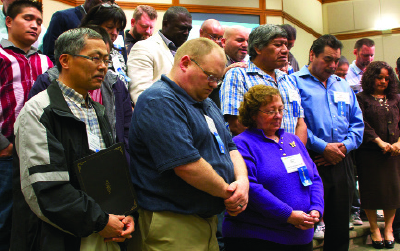
The best pictures actually came after everyone stopped looking at the camera, when the pastors and leaders bowed their heads there on the steps to pray together. In the stillness, you could see the diversity of the group, and the fellowship they felt for one another.

One pastor wore traditional clothing of his country. Another put his hand on the shoulder of the person in front of him. The group reflected the differences in any family, and the solidarity the members feel because of a shared calling and commitment to, well, act like family.

This year’s family photo isn’t going to win any contests for composition or lighting. If you look closely enough, you can probably tell it’s not perfectly in focus. It’s a bit of a mess, as far as pictures go. A glorious, holy mess.

– MDF

Martin Luther monument on Neumarkt in front of Frauenkirche, DresdenCOMMENTARY | “Do Southern Baptists consider themselves Protestants?” I was asked recently. The question seemed innocuous.

“Why do you ask?” I said.

“Well, in my former church, we were taught that Baptists aren’t Protestants. That we weren’t part of the groups that withdrew from the Catholic Church. You can’t really protest what you weren’t part of to begin with.”

Interesting point.

Normally I wouldn’t spend much time pondering how Baptists emerged on the scene, because I would find it outweighed by the question: How does that matter now? But here on the 498th anniversary of the Reformation, and peering over the cultural and moral precipice of the 21st century, I find the question is deep—and important.

In my friend’s church background, the teaching is that there always existed on a sort of parallel track to the Catholic Church a string of truly New Testament churches that were faithful to the biblical doctrines of salvation, believer’s baptism, and local church autonomy. They don’t identify themselves with Martin Luther, the agitated priest who on All Hallows Eve in 1517 started a movement—and a schism—with a hammer and nail as he posted his complaints on the door of his church building. Nor do they fully identify with Calvin, Knox, and Zwingli, Luther’s contemporaries. These Reformers nailed down faith by grace alone, but ultimately they kept the practice of infant baptism and a hierarchical church polity.

Methodists technically didn’t “protest” the Catholic Church. They withdrew from the Anglican Church, which was formed by Henry VIII because the Pope refused him permission to divorce and remarry—and remarry—and remarry. About 200 years later, Anglican priest John Wesley got saved and unintentionally started another movement. Not really a protest.

But in our day, the denominations that cite these Reformers as their antecedents are called Protestants. Mainline Protestants in America are Lutheran (of various types), Presbyterian (mostly PCUSA), United Church of Christ, Episcopalian (ECUS), United Methodist, American Baptist, and a couple of others.

We Southern Baptists never considered ourselves Mainline. But are we Protestants?

The reason this is important today was underscored at the symposium on “SBC in the 21st Century” hosted by Midwestern Baptist Theological Seminary in September. All the presenters—mostly seminary presidents and leading SBC thinkers and pastors—referenced the current cultural decline and the need for Southern Baptists to take biblical stands against it.

David Dockery, former president of Union University and now head of Trinity Evangelical Divinity School in metro Chicago, masterfully explained the shifts in Southern Baptists’ relationship to the prevailing culture.

He recited the SBC’s history as a series of six generations starting with its founding in 1845, each delineated by the death of some significant SBC figure. The period from 1950 to 1980 was one of expansion and accommodation, as the SBC grew dramatically and surpassed the Methodists to become the largest “Protestant” denomination in the U.S. The period was marked by movement toward the mainline, as downhome Southern Baptists moved up in the world. For a while, it was cool to be Baptist.

Dockery described how our cultural accommodation resulted in theological drift, identity crisis, and the Conservative Resurgence, intended to stop liberalization of the denomination. From that time, the SBC and society-at-large began moving in opposite directions. Here, 35 years later, we find ourselves on the fringe again, decrying moral decay and building battlements to preserve what remains of our religious liberty.

Perhaps my friend is right. Out here on the edge, we are not served well by the label “Protestant.” As applied to people and churches today, Protestant has lost its theological meaning. By it we are lumped in with those who have surrendered their doctrinal standards for the sake of cultural acceptance.

Perhaps we should consider ourselves simply “Baptist.”

Eric Reed is editor of the Illinois Baptist. Read the most recent issue of the Illinois Baptist online.

Nathan CarterCOMMENTARY | You are probably familiar with the term “multi-site” by now. Maybe your church has already gone to the model, or is considering it. Very simply put, multi-site refers to the concept of one church that meets in multiple locations. Twenty-five years ago, there were fewer than 25 such multi-site churches in North America. Today there are over 5,000! It is a relatively recent phenomenon, yet an increasingly popular strategy for reaching more people with the gospel.

Opening up another campus allows for growth that is usually quicker and more cost-effective than building bigger or sending people out to start something new. It is in many ways simpler and more streamlined. You don’t have to reinvent the wheel, but can keep the same name, logo, website, 501(c)3 status, support staff, etc. Resources can be shared more readily. You can be more certain that your own “DNA” is being replicated.

I understand the appeal and practical benefits. There are many Baptists whom I respect that have gladly joined the multi-site movement, motivated by a genuine desire to penetrate lostness. But I’ve always had a lingering doubt about whether this method is entirely consistent with our Baptist principles, particularly that of local church autonomy.

Now you may be wondering why I don’t pose the question as, “Is it biblical to be multi-site?” It is because I don’t have space to make a full argument from Scripture. I am assuming that we are all Baptists here. And I am assuming that we are Baptists because we believe it is biblical. We are solidly convinced the Bible teaches that baptism is to be administered to believers only. And we believe that “a New Testament church of the Lord Jesus Christ is an autonomous local congregation of baptized believers” (The Baptist Faith & Message 2000, Article VI). Our views about credobaptism and congregational ecclesiology are the principal reasons why we are Baptist, and not Methodist or Presbyterian.

But while they may remain firm on the practice of baptism, Baptist practitioners of the multi-site model appear willing to compromise the autonomy of the local assembly. Each distinct location is not allowed the responsibility to receive and dismiss its own pastors and members. There is limited leeway given to determine the best programs and strategies for evangelism and discipleship. In many ways, the satellite congregations are bound by the decisions coming out of central headquarters.

When it comes to organizational structure and leadership in a multi-site operation, there may be one single pastor over all the campuses, in which case you have a hierarchy. How is this different than having a bishop? Or there might be a representative group of elders overseeing all the campuses, in which case you then have a presbytery. It seems to me that while the language may be “one church in multiple locations,” what you really have is a small denomination.

There are potential dangers in any system, but with multi-site, the pull towards empire-building and a cult of personality is extremely strong. There is also a temptation to trust in a franchise brand instead of the power of the Word and Spirit.

I can see how in true revival circumstances where massive amounts of people are being converted at once, a temporary multi-site solution might be needed. But I would rather see this as church planting in slow motion.

What all this means is that the task of pastors is not just to do the work of an evangelist (2 Tim. 4:5), but also to commit what we know to faithful men who will be able to teach others also (2 Tim. 2:2). We must be committed to raising up leaders from within our churches who could do what we do and be released from our authority to start other churches as the need arises. Hopefully these churches would retain a similarity and organic connection, without control or formal structural unity.

A growing number of like-minded yet independent congregations freely choosing to associate and cooperate together in mission…that sounds more Baptist (and biblical) to me.

Nathan Carter is pastor of Immanuel Baptist Church in Chicago. This article first appeared in the Illinois Baptist. Read the latest issue online.

‘Spurgeon’s rail’

Lisa Misner —  October 16, 2015

Spurgeon's railCOMMENTARY | Consider it the first see-through pulpit. A century before the plexiglass lectern, black-metal music stand, or repurposed pub table, there was Spurgeon’s rail.

The centerpiece of the great Metropolitan Tabernacle in London was not an ornate pulpit. It was a rail, a simple wooden banister with only newel posts at the corners and topped by a little shelf just big enough for a Bible and his one-page manuscript. Behind it, in some photos there is a small trestle-style library table. With the open “rail” extending out about eight feet, there was plenty of room for the preacher to pace about without toppling off the platform.

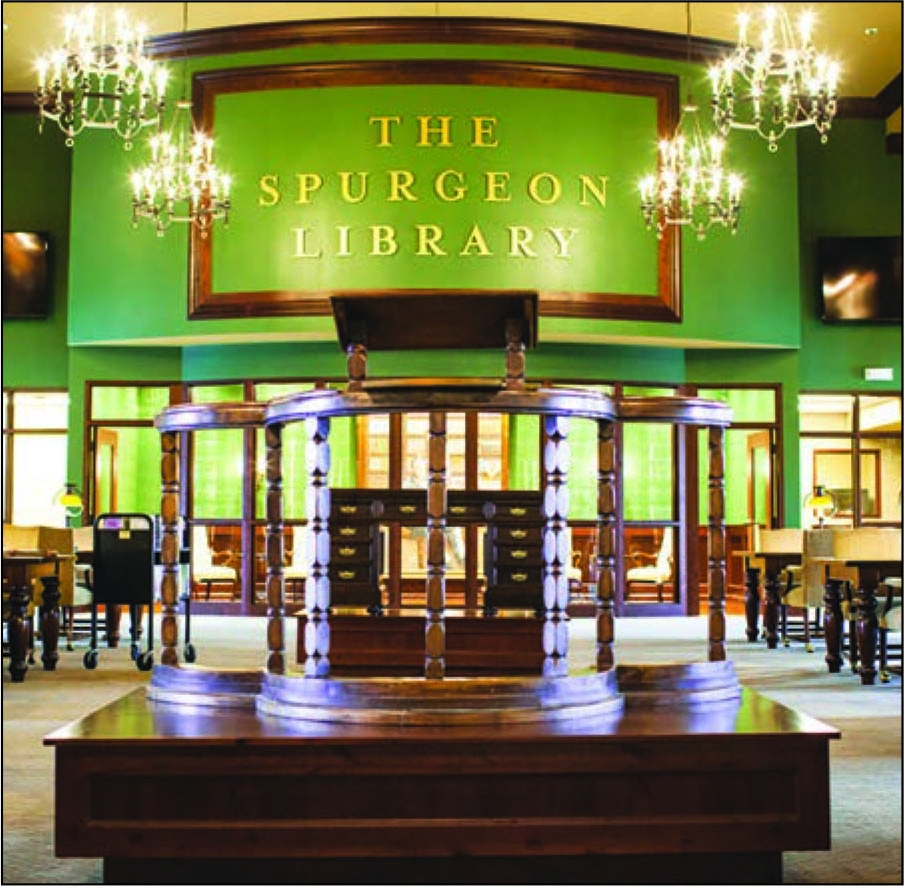
The historic podium anchors the new Spurgeon Library at Midwestern Baptist Theological Seminary, along with a collection of 5,103 of the great master’s books and commentaries from his pastoral office. Overhead hang large new paintings depicting the great preacher’s call and ministry. (We also saw Spurgeon’s doorknob and the silver keyhole cover from his study door, recently acquired.)

I wanted to stand behind Spurgeon’s rail and preach a bit in the style of the renowned orator, but I don’t know what Spurgeon sounded like. He died in 1892 at age 57. Although Edison had invented sound recording more than a decade earlier, there are no phonograph discs of Spurgeon preaching.

His son and successor Thomas recited a transcript of his father’s last sermon, but Thomas’s voice is tinny on the wax cylinder, and we are left to wonder how the man who once preached to an audience of 23,654 without a microphone really sounded.

But his words—we have many. Up to 25 million words are documented in 63 volumes of his sermons from his 38-year pastorate. A Midwestern professor is leading the transcription and exposition of recently discovered sermons from Spurgeon’s earliest years in the pulpit. (No small feat that is, as we also saw from pages of sermon notes in his own scritchy Victorian hand.) So the number grows.

While he did speak to some of the ills of his day (American editors sometimes deleted his strong comments on slavery), Spurgeon always made a beeline for the cross. If Spurgeon railed, it was for Christ.

“When I cease to preach salvation by faith in Jesus,” Spurgeon said, “put me into a lunatic asylum, for you may be sure that my mind is gone.”

We need more of Spurgeon’s rail today.

Eric Reed is editor of the Illinois Baptist. Read the latest issue online.

COMMENTARY | Eric Reed

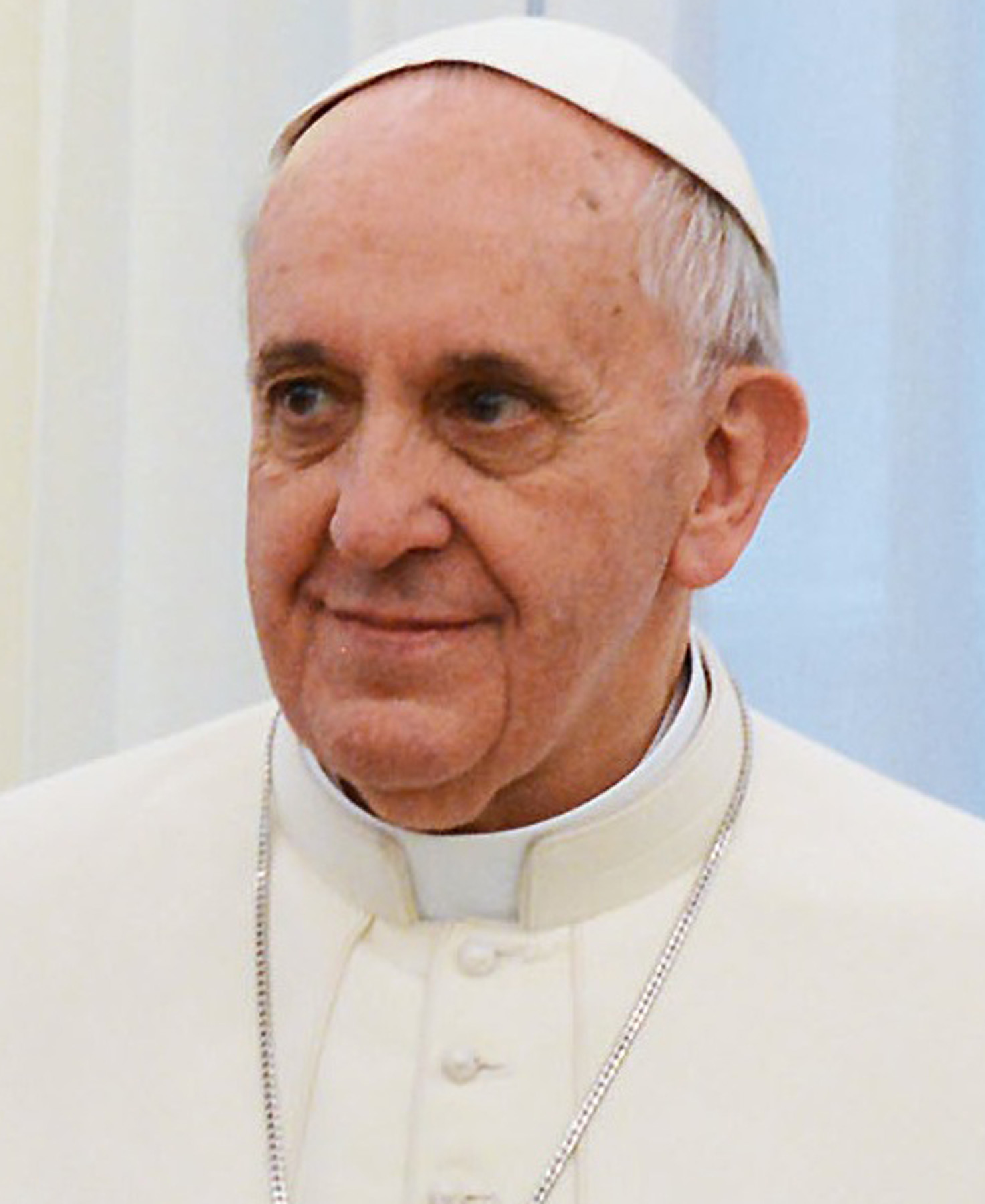
Pope FrancisAs Pope Francis hugged a disabled child, MSNBC’s Chris Matthews said, “What power this man has to make people feel good.” And it’s true. Even I, with all my Baptist objections to the papacy, got a catch in my throat at that scene on the Philadelphia airport tarmac when Francis stopped the car and got out to bless the child in the wheelchair. Yes, he makes people feel good.

Why else would millions line the streets for an eight-second glimpse of the pontiff waving from the back seat as his tiny Fiat passed by?

But CBS’s Jericka Duncan, to bishops at a press conference following the Philadelphia visit, was more pointed: Why didn’t Francis publicly tell people how he feels about the family, starting with the marriage of one man and one woman?

Francis has a history of making statements that, broadly interpreted, could make homosexuals, divorced people, those who allow for abortion, and even “women religious” believe there’s an open door for them in mainstream Catholic life and leadership. But Francis isn’t going to change his church’s doctrines on marriage, protection of the unborn, a male only priesthood. He can’t: 2,000 years of church history, conservative Catholics in the global south, and the College of Cardinals won’t let him.

So why make gestures that soothe postmoderns and liberal Americans, but don’t really change anything? Perhaps because, as Chris Matthews puts it, he wants people to feel good.

But that isn’t speaking the truth in love. Sure, Francis’s approach is long on love. Don’t we all see Christ exemplified in his embrace of the homeless and handicapped? But the more loving response to people struggling with sin and its effects is to tell the truth: We love you, but the church can’t embrace your beliefs when they are outside orthodoxy. That’s the lesson I’m taking from Francis’s visit.

Church leaders do no favors when we let people think some doctrinal issues are open for debate when they’re really not. I have witnessed this accommodation of feelings in conversations with non-Baptists and Millennial evangelicals pressured by the current wave of cultural liberalization. (“Why can’t my brother marry his boyfriend?” “You won’t accept my sister’s application for lead pastor?” No, sorry.)

We want to approach these conversations in love, but they must be grounded in truth. Letting people think what they want because we’d rather not hurt their feelings isn’t being loving—or honest. Love is grounded in truth, not feelings.

Read this and other articles in the 10/12 issue of the Illinois Baptist.