Archives For November 30, 1999

THE BRIEFING | Meredith Flynn

The_BriefingTwo men who were shot in the July 16 attacks on Tennessee military facilities were connected to Southern Baptist churches. Lance Cpl. Skip Wells, 21, was killed by Mohammad Youssef Abdulazeez at a Navy support center in Chattanooga. Three other Marines also were killed, and a Navy petty officer later died from injuries sustained in the attack.

The Sunday following the shootings, Wells’ one-time church, First Baptist of Woodstock, Ga., placed a Marine flag at the seat he occupied as a clarinetist in the church orchestra, Baptist Press reported.

In Harrison, Tenn., near Chattanooga, members of Bayside Baptist Church prayed for the families of the victims and for Dennis Pedigo, a church member and police officer injured during the attacks. Pedigo, whose name was released after this Baptist Press story was published, is expected to make a full recovery.


Former Planned Parenthood clinic director reaches out to exec caught on video
Abby Johnson, a former Planned Parenthood clinic director who now has a ministry dedicated to helping abortion workers find a way out of the industry, has written an open letter to Deborah Nucatola, the subject of a video made by an anti-abortion organization in which she discusses the sale of body parts gained through abortion.

“We want you to find peace,” wrote Johnson, former director of a Planned Parenthood clinic in Bryan, Texas. “We want you to find true happiness. We know that won’t happen as long as you are involved in Planned Parenthood.” More from Johnson’s letter, published by LifeSiteNews, can be read at BPNews.net, with this warning: The letter contains some graphic details that are difficult to read.


Christian colleges could hire staff in same-sex marriages
Two Christian colleges have added “sexual orientation” to their non-discrimination policies, said Christianity Today, meaning they could hire faculty and staff members who are in same-sex marriages. Both schools–Goshen College in Goshen, Ind., and Eastern Mennonite University in Harrisonburg, Va., are affiliated with the Mennonite Church USA, which voted in July to reaffirm same-sex marriage as a sin, but also to allow churches to perform same-sex marriages if their regional conferences allow it.


GuideStone loses case against health care mandate
“Today was a setback. It is not the final outcome,” said GuideStone Financial Services President O.S. Hawkins after a federal appeals court ruled it must comply with a mandate requiring employers to cover the cost of contraceptives–including some that can potentially cause abortions. GuideStone, the Southern Baptist entity responsible for health and financial benefits, is considering an appeal of the ruling, according to a statement on the organization’s website.


Americans rooted in their communities, Barna finds
59% of Americans aren’t sure they’ll move from the place they currently live, or never plan to, according to a Barna survey on why people put down roots in a particular place. Among the findings: The largest share of Americans–45%–describe their community as suburban, and 24% currently live in the city or town where they were born. Among those who don’t, family ranked as the most popular reason they moved to their current location.


Churches, institutions prepare for fallout from marriage decision

NEWS | From the Illinois Baptist

Now that same-sex marriage is legal in all 50 states, leaders of churches and Christian institutions are asking several key questions: Is the threat to religious liberty as real as we imagined? And will our insurance cover the costs if our churches and schools are sued?

The U.S. Supreme Court’s June 26 decision to legalize same-sex marriage nationwide flipped the final switch on a new marriage culture many observers believed was a foregone conclusion. In the days and weeks following the announcement, Christian leaders urged churches and ministries to evaluate their policies to determine if they will be adequately protected against potential infringements on religious liberty.

“For a few years now, leading up to the time ‘same-sex marriage’ became legal in Illinois, IBSA has been seeking to inform and resource churches regarding steps they can take to protect their freedoms of speech and religious exercise,” IBSA Executive Director Nate Adams said immediately following the Court’s decision.

“In light of this latest Supreme Court ruling, we would again urge churches to be vigilant in pursuing the recommended steps
in their constitutions and policy manuals to help protect those freedoms. On this issue, as on others before it, the local church and churches banding together in unity and cooperation are likely to be the primary opponents of laws that threaten religious freedom.”

New research from Barna indicates 56% of Americans are concerned that religious freedom will be more restricted in the next five years, with adults over age 40 more likely to say so than those under 40.

The numbers soar when Christians answer the question: 77% of practicing Christians and 93% of evangelicals are concerned about religious freedom over the next five years.

Those polled by Barna were more likely to protect the rights of churches than those of businesses: 38% of U.S. adults say businesses should have to provide services for same-sex weddings, while only 19% say religious institutions should be legally required to perform same-sex weddings.

But some, including Illinois pastor Danny Holliday, say churches could be in danger. “I think some churches are going to end up having to close because of the Human Rights Act and the building usage issue,” Holliday, pastor of Victory Baptist Church in Alton, told the Illinois Baptist.

(Illinois’ Human Rights Act protects individuals from discrimination based on classifications like race, gender, and sexual orientation. It was used by Chick-Fil-A opponents in 2012 to file complaints against the company after President Dan Cathy vocalized the business’ views on marriage and family.)

Prior to the Supreme Court decision, the Southern Baptist Convention’s Ethics and Religious Liberty Commission released “Protecting Your Ministry,” a booklet for churches, schools, and businesses. The guide, available for free at http://www.ERLC.com/store, provides checklists for navigating the new marriage culture (and avoiding lawsuits).

If churches do face lawsuits resulting from their refusal to perform same-sex weddings, said Brotherhood Mutual Insurance Company attorney Joshua Lederman, the claim would most likely be “emotional injury as a result of improper discrimination.”

While some insurance companies only cover emotional injury claims caused by physical injury, said Lederman, Brotherhood
Mutual offers a Religious Freedom Liability Coverage endorsement that covers “alleged discriminatory acts, religious communication, challenges to your ministry’s tax exempt status, reimbursement for declaratory judgment actions that your ministry initiates in order to protect its right to pursue a belief-based decision or practice, and liability defense reimbursement coverage.”

Churches aren’t the only institutions potentially affected by the ruling: Oral arguments heard by the Court in April touched on
concerns for schools, specifically related to whether they could lose their tax-exempt status if they oppose same-sex unions.

A few weeks after the Court’s ruling, two Christian colleges, Hope College in Holland, Mich., and Belmont University in Nashville, Tenn., announced they would extend benefits to same-sex spouses of employees. But Shapri LoMaglio, a representative for the Council for Christian Colleges and Universities, told Baptist Press that as long as Christian colleges and universities “ensure that all of their policies are clearly tied to their religious beliefs,” the threats of losing tax-exempt status and being held liable for discrimination aren’t immediate.

While nothing will change for most Christian organizations in the short term, said David Dockery, president of Trinity Evangelical Divinity School in Deerfield, Ill., schools like his and other institutions could face challenges in the areas of hiring, financial aid and accrediting.

“It is also possible that the ‘free exercise of religion’ as defined by the First Amendment and echoed in the Civil Rights Acts of
the 1960s could be reduced to a more narrow understanding of ‘freedom of worship,’ thus applicable only for the ‘heart, the home, and the pew,’” Dockery told the Illinois Baptist. “As Chief Justice Roberts suggested in his minority expression, this could have implications for religious expressions in education, publishing, social services, or other spheres.”

That’s why a holistic understanding of religious liberty—one that harkens back to Baptist leaders in the 18th century—is important, Dockery said.

“We want Mormon schools to be able to hire only Mormons if they choose to do so. We want Buddhists to be able to hire only Buddhists if they choose to do so. We want Muslims to be able to only hire Muslims if they choose to do so.”

Following the Court’s ruling, Dockery advised a “wise, careful, and prudent” approach for Christians in the days ahead.

“At this point it is important for Christians to carry out their callings in a faithful and joyful manner, seeking to be kind and civil in all of our responses with all people, even as we seek to remain convictional about the teaching of Scripture and the pattern of Christian truth.”

Read the July 20 issue of the Illinois Baptist newspaper online at IBonline.IBSA.org.

NEWS | Imprisoned pastor Saeed Abedini has become a key figure in news coverage surrounding the nuclear deal with Iran struck by President Barack Obama and other world leaders this week.

Image from a May 2012 YouTube video Saeed Abedini made before his imprisonment.

Image from a May 2012 YouTube video Saeed Abedini made before his imprisonment.

Abedini’s wife, Naghmeh, expressed her disappointment that a deal was reached without securing the release of her husband and other Americans imprisoned in Iran. Mrs. Abedini’s legal representation, the American Center for Law and Justice, released a petition calling Congress to reject the deal, The Christian Post reports.

“It is unconscionable that the Obama Administration would sign a deal with Iran without securing the freedom of Pastor Saeed who has been imprisoned for nearly three years simply because of his Christian faith,” said Jay Sekulow, chief counsel at ACLJ, in a news release.

“President Obama told the Abedini family face-to-face that he considered the release of Pastor Saeed a ‘top priority.’ How could that be a ‘top priority’ when a deal is reached and Pastor Saeed is left behind? What happened today makes a bad deal even worse. We will now focus our attention on convincing Congress to reject this deal.”

Obama faced similar opposition in-person, when CBS News reporter Major Garrett asked him in a press conference why he is “content with all the fanfare around this deal to leave the conscience of this nation, the strength of this nation unaccounted for in relation to these four Americans?”

Calling that notion “nonsense,” the President said he previously met with the families of some of the imprisoned Americans and that connecting their release with the deal would have encouraged Iran to seek more concessions, CNN Money reported after the exchange.

Southern Baptist Convention President Ronnie Floyd told Baptist Press, “While still learning more about this deal made with Iran, I stand appalled that we would make any kind of deal that would not demand the immediate release of the four Americans held hostage, including Pastor Saeed Abedini.

“Additionally, I am concerned for the safety of the people of Israel, America’s great ally. All of this calls the church to rise up and pray for the peace of Jerusalem, as well as recommit ourselves to the evangelization of the world.”

COMMENTARY | Charles Lyons

Floyd and Rad certainly stood out when they showed up in our tiny congregation. I had been pastoring a couple years. Obviously not from around here, they did seem familiar with church. Conversation revealed they were both from Arkansas; one from a Baptist church, the other from an Assembly of God church. Maybe they were 20 years old. My guess is they met in high school.

Charles_Lyons_July16They, like thousands before them, had fled home and familiarity for faraway, big-city anonymity. I’m not sure why, but they didn’t hide their homosexuality from me. I’ll never forget the anguished question during one tearful conversation with Floyd:
“How can this be wrong?” He was overwhelmed with need, emotion, passion, and counterfeit love.

I have to say, getting to know them as individuals radically changed my rabid hostility toward those I before would have called “perverts.” I didn’t change what I believed. My conviction that God’s Word is true was not threatened. But I had an overwhelming desire to be a channel of grace and, as John puts it, “love in truth.”

It was God’s truth and love by God’s definition that eventually contributed to Floyd and Rad drifting away from the church,
looking for something else I could not offer.

Let me tell you! I’m as opinionated a person as you’ll ever meet. Furthermore, I am able to passionately, hey, vehemently
articulate my views. I’m especially dogmatic and emphatic when it comes to behavior I don’t engage in, and I can really preach against that stuff!

Many of us have gone through a process to get where we are today. We used to regularly rant against “easy targets” like communists and hippies, and these days those targets have been replaced by homosexuals, transgender, and “gay marriage” (as if there really were such a thing). And some continue to rant rather than to take a Bible approach.

Should we ignore these things or begin to accept them? Of course not, but we need to confront them biblically. After all, we
are not just guarding our culture or doing battle with sinners. We are representing God and his grace as well as his warning.

Jesus’ harshest condemnations target self-righteous religious zealots. His greatest compassion is expressed to those most
ignorant of, rebellious toward, or distant from God. He said, “I didn’t come to call the righteous but sinners to repentance.”

It goes without saying, those who are determined to pursue any kind of sin are not going to be comfortable or in close fellowship in a Bible-preaching church.

That said, there is a whole slice of “sinnerdom,” and for sure some wrestling with same-sex attraction, who would seek help
from people they knew loved them. Is that not the spirit of Jesus?

How do we communicate God’s love?

How do we communicate God’s love to those who are out of bounds in any way, shape, or form? Think over-indulgence. Adultery. Consider any form of destructive behavior. What about unnecessarily angry people?

How do we express God’s love to those who are way, way out of bounds?

Is God’s love unconditional? Is the love I live, preach, teach, and lead our congregation to demonstrate just as unconditional?

Should the church be the last place these out-of-bounds think of for seeking help?

Do the kids attending our churches know these are safe places to bare their souls and share their secrets?

Understand me. There is always someone reading between the lines looking for compromise if not sellout, and I am not advocating in any way changing or messing with what God says about any particular sin. I am saying our churches need to be havens of hope, dispensaries of love and deliverance, places of grace.

The rebels and unrepentants will cast themselves into an eternity without God… but they should go with the knowledge that we loved them. Those willing to believe God’s promises, trusting him for rescue, and willing to fight the flesh in fellowship with God’s people should never wonder if they have a home.

Charles Lyons pastors Armitage Baptist Church in Chicago.

THE BRIEFING | Meredith Flynn

The_BriefingFollowing the Supreme Court’s ruling on same-sex marriage, churches and Christian institutions, including colleges and universities, are navigating the potential religious liberty ramifications.

Christian colleges in Michigan and Tennessee announced last week they would extend benefits to same-sex spouses of employees. But a representative for the Council for Christian Colleges and Universities (CCCU) told Baptist Press that as long as Christian colleges and universities “ensure that all of their policies are clearly tied to their religious beliefs,” the threats of losing tax-exempt status and being held liable for discrimination aren’t immediate.

“At this point, there is no reason to believe that religious institutions, who do immense good by educating first-generation and low-income students, providing thousands of hours of volunteer time to their communities, and are institutions essential to the fabric of their communities, would be targeted to be penalized in this way for their longstanding religious beliefs,” said Shapri LoMaglio. “The test for tax-exemption is public good, and our institutions absolutely serve the public good.”

Neither of the two schools who announced benefits for same-sex spouses–Hope College in Holland, Mich., and Belmont University in Nashville, Tenn.–are affiliated with the CCCU. Belmont, which was affiliated with the Tennessee Baptist Convention until 2007, added “sexual orientation” to its non-discrimination policy in 2011, BP reports.


Durbin says schools are ‘challenging area’ after marriage decision
U.S. Senator Dick Durbin (D-Ill.) said he doesn’t “have a quick answer” about whether religious schools that oppose same-sex marriage are protected from religious liberty concerns in the same ways as churches. “There’s no question this was an historic decision, and now we’re going to go through a series of suggestions for new laws to implement it,” Durbin told The Weekly Standard. “I can’t predict how this will end. But from the beginning we have said that when it comes to marriage, religions can decide what their standards will be.”

But on the schools question, Durbin said, “Getting into a challenging area, and I don’t have a quick answer to you. I’ll have to think about it long and hard.”


Baylor drops ‘homosexual acts’ ban from conduct policy
Christian school Baylor University in Waco, Texas, has removed “homosexual acts” from behaviors banned in its sexual conduct policy, the Houston Chronicle reported this month. However, a “Statement on Human Sexuality” on the Baylor website says, “Christian churches… have affirmed purity in singleness and fidelity in marriage between a man and a woman as the biblical norm. Temptations to deviate from this norm include both heterosexual sex outside of marriage and homosexual behavior.”


Carter says Jesus would be OK with same-sex marriage
Former President Jimmy Carter says he has no problem with same-sex marriage, and Jesus wouldn’t either. “I think Jesus would encourage any love affair if it was honest and sincere and was not damaging to anyone else, and I don’t see that gay marriage damages anyone else,” Carter told interviewer Marc Lamont Hill on HuffPost Live.

Carter did say he’s not in favor of the government being able to force churches to perform same-sex weddings.


Wheaton denied injunction against contraceptive mandate
Wheaton University in Illinois will be required to notify the federal government that it objects to providing emergency contraception through its employee healthcare plans, after a judge denied the school’s request for an injunction. That notification will allow health plan participants to receive free contraception coverage, Christianity Today reported.

“…[W]e remain hopeful for a time when the government will allow us to provide healthcare for our employees and their families in full accordance with our common faith,” said Wheaton President Philip Ryken.

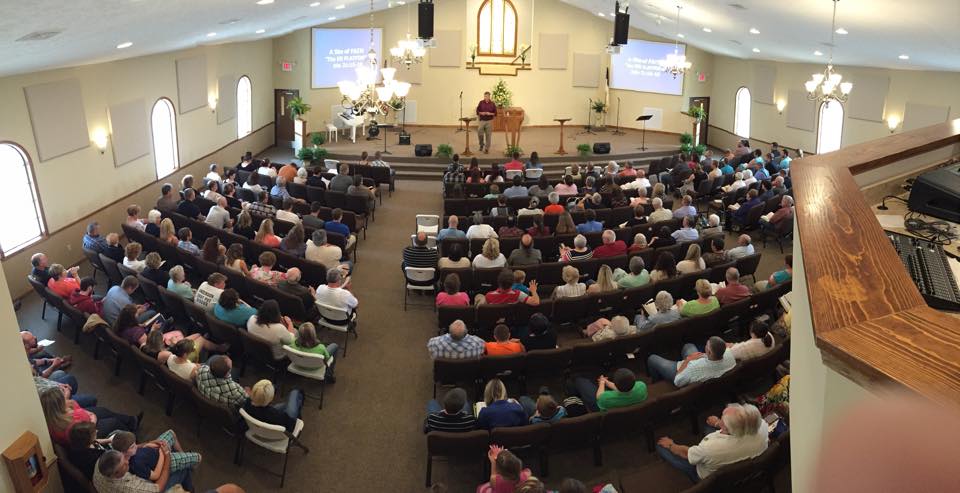
Pastor Don Hannel estimated 80% of the construction at FBC Pleasant Hill was done by volunteers.

Pastor Don Hannel estimated 80% of the construction at FBC Pleasant Hill was done by volunteers. Photos by Joe Springer

HEARTLAND | Meredith Flynn

In the year it’s taken to build a new church, Pastor Don Hannel and the members of First Baptist Church, Pleasant Hill, have seen God move in numerous ways. One moment that stands out: when they raised the 30-foot steeple in the air, pausing first to dedicate the building to the Lord.

“When we raised the steeple up…it went from a building to a church, a house of God,” Hannel said. “It’s just one of the moments you’ll never forget the rest of your life.”

The members of FBC Pleasant Hill met in their new sanctuary for the first time May 10.

The members of FBC Pleasant Hill met in their new sanctuary for the first time May 10.

The 15,000-square-foot building now sitting on what used to be 10 acres of corn fields has been a labor of love for the congregation, who started exploring the possibility of expanding or renovating their facilities a few years ago. Their land-locked original location downtown Pleasant Hill, located about 15 miles from the Illinois-Missouri border, was built in 1917 and was in good condition. But it left them little room for growth–or parking.

About 80% of the work on the new building was completed by volunteers, Hannel said. His church members worked alongside several groups throughout the process, including Carpenters for Christ, a church-building ministry that started out of a Southern Baptist congregation.

The Carpenters groups that worked with Pleasant Hill hailed from Attalla, Alabama, and brought 120 men to the rural Illinois community last summer. In 10 days, they raised walls, set trusses, and nearly put on the whole roof.

They also set up the steeple, gathering with the Pleasant Hill volunteers to lay hands on it and pray before the crane hoisted it up in the air.

The steeple experience wasn’t the only instance Hannel described as a “spiritual moment.” There was the time a pastor from Talbotton, Ga., called to see how he could help. (Hannel’s church had helped build a church for the Georgia pastor on a previous Carpenters for Christ mission trip.) When Hannel replied there was some brick work to be done, the pastor and four other men came to Pleasant Hill to finish the job.

Then there was the man who had been attending Pleasant Hill who volunteered to spend several days last winter with his brother installing more than 70 interior doors in the building. A few months later, the volunteer and Hannel were talking in the new sanctuary when the pastor felt led to talk about how to have a relationship with Jesus. The man knelt there at the altar and prayed to receive Christ, the first person to do so in the new building.

And he’s not the only one. Revival started at Pleasant Hill through the building process, Hannel said. Seven people were baptized in the new building in June, with six more waiting.

On May 10, the church met in the new building for the first time, with 282 people in attendance. (Previously, they had been running between 130 and 150.) They dedicated the new facility two weeks later, with a Saturday open house and special worship service on Sunday.

There were times in the process when it was difficult to press on, and the church had to rely on the Lord for strength, Hannel said. But seeing those 282 people come in, “it was just like everything disappeared at that point.”

The pastor has been at Pleasant Hill for 10 years; the last one has given him countless stories of God’s faithfulness to tell over the next many.

“We need to write a book on this some day,” he said, “as many things as God has done through this.”

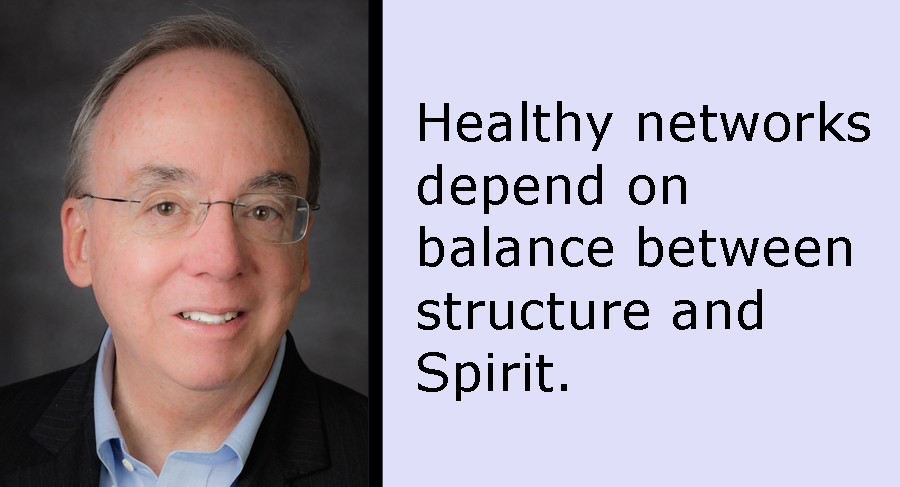
David_DockeryCOMMENTARY | David Dockery

In 1955, when Will Herbert wrote his classic volume “Protestant, Catholic, Jew,” one in 25 church-going Americans tended to change denominations over a lifetime. In 1985, one in three Americans changed denominations over a lifetime. In this current decade, it’s more than one in two, or about 60%, which means many Christians will change denominations in this century. Not only have we seen a decline in denominational loyalty in recent years, but an increase in the number of people who identify with a network, special purpose group, or parachurch group, rather than a particular denomination.

These accelerated shifts have changed the way many perceive the importance of denominations, resulting in additional changes to the denominational diversity that has developed in North America over the past 200 years. While there are significant changes to observe, we dare not miss the importance of geography as we address this topic.

As the country has migrated westward over the past hundred years, new movements and denominational offshoots have developed. Certainly geography has shifted, but the generalizations about geographical presence and denominational influence still hold. Roman Catholics continue to have great sway in New England, Lutherans are most prevalent in the upper Midwest, Baptists are a majority in the South, and Dutch Reformed are sprinkled across the heartland.

Perhaps even more important than geographical regions is the kind of city or town or place where one resides. Great differences in the understanding of denominational importance exist in metropolitan areas compared with rural towns. Suburban areas are where the majority of generic megachurches are located. Surprisingly, more than 50% of all churchgoing Americans attend less than 12% of all churches. Denominational labels mean less and less for the majority of these megachurches.

Sociologists at Boston University have tracked these changes, highlighting the differences on the east and west coasts when contrasted with areas in the middle of this country. About 30% of the people on the two coasts respond positively to the importance of denominational identity, compared with about 70% in the Midwest and the deep South. Such comparisons are even more exaggerated from rural to urban areas: 84% of people who live in rural areas persist in thinking that denominational identity is important, compared to less than half of that number in suburban and urban areas.

One more important point regarding place: The majority of churches are still found in rural areas, while most people now live in urban and suburban areas, pointing to another reason for decline in the importance of denominations for people in this century.

Furthermore, most of the mainline denominations have sadly lost their way. Some have become disconnected from their heritage, and even more so from Scripture and the great Christian tradition. Some today are not only post-denominational, but also on their way toward becoming post- Christian as their conversations focus on issues of inclusiveness and universalism, sexuality and inter-religious spirituality. Postmodern influences, shifts in population and perceptions regarding denominations, and the decline of mainline denominations have combined to bring about changes that frankly are hard to calculate.

So, what does this say about the future of denominationalism? I want to say that while denominationalism is in measurable decline, denominations still matter. Certainly the kind of structure that denominations provide for churches is important. The Christian faith needs both “structure and Spirit,” to borrow words from historian Jaroslav Pelikan, in order to carry forward the Christian message.

If, however, we focus too much on structure, we wind up with unwanted bureaucracy. Should we focus too much on the Spirit, we unwittingly move toward an amorphous form of Christianity. Let us pray for balance even as we hold out hope for the future of healthy denominations to serve the cause of Christ and cooperatively advance the good news of the gospel message.

David S. Dockery, president of Trinity International University, is the editor of “Southern Baptist Identity: An Evangelical Denomination Faces the Future.”

Melissa PhillipsThe life of Melissa Wootton Phillips was celebrated July 7 at a memorial service in Springfield, Ill. Melissa, 53, an associate executive director for the Illinois Baptist State Association, died July 2 after a nearly year-long battle with cancer.

“She knew that joy and peace come from loving the Lord,” said her oldest daughter, Laura. That’s what enabled her mother, Laura remembered, to look at a doctor near the end of her life and say, “I’m not scared. I’m not.”

“She wasn’t scared because she knew the Lord,” Laura said, urging those in attendance without a relationship with Jesus not to leave the church before exploring the thing her mother had staked her life on.

“If ever a woman lived for the Lord, it was Melissa,” said Mike Keppler, pastor of Springfield Southern Baptist Church. At her memorial service, Melissa was remembered as an active, dedicated member of that congregation, and an advocate for missions.

Keppler recalled how she promoted Weeks of Prayer for missionaries, crediting her parents, James and Mary Lou Wootton, for passing along that particular gift. The Woottons served as missionaries in South Korea while Melissa was growing up.

“She evidenced a life of missions,” Evelyn Tully, former director of women’s missions for IBSA, told the Illinois Baptist. Melissa served four years as vice president for missions support within Illinois Woman’s Missionary Union, and led a mission team to Kazakhstan during the state’s partnership with that country. She was also active in her church’s missions programs for children, teens and women.

She began working at IBSA at the age of 18, newly graduated from high school and recently married to Doug Phillips. The couple later had two daughters: Laura, married in 2013 to Caleb Adams, and Melinda, married this summer to Adam Holler.

“Her value to IBSA was evident from day one, as was her value as a friend,” IBSA retiree Janet Craynon, who hired Melissa, told the IB. “I saw her through days of juggling her work, a young family and church involvement—all with an amazing ease and dedication to excellence.”

Melissa had recently celebrated 35 years with the Association. “She could help us find anything, do anything, solve anything,” said IBSA Executive Director Nate Adams, whose son is married to the Phillips’ daughter Laura.

“She was the person who did whatever you needed,” Adams said. He also noted that Melissa was Christ-like in special ways. “Her unique light shined on us in a way that reflected God’s glory.”

He read aloud verses from Fanny Crosby’s 1875 hymn “All The Way My Savior Leads Me,” dedicating the third verse to Melissa:

All the way my Savior leads me
O the fullness of His love!
Perfect rest to me is promised
In my Father’s house above.
When my spirit, clothed immortal,
Wings its flight to realms of day
This my song through endless ages—
Jesus led me all the way;
This my song through endless ages—
Jesus led me all the way.

Along with her husband, daughters and sons-in-law, Melissa is survived by her parents, James and Mary Lou, four siblings, and several nieces, nephews and cousins.

The_Briefing

THE BRIEFING | Meredith Flynn

While 62% of American adults believed nationwide legalization of same-sex marriage was inevitable, slightly less than half (49%) are in favor of the U.S. Supreme Court’s June 26 decision in favor of it, Barna reports. 43% disagreed with the decision, and 7% were unsure how they felt about it, according to the researcher’s July 1 report.

When it comes to how Christians feel about the Court’s decision, Barna found, 28% of practicing Christians (defined as “those who say their faith is very important to their life and who have attended one or more church services during the past month”) approve of legalized same-sex marriage, compared to 43% of people who identify as Christians but don’t qualify as practicing.

Only 2% of evangelicals support the Court’s decision. Read the rest of Barna’s report at Barna.org.


U.S. Episcopal Church votes to approve same-sex marriage
Right after the Supreme Court made it legal nationwide, the U.S. Episcopal Church moved to approve same-sex marriage in the denomination, The Christian Post reports. Episcopal clergy are now authorized to perform same-sex marriages, but can opt out, according to two marriage-related resolutions passed in late June at the denomination’s General Convention.

The resolutions were opposed by 20 bishops who issued a minority report stating, “The nature, purpose, and meaning of marriage are linked to the relationship of man and woman,” and by Archbishop of Canterbury Justin Welby, who said the decision “will cause distress for some and have ramifications for the Anglican Communion as a whole, as well as for its ecumenical and interfaith relationships.”


Church violence survivors share in Charleston grief
After nine people were killed in a South Carolina church last month, Southern Baptists who have experienced similar tragedies expressed their sympathy and grief over the June 17 shooting.

“I don’t know if you ever recover from something like that,” said Cindy Winters, whose husband, Fred, was killed in his Maryville, Ill., pulpit in 2009. “I think you learn how to get through it, but I don’t think you ever get over it this side of eternity,” Winters told Baptist Press. “I know one day I will when I’m with Jesus. Obviously only by the grace of God am I able to get up each day and go forward, and find beauty and meaning…and find goodness in living.”


Burned churches receive assistance from Baptist missions agency
African American churches in need of assistance after a recent spate of church fires can receive help from a fund established by the North American Mission Board, the domestic missions agency of the Southern Baptist Convention. “Southern Baptists should be the first to condemn acts of hatred toward African Americans,” NAMB President Kevin Ezell said, according to Baptist Press. “Regardless of the causes of these fires, as brothers and sisters in Christ, we need to come alongside and offer whatever assistance we can.”

None of the fires have been deemed hate crimes, and only some are suspected arsons. However, one confirmed arson case is Charlotte’s Briar Creek Road Baptist, a predominantly black Southern Baptist church.


Barnabas Piper: Parents, ‘Don’t fight unbelief in your kids’
“At least don’t think of it as fighting,” Piper said in an interview about his new book “Help My Unbelief.” “Belief, ultimately, is a miracle, death made life by the Holy Spirit. The Spirit can work in myriad ways, and questioning is a significant one,” Piper, son of preacher and author John Piper, told Ed Stetzer.

“As parents our job is to declare and display the work of the Spirit, our relationship with God, so that children can see where the answers to those questions truly lie. Don’t argue; answer. Don’t fight; exemplify. Don’t give up; pray.”

Illinois Disaster Relief volunteers help clean a home in Colorado.

Illinois Disaster Relief volunteers help clean a home in Colorado.

HEARTLAND | Morgan Jackson

After severe storms swept across Northern Illinois June 22, several of the state’s Disaster Relief teams moved quickly to respond. By June 24, four volunteers were in Coal City to meet with homeowners and assess damage. More than 50 volunteers on chainsaw teams from Salem South, Capital City and Three Rivers Associations worked over the next few days while staying at First Baptist Church, Coal City.

On June 30, IBSA’s Disaster Relief Coordinator Rex Alexander got word of a new need in the community of Sublette, which was hit by a tornado on the same evening as Coal City.

“This area has been closed off to volunteers due to safety issues of gas leaks and electrical wires being down,” Alexander reported. “They are now opening up this area and requesting assistance for a large number of chainsaw jobs…” Alexander also was working to recruit assessors and chaplains to work in the area. The response was expected to begin Monday, July 6.

Outside Illinois, recent flooding in Colorado, Texas, Arkansas, and Oklahoma  caused severe water damage in many communities. The first of several waves of ministry teams from Illinois arrived in Colorado June 15.

Don Ile, from Greater Wabash Association, was supposed to lead his team to Colorado Springs. But storm-related issues and a tornado forced them to Berthoud, about 50 miles from Denver.

Another Illinois team from Williamson Association, led by Jerry Cruse, was delayed in arrival. But after staying overnight in Kansas, they were able to get to Colorado and start work.

Before arriving, Ile said they didn’t know what to expect. “We’ve been told there are major water problems; they’ve had at least a couple tornadoes…possibly some chainsaw work and tree situations, but more flooding than anything. People are happy we’re coming. We just hope to accomplish what some of their needs are right now.”

After a couple days on the job, Cruse said, “Our team draws closer to God all the time as we’re helping people. We just pray others grow close to him too through seeing us work and our interactions.”

While taking a break, Ile described his current view: beautiful, snowcapped mountains to the west, sunshine, perfect weather. But a booming thunderstorm the night before was a poignant reminder to the team why they were there, despite the picturesque landscape.

Their first task involved moving a large amount of a homeowner’s belongings in order to strip all carpet on the lower level. They faced a number of problems: no dumpster, stopping the spread of mold, not being able to power wash.
Ile sounded in good spirits, though. “Every house has its own challenges, but we’re doing good, we’re getting there.”
Both teams said God was certainly good to them during their travels, and that their goal was to help as many families as possible during their time in Colorado.

For more information about Illinois Baptist Disaster Relief, go to www.IBSA.org/dr.