Archives For July 31, 2015

NEWS | As the country marked the one-month anniversary of the Supreme Court’s decision to legalize same-sex marriage nationwide, religious institutions continued to wrestle with the possible implications.

“The Supreme Court left unresolved what rights faith-based universities will have in regard to their religious liberty,” Gene Crume, president of Judson University in Elgin, Ill., told the Illinois Baptist. “The federal government controls financial aid for students, so there is a very real possibility that there could be restrictions to federal financial aid for faith-based institutions if they do not recognize same-sex relationships.”

Crume also noted that since the Court’s ruling, some leaders have favored protecting the tax-exempt status of faith-based universities that oppose same-sex unions, while others have called to do away with the protection for those institutions.
That particular concern arose during oral arguments heard by the Court prior to their decision, when Justice Samuel Alito asked if institutions like religious schools could lose their tax-exempt status if they opposed same-sex unions. Solicitor General Donald B. Verrilli responded that “it’s certainly going to be an issue.”

U.S. Senator Dick Durbin (D-Illinois) told The Weekly Standard in July that he had no “quick answer” about the “challenging area” presented by schools and their religious liberty concerns.

“There’s no question this was an historic decision, and now we’re going to go through a series of suggestions for new laws to implement it,” Durbin said. “I can’t predict how this will end. But from the beginning we have said that when it comes to marriage, religions can decide what their standards will be.”

The Commissioner of the Internal Revenue Service testified before a Senate committee in July that Christian schools will not lose their tax-exempt status if their policies oppose same-sex marriage, The Christian Post reported. But Senator Mike Lee (R-Utah) was skeptical of Commissioner John Koskinen’s use of the phrase “at this time” in explaining the IRS’ position.

Lee told media, “While I greatly appreciate Commissioner Koskinen’s word that he will not target religious institutions for their religious beliefs, it worries me and it should worry every American that the IRS does not absolutely disavow the power to target religious institutions based on their religious beliefs, even if the current IRS commissioner has committed not to use that power for the time being.”

SBC entity appeals mandate
GuideStone Financial Resources of the Southern Baptist Convention announced last month it had filed an appeal with the U.S. Supreme Court against a health care mandate that requires some companies it works with to provide abortion-inducing drugs.

While GuideStone and churches are exempt and will not have to pay penalties for refusing to cover drugs like the morning-after pill, the federal government has argued that other religious employers are protected by an accommodation in the mandate.

In a report on the Baptist Press website, GuideStone General Counsel Harold R. Loftin Jr., said the Southern Baptist entity “has, from the filing of our case, objected to the so-called ‘accommodation’ because the government is attempting to rewrite the terms of GuideStone’s plan” to use the plan “to provide access to drugs and devices GuideStone believes to be impermissible.”

GuideStone officials said they are optimistic that the Supreme Court will accept its appeal by the end of September, but regardless of the outcome, President O.S. Hawkins said the organization remains committed to the ministries potentially affected by the mandate if the Supreme Court upholds it.

With reporting from Baptist Press, BPNews.net

The pipeline

nateadamsibsa —  August 10, 2015

Nate_Adams_August10COMMENTARY | Nate Adams

Recently Beth and I had the opportunity to travel to Alaska for our 30th anniversary, and to see for the first time the famous Alaska Pipeline. It is truly a modern marvel, transporting millions of barrels of oil each week over 800 miles from the north slope of Alaska to its northernmost ice-free port in Valdez. Since the pipeline opened in 1977, more than 17 billion barrels of oil have flowed through it, along a route that travels both underground and over the permafrost, in climates that can vary from -80 to +95 degrees Fahrenheit.

The amazing length, cost, and complexity of the pipeline is a testimony to the value of the oil it carries. At $8 billion, it was the largest privately funded construction project ever at the time, and took 70,000 workers and more than three years to build. But it has paid for itself many times over.

Here in Illinois, Baptist churches are working together to build a different kind of pipeline, one designed to carry something of far greater spiritual value than oil. We are seeking to build a leadership pipeline, one that can deliver church planters and tomorrow’s church leaders, both to current churches, and to the under-churched regions of our state.

This summer we laid some major new sections of that pipeline. For the second year, IBSA hosted “ChicaGO Week” at Judson University in Elgin, a mission week experience designed to connect student groups with church planters in Chicagoland. We were delighted to see participation triple over the previous year, as 181 students and leaders from 14 churches invested a week of their lives in numerous neighborhoods where we are seeking to plant new churches.

Earlier in the summer, we laid yet another track of leadership pipeline through IBSA’s Summer Worship University, hosted by Hannibal-LaGrange University. About 130 students and leaders invested a week learning music and worship leadership skills, and then more than 50 of them went on tour to put those skills into practice through the All State Youth Choir.

Super Summer for student leaders at Greenville College, kids camps at Lake Sallateeska and Streator Baptist Camps, and many other leadership development efforts throughout the year are designed to prepare tomorrow’s leaders, and guide them through childhood and adolescence and internships into tomorrow’s—and today’s—church leadership roles. In fact I frequently meet young adults serving in IBSA churches who say they got their start in church leadership through an IBSA leadership development event for students.

A church leadership pipeline is something that we all have to work together to build, in multiple different ways, whether we’re preparing leaders for our own church, or for a sister church somewhere. If we all work at it together, the value of the leaders the pipeline eventually delivers is well worth the cost.

The last day of the ChicaGO Week student camp happened to fall on July 31, which was also my mother’s 85th birthday. So that morning I showed a picture of her to the almost 200 students, interns, youth leaders, and church planting catalysts, and reminded them that missionaries like my mom and dad had invested their lives for decades in the work those young leaders were just now being challenged to continue. I wanted them to see where the leadership pipeline was leading.

After the group joined me in singing “Happy Birthday” on video to my mom, they loaded up in their respective vehicles. But as they drove away, I told myself that they were not just headed home. They are now on a long but important journey, down a pipeline that will one day deliver them to the church of tomorrow, as its leaders.

Nate Adams is executive director of the Illinois Baptist State Association.

Screen Shot 2015-08-04 at 9.30.51 AM

NEWS | Morgan Jackson

With only one day remaining before the kickoff of the 2015 SEND North America Conference, a completely sold-out event, Esther Fasolino had only a single word to say in explanation of why she was attending, “Missions!”

Fasolino is a member of Immanuel Baptist Church in Toronto and was enthusiastic about this highly anticipated conference. “We’ve come to learn,” she said. “The breakout topics are fantastic.” Her friend, Ivonne Anlar, chimed in, “We want to share the experience with as many people as we can.”

This two-day gathering in North America aims to see a movement of people from within the church, across the entire country, living out the mission of God in every aspect of their everyday lives.

SEND 2015 was hosted this year at Nashville’s Bridgestone Arena August 3-4 and was sponsored by the North American Mission Board and the International Mission Board. Between participants and volunteers, almost 14,000 were in attendance.

At a Sunday briefing, SEND Conference executive director Aaron Coe reminded event volunteers that just five short years ago, a mission gathering like this was only a dream. Coe said approximately 280 pastors were registered and bringing some 8,200 members from their congregations.

“This conference is about aligning our lives behind God’s plan to advance His kingdom,” Coe said. “We want to change the conversation and help people understand they are ministers. God wants us to use each of these people to share the Gospel with their neighbors and friends. I can’t wait to see what God will do.”

Carmen Halsey, IBSA’s Director of Women’s Ministry and Church Missions, said the “two-day program was packed with quality speakers, timely breakout topics, premiere worship leaders, cutting edge technology, and hundreds of volunteers prepared to greet and host us.”

Halsey expressed that both NAMB and IMB leadership were well-represented, and anybody who walked away doubting whether or not the two agencies are working more aligned than ever in their vision, strategy, and fellowship… might have gone to the wrong conference.

Rex Alexander, Director of Men’s Ministry and Missions Mobilization for IBSA, said the worship and times of preaching were a blessing but that new IMB president, David Platt, was particularly inspiring. “I just love his passion. Every time he speaks it’s a great encouragement to me to keep doing what I’m doing here in Illinois with missions and helping our people move towards the ends of the earth.”

SEND 2015 drew church members and leaders from all 50 states and four Canadian provinces. And the event’s missional focus permeated everything. Three stations were even set up throughout the venues where participants could respond to missions callings. A six-week, next steps Bible study was also launched through the Send North American Network on Monday, August 10.

Member of IBSA’s Church Planting Team, Charles Campbell, said the two days brought a great atmosphere. “The main voice that I heard was this: every life needs to be lived on mission. Don’t waste the opportunity, and use the gifts God has given you to make an impact for him.”

  • Reporting from Baptist Press and IB Staff
Worship was led over the course of the 2 days by various bands and artists such as David Crowder, Casting Crowns, Shane and Shane, and the Passion worship band.

Worship was led over the course of the 2 days by various bands and artists such as David Crowder, Casting Crowns, Shane and Shane, and the Passion worship band.

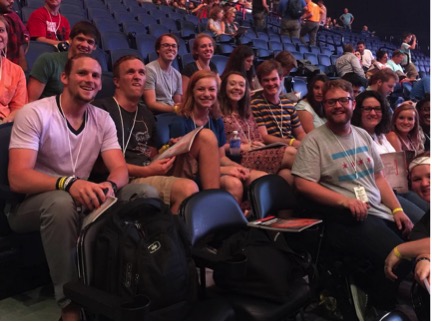
Chicago’s Transplant crew was ready for the first session of SEND Conference 2015 to start.

Chicago’s Transplant crew was ready for the first session of SEND Conference 2015 to start.

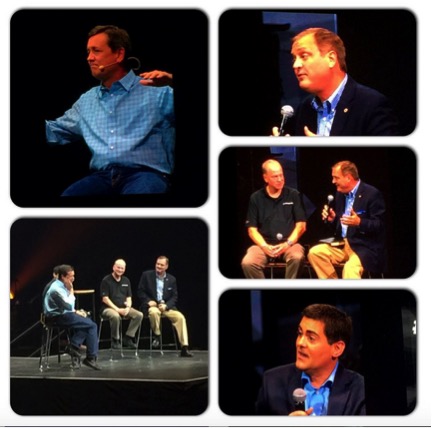
Russell Moore, Albert Mohler, Kevin Ezell, and Danny Akin talking about the benefits of the Southern Baptist Convention family.

Russell Moore, Albert Mohler, Kevin Ezell, and Danny Akin talking about the benefits of the Southern Baptist Convention family.

Is preaching passe?

Meredith Flynn —  August 6, 2015

COMMENTARY | Nathan Carter

Nathan_Carter_August4In his little book, “The Priority of Preaching,” Christopher Ash writes what every pastor has thought at some point.

“Is it really helping when we spend so much of our week laboring at the Word of God, preparing to preach it to the churches we serve…Is it worth slogging away preparing Sunday’s sermon with such a world of need outside?”

Maybe you are a pastor and you have doubted whether your preaching is really doing anything. Maybe you are a church member who sometimes falls asleep during sermons and you wonder if there is a better way of connecting with today’s postmodern culture. Is preaching a thing of the past?

We are far from the Puritan days when one minister apologized to his congregation for preaching a two-hour sermon and they all replied, “For God’s sake sir go on, go on!” During the era of the Baby Boomers, preaching in many churches became a casual talk on how biblical principles can address felt needs, bolstered by the use of multimedia technology.

Many Gen Xers and Millennials are now looking for new expressions of church, and the very idea of preaching is being re-imagined. Wouldn’t it be more authentic to have a dialogue about the Bible where everyone could share his or her own experiences and insights?

I define preaching as one-directional, verbal proclamation of God’s Word culminating in the gospel. And I still maintain that this is an absolutely essential practice for the church. Why? For one, we see it happening all over the Bible (i.e. Acts 10:33-44). That’s descriptive, not necessarily prescriptive, you might say. Well, it is also expressly commanded elsewhere (i.e. 2 Tim. 4:2).

But couldn’t the intent behind “preach the word” be fulfilled in other ways than one person talking at other people for an extended time? I certainly believe there are several different legitimate styles of preaching. But the method of preaching is critical.

We need times when we bite our tongues as we are confronted by the authority of God’s Word. In an age of relativism and rebellion against authority, it makes sense why we don’t want to sit under preaching. We don’t want doctors; we’d rather self-diagnose. The idea of a wiki-sermon that we all have a hand in constructing is much more appealing. But our great need is to hear, “Thus saith the Lord,” and let his external word rebuke us, call us to repent, make us ready to receive the message of the gospel, and then respond in faith and obedience.

Hearing a declaration of something that has happened, something to which you can’t contribute a thing but must respond to with either belief or disbelief, best comports with the gospel. Since there is a constant need to have the double-edged sword of God’s Word pierce our souls to expose our sinful hearts and then graciously present Christ to us in all his resplendent glory so that we can trust in him as our righteousness and healer, preaching will always be indispensable.

There is a place for small group discussions and seminars and life-on-life mentoring. But preaching is an essential element of the life and health of a church. The practice of preaching can be abused (when it becomes a chance to express one’s own ideas instead of expound a text), but that shouldn’t cause us to avoid its proper use. Some preachers are more gifted than others, but the mark of a mature believer is to be easily edified as long as the Word of God is being preached.

Charles Spurgeon said, “I do not look for any other means of converting men beyond the simple preaching of the gospel and the opening of men’s ears to hear it. The moment the Church of God shall despise the pulpit, God will despise her. It has been through the ministry that the Lord has always been pleased to revive and bless His Churches.”

May he do it again today!

Nathan Carter is pastor of Immanuel Baptist Church in Chicago.

THE BRIEFING | Meredith Flynn

The_Briefing

A bill to remove federal funding from Planned Parenthood failed to get the 60 votes it needed in the U.S. Senate Monday, but the issue likely to be back in the fall, USA Today reports.

The Southern Baptist Ethics and Religious Liberty Commission announced last week its endorsement the bill, which was introduced following the release of several videos showing Planned Parenthood employees discussing the sale of body parts from aborted babies.

And in this interview, Christianity Today senior news editor Bob Smietana talks to David Daleiden, the executive director of the pro-life organization behind the recent Planned Parenthood videos.


IRS address tax-exempt status in light of marriage ruling
The Commissioner of the Internal Revenue Service testified last week that Christian schools will not lose their tax-exempt status if they opposed same-sex marriages. But at least one U.S. Senator is skeptical of Commissioner John Koskinen’s use of the phrase “at this time.” Read the full story at ChristianPost.com.


Kasich’s faith rooted in tragedy
As the field for U.S. President grows more and more crowded, Americans are getting a look at the candidates’ personal faiths. Cathy Lynn Grossman of Religion News Service has compiled “5 Faith Facts” about several of those in the running, including Ohio Governor John Kasich, who told religious conservatives meeting in June that his faith was a “rabbit’s foot,” until his parents were killed by a drunk driver in 1987.

“I tore it all apart,” he said, according to the Columbus Dispatch, and re-built his faith. Kasich belongs to a congregation affiliated with the Anglican Church in North America.


Missionary doc details Ebola fight in book
Kent Brantly
, the doctor who contracted the Ebola virus last year while working as a missionary in Liberia, said he and his wife “didn’t have regrets” about serving overseas. “That’s what God called us to,” Brantly told The Christian Post. He and his wife, Amber, tell their story in the new book “Called for Life: How Loving Our Neighbor Led Us Into the Heart of the Ebola Epidemic.”


LifeWay relocation moves forward
While finalizing the sale of its facility, LifeWay Christian Resources of the Southern Baptist Convention is purchasing land to build a smaller building in downtown Nashville, Tenn. The organization’s offer to buy 1.5 acres one mile from its current location was accepted last month, Baptist Press reported. President Thom Rainer said the organization hopes to close on the new property early this fall, and complete the new building by late 2017.

When the organization began mulling the sale last year, spokesman Marty King said nearly one-third of the current facility was vacant or leased.


Christian critic picks 2015’s worthiest films (so far)
While there hasn’t yet been much to celebrate, movie-wise, says critic Phil Boatwright, he picks four relative bright spots (including recent Pixar blockbuster “Inside Out”).

Students at Youth Encounter 2014 huddle for prayer after a main session of the annual evangelism conference. Photo by Brooke Kicklighter

Students at Youth Encounter 2014 huddle for prayer after a main session of the annual evangelism conference. Photo by Brooke Kicklighter

HEARTLAND | Youth Encounter, the annual evangelism conference for junior high and high school students sponsored by the Illinois Baptist State Association, has a new look in 2015. Instead of one location, it’s in three. And the traditional post-Christmas date has been moved to October 11.

Changing patterns in youth culture and a decreasing number of attenders in recent years necessitated a re-launch of the Youth Encounter strategy, said Mark Emerson, IBSA’s associate executive director for the Church Resources Team. Noting the event’s rich heritage among Illinois Baptists, he said, “We are working to allow more students to have access to this event, while at the same time renewing its evangelistic purpose.

“Youth Encounter is more than just a concert; it is an event where pastors and student leaders can bring lost students to hear the gospel presented with the opportunity to respond to Christ. Not only are we praying that more churches will be involved with Youth Encounter this year, we are praying that hundreds of students will give their lives to Jesus.”

YE 2015 will take place in three cities: Country Club Hills in Chicagoland, Decatur and Mt. Vernon. The conferences share a purpose—inspiring students toward deeper devotion to Christ—but will welcome different speakers and musical guests:

North | Hillcrest Baptist, Country Club Hills
Hip-hop artist and St. Louis native FLAME will return to Youth Encounter after making his YE debut in 2014. Joining him at the Chicagoland site are singer/songwriter V.Rose and performance artist Marc Eckel. IBSA pastors from the area will lead in teaching at the northern location.

Central | Tabernacle Baptist, Decatur
Evangelist Clayton King is the featured speaker in Central Illinois. Bands Seventh Time Down and Remedy Drive will lead students in worship, along with artist Andy Raines.

South | Another YE returning guest, 321 Improv, will bring their comedy act to the southern location, joined by worship artists Jordan and Jessa Anderson, Shuree Rivera and The Great Romance. Evangelist and Liberty University Senior Vice President David Nasser is the guest speaker.

Each YE conference is 3-10 p.m., with dinner included. Until October 9, the cost is $25 per participant for churches affiliated with IBSA, and $30 for all others. Cost is $30 at the door.

For more information about Youth Encounter or to register, go to www.IBSA.org/YE2015.