Archives For May 31, 2014

O’Fallon, Ill. | An Illinois pastor has prescribed three goals – and one new project – for the next president of the Southern Baptist International Mission Board.

In a May 24 blog post, FBC O’Fallon Pastor Doug Munton said choosing who will replace current President Tom Elliff is “perhaps the most important decision that will be made in the Southern Baptist Convention for years to come.” Elliff, 70, asked IMB trustees in February to begin looking for his successor.

Munton said the next president should focus on making the IMB effective and efficient, and on providing the organization with energy. “Missionaries are great, but they can become discouraged,” he wrote. “Keep them focused on the life-giving energy of time spent with the Lord in daily devotions.  Remind them often of the joy of the Lord.”

Lastly, Munton asked the IMB’s next leader to begin an IMB Endowment of $20 billion. Harvard University has an endowment of more than $30 billion, he said, so why shouldn’t the Southern Baptist agency have a similar goal? “With all due respect to Harvard, our job is bigger and greater.”

The revenue stream would allow the IMB to send more missionaries and would serve as a buffer against a tumultuous market, he said. “Encourage every Southern Baptist to leave the IMB in their will,” Munton advised. “Thousands would respond to that plea. Thousands and thousands.”

The annual meeting of the Southern Baptist Convention is June 10-11 in Baltimore. Look for our coverage at ib2news.org and in the June 16 issue of the Illinois Baptist newspaper, online at http://ibonline.IBSA.org.

Candidates lead in varied contexts: Small church, city church, megachurch

Baltimore | With the Southern Baptist Convention’s annual meeting one week away, the election to succeed current President Fred Luter appears to be a three-candidate race:

Ronnie_FloydRonnie Floyd
Church:
Cross Church has four campuses in northwest Arkansas, and launched a site in Neosho, Mo. this Easter. According to the church’s website, more than 17,000 people have been baptized during Floyd’s 27-year tenure.

SBC service: He has chaired the SBC Executive Committee and led the Great Commission Resurgence Task Force. Most recently, Floyd organized national prayer meetings for Southern Baptist ministers.

Quotable: “It is obvious to me that we need a mighty, fresh manifestation of God’s presence in our lives personally, which I would call personal spiritual revival,” Floyd said in an interview with Midwestern Seminary President Jason Allen about the SBC presidency. “Our churches need that mighty manifestation of God’s presence through the life of the church – revival, revitalization, whatever you want to call it, refreshing winds of the Spirit. There is no question that the greatest need in American life is a spiritual awakening.”

Read the Baptist Press Q&A with Floyd here.

Dennis_KimDennis Manpoong Kim
Church: 
Global Mission Church of Greater Washington, a predominantly Korean congregation, is the largest church in the Baptist Convention of Maryland/Delaware.

SBC service: Kim is a past president of the Council of Korean Southern Baptist Churches in America, and recently served on a task force appointed by the North American Mission Board to
study the SBC’s declining baptisms.

Quotable: In his interview with Baptist Press, Moon outlined how he would call the SBC forward in fulfilling the Great Commission if he is elected president: “In a time when about 1,000 churches close their doors every year, I believe that the need of the hour is an evangelistic tool that is simple enough to train all church members, effective enough to ignite believers’ passion for evangelism and engaging enough to captivate the hearts of the present generation.”

Read the entire Baptist Press Q&A with Kim here.

Jared_MooreJared Moore
Church:
New Salem Baptist in Hustonville, Ky., is a church of about 60 members that Moore describes as a “loving, caring, godly group of people.” He served as a youth minister and pastor in Tennessee before moving to Kentucky.

SBC service: Moore currently is second vice president of the Southern Baptist Convention.

Quotable: “I want to represent Southern Baptists like the ones I serve on a daily basis who may not have the opportunity to attend the convention or serve at the convention level,” Moore wrote on his blog. Among his other reasons for running: promoting unity and the Cooperative Program.

“Apart from cooperating with other SBC churches through the Cooperative Program, our small church could not support as many ministries on our own,” Moore wrote. “I hope to encourage churches to begin, continue, or increase their support of the Cooperative Program.”

Read Moore’s Baptist Press Q&A here.

THE BRIEFING | Meredith Flynn

A California congregation voted May 18 to retain their pastor, Danny Cortez, who had announced three months earlier that he affirms same-sex lifestyles. The decision by New Heart Community Church in La Mirada, Ca., brings the Southern Baptist Convention to “a moment of unavoidable decision” just before its annual meeting in Baltimore, said Southern Seminary President Albert Mohler.

Cortez blogged May 29 on Patheos.com that New Heart will “formally peacefully separate” June 8, when a group affirming traditional church teachings about homosexuality leaves the congregation. The church took three months to study and pray over the issue after Cortez told them about his beliefs in February. Prior to Cortez’ confession to his church, his teenage son told him he was gay and posted a “coming out” video on social media sites.

The_BriefingIn May, the church voted to keep Cortez as pastor and become a “third way” church that stands in the middle ground between condoning and condemning same-sex relationships.

“So now, we will accept the LGBT community even though they may be in a relationship,” Cortez wrote on Patheos.com. “We will choose to remain the body of Christ and not cast judgment. We will work towards graceful dialogue in the midst of theological differences.”

Despite the church’s decision, “there is no third way,” Mohler said on his blog.

“A church will either believe and teach that same-sex behaviors and relationships on sinful, or it will affirm them. Eventually every congregation in America will make a public declaration of its position on this issue. It is just a matter of time (and for most churches, not much time) before every congregation in the nation faces this test.”

That New Heart’s decision is in conflict with The Baptist Faith & Message, the SBC’s statement of faith, could result in discussion and/or action when messengers gather in Baltimore.

“I am confident that the Southern Baptist Convention will act in accordance with its own convictions, confession of faith, and constitution when messengers to the Convention gather next week in Baltimore,” Mohler said.

“But every single evangelical congregation, denomination, mission agency, school, and institution had better be ready to face the same challenge, for it will come quickly, and often from an unexpected source. Once it comes, there is no middle ground, and no ‘third way.’”

Other news:

Poll: Most believe same-sex couples should be able to adopt
A new Gallup poll shows 63% of Americans believe same-sex couples should be allowed to adopt a child. The percentage of approval is higher than approval for same-sex marriage, which, according to another recent Gallup poll, is at 55%. Read more at Gallup.com.

Imprisoned pastor still sharing the Gospel
The wife of a U.S. pastor imprisoned in Iran says his sentence may be extended because he’s leading people to Christ. “I don’t see him [witnessing] as an act of defiance,” Naghmeh Abedini told Baptist Press about her husband, Saeed. “Knowing Saeed’s heart as a pastor, he’s seeing people in such a dark place…on death row for murders and rapes, and just seeing people who are in prison whose future is so dark. Knowing Saeed’s heart, I know that his heart was to give them the hope that he’s found in Christ that no one can take away, even in prison.”

Abedini, a U.S. citizen, was sentenced last year to eight years in prison for his involvement in the Iranian house church movement. He moved to the U.S. in 2005 and was arrested two years ago during a trip to build an orphanage in Iran. Read more at BPNews.net.

SBC leaders call for ‘renewed passion’ amid declining numbers
Southern Baptist churches reported more than 310,000 baptisms in 2013, but the total was 1.46% less than the previous year. The Annual Church Profile report, compiled by LifeWay Christian Resources in cooperation with Baptist state conventions, also showed declines in church membership (down 0.9%) and primary worship attendance (down 2.2% to 5.8 million worshipers).

“I am grieved we are clearly losing our evangelistic effectiveness,” said Thom S. Rainer, president of LifeWay Christian Resources. “I continue to pray for revival and a renewed passion for the Great Commission in our churches. May God renew all of us, including me, with a greater heart for the lost.” Read more at BPNews.net.

A Southern Baptist task force addressed declining baptisms in a report released in May, ahead of the denomination’s June meeting in Baltimore. Read their report here.

Viewing habits: What do we all have in common?
Sheldon Cooper, at least according to research by the Barna Group. Their survey found “The Big Bang Theory” is the most commonly watched show among American adults (30%) and the Millenial generation (31%). And with 23% it was #2 on the list for practicing Christians. Among that group, Sheldon, Penny and the gang lost out by two percentage points to “NCIS.” Read more at Barna.org.

BREAKING_NEWSNEWS | Two Southern Baptist leaders have submitted a resolution on transgender identity that could be considered June 10-11 by messengers at the SBC’s annual meeting in Baltimore.

“You know you’re a cultural tipping-point when both Newsweek and Time magazine run cover stories on your cause within the span of a single year,” wrote Denny Burk, who co-authored the resolution. “Such is the case with transgender, which both Newsweek and Time have declared to be the next phase of the gay rights revolution.”

Burk, a professor at Boyce College in Louisville, Ky., co-wrote the resolution with Andrew Walker, director of policy studies at the Southern Baptist Ethics and Religious Liberty Commission. The SBC Resolutions Committee will consider the measure prior to the annual meeting and decide whether to bring it (or an amended version) to the Convention for a vote.

On his blog, Burk outlined several reasons for the resolution: The American Psychiatric Association removed transgender from its list of disorders last year. Some school systems now allow students to use opposite-gender restrooms and locker rooms. And, Burk wrote, parents, medical professionals, and counselors are increasingly open to treatment – including sex reassignment surgery – that helps children and others identify with the gender they feel, rather than the one with which they were born.

“…Christians are going to have to have to meet the transgender challenge as a matter of great pastoral and missional urgency,” Burk wrote. “We must be clear about what the Bible teaches and be faithful to live that message out in a culture that is increasingly out of step with biblical norms.”

The full text of the proposed resolution is available at DennyBurk.com (scroll to the bottom of the post). It asks SBC voters to affirm several statements, including:

  • That “perceived conflict between their biological sex and their gender identity” is one way some people experience the brokenness sin brought into the world.
  • God’s design is that “gender identity should be determined by biological sex and not by one’s self-perception.”
  • Transgender persons should be invited to “trust in Christ and to experience renewal in the gospel.”
  • “That we regard our transgender neighbors as image-bearers of almighty God and therefore that we condemn acts of abuse or bullying committed against them.”
  • Opposition to efforts to bring biological sex in line with a different gender identity.
  • “Our love for the gospel and urgency for the Great Commission must include declaring the whole counsel of God, including what God’s word teaches about God’s design for us as male and female persons created in His image and for His glory.”

Illinois Governor Patrick Quinn is expected to attend a same-sex marriage ceremony today at the Museum of Contemporary Art in Chicago.

Same-sex marriage became legal throughout the entire state of Illinois yesterday. Although it was a Sunday, some county clerks’ offices opened to allow couples to get their licenses.

According to the Chicago Tribune, the church, Unity in Chicago located in Rogers Park, held a group wedding ceremony for 40 couples, same-sex and straight, Sunday evening.

David Viggiano, co-organizer of the event told the Tribune, “Now that we have gay marriage we need to push past labeling any marriages as gay, lesbian or straight and talk about marriage equality. Unity’s thought is that there is one God and many paths to that. One marriage, many paths to that.”

Governor Quinn issued a statement Sunday declaring, “All couples across Illinois can now receive the rights and protections under the sacred vow of marriage. The Land of Lincoln has always been a place to embrace all people and today we stand as an example for the rest of the nation.”

Couples already joined by civil unions can have them converted to marriages backdated to the start of the civil union or have a new marriage ceremony date issued.

The Illinois General Assembly voted Nov. 5, 2013 to legalize marriage between same-sex partners effective Jun 1, 2014, but some counties began issuing licenses in February after a Cook County judge allowed a terminally ill woman to marry her partner four months before the official start date.  Illinois Attorney General Lisa Madigan then left it up to each individual county clerk as to when they would begin issuing licenses. The group Equality Illinois estimates around 1,300 couples have already married since the February ruling.

HEARTLAND | Eric Reed

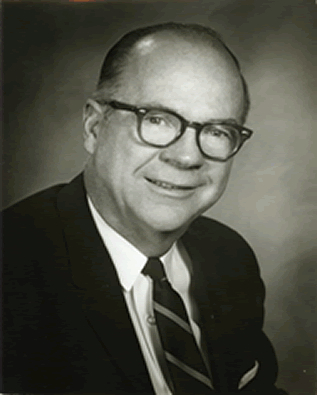
Owen Cooper was a prophet. “We live in an age when it is popular to be tolerant and it is a stigma to be called intolerant,” the chemical engineer from Mississippi preached to messengers at the Southern Baptist Convention. “Tolerance of a half truth soon leads to tolerance of an untruth and then to tolerance of an error,” he warned. “Social and political pressures in the name of tolerance are quenching the flame of missionary zeal.”

Owen_Cooper_0616

Photo from Mississippi Historical Society website

Cooper was describing his own time, but his convention sermon delivered in Atlantic City in 1964 has proven an apt description of our time.

Among Cooper’s insights: Christianity is losing ground in the U.S., world population is growing faster than the Christian faith, and Islam is on the rise; baptisms in SBC churches are declining, more ministry is focused on places where Southern Baptists are strong than to regions and nations where evangelical witness is weak, and the word “witness” itself is almost lost from our vocabulary – and our activity.

“Southern Baptists are losing their mission zeal because of a growing feeling among many theologians and the laity that, after all, man is not lost.” He cited contemporary articles declaring the beginning of “the post-Christian era.”

In 1964? Really?

“Perhaps it is well to ask ourselves the question, ‘What is wrong?’” Cooper said. “‘What is the trouble? Why the diminution of spiritual momentum in the world, and in our country, and in our denomination?’”

In the two decades after World War 2, the Southern Baptist Convention grew rapidly. An emphasis on Sunday school and evangelism that reached the burgeoning families of returning GIs swelled the ranks. The SBC eclipsed the mainline denominations that peaked in 1964 and started their downward spiral. Even as the SBC rallied for growth in membership, Cooper sounded an alarm. Ten million Southern Baptists were on the church rolls, but three million of them couldn’t be accounted for. Baptisms flatlined.

The numbers are no better today. With 15.7 million members officially, our churches report only 5.8 million in worship on any given Sunday. And baptisms are down for seven out of the last nine years, after 40-plus years mostly plateaued. We peaked in 1972.

“We may find ourselves somewhat in the position occupied by Gideon when his followers included…those who follow the crowd as well as the earnest and dedicated,” Cooper said. Apparently some thinning of the herd at the watering hole wouldn’t hurt. “It’s too easy to join a Baptist church,” he stated.

But more than the incipient decline, Cooper decried the loss of commitment to evangelism. “The Southern Baptist Convention was organized for the purpose of ‘directing the energies of the whole denomination for the propagation of the Gospel.’ Witnessing was acknowledged as our principle objective; it must continue to be such.”

Cooper, a layman, was very public about his faith. (Even in 1964, he said personal witnessing would be considered “intolerant, bigoted, and improper” in many circles.) One of only two laymen elected president of the SBC, he served two terms starting in 1973.

In the 1964 sermon, Cooper called on messengers to increase Cooperative Program giving. In 1962, he said, citing the most recent statistics available, 10% of receipts by Southern Baptist churches went to the CP missions and 8% to state missions; today CP giving is down to 5.4% per church, on average. And he called for more money, missionaries, and church planters in distant and unreached parts of the U.S.

But mostly Cooper called for a return to witnessing: “The challenges and problems faced by Southern Baptists, yea even in Christianity for that matter, seem overwhelming when viewed in their totality. Yet broken into their component parts, it becomes much simpler. As Southern Baptists, as Christians, our task is to ‘win them one by one.’

“Ask men to witness,” he urged. “At the time a person joins the church, he should understand that part of his responsibility is to witness, and opportunities should be provided for Christian witness…Without the primacy of missions and witnessing, the church is without true purpose,” Cooper said, “the pulpit is without power and the pew is without potency.”

Eric Reed found Owen Cooper’s 1964 convention sermon while researching the SBC for the Illinois Baptist series B-101. Cooper, from Yazoo City, Mississippi, was a member of the SBC Executive Committee at the time he delivered it.