Archives For February 28, 2014

Thom_Rainer_blog_calloutCOMMENTARY | Thom Rainer

Editor’s note: Thom Rainer is president and CEO of LifeWay Christian Resources. This article was originally published Feb. 12 at ThomRainer.com.

Many churches are busy, probably too busy. Church calendars fill quickly with a myriad of programs and activities. While no individual activity may be problematic, the presence of so many options can be.

An activity-driven church is a congregation whose corporate view is that busier equals better. More activities, from this perspective, mean a healthier church. The reality is that churches who base their health on their busyness already have several problems. Allow
me to elaborate on seven of those challenges:

1. Activity is not biblical purpose. Certainly some activities can move a congregation toward fulfilling her biblical purposes. But busyness per se should not be a goal of a healthy congregation.

2. Busyness can take us away from connecting with other believers and non-believers. It is sadly ironic that local churches are often a primary reason we do not connect on a regular basis with people in our community and in the world. We are too busy “doing church.”

3. An activity-driven church often is not strategic in its ministries. Leaders do not think about what is best; they often just think about what is next on the activity list.

4. A congregation that is too busy can hurt families. Sadly, some church members are so busy with their churches that they neglect their families. Our churches should be about strengthening families, not pulling them apart.

5. An activity-driven church often has no presence in the community. Christians should be Christ’s presence in the communities their churches serve. Some Christians are just too busy doing church activities to have an incarnational presence in the community.

6. Activity-driven churches tend to have “siloed” ministries. So the student ministry plans activities that conflict with the children’s ministries that conflict with the senior adult ministries, and so on. Instead of all the ministries and activities working together for a strategic purpose, they tend to work only for their particular areas.

7. Churches that focus on activities tend to practice poor stewardship. Many of the activities are not necessary. Some are redundant. Others are sacred cows. Ministry effectiveness can often be enhanced with less instead of more.

Many of our churches have traded effectiveness for busyness. Good use of the resources God has given us demands that we rethink all we are asking our members to do in our churches. We really need more simple churches. Now that’s a novel concept.

browniesTHE BRIEFING | Meredith Flynn

A new Barna study shows 70% of American adults (and 72% of Christians) are aware of the Lenten tradition of giving something up in order to draw closer to God. But only 17% plan to observe Lenten sacrifice this year. Here’s Barna’s list of what they’re giving up:

88% of adults plan to fast from food or drink:

  • Chocolate (30%)
  • Meat (28%)
  • Sugar (28%)
  • Soda drinks (26%)
  • Alcohol (24%)
  • Fruit (14%)
  • Butter or cream (11%)

31% will give up some form of technology:

  • Social networks (16%)
  • Smartphones (13%)
  • TV (11%)
  • Video games (10%)
  • Movies (9%)
  • Internet (9%)

Barna found the millenial generation (born after 1980) is the least likely to know about Lent, but millenials are more likely than other age groups to fast during the season. Read more at Barna.org.

Other news:

Prayer ‘more popular than ever’ says Reader’s Digest
“Organized religion may be losing members, but prayer is more popular than ever,” according to an article in the April issue of Reader’s Digest. The story points to research in the 2010 General Social Survey, which found 86% of Americans pray and 56.7% do so at least once a day. But how they’re praying may look different. Writer Lise Funderburg cites several examples of how the prayer umbrella is widening, including sidewalk chalk prayers outside a Presbyterian church in San Francisco, and the use of Twitter to start prayer movements like #pray4philippines.

The Illinois Baptist examined prayer and spiritual awakening in a January cover story. And Southern Baptist leaders have met together twice recently to pray for individual and corporate revival. Read more at BPNews.net.

Menlo Park Presbyterian leaves denomination over doctrinal, evangelistic differences
A San Francisco church “increasingly out of alignment” with their denomination has voted to sever ties with the Presbyterian Church (USA). Earlier this month, 93% of members at the 4,000-member Menlo Park Presbyterian approved the move, Baptist Press reports. The church, led by Pastor John Ortberg, has for years referred to itself as a “Jesus church,” according to a statement by church leaders. “We believe that God has expressed himself uniquely in his son Jesus, who lived, taught, died and rose again for our sakes.”

BP reports a 2011 survey of PCUSA pastors found only 41% agreed with the statement, “Only followers of Jesus Christ can be saved.”

The decision will cost Menlo Park $9 million because the denomination owns its property. “This points to the fact that theology matters,” Southern Seminary President Albert Mohler said of the decision. “Keeping the faith is worth infinitely more than $9 million.” Read more at BPNews.net.

‘Son of God’ in top 5 over first two weekends
The movie built from last year’s “The Bible” miniseries was the second-highest grossing movie during its opening weekend, and fell to #5 after its second. Some had thought “Son of God” would reach the numbers posted by 2004’s “The Passion of Christ”, The Christian Post reports, but the new movie’s grosses so far aren’t half of what “The Passion” took in during its debut weekend. Read more at ChristianPost.com.

More Africa stories
Five volunteers from Illinois recently spent a week in Guinea, telling true stories from the Bible to people who had never heard them. For people in the West African nation to know Jesus, “it can only be a move of God,” said one mission volunteer. Read more about their team’s experiences in the current issue of the Illinois Baptist.

Do you know Carol?

Meredith Flynn —  March 10, 2014

Guinea_boats_blogHEARTLAND | Meredith Flynn

Mark Emerson had spent several hours on a boat off the coast of Guinea, looking for the Mbotini people group. It was getting late, and the group would eventually have to turn around. But Emerson had a good reason to find the Mbotini.

They were Carol Stewart’s people.

Before his trip in January, Emerson talked to Stewart about the people group she and her church adopted several years ago. Stewart, a member of Lincoln Avenue Baptist in Jacksonville, Ill., had visited Africa’s west coast. But still, it was surprising how many times
Emerson heard the question:

“Do you know Carol?”

From two missionaries and a local pastor, on the other side of the world. “This Illinois Baptist is known in Guinea because she went there in representation of her church,” Emerson said.

He’s hoping others will follow her example. The International Mission Board is calling congregations to be “engaging churches” who will adopt an unreached, unengaged people
group (UUPG) and send small teams several times a year.

Reaching unreached people groups will require a long-term investment. “This was my first mission trip I’d ever participated in that we didn’t win anyone to the Lord,” Emerson said of
his time in Guinea. Referencing William Carey, he said, “We forget that these hall of fame missionaries of the past spent years before they saw anyone come to the Lord.”

When he joined IBSA’s missions team, Emerson said he had a goal to get as many Illinois Baptists to the mission field as possible. Now, “I’m thinking we need to get the Gospel
where it’s not.”

Read more Africa stories in the newest issue of the Illinois Baptist newspaper, online here.

Ronnie_Floyd_blogCOMMENTARY | Meredith Flynn

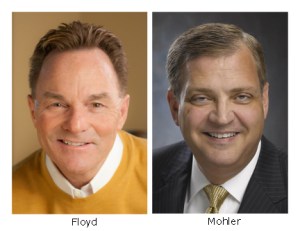
Ronnie Floyd is the first candidate to toss his hat in the ring for the next Southern Baptist Convention president. Although, in keeping with tradition, Floyd’s nominator actually did
the tossing: Southern Seminary President Al Mohler announced last month he will nominate Floyd for the convention’s top elected post at the annual meeting in Baltimore.

No one else has allowed his name to be brought forth so far. This unusual across-the-aisle nomination, and a potential single-candidate race, has several implications for Southern
Baptists:

1. The Calvinism debate doesn’t have to result in a hostile takeover for either camp. Mohler’s well-known and well-documented theological perspective is different from what is known of Floyd’s. In an open letter announcing the nomination, the seminary president and leading Reformed thinker lauded Floyd as a unifier. He specifically mentioned the theology talk that has dominated conversation over the past several years, pointing to Floyd as a leader who can move the SBC toward a common goal of reaching the world for Christ.

Mohler’s nomination of Floyd is likely the kind of unifying event SBC Executive Committee President Frank Page had in mind when he appointed an advisory committee to study how the two “sides” can work together.

2. The generation gap may be narrowing. Mohler has the ear of many young Baptists, as a seminary president and proponent of Reformed theology, whose adherents tend to skew younger. He is in the unique position of being able to steer 30-somethings toward active participation in Southern Baptist life, without being a 30-something himself. His nomination
of Floyd indicates he’s willing to guide young leaders away from a concentration on divisive issues and toward goals we can work on together.

3. With revival as the goal, Baptists are ready to rally around the Great Commission. Current SBC President Fred Luter made revival and spiritual awakening his platform during his two years of leadership, aiming to stem the decline in baptisms. “Fred Luter has led us so well as he has unified and inspired us,” Mohler wrote in his nomination letter. “Our next president needs to unify and inspire us for our next steps together.”

Floyd chaired the Great Commission Resurgence Task Force, which presented a comprehensive strategy in 2010 to push funding to areas of the country (and world) that are less churched and often more urban. More recently, he organized two prayer gatherings to guide pastors and leaders toward personal and corporate revival.

“Pastors believe the Great Commission can be fulfilled in their generation,” Floyd blogged after the prayer meeting in Atlanta. If he’s elected in June, he’ll be charged with communicating that vision to a multigenerational, theologically diverse denomination.

Meredith Flynn is managing editor of the Illinois Baptist.

The_BriefingTHE BRIEFING | Meredith Flynn

Amid much debate, Gov. Jan Brewer vetoed a bill Feb. 28 that would have allowed business owners in Arizona to deny services to same-sex couples based on their religious beliefs. New York Times columnist Ross Douthat wrote over the weekend that media coverage of the bill could signal that with the marriage battle a foregone conclusion, Christians will be increasingly marginalized for their beliefs.

…”[S]uch bills have been seen, in the past, as a way for religious conservatives to negotiate surrender – to accept same-sex marriage’s inevitability while carving out protections for dissent,” wrote Douthat, a Christian. “But now, apparently, the official line is that you bigots don’t get to negotiate anymore.

“Which has a certain bracing logic. If your only goal is ensuring that support for traditional marriage diminishes as rapidly as possible, applying constant pressure to religious individuals and institutions will probably do the job. Already, my fellow Christians are divided over these issues, and we’ll be more divided the more pressure we face.”

Christian leaders debated the Arizona bill prior to Brewer’s veto, while Michigan pastor Kevin DeYoung found counsel in the Book of Revelation. Blogging at thegospelcoalition.org, he recommended Christians look at Jesus’ letters to several churches who were “too cozy with the culture.”

“Granted, the issue in Asia Minor was not baking cakes for same-sex ceremonies,” wrote DeYoung. “We shouldn’t think Revelation 2-3 was written to solve our controversies. But we shouldn’t assume they have nothing to do with our controversies either. High pressure social obligations, rationalizing participation as only an empty gesture, popular teachers urging permissiveness, the threat of social and economic ostracism – sounds familiar. Maybe our problems aren’t so new.”

Other news:

Disney and Scouts face offThe Christian Post reports Disney has told Boy Scouts of America they will withdraw funding unless the organization allows gay troop leaders. Through Disney’s VoluntEARS program, employees can earn cash donations for non-profits they choose, but Boy Scouts will no longer be eligible beginning in 2015 unless the current policy changes. Boy Scouts voted last year to allow openly gay members, but kept its ban on gay leaders. Read more at ChristianPost.com.

Elliff asks IMB Board to find successor
Tom Elliff, president of the Southern Baptist International Mission Board since 2011, asked trustees meeting in February to begin looking for his successor. “[God’s] telling me that this is the time to leave and that if I will obey Him and ask the Board of Trustees to appoint a search team … that is the surest way to ensure a smooth transition.”

He added, “He didn’t say resign and I’m definitely not going to retire, but I do believe that the board needs to be looking for the successor and the minute they find that man…I need to join the ranks of all the other people who are holding up his hand and praying for him.”

Elliff, 70, was elected IMB President in 2011. He has said he will stay in the post until the next leader is named. Read more at BPNews.net.

Former Union Pres. Dockery to lead divinity school in Chicagoland
David Dockery has been unanimously elected as the new president of Trinity Evangelical Divinity School in Deerfield, Ill. “We are overwhelmingly grateful to God for the invitation from the Trinity Board to serve the students, staff, faculty and various institutional constituencies in the days ahead,” said Dockery, who recently transitioned out of an 18-year presidency at Union University in Jackson, Tenn. Read the full story at BPNews.net.

Noah’s pros and cons
Daunted by early reviews of the upcoming “Noah” movie? Check out EdStetzer.com for Jerry Johnson’s lists of the film’s positives (follows the basic plot from the Bible) and negatives (the main character doesn’t ring true). Johnson, president and CEO of National Religious Broadcasters, will also post on the movie’s applications for Christians and for Hollywood.

Nate_Adams_blog_callout_3HEARTLAND | Nate Adams

I’ve recently found myself in several different settings where I have been asked to help clarify what Baptists believe, and how those beliefs may be distinct or different from those of other groups. Sometimes the question comes from Christians of another faith background. Sometimes it’s from a non-Christian who wants to understand if his or her perception is accurate. Occasionally, those from a different Baptist denomination simply want to understand why all Baptists aren’t alike.

I have to admit, dialoguing with that latter group sometimes has made me wonder if we Baptists aren’t too quick to stand apart from one another, or to divide into different groups over relatively minor issues. But in most cases, looking for the reasons that we stand apart as Baptists makes me glad that we do.

Late last year, my more frequent conversations along these lines led me to set aside 18 weeks of our weekly chapel at the IBSA building, and to devote one week to each of the articles in The Baptist Faith & Message. We only have 30-45 minutes for chapel, which includes worship and prayer. So we did not do an in-depth study. But each week, I asked the staff to look at a different article from The Baptist Faith & Message, and to ask with me, “What is distinct here? How are Southern Baptists different from other groups, even other conservative, Christian groups?”

Our staff agreed it was a helpful and enlightening exercise. Often we found ourselves saying, “Well, many Christians believe that, or certainly most conservative or evangelical Christians would say something similar to that.” But every week, on almost every doctrinal topic, we also found ourselves identifying distinct beliefs or practices that make our Baptist faith and message meaningfully unique.

After the chapel series was over, I sat down with my notes and jotted my own personal summary of the Baptist beliefs that, to me, seem to differentiate Baptists from others. This list will help me summarize our Baptist identity when I am asked to do so. And, with great love and respect for my many Christian and evangelical friends from other denominations, these are the reasons I will always look for a Baptist church when I move to a new town, or when I choose to declare a doctrinal identity.

My list didn’t simply include a high view of Scripture, or faith in Jesus as the only way to salvation, or a literal resurrection and second coming, because many Christians share those beliefs. But it did include things like believer’s baptism, by immersion and symbolic. It included local church autonomy and congregational governance, combined with passionate, organized cooperation in missions. And it included belief in eternal security, biblical marriage, and personal responsibility for evangelism.

This rich discussion of “What does it mean to be Baptist, and does it really matter?” has also contributed to the creation of a new feature, beginning in this issue of the Illinois Baptist. You will find it on pages 9 and 10. This new “Baptist 101” section will help clarify and reinforce what it means today to be Baptist, not just doctrinally, but also in cooperative missions endeavors and practical church matters. In fact, I hope it will help all of us who read the Illinois Baptist become more articulate proponents of Baptist, evangelical, Christian faith.

Of course the autonomous nature of Baptist churches and people makes it impossible, even undesirable, to try and paint everyone with the same broad stroke. Baptists are a diverse group! But while we are not uniform, we are strangely, almost miraculously, unified. Our best understanding of the Bible has led us to stand, with humility and respect for others I trust, on core Baptist beliefs and practices. If we believe these are important enough to protect and
preserve for our children and grandchildren, then we must continue to understand them and articulate them for others. Across the centuries, and I believe now and into the future, Baptist faith matters.

Nate Adams is executive director of the Illinois Baptist State Association.