Archives For November 30, 1999

Editor’s note: This is part 2 of the Illinois Baptist’s coverage of a recent summit hosted by the Ethics and Religious Liberty Commission on racial reconciliation and the gospel. Read part 1 here.

Layout 1

Read the April 6 edition of the Illinois Baptist at http://ibonline.IBSA.org.

NEWS | If Southern Baptists are to be serious about Jesus’ Great Commission to make disciples of all peoples, said historian Matt Hall, they need to honestly think through where they’ve come from. Hall, Southern Seminary’s vice president for academic services, spoke in a video message about the SBC’s history with slavery, racism, and segregation during a March summit hosted by the Ethics and Religious Liberty Commission on racial reconciliation and the gospel. (The Convention was formed over a divide between Baptists in the North and those in the South who wanted to continue owning slaves.)

Hall also led one of the summit’s panel discussions, joined onstage by Moore, Philadelphia pastor K. Marshall Williams, SBC Executive Committee President Frank Page, and past SBC President Fred Luter.

Understanding the SBC’s past ought to inform how we address racial issues now, Moore said. The divide over slavery “really was a justification for evil and for wickedness,” he said.

“Which, to me, ought to cause us not so much to look back and say, ‘Weren’t they evil and weren’t they wrong?’ as much as it ought to cause us to look back and to say, ‘Look at these people who knew their Bibles, and who were preaching their Bibles, and who were trying to gather up money for world missions, and yet were not able to see this glaring and wicked sin and unrighteousness and injustice that they were part of.’

“That ought to not give us a sense of our superiority to them; it ought to give us a sense of humility to say, ‘If these people who knew their Bibles like this, could get this that wrong on an issue that is so basic to what Scripture is teaching, then we need the mercy and the power of God.’”

IBSA African American Church Planting Strategist Ed Jones has faced the obstacle of the SBC’s history, he said. Some African Americans have told him, “I don’t necessarily want to be part of the Southern Baptist Convention because of its past,” he told the Illinois Baptist during the summit. The Nashville meeting was an opportunity to tackle those issues head-on and bring things into the open.

Luter said the Convention’s history resulted in one question asked by every person who interviewed him in the months before his election: Why would a black man want to be president of the SBC? Frankly, he didn’t know much about the Convention’s history when he went from street preacher to pastoring New Orleans’ Franklin Avenue Baptist Church almost 30 years ago. A couple of years into his pastorate, several of his older church members suggested Franklin Avenue leave the SBC.

“…There’s nothing we can do about our past,” was Luter’s response. “But there’s a whole lot we can do about our future.”

Luter was on the SBC Resolutions Committee that in 1995 proposed a resolution adopted by Convention messengers apologizing “to all African-Americans for condoning and/or perpetuating individual and systemic racism in our lifetime,” and repenting “of racism of which we have been guilty, whether consciously or unconsciously.”

The applause and tears that accompanied his election as SBC president made June 19, 2012, “one of the greatest hours in the life of the Southern Baptist Convention,” Luter said as people in the Nashville auditorium clapped too. “My only concern is that hopefully it’s not the last time.”

“That’s where the real test is,” said Moore. “We’ve got the pictures of the presidents of the Southern Baptist Convention over there. Let’s come back in 20 years and if Fred Luter is an island in a sea of middle-aged white guys, that’s means that we have not been where we need to be.”

Can we keep the ‘beast feast’?
H.B. Charles was in the middle of a potential church merger when he was asked that question about a long-held tradition. Charles’ largely African-American church, Shiloh Metropolitan Baptist in Jacksonville, Fla., was considering combining with largely Anglo church across town. One member of that congregation was most concerned with whether Charles as pastor would let them keep their annual wild game dinner and evangelistic outreach, known as the “beast feast.”

“He looked at me and said, ‘Pastor, I know you’ll agree with me, that if one redneck comes to Jesus, it’s worth it all.’ And in that moment,” Charles said, “I just had a feeling everything was going to be all right.”

The summit’s lightest and most practical moments came when practitioners like Charles explained what racial reconciliation looks like in a church setting. Josh Smith, pastor of MacArthur Boulevard Baptist Church in Irving, Tex., experienced a similar would-be culture clash when a woman at his increasingly diverse church brought a tambourine to play during worship, and during his sermon.

Smith and his team decided the next day they would allow the tambourine playing during the worship, but not during the message. He explained their thoughts to the woman, who’s still at the church six years later. “It was a lot of those hard conversations,” Smith said of the church’s transition to be more diverse, “and I just felt like it was not as much from the pulpit as interpersonal conversations.”

Sometimes, unity is a matter to preach about, as Adron Robinson found when he became pastor of Hillcrest Baptist Church in Country Club Hills. Robinson, who attended the ERLC summit, said his first sermon series was on forgiveness, because the church had recently experienced a difficult time in its history when he arrived almost six years ago.

Hillcrest’s community is largely African American, Robinson said, and his church currently reflects their neighborhood. But during the summit, he said he was wrestling with one of the conversations happening onstage: Is it best for churches to reflect their communities, even if those communities are predominantly one ethnicity?

“I’m good with the fact that our church reflects our community, but I’m also wondering, Is that enough? Does a church need to look more like heaven?

“There’s some ease…some accomplishment in the fact that we look like our community, but I also think that there’s more for us to do, that the church needs to be more multi-cultural, more multi-ethnic,” Robinson said. He also sees a need for more unity between churches.

“We’re cordial and we speak, but there’s not really true fellowship,” Robinson said of some African-American and Anglo Southern Baptist congregations. “So, that’s been an issue, and I think it’s an issue on both sides. [I don’t think] that I’ve done everything that I can do to encourage that either.

“This conference has helped me see the need for communication, for us to sit down, share a meal, and actually build a better relationship, so that we can be the family that God has called us to be.”

One Baptist leader says Scripture’s case for cooperation is the most compelling reason to work together.

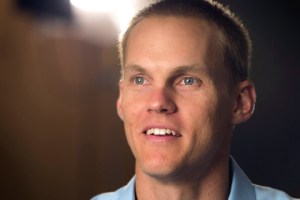
Micah_Fries_blog“My entire life growing up, what I heard about the Cooperative Program was, ‘give to it because it works,’” said Micah Fries (left), vice president of LifeWay Research.

Indeed, historical evidence supports it—CP does work. Southern Baptists’ main method of supporting missions and ministry here and around the world, will turn 100 in 10 years, and has helped mobilize one of the largest missionary forces in the world.

Last year, Baptists gave more than $186 million through the CP Allocation Budget to send and support church planters in rural America and the country’s largest cities, and to get the gospel to places and people around the world that have never heard it. At a meeting of the SBC Executive Committee last year, CEO Frank Page called CP the best way to “concurrently, consistently and, yes, completely fulfill Acts 1:8 as a church body. Through that, you’re involved in missions and ministries all over the world, all the time.”

But the average percentage churches give through CP has fallen over the years, from 10.7% in 1982, to less than 5.5% the last few years.

In this climate of decline when it comes to cooperative engagement, there is a better, more compelling reason to work together than to do so “because it works,” Fries said during a breakout session at the recent Midwest Leadership Summit in Springfield, Ill. He argued for a theological foundation, rather than pragmatic justification.

“…I want to plead with you to go back to your churches and plead with your churches, go back to your associations and your state conventions and plead with them to be faithful at partnership mission, but not because it works. But because the Bible tells me so.”

A better rationale
Our need for a biblical foundation for cooperation, Fries said, starts with characteristics we have that are specifically human, and specifically American. In our consumer-driven culture, most people shop for churches like they shop for blue jeans. Where can I get the best product for the lowest cost? If the personal price is too high, they’ll look elsewhere.

That consumerism, along with pride, independence, and the valuing of perception over reality, runs counter to the ideas of community and cooperative engagement.

“…When you and I call for community in the context of the local church, and cooperation or collaboration between local churches, we need to understand that what we’re calling for is a radically counter-cultural identity,” Fries said. “It strips away the core of who we are, and calls us to be like Jesus.

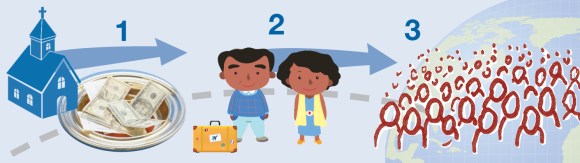
CP charts are complicated, Fries said, even for those who have long understood the system. “Stop making it so confusing for people.” “That’s what the Cooperative Program does," Fries said.

CP charts are complicated, Fries said, even for those who have long understood the system. “Stop making it so confusing for people. You put money in the plate, money goes to a missionary, missionary tells people about Jesus. That’s what the Cooperative Program does.”


“This is challenging. This is why it’s not enough to say, ‘We need to give to the Cooperative Program because it works.’ Because ‘it works’ is not a compelling enough reason to deny the core of who we are.

“Because it makes us to be like Jesus, because it helps to advance the gospel, because it helps to glorify God; those are compelling reasons to engage in counter-cultural activity.”

Younger Baptists are looking for more than pragmatic justification too, Fries said. The generation raised after the Conservative Resurgence spends more time thinking about what the Bible actually says, than arguing its truth. “So, you’re not going to compel them with pragmatic arguments, it’s going to have to a biblical rich, theologically rooted argument.”

Toward gospel advance
“Without a doubt, the high calling and common cause that unites diverse Baptist churches in cooperation is the Great Commission of Jesus to make disciples of all the world’s peoples,” IBSA Executive Director Nate Adams wrote for Resource magazine last year. “Wherever else Baptists may disagree, we are agreed on the priority of advancing the gospel, both across the street and around the world.”

CP also helps involve different kinds of churches in that mission, Page noted during the Midwest Leadership Summit. The SBC is a convention of small churches, including many ethnic congregations. “The Cooperative Program levels the playing field so everyone has opportunity to bring worshipers to God.”

Ultimately, biblical cooperation leads to an advanced gospel, which is “the compelling apologetic for collaborative mission,” Fries said. Choosing for the gospel to go forward through believers wasn’t the most pragmatic choice for God to make, he said; rather, he designed it that way because it brings him glory and brings us joy.

Read more from the Feb. 2 issue of the Illinois Baptist, online at http://ibonline.IBSA.org.

COMMENTARY | Meredith Flynn

“Great Awakening: Clear Agreement, Visible Union, Extraordinary Prayer.” The theme for the 2015 Southern Baptist Convention won’t fit easily on a T-shirt. But it’s a clear prescription for the kind of spiritual awakening Ronnie Floyd has been talking about since his election as SBC President.

SBC Annual Mtg logo

Theme art for the 2015 Southern Baptist Convention

The complex rallying cry also is a departure from the themes chosen over the past several years. While past presidents have certainly called Baptists to greater engagement in evangelism and missions, this is the first year in recent memory that a leader has set so direct a path to a common goal.

Floyd, pastor of Cross Church in northwest Arkansas, is uniquely situated to call Baptists to prayer. He’s written books on prayer, fasting and revival. He gathered leaders for regional and national meetings devoted to praying together. He is also leading the SBC at a time when churches are baptizing fewer people and facing more pushback from the culture.

When asked in a recent media conference call what he’s learned in his first few months as president, Floyd said he has found that Southern Baptists are optimistic about the future of the denomination.

“I have also found that while we have our challenges, people are very hopeful that we’re gonna find a way to make things happen together.”

Perhaps that’s why “clear agreement” and “visible union” are two prongs in Floyd’s theme: He’s hearing that Southern Baptists want to move forward as a denomination, despite decline or differing theology. “Southern Baptists need to be together,” he told media, referencing why he wants as many people as possible to be at the SBC Annual Meeting next June.

The Call to Columbus might be a difficult sell—it’s an out-of-the-way convention city for many Baptists, it’s an election “off-year,” and there’s no Disney World or White House anywhere nearby.

But Floyd’s call to “extraordinary prayer”—something he has trumpeted since his election—is intriguing. He drew the phrase from a Jonathan Edwards sermon whose title rivals that of Floyd’s new e-book in length. In “Pleading with Southern Baptists…,” the SBC President lays out the need for a great awakening in our culture and our churches (see sidebar at right), and suggests five action items.

His plan is reminiscent of the Isaiah 6 cycle people prayed through at the IBSA Annual Meeting in November, not because of its content, but because Floyd’s list puts the priority on prayer as the jumping-off point for any great move of God.

“It’s time to pray,” he said shortly after he was elected in Baltimore. “Quite honestly, it’s past time to pray.”

Baptists have heard the call, clearly outlined. Now, the question is whether they’ll heed it.

Meredith Flynn is managing editor of the Illinois Baptist newspaper.

HEARTLAND | Meredith Flynn

In two out of three Southern Baptist congregations, fewer than 100 people gather for worship on Sunday morning. Megachurches may get more attention, but small churches are the backbone of the SBC, Frank Page has said.

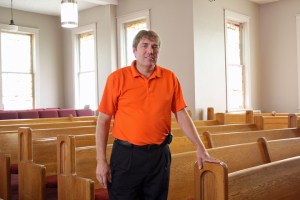
Illinois pastor Cliff Woodman is part of a new advisory council on small and bivocational churches.

Illinois pastor Cliff Woodman is part of a new advisory council on small and bivocational churches.

Still, small church pastors often feel overlooked and marginalized, left out and under-resourced. A new advisory council assembled by Page, president of the SBC Executive Committee, exists to communicate the unique needs of these categories of churches with denominational leaders.

“I will not allow the Southern Baptist Convention to forget who we are,” said Page during the first meeting of the Bivocational and Small Church Advisory Council. “Part of my goal in this is to elevate the role of the small church pastor and the bivocational pastor, period. And that’s going to happen.”

Illinois pastor Cliff Woodman is part of the 21-member council, which will work over the next three years to develop a report on the statistics that define Southern Baptist churches. The group, one of several Page has brought together in his first four years as Executive Committee president, represents a large majority of Southern Baptist churches.

“Some would say 35,000 of our 46,000 churches, maybe more than that, are in the two categories of small church or bivocational,” Page said at the Sept. 11-12 meeting in Atlanta. For the council’s purposes, he defined a small church as one with 125 people or fewer in Sunday school attendance. The group also looked at research on the percentages of SBC churches by worship attendance. According to 2013 data, 68% of Southern Baptist churches have 100 or fewer people in worship, compared to 78% of IBSA churches and missions.

Woodman, now pastor of Emmanuel Baptist Church in Carlinville, spent more than 25 years as a bivocational pastor at Harmony Baptist Church in
Medora. He told the Illinois Baptist small church and bivocational pastors (most who also work a second job) often feel out-of-the-loop. Sunday school curriculum may feel tailored to larger churches with more people and more classroom space, for example, and large church pastors often are the ones invited to speak at meetings or conferences.

But non-megachurches can be effective churches. Woodman, whose Carlinville church reported an average worship attendance of 145 in their 2013 Annual Church Profile, is leading Emmanuel to look closely at what makes a congregation healthy. He referenced LifeWay President Thom Rainer’s 2013 book “I Am A Church Member,” which outlines members’ responsibilities to their congregation.

“If a church member’s not supposed to look at ‘what’s in it for me,’ then maybe churches ought to stop looking at ‘what’s in it for me,’” Woodman said. The better question is, “What can I do for the bigger body?”

Major shift toward bivocational
Page has used a “fault lines” analogy to describes areas of SBC life where there are rifts between different groups. One of those fault lines, he said in the Atlanta meeting, is related to church methodology, or how churches do church. The discussion centered on bivocational ministry, a strategy Page called “the wave of the future.” It’s also the wave of the past.

Southern Baptist churches have long relied on bivocational pastors to lead churches. Decades ago, many pastors were farmers; today, they also drive school buses, deliver the mail, and run small businesses.

“I’m convinced that in the 21st Century, the best stewardship model is bivocational,” Page said. “We’ve got a lot of students coming out of seminary now who have no intention of being full support.” In other words, they’re prepared to work more than one job to make ends meet.

That news was encouraging to Woodman. There was a day, he said, when “the underlying current was that the bivocational guy wasn’t good enough to have a full-time church.” Page shared with the group that some Christian universities are now training students to be pastors along with learning another vocation.

While there will always be churches that want their pastor to be full-time, Woodman said, bivocational ministry is imperative if Southern Baptists want to extend the reach of churches into more communities. “And we’re going to have to do a better job at it,” he said, and at preparing future leaders for it. Because bivocational pastoring is “a different game.”

Quit the comparison game
Small church pastor Job Dalomba posed a pointed question in an April blog post: “We have to ask ourselves an honest question: Do we want to see the glory of God shining from larger churches or do we just want their numbers, resources and notoriety to be our numbers, resources and notoriety?”

The SBC Voices post by Dalomba, pastor of a new, small church in Southaven, Mississippi, called for small church pastors to stop comparing themselves to men who lead larger congregations, and to pray for those big churches too.

It’s a strategy the congregation at Emmanuel has utilized this year. A church’s prayer requests are a good measure of its health, Pastor Woodman said. “Throw them up on the wall, and see what your prayer requests do. And when you get done, you begin to think about what does that tell you your view of God is.

“And in essence, you’ll find in most churches that he’s healer, a physician; he’s an employment agency; he’s Triple A. But what’s lacking is that he’s a savior.”

Woodman’s congregation was already praying by name for people who don’t know Christ when he arrived as pastor last year. To that focus, they’ve added regular prayer for sister churches in Macoupin Baptist Association. The prayers are scripted, with a focus on reaching people who don’t know Christ. Woodman is hopeful the strategy will help build a spirit of teamwork between his church and others in the community, he told SBC Life earlier this year.

“When we started praying for our sister churches, that helped us be healthier. If we as pastors and churches would take the same attitude, then we’d stop looking at what others were doing for us, and we’d start doing for others.”

With reporting by Baptist Press and SBC Life. Meredith Flynn is managing editor of the Illinois Baptist newspaper, online at http://ibonline.IBSA.org.

David Platt, 36, was elected president of the Southern Baptist International Mission Board on Aug. 27.

David Platt, 36, was elected president of the Southern Baptist International Mission Board on Aug. 27.

COMMENTARY | Eric Reed and Meredith Flynn

one_blogThe first time I saw David Platt was at the SBC pastors conference in 2012, explaining fervently why he questions use of the sinner’s prayer. In his preaching, Platt marries Reformed theology with a passion for missions.

The first time I heard of David Platt, he had just been called to pastor a megachurch in Birmingham, Alabama—at age 26. Leaders of the church were promising they would surround their new pastor and guide him through a ministry that would challenge a man with three times his experience. Platt had completed three degrees at New Orleans Baptist Theological Seminary and served as assistant professor and dean of the chapel. Truly, he was a wunderkind.

He still is.

But at 36, it’s fair to ask if he’s ready for the enormous responsibility of leading a $300-million-dollar-a-year missions enterprise with 5,000 employees. His church’s record of bypassing the Cooperative Program for most of its giving to IMB and international missions has been reported. And Platt comes to office with many mission trips to his credit, but this position will be his first as a career missionary.

Still, we could be seeing the start of a long and remarkable tenure such as those of the giants who helmed our missions endeavors in the days of our greatest Gospel advance.

Let us pray so.

-Eric Reed

two_blogThe first words I ever heard David Platt speak weren’t his own. At a collegiate conference several years ago, he walked on stage and started preaching through the first half of Romans. Paul’s actual words.

After the audience frantically paged through their Bibles to find where he was, they sat in rapt attention. It was an urgent message, one that clearly challenged these early 20-somethings to listen, respect the Word, and understand it in a new way.

The most exciting news about David Platt’s election as the new president of the International Mission Board may well be his ability to challenge young people to a deeper understanding of Scripture, and a more intentional following of God’s will for believers.

Several years later on a Good Friday, a slightly older group gathered for several hours of teaching during one of Platt’s “Secret Church” simulcasts. As they scrambled to fill in hundreds of outline blanks during his rapid-fire message, the challenge again was clear: focus, listen, learn. And, let’s all do whatever it takes to get the gospel to more people around the world.

Right after IMB trustees elected Platt last month, a group of young missionaries reportedly gathered around to congratulate him and thank him for the influence his messages and the book “Radical” have had on their lives. These newly appointed missionaries have followed God’s call to the ends of the earth.

Let’s pray many, many more will accept the challenge.

-Meredith Flynn

THE BRIEFING | Meredith Flynn

New International Mission Board President David Platt said his head was “still kind of spinning” the morning after his Aug. 27 election by IMB trustees. “It’s good, though,” he told IMB global correspondent Erich Bridges. Their interview touched on mobilizing the next generation of missionaries, and the value of traditional Christian institutions in penetrating spiritual lostness.

“That’s the beauty in what God has created, even in the Southern Baptist Convention on a large scale – 40,000-plus churches working together, and the IMB keeping that coalition focused on reaching unreached peoples with the Gospel. The key is [building] strategies and structures and systems that help fuel a movement, that don’t inhibit the movement or cause churches to abdicate their responsibility in mission.”

Chicagoland pastors, planters share ministry challenges with SBC leaders
Frank Page
, president of the Southern Baptist Convention’s Executive Committee, was in Chicago last month for two “listening sessions” with leaders where the discussions touched on church size, diversity, church planting, and the challenges of urban ministry. Read the story from the Illinois Baptist here.

Seminary eyes new campus, new name
Golden Gate Baptist Theological Seminary has signed a purchase agreement for its new campus in southern California, President Jeff Iorg announced in August. The school, currently located in Mill Valley near San Francisco, plans to relocate to the 153,000-sq.-foot building and adjoining property in Ontario, Ca., by June 2016.

Iorg also said the seminary will request that the Southern Baptist Convention approve a new name—Gateway Seminary of the Southern Baptist Convention. “The new name connects to our heritage, frees us from geographic designations, allows for developing a more global identity, and acknowledges our Baptist distinctive.”

Pastors call Driscoll to step down
Nine pastors at Mars Hills Church have called for Pastor Mark Driscoll to step down from ministry for a year in the wake of charges of verbal abuse and ungodly leadership. A 4,000-word letter from the pastors was circulated two days before Driscoll announced he would take a six-week leave of absence while the charges were investigated, Christianity Today reported.

In reponse to the letter, which was leaked online, a newly formed Board of Elders for Mars Hill responded with their own message to Mars Hill members, asking them not to “react in fear or anxiety” or “pronounce judgment before the time.” Read more at ChristianityToday.com.

Barna studies Christians and public schools
New research from Barna found 95% of Protestant pastors believe Christians should be involved in helping public schools, and more than 8-in-10 church-going Christians agree. While 65% of people who regularly volunteer at public schools are church attenders, Barna said, there are some factors holding Christians back. 44% say they don’t have children in public school, 18% don’t think public schools want religious people to help, and 17% are unsure how to help.

Church planter Scott Venable (second from right) shares about the process of starting Mosaic Church in Wicker Park, during a listening session hosted by SBC Executive Committee President Frank Page.

Church planter Scott Venable (second from right) shares about the process of starting
Mosaic Church in Wicker Park, during a listening session hosted by SBC Executive Committee
President Frank Page (photo below).


NEWS | Frank Page
is president of the Southern Baptist Convention’s Executive Committee, but he also carries the title CEO, which he has often said means “chief encouraging officer.” Operating in that role, Page joined pastors and church planters in northern Illinois for two “listening sessions” in August.

Throughout the year, Page has met with leaders in several states. In Chicagoland, he and members of his staff hosted church planters at a luncheon in Edgewater to discuss specific ministry challenges related to planting in the city. They also were at Broadview Missionary Baptist Church for a session with more than 50 leaders.

“I think the key is building relationships and building trust,” Page told SBC Life about the listening sessions. “It’s time to build some momentum on correct relationships.”

Broadview Pastor Marvin Parker said he was impressed Page “is taking the time to go around the country, to hear what SBC pastors are talking about.” In the Chicago sessions, Page and leaders addressed several issues:

Page_blogChurch size and diversity. Page previously has called small churches the “backbone” of the convention. In the session at Broadview, he told leaders that a large majority of Southern Baptist churches run 100 people or less, said Pastor Don Sharp. “And to me, that’s a story that needs to be told over and over and over again,” said Sharp, pastor of Faith Tabernacle Baptist Church in Chicago.

“…We hear these stories of people coming in places and [the] membership’s quadrupled and the baptisms are off the board, so to speak, but it doesn’t speak to many of us” pastors of small churches, Sharp said. Faced with the comparisons, leaders can fall into fear that they’re the reason their church doesn’t measure up.

“If nothing else, I came out of that meeting with a sense of, ‘Keep doing what you’re doing, and leave room for God to do the rest.’”

The group also discussed diversity in the SBC, and the need for more ethnic groups to be represented in convention leadership, Sharp said. He paraphrased Page’s words: “The election of Fred Luter (as the SBC’s first African American president) should not be an anomaly…it shouldn’t take another 30 or 40 years for something like that to happen again.”

Cooperative Program education. The CP is Southern Baptists’ main method of supporting missions around the world, but it doesn’t have a Lottie Moon or Annie Armstrong to help promote it. “One of the keys for the future is to somehow put a face on the Cooperative Program,” said IBSA’s Dennis Conner during the Edgewater meeting of church planters. “We are deep into a cultural shift where people want to know the people they support.”

That challenge is something his team deals with every day, Page said, asking for ideas. The planters suggested using social media or daily news briefs to connect Southern Baptists with missionaries they support through the Cooperative Program.

The Executive Committee’s Ashley Clayton suggested a more foundational plan to help communicate the importance of CP giving in the next generation. “Perfunctory” support for CP has been tailing off for several decades even among older Baptists, Clayton said. There’s a need to elevate again Baptists’ core values, like international missions, reaching unreached people groups, planting churches, and theological education.

“These are core values, that when you say it in a room full of pastors, they nod their heads, they’re in agreement, they go, ‘Yeah, I’ll support that.’”

The Chicago challenge. Also in Edgewater, Page heard from Chicagoland church planters about how long it often takes to grow a church. Michael Allen, city coordinator for Send North America: Chicago, said he tells planters, “When you come to Chicago to plant a church, buy a cemetery plot.”

“In other words, don’t come to Chicago thinking I’m going to try this church planting thing and see if it works out….Many [church planters] who start do not last, and I think primarily they didn’t realize just how hard the ground is, and how much gumption you have to have.”

Page told the leaders around the lunch table that he understands the role of a sponsoring church pastor, but hasn’t had personal experience as a church planter. “I don’t even pretend to understand what you might be going through,” he said.

“I will tell you that what I hear, what I’ve seen in the past four to five years, is that things are changing across our nation….Even in the deep south, we’re seeing an encroaching lostness in some areas that is profoundly more than what you might think.”

The planters and Page discussed the temptation church planters have to move to a new place with the hope of winning the city, but without really understanding its culture and context.

Page said he was praying for “an indigenous move of God, that native Chicagoans will be able to reach the city for Christ, in addition to those that God does bring in from the outside that has called, and equipped, and [that] have the staying power to get it done.”

COMMENTARY | Meredith Flynn

The Southern Baptist Convention’s summer annual meeting traditionally is a time for Baptists to make big statements together. And, in the past, many of those decisions have made a splash with national media.

The attention in those years made the annual meeting feel like a major event that held import for a large part of the culture, and not just for messengers meeting in the Convention city.

But this year’s Convention in Baltimore didn’t get that kind of reaction. Even the buzziest issues – a resolution on transgender
identity and possible action concerning a California church – received relatively few mentions from national media.

The quiet raises a question for Baptists: Was 2014 the year the SBC dropped off the national radar?

Throughout the years, SBC stories have dominated national headlines: The return to conservative theology in the 1980s, the decision to boycott Disney in 1997, and the election of Fred Luter as the SBC’s first African American president two years ago. We’ve made it a practice to include several bits from other media in the Convention issue of the Illinois Baptist, to widen our paper’s perspective and answer the question, “What do they think about what we think?” Reading the national news coverage
can be enlightening and a little dangerous, kind of like Googling your own name.

When we went to gather information for the section this year, we came up empty. There were a few stories about the resolution to affirm that gender is determined by biological sex, rather than self-perception. And some writers commented before the Convention about the likelihood of action against a California church that recently voted to change its stance on same-sex relationships. But it was nothing like in years past, when national coverage of the Convention was extensive.

The lack of attention seems to confirm fear that the SBC’s influence is waning. Or maybe it’s shifting.

One columnist did write a thorough piece on the SBC, just prior to the meeting in Baltimore. In a piece for Religion News Service, Jacob Lupfer said, “A generation after the ‘Conservative Resurgence,’ the SBC has capitalized on its remarkable unity….This is not to say there are no matters of controversy, but the nature and scope of disagreements make doctrinal and ideological cohesion – not infighting – hallmarks of today’s Southern Baptist Convention.”

Remarkable unity, doctrinal and ideological cohesion. A mouthful of a headline, but good news for Southern Baptists.

Meredith Flynn is managing editor of the Illinois Baptist newspaper.

Fred_Luter_revivalCOMMENTARY | Eric Reed

I’ve never been prouder – of Fred Luter or of the Southern Baptist Convention – than when, on the second day of the annual meeting in Baltimore, they suspended the agenda and spent most of an hour in prayer.

Will this be Bro. Fred’s lasting contribution to the SBC, I thought to myself, that he was willing to lay aside the fixed orders of business, to call us all to our knees, and to take our deep needs to the Lord?

Two years earlier, I sat on a bench in the cavernous lobby of the New Orleans Convention Center talking with a pastor-friend of mine. He’s African American. I seemed more excited by Luter’s election that day than he did. I posed a question about the new president’s lasting impact.

“We’ll have to wait and see,” was his response. “Will this be a one-time thing, or has the Convention really changed? Is there room for me in leadership?”

That has been the response of several people I’ve asked since then, even Luter himself. Many people, especially African American pastors, said they wanted to see what happened after Luter’s term. Would he really be able to increase the ethnic diversity on SBC boards and in leadership? Would there be a lasting place at the table for black, Hispanic, and Asian leaders?

Under Luter’s direction, the committees responsible for manning those boards have attempted to broaden representation. In fact, messengers at the Phoenix convention in 2011 had ordered the start of such a concentrated effort even before Luter’s election as the SBC’s first African American president.

It was good to see several African American pastors on the platform in 2014: Southern Seminary Professor Kevin Smith spoke for the Resolutions Committee. Chicago’s very own Marvin Parker of Broadview Missionary Baptist Church served with the Committee on Order of Business and Michael Allen of Uptown Baptist Church was elected “back-up preacher” for the 2015 annual meeting.

But it took a messenger from the floor to confirm what those watching the live video stream had noticed. There was not a lot cultural diversity on the worship platform. The messenger moved that the music teams next year be more diverse, because, he noted, while the choirs and bands were almost all white, the Convention isn’t anymore – and heaven won’t be either.

I saw a similar message in the official photograph of the incoming SBC officers: five middle-aged white guys in dark suits. Except for one goatee, that photograph could have been snapped in 1974.

Or 1954.

We missed an opportunity to extend Bro. Fred’s impact. Korean-American pastor Daniel Kim ran for president, and his showing as a late-entry against winner Ronnie Floyd was respectable. But both first and second vice-presidents ran unopposed. Why? Because no one else stepped up.

Fred Luter’s lasting impact may not be that he radically altered the composition of committees or platform personnel. Instead, he demonstrated the door is open and there’s room at the table. And he was willing to take the risk.

As a pastor in New Orleans, Luter suffered jeers for his embrace of the historically white denomination. And before he agreed to run for SBC president in 2012, one advisor warned, “Look at the racial make-up of the Convention, Fred. You might lose.”

But he won. In a big way. Unopposed. Twice. To cheers and tears and shouts of joy from a whole lot of people glad that a new day had arrived for Southern Baptists.

Successor Floyd called him “the most beloved president” in recent SBC history. Luter traveled widely and preached in churches of all sizes and ethnicities. He embodied the new spirit of the SBC, and he did it with characteristic joy and grace. For all that, he is deservedly and deeply appreciated.

But, for me, Fred Luter’s lasting impact is that he was willing to step up.

Eric Reed is editor of the Illinois Baptist.

Nate_Adams_blog_callout_JuneHEARTLAND | Nate Adams

One big event that pulls many of us together each June is the annual Southern Baptist Convention. This year’s gathering in Baltimore was filled with inspirational music, messages and reports. But at its core, the annual SBC is a business meeting where messengers from autonomous churches gather to affirm or determine how they will cooperate.

Those messengers elect board and committee members. They agree on how to invest shared resources in missions and ministry. And they declare to one another and to many onlookers the biblical truths on which they will continue to stand.

It’s a big event with big consequences. But the reality is that there are relatively few messengers at the annual meeting compared to the number of churches and church members that cooperate as the Southern Baptist Convention. Most of us trust a few of us to determine which leaders, strategies, and priorities should direct the resources that we all have shared.

That’s why I would argue that the real big event for Southern Baptists does not take place in a convention center, or in a single city, or even on the same day. The real big event that determines at least the financial strength of our Great Commission cooperation happens in multiple locations at multiple times. It’s called the local church business meeting. That is where each church determines the percentage of its budget that will go through the Cooperative Program to support Southern Baptist missions and ministries. And that is the “big event” that really determines the degree to which we will cooperate in fulfilling our shared, Great Commission purpose.

For more than 20 years now, the percentage given by all SBC churches through the Cooperative Program as a percentage of undesignated giving has ever so slowly declined. It’s only been a fraction of a percent each year. But over time, national CP giving as a percentage of churches’ undesignated giving has declined to 5.4%, when it used to be almost 11%.

Here in Illinois, our churches are doing a little better than the national average. IBSA churches’ CP giving is about 7% of their undesignated gifts. But that is still well below the level being given 20 years ago.

There are some indications, however, that the trend in CP giving may be on the verge of a reversal. Annual Church Profile data for 2013 was recently released, revealing a second consecutive year of uptick rather than decline in national CP giving. The “One Percent Challenge” that Dr. Frank Page has been championing for 2-3 years now appears to be gaining traction, and numerous churches are accepting that challenge to intentionally increase the percentage of their CP giving.

Other churches are starting to give a percentage of their offerings, rather than a flat amount. It’s only two years, but it’s enough to encourage optimism that churches may be recapturing their vision for the power and effectiveness of cooperative missions giving.

So whether you were able to attend the big event of the Southern Baptist Convention this year or not, I hope you will consider attending the big event of your church’s business meetings, especially the one where the annual budget is discussed. Challenge your church to be one that’s helping reverse the trend by increasing your commitment to SBC missions and ministries through the Cooperative Program.

The Big Event of all history, of course, will be that day when Jesus returns and our Great Commission task as His church draws to a close. All our churches’ big events should anticipate and point to that one. And our churches’ business meetings are a good place to start, because that’s where we can choose priorities that demonstrate we believe He’s coming back soon.

Nate Adams is executive director of the Illinois Baptist State Association.