


January 17 is Sanctity of Life Sunday

At just over one-and-a half pounds. baby Grace was born a micro-preemie.
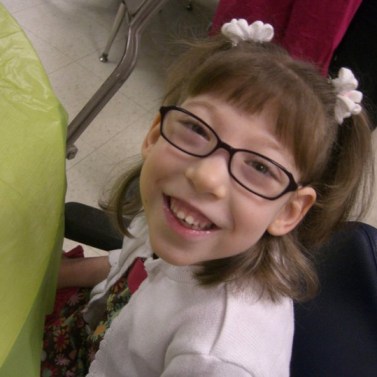
When Grace Schumacher turned one last October, it was a milestone that once seemed impossible. Her story of survival against the odds has reminded a church and a community about the sanctity of human life.
When Grace’s mom, Mindy, was pregnant, a blood-screening test indicated possible problems. More testing revealed a high likelihood of Down Syndrome. At only 29 weeks, Mindy’s doctor wanted to monitor her because baby Grace was “off-the-charts too small,” said Grace’s grandmother, Charmel Jacobs.
This routine procedure became a two-day hospital stay, which then became an emergency C-section as Grace’s heart rate continued to drop much too frequently. The baby needed to be delivered, despite the chance she might not survive. Charmel’s husband, Jerry, started praying out loud as this decision was made.
He said, “Lord, we just need your grace.”
And Grace the Lord gave, literally. Born October 24 at 5:44 a.m., weighing only 1 lb. 9 oz., she was considered a micro-preemie. The family was warned she probably wouldn’t cry. But she gave a little squeak, and then started wailing away.
Grace was in the hospital for three months after that, “an emotional roller coaster for everyone,” her grandmother said. She faced a host of medical complications, and family and friends weren’t even allowed to visit. But finally, one week after her original due date, Grace’s parents took their daughter home.
Charmel wanted to thank Rockford Memorial Hospital for everything they did for their family during that difficult time. So she got the idea (which she credits to the Lord) to write a letter to the editor in their local paper. This was also around the time that she was wrestling with how to influence the culture and put a positive pro-life message into the community.
She enlisted prayer from her pastor that the Lord would give her the ability to construct this letter concisely and positively. Jacobs awoke one morning at five o’clock and started writing. “It was done within an hour,” she said.
In the editorial she expressed her gratitude to everyone in the neo-natal intensive care unit that had been Grace’s first home. She concluded by giving ultimate thanks to her Heavenly Father, praising him for gifting the family with the care the hospital gave them and their vulnerable, yet extremely valuable treasure, Grace. She then wrote, “I wish everyone could peek inside those cribs and understand that each one is a precious soul created by God—no matter how tiny.”
Within days, the letter was in print and on Facebook. It was taped to every monitor at the hospital, and the newspaper later published an article celebrating Grace and the hospital’s acclaimed NICU department. “Over and over, God has confirmed that he wants this story told,” the grateful grandmother said.
‘It’s not up to us’
In the same church in Machesney Park, another young girl’s life—once in question—now stands as a testimony to the goodness of God.
Michael and Jessica Miller were encouraged to terminate a pregnancy because of complications, but they chose not to. Now nine years later, Machesney Park’s former associate pastor, Larry Wells, says, “Riley is an inspiration to all of us.”
At 20 weeks into the pregnancy, the Millers were asked if they wanted to find out the baby’s gender. From the images, they could tell they were having a girl, but also that something was definitely not right. “She had a tumor at the base of her tailbone,” Jessica said. A specialist came in soon after they got the news and told them the child had almost no chance of survival and would need to be monitored very closely.
“That same day, they sent us to a genetic counselor who said we should have an abortion,” Jessica said. The baby would have a host of mental, physical, and developmental problems, and in the eyes of the doctors, the cost of the complications outweighed the value of her life.
The Millers made it very clear that wasn’t an option and never would be. “We told them that doesn’t need to be suggested again. It’s not happening,” Jessica recalled.
But the tumor continued to grow, quickly. By 27½ weeks, it was affecting everything and causing Riley’s heart to fail. It was also starting to affect Jessica. The doctor said they would perform one last ultrasound, and if Riley’s heart was still beating, they would deliver her. The Millers were warned, though, that even then she would have only a 50% chance of survival.
“But I had confidence,” said Jessica. “We had been praying about it.”
The test revealed that somehow, against all medical odds, her heart was beating. So they delivered Riley—not breathing at first, blue and swollen, but alive.
She initially weighed just over four pounds. Riley immediately underwent surgery to remove the tumor, a genetic anomaly that affects only one in 40,000 babies. After the procedure, she weighed 1 lb. 5 oz. She remained in intensive care for two months.
Although Riley is small for her age and some scars remain from her multiple surgeries, her mother says, “She’s nine years old now. She has no learning disabilities. Looking at her you would never know!”
When questioned how her daughter’s story has impacted other people over the years, Jessica talked about how opening up about their experiences has been a real encouragement to the people in her church, bolstering their faith as they hear about and witness what amazing things God can do.
About two years ago, she was also able to talk to another mother who was faced with the decision either to terminate the pregnancy or trust their baby into God’s hands. Although they lost their child, they chose the latter.
“The main thing I’ve learned,” Jessica said, “is that you never know what’s going to happen. It’s not up to us to make that choice.”
– Morgan Jackson is a freelance writer living in Bloomington, Illinois.



 iB2 News