Archives For November 30, 1999

By Eric Reed

Editor’s note: Baptist news editors met in coastal Alabama this week. Look for stories in the Illinois Baptist and online over the next few weeks.

Orange Beach, Ala. | It’s a wonder the local paper didn’t call this “The Battle of Mobile Gay.” This is, after all, the place where in 1864 Admiral Farragut famously condemned the torpedoes and ran his ship “full speed ahead” past Confederate forts and mines (called “torpedoes”) tethered in the Bay.

The 2015 version had attorneys dueling on the courthouse steps and clerks inside shuttering the marriage license window because the probate judge refused to accept applications from same-sex couples.

“I’m plumb ashamed of this town,” one applicant said outside the courthouse on Monday when he and his partner were unable to get married. On Thursday, that same man declared, “In Alabama! I never would’ve believed it!” as he waved his new license in the air with one arm and hugged his new spouse with the other.

Between Monday and Thursday, the Battle:

A federal judge in Mobile, Callie Granade (pronounced like the ammunition), had ruled Alabama’s ban on same-sex marriage unconstitutional on January 23. Marriage licenses were to be issued starting Monday. But on Sunday night, Chief Justice of the Alabama Supreme Court Roy Moore told the state’s probate court judges, who issue marriage licenses here, that the federal ruling did not apply to them.

On Monday, it was reported 60 counties started processing applications from same-sex couples; seven did not, including the state’s second most populous county, Mobile. Probate judge Don Davis ordered the license window, festooned with purple and gold Mardi Gras masks, shuttered. No licenses were issued to any couples, same-sex or otherwise.

By Wednesday, it was reported only 23 counties were issuing same-sex licenses.

Attorneys representing gay couples and Judge Davis went to court.

And Roy Moore went on TV.

The last time Moore opposed a higher court ruling, he was removed from the bench. That was over the monument to the Ten Commandments at the State Supreme Court. This time, Moore went to the court of public opinion.

For many observers, he appeared to win in Alabama, where his stance is based on a state’s right to amend its own constitution as 81% voters did in 2006, limiting marriage to the traditional, biblical definition. But on TV, against CNN’s Chris Cuomo, Moore lost, according to national pundits who gave the win to the news anchor/attorney.

It didn’t matter. Late Thursday, Granade ruled again. Probate courts must issue marriage licenses to all couples, despite the state constitution. And today, Friday, it is reported all counties’ license offices are open for business.

Frankly, in Alabama, many would never have believed it. I wouldn’t, because I grew up here.

As Baptist editors gathered for their annual conclave to hear reports from SBC entity heads and discuss journalism, I was also looking forward to a short visit to my old home. I didn’t expect to see history made.

I learned to report from that federal courthouse where TV reporters waited this week for the rulings, reporting breathlessly at 5, 6, and 10 on the latest developments—or lack of them. I covered the same county governments at the place where a half-dozen gay couples were wed in the hour after the marriage license office reopened. And I thought I understood this coastal town where half the people are Baptist and the other half are Catholic, and their alliance has kept the politics and the morals mostly conservative for 300 years.

Until now.

Leaders of the Baptist state convention in Alabama quickly commented: “The vast and overwhelming majority of Alabama Baptist leaders and other church members continue to affirm the biblical view of marriage and the historic declarations that Alabama Baptists have made concerning the marriage relationship,” executive director Rick Lance said.

But the comment did not appear on local newscasts in Mobile.

I did hear a comment from an SBC leader at this meeting that demands my consideration. Given the rapid liberalization of public opinion on same-sex marriage and other moral issues, is it possible that pastors and leaders of SBC entities will find themselves heading organizations that are more conservative than the people in the pews—especially younger people? (That’s just the opposite of what happened in mainline denominations in the second half of the 20th century, when leaders grew far more liberal than church members.) Our church members will be shifted by the tide of public opinion, he said, if we pastors and teachers don’t provide a firmer biblical foundation.

And the next wave is coming soon. From here, it’s full speed ahead to the U.S. Supreme Court, where a ruling possibly in June is likely to determine the legality of same-sex marriage in all 50 states. Expect Southern Baptists to speak to that, but will anyone listen?

The Baptists came to Alabama this week, but that wasn’t news. The world changed while we were here. That’s the news.

Eric Reed is editor of the Illinois Baptist newspaper and associate executive director for the Church Communications team of the Illinois Baptist State Association.


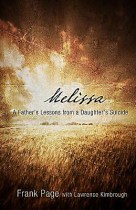
Frank Page, president of the SBC Executive Committee, wrote a book about his daughter, Melissa, his grief after her suicide, and how church leaders can help people living with the deep pain of mental illness.

Frank Page, president of the SBC Executive Committee, wrote a book about his daughter, Melissa, his grief after her suicide, and how church leaders can help people living with the deep pain of mental illness.

THE BRIEFING | Meredith Flynn

Editor’s note: This article is excerpted from the September 30 issue of the Illinois Baptist. The first part of the article headlined The Briefing last Tuesday, but this section takes a closer look at how the church, and specifically church leaders, can minister to individuals and families struggling with mental illness and suicide.

At the Southern Baptist Convention this summer in Houston, mental health and the church was a much-discussed topic, with messengers approving a resolution to “oppose all stigmatization and prejudice against those who are suffering from mental health concerns.” The resolution also called on churches to “look for and create opportunities to love and minister to, and develop methods and resources to care for, those who struggle with mental health concerns and their families.”

When it comes to mental health, “the church has had a tendency to say we’re going to leave that up to the professionals,” said Pastor Hal Trovillion, pastor of First Baptist, Manteno, Ill., and a former youth and family counselor. The problem is that for the most part, those professionals don’t take God into account.

Melissa_book_coverThe church has an opportunity to engage in the critical ministry of offering spiritual help to those in deep pain.

Jesus’ ministry did just that, Pastor James Shannon says. His church, People’s Community Church in Glen Ellyn, has sponsored several support groups (grief, divorce, substance abuse, etc.) and plans to do more in the future. An experienced and degreed counselor, Shannon is dedicated to helping hurting people find wholeness. His mission is to help people transition from “walking wounded” to “wounded healers” so that they can minister effectively to others.

“The point where a person is hurt the most is the point where God can equip them to do ministry, and I think that’s so vital for people to understand.”

The potential for those who have struggled with mental illness to be used in ministry to others with similar stories is encouraging, but the need to alleviate pain is often more pressing. What can churches do now to help people who are depressed and possibly contemplating suicide, and their families?

Frank Page has clear advice for pastors who likely are ministering or will minister to people in deep pain. Teach good theology, help people learn how to control their thoughts, and steer clear of trite advice, he counsels in his book “Melissa: A Father’s Lessons from a Daughter’s Suicide.”

“Stay quick with Scripture but sparing with human philosophy,” writes Page, whose oldest daughter took her own life almost four years ago. Currently serving as president of the Southern Baptist Executive Committee, Page was a pastor for many years and he and his wife, Dayle, raised their three daughters in the church. In the book, which includes a letter at the end of each chapter to those contemplating suicide, he says, “We were not a family whose daughter kills herself.”

Page is using his national platform to help Christian leaders understand the complexity of suicide and mental health issues. First, “be a learner,” he writes. “No one on this side of eternity can fully understand or articulate the complex nature and theological mysteries surrounding the horrible act of suicide nor of the loss of rational thought that typically leads up to it.

“Grow your observations, increase your insights, but don’t place pressure on yourself to grasp it all or to promise the absolute answer to every question.”

At the same time, Page writes, pastors should make themselves more knowledgeable about mental illness. “The church many times has been woefully inadequate in reaching out to persons who either experience mental illness themselves or are dealing with it in their families. …And when we as pastors, not in dismissiveness perhaps but at least in ignorance, give them ‘snap out of it’ advice (or something in that family of faulty counsel), we do more harm than good.

“More than ever – if you intend to serve your congregation well – you need a working knowledge of what causes mental illness and depression and how to assist its sufferers with the best kind of loving assistance.”

Read Religion News Service’s interview with Frank Page here, or watch his interview with LifeWay’s Ed Stetzer.

Senate chaplain likens government shutdown to ‘madness’
In a prayer in the U.S. Senate chamber last week, Senate Chaplain Barry Black asked God to “save us from the madness” of the ongoing government shutdown. Black, a Seventh-day Adventist minister who has served as chaplain of the Senate since 2003, also used words from Psalm 51 in his prayer. “We acknowledge our transgressions, our shortcomings, our smugness, our selfishness, and our pride,” he said. “Create in us clean hearts, oh God, and renew a right spirit within us. Deliver us from the hypocrisy of attempting to sound reasonable while being unreasonable.”

The Washington Post’s On Faith blog ran an article yesterday about the role pride is playing in the federal government’s shutdown. Read it here.

Leaders, scholars remember Chuck Smith“His impact can be seen in every church service that has electric guitar-driven worship, hip casually-dressed pastors, and 40-minute sermons consisting of verse-by-verse Bible expositions peppered with pop-culture references and counterculture slang,” sociologist Brad Christerson said of California pastor Chuck Smith, who died last week. Read Christianity Today’s story on Smith, who helped a generation of “Jesus People” find their faith.

Mississippi church apologizes for racial discrimination
First Baptist Church of Oxford, Miss., decided it’s never too late to right a wrong. This summer, the church nullified a 1968 decision to deny African Americans use of its building facilities and resources. The policy hadn’t been enacted for many years at the church, but it also had never been officially overturned. Pastor Eric Hankins and deacons wrote a resolution to repeal the earlier decision and apologize for it, and Hankins preached on corporate repentance. Read the full story at BPNews.net.

Chris Davis seeks godliness above stats
The Baltimore Orioles missed this year’s playoffs, but first baseman Chris Davis celebrated several individual achievements, winning 2013’s homerun and RBI crowns. “I just want to be known as a godly man,” he said in story on BPNews.net. “That’s more important than any legacy on the field or numbers you leave behind. Read Joshua Cooley’s profile of Davis here.