Archives For November 30, 1999

United Methodists divide over LGBT marriage and ordination
The media has largely focused on LGBT issues in reporting on the United Methodist Church split, writes evangelical columnist David French, but, “The true fracturing point between mainline and evangelical churches is over the authority and interpretation of Scripture.”

An 8-page statement titled the “Protocol of Reconciliation & Grace Through Separation” likely will govern the divide of the nation’s second-largest Protestant denomination. The plan, which will need approval from the UMC’s legislative body this spring, gives $25 million to conservative congregations toward the formation of a new denomination that opposes gay marriage and ordaining LGBT clergy.

>Related: “If the new denomination takes its orthodoxy on mission,” missiologist Ed Stetzer wrote, the Methodist traditionalist group “may create new paths we all can learn from.”

President rallies evangelical voters amid deepening divides
At the inaugural “Evangelicals for Trump” rally Jan. 3 at a Miami megachurch, President Donald Trump sought to shore up support from Christian voters after a Christian magazine editorial supported his impeachment. “Evangelicals and Christians of every denomination and believers of every faith have never had a greater champion…in the White House than you have right now,” Trump said at the rally at El Ray Jesus Church.

The event and the President’s “Evangelicals for Trump” coalition were announced the day after now-retired Christianity Today editor Mark Galli wrote that Trump should be removed from office.

7 key abortion stories from the last decade
Just ahead of the annual March for Life in Washington, D.C., the Southern Baptist Ethics and Religious Liberty Commission has released its list of seven of the most important abortion stories from 2010-2019. Leading the list: the trial of late-term abortionist Kermit Gosnell, whose eventual conviction on first-degree murder charges received almost no national media coverage.

As church membership declines, churches use tech to connect with new audiences
At a time when just half of all Americans belong to a house of worship, more and more churches are using online resources to gather people and address spiritual needs, USA Today reports. “In the beginning, a lot of churches thought the internet would hurt and keep people from coming,” said an online campus pastor at Saddleback Church in Lake Forest, Calif. “But it’s actually one of the best ways to reach new people.”

Sources: French Press, Christianity Today, Baptist Press, Christian Post, ERLC, USA Today


High-profile religious freedom cases set for high court’s 2019-20 session
The U.S. Supreme Court is poised to consider several cases dealing with the First Amendment right of freedom of religion, including a trio of cases that ask whether sexual orientation and gender identity are included in non-discrimination protections in federal workplace law.

“This is shaking up to be an exciting term for religious liberty,” said Mark Rienzi, president of the religious freedom legal nonprofit Becket, as reported by The Christian Post.

“I think this term will see the court have some opportunities to tighten up and improve its doctrine and in the process, perhaps, stem the tide of religious liberty cases it’s been getting in recent years by giving some clear answers and some clear resolutions to some lingering controversies.”

IBSA joins religious freedom lawsuits
The Illinois Baptist State Association will join two lawsuits involving religious liberty issues for the purpose of protecting Southern Baptist churches in the state. One case involves zoning regulations that prohibit churches and church plants from being located in certain areas of a city; the other contests requirements that churches and religious institutions cover the cost of abortions for their employees.

World Vision shifts sponsorship program to empower kids
A ministry dedicated to helping impoverished children around the world will now let the kids choose their own sponsors, instead of the other way around. “We are simply expressing what we believe in a new and fresh way,” Edgar Sandoval, president of World Vision US, told Christianity Today. “We are working to empower them to be agents of change.”

United Methodists to consider separation plans
Following a narrow vote in February to keep its traditional positions on marriage and qualifications for clergy, the United Methodist Church appears poised for a breakup next year. Religion News Service reports the country’s second largest Protestant denomination (after Southern Baptists) will consider how to allow dissenting churches to leave the denomination, while keeping their ties to support organizations like publishing houses.

Disaster Relief continues in the Bahamas
Southern Baptist agencies are working with local churches and Baptist leaders to help residents of the Bahamas rebuild after Hurricane Dorian. “At the end of the day, when all the disaster relief groups from the U.S. go back, the Bahama Baptists are still there,” said Jeff Palmer, CEO of Baptist Global Response. “We want God to be the champion in this, and we want our local Baptist partners to be, as well.”

Sources: Christian Post, Illinois Baptist, Christianity Today, Religion News Service, Baptist Press

Christian rocker calls leaders to value truth over feeling
In a post that has since been shared nearly 40,000 times, John Cooper, frontman for Christian rock band Skillet, responded to Christian leaders who have announced they’re walking away from the faith. Author Joshua Harris and Hillsong writer Marty Sampson both made public statements recently, with Harris saying outright “I am no longer a Christian.”

Cooper, who founded the band in 1996, also called Christians—those who lead worship and those who are led in it—to a higher standard than what is relevant or trendy in the moment. Rather than lift up current influencers as ultimate truth-tellers, he posted, rely on the Word of God.  “…we are in a dangerous place when the church is looking to 20-year-old worship singers as our source of truth,” Cooper said. “We now have a church culture that learns who God is from singing modern praise songs rather than from the teachings of the Word.”

>Related: Russell Moore on what to do when someone you admire abandons the faith

>Related: The roles endurance and environment play in a Christian’s ability to press on

Illinois parents weigh options ahead of 2020 curriculum change
Gov. J.B. Pritzker’s signature on a bill that will require LGBT history in public schools has sent some Christian parents looking for education alternatives, while others are resolved to keep their kids in the school system.

“We are very aware that times are changing and more liberal views are entering the classroom,” said one Springfield mother of three. “We feel that the changes that are happening in the classroom and throughout the world right now are opportunities to share Christ and his message.”

Methodists mull denominational split
Religion News Service reports a group of conservative United Methodists met this summer to discuss how the denomination can go forward amid growing divisions over its policies toward the LGBTQ community and same-sex marriage. One plan under consideration would keep the UMC denomination as a centrist/liberal organization, while creating a new entity for traditionalists.

In February, delegates to the denomination’s General Conference voted narrowly not to lift bans on LGBTQ clergy and same-sex marriage.

MacDonald indicates return to ministry
James MacDonald, former pastor of Chicagoland’s Harvest Bible Chapel, posted online last week that he’ll “be back soon with fresh messages from God’s Word.” MacDonald was fired in February amid charges of financial mismanagement and poor leadership.

Trade war won’t affect Bibles
Bibles and other religious literature were initially on a list of items that would be subject to a 10% tax hike on goods imported from China, Baptist Press reported. But Christian leaders were relieved last week when the U.S. Trade Ambassador indicated a “Bible tax” will be avoided.

Sources: Facebook, Christian Post, RussellMoore.com, Christianity Today, Illinois Baptist, Religion News Service, USA Today, Baptist Press

David_DockeryCOMMENTARY | David Dockery

In 1955, when Will Herbert wrote his classic volume “Protestant, Catholic, Jew,” one in 25 church-going Americans tended to change denominations over a lifetime. In 1985, one in three Americans changed denominations over a lifetime. In this current decade, it’s more than one in two, or about 60%, which means many Christians will change denominations in this century. Not only have we seen a decline in denominational loyalty in recent years, but an increase in the number of people who identify with a network, special purpose group, or parachurch group, rather than a particular denomination.

These accelerated shifts have changed the way many perceive the importance of denominations, resulting in additional changes to the denominational diversity that has developed in North America over the past 200 years. While there are significant changes to observe, we dare not miss the importance of geography as we address this topic.

As the country has migrated westward over the past hundred years, new movements and denominational offshoots have developed. Certainly geography has shifted, but the generalizations about geographical presence and denominational influence still hold. Roman Catholics continue to have great sway in New England, Lutherans are most prevalent in the upper Midwest, Baptists are a majority in the South, and Dutch Reformed are sprinkled across the heartland.

Perhaps even more important than geographical regions is the kind of city or town or place where one resides. Great differences in the understanding of denominational importance exist in metropolitan areas compared with rural towns. Suburban areas are where the majority of generic megachurches are located. Surprisingly, more than 50% of all churchgoing Americans attend less than 12% of all churches. Denominational labels mean less and less for the majority of these megachurches.

Sociologists at Boston University have tracked these changes, highlighting the differences on the east and west coasts when contrasted with areas in the middle of this country. About 30% of the people on the two coasts respond positively to the importance of denominational identity, compared with about 70% in the Midwest and the deep South. Such comparisons are even more exaggerated from rural to urban areas: 84% of people who live in rural areas persist in thinking that denominational identity is important, compared to less than half of that number in suburban and urban areas.

One more important point regarding place: The majority of churches are still found in rural areas, while most people now live in urban and suburban areas, pointing to another reason for decline in the importance of denominations for people in this century.

Furthermore, most of the mainline denominations have sadly lost their way. Some have become disconnected from their heritage, and even more so from Scripture and the great Christian tradition. Some today are not only post-denominational, but also on their way toward becoming post- Christian as their conversations focus on issues of inclusiveness and universalism, sexuality and inter-religious spirituality. Postmodern influences, shifts in population and perceptions regarding denominations, and the decline of mainline denominations have combined to bring about changes that frankly are hard to calculate.

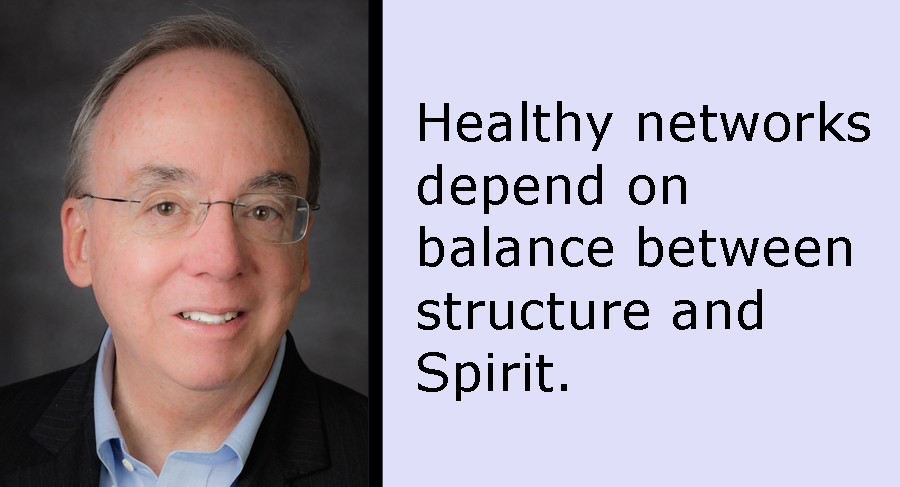
So, what does this say about the future of denominationalism? I want to say that while denominationalism is in measurable decline, denominations still matter. Certainly the kind of structure that denominations provide for churches is important. The Christian faith needs both “structure and Spirit,” to borrow words from historian Jaroslav Pelikan, in order to carry forward the Christian message.

If, however, we focus too much on structure, we wind up with unwanted bureaucracy. Should we focus too much on the Spirit, we unwittingly move toward an amorphous form of Christianity. Let us pray for balance even as we hold out hope for the future of healthy denominations to serve the cause of Christ and cooperatively advance the good news of the gospel message.

David S. Dockery, president of Trinity International University, is the editor of “Southern Baptist Identity: An Evangelical Denomination Faces the Future.”

HEARTLAND | Nate Adams

Nate_Adams_June29I am writing this just a day after returning from the 2015 South­ern Baptist Convention in Columbus, and four days before my wife, Beth, and I celebrate our 30th wedding anniversary. So, as unromantic as it may sound, I find myself reflecting today on both the past three days with more than 5,000 other church messengers, and the past 30 years with the one woman God gave me for life.

They’re not entirely dissimilar. To both my wife and to the Southern Baptist Convention, I have made deep commitments that, by God’s grace, are standing the test of time. With both I share impor­tant beliefs and values. And with both I share purpose and direction that allow us to walk together joyfully.

That’s not to say we agree a hundred percent of the time on a hundred percent of the ques­tions or issues we face. There were times this past week in Columbus when I read or heard something and thought to myself, “Why on earth would we want to do that?” or “Don’t you see what needs to be done over here?” or “I’m not sure he’s the best person to entrust with that.”

But the truth is Beth and I have both asked those kinds of questions of one another over the past 30 years too. In fact, a few years ago when James Merritt was President of the SBC, I remember him saying that he and his wife had agreed long ago that he would make all the major decisions in their marriage, and that she could make all the minor decisions. Then he quipped, “And I’m proud to report that in 25 years of marriage we’ve never actually had a major decision.”

There’s quite a thread of truth in that silly exaggeration. When you share a deep commitment to someone over time, you simply don’t allow relatively minor disagreements to threaten either your relationship or the overall pur­pose you’ve embraced, whether it’s raising a healthy family or obeying the Great Commission. You defer to one an­other whenever possible, and you reserve strong words for truly important subjects. Then, most of the time, you move forward by consensus rather than casting ballots, or stones.

That’s why I was able to spend at least as much of my SBC time out in the hall­ways, or exhibit area, or in collaborative meetings, as I did in the voting sessions, most of which went forward smoothly and without dissent. And I noticed I was not alone. As important as the main sessions were to those attending, it was the hall­ways, restaurants, and hotels that were the settings for countless informal reunions and meetings, for prayer, for collaboration, for counseling, or simply for much needed encouragement.

There certainly are occasions during our long commitments over time when we need to gather in big meetings to confront big things. And there are times when we need to come together for celebrations and worship, or for special efforts like the Tuesday night session in Columbus when thou­sands of us gathered to pray for awakening and revival in our land.

But most of our long commitments over time are lived out between big anniversaries and annual sessions. We believe the Bible together, we serve our churches together, we send missionaries and support missions projects together, and we worship together. And so my deep commitment over time to the imperfect yet wonderful Southern Baptist Convention continues.

And as Beth and I continue to make the bed together, raise the kids together, pray together, serve churches together, and face the challenges of life together, my deep commitment over time to her continues as well, now for 30 years and counting. May the Lord bless you as He has me, with a life of deep commitments over time.

Nate Adams is executive director of the Illinois Baptist State Association.

THE BRIEFING | Meredith Flynn

‘Unequally yoked’ couples may be more common in 21st century
Most married people–almost 70%–still share the same faith, Pew Research reports in its Religious Landscape Study. But the last few decades have seen an increase in interfaith marriages. 39% of those who have gotten married since 2010 have married someone of another faith–or no faith at all. 18% of the interfaith marriages since 2010 are between a Christian and someone not affiliated with a religion.

The_BriefingOf people who got married prior to 1960 (and are still married), only 19% are interfaith marriages. But Pew is careful to note the rise in interfaith marriages “may not be as pronounced as it appears,” if in fact marriages between people of the same religious group are more likely to last. Because the study only measures intact marriages, it’s possible that there were more interfaith unions prior to 1960 that ended in divorce.


What’s in a (church) name?
The presence of a denomination in a church’s name doesn’t necessarily deter even non-religious people, LifeWay Research reports. In a new survey, Americans were asked to respond to several denominations based on the statement, “When I see a church named the following, I assume it is not for me.” Pentecostal had the highest percentage of yes responses, with 45%, followed by Catholic (42%) and Lutheran (41%). Southern Baptist fell toward the end of the list, with 39%, and Baptist came in last (or first?) with only 36% of respondents saying they assume Baptist churches aren’t for them when they see the label.


Pro-choice views outgaining pro-life position
For the first time since 2008, pro-choice “has a statistically significant lead in Americans’ abortion views,” over pro-life views, Gallup reports. 50% of Americans now say they are pro-choice, compared to 44% who identify as pro-life.


One more poll: Measuring presidents’ popularity
CNN/ORC reports more Americans think favorably about former President George W. Bush (52%) than do current President Barack Obama (45%). Besting them both: Presidents George H. W. Bush and Bill Clinton, who both have a 64% approval rating.


Campolo announces new view on same-sex marriage
Christian author and speaker Tony Campolo said via a statement on his website June 8 that he is “finally ready to call for the full acceptance of Christian gay couples into the Church.” Campolo, author of many books including 2012’s “Red Letter Revolution,” said his decision was influenced by same-sex couples he and his wife have come to know “whose relationships work in much the same way as our own.”


Seminary President films video for ‘Openly Secular’ website
Southeastern Baptist Theological Seminary President Danny Akin appears in a new video on the website of Openly Secular, an organization dedicated to eliminate discrimination against atheists, agnostics, and other non-religious people. We disagree on some very important issues, Akin says in the video, but we also agree on some important things, like that no one should be coerced when it comes to their religious beliefs.

Akin told Christianity Today, “I’m not going to endorse the organization [Openly Secular], but I’m happy to do a video as an evangelical who believes we all have the right to religious liberty. That’s all I endorsed.”


New movie tells how ‘Purpose Driven Life’ helped resolve hostage situation
A film scheduled for release this fall will tell the true story of Ashley Smith, an Atlanta woman who read Rick Warren’s book “The Purpose Driven Life” to a man holding her hostage in her home. Smith’s captor, Brian Nichols, eventually surrendered to authorities. “Captive” stars Kata Mara as Smith and David Oyelowo, who recently played Martin Luther King, Jr., in the film “Selma,” as Nichols.

COMMENTARY | Meredith Flynn

The Southern Baptist Convention’s summer annual meeting traditionally is a time for Baptists to make big statements together. And, in the past, many of those decisions have made a splash with national media.

The attention in those years made the annual meeting feel like a major event that held import for a large part of the culture, and not just for messengers meeting in the Convention city.

But this year’s Convention in Baltimore didn’t get that kind of reaction. Even the buzziest issues – a resolution on transgender
identity and possible action concerning a California church – received relatively few mentions from national media.

The quiet raises a question for Baptists: Was 2014 the year the SBC dropped off the national radar?

Throughout the years, SBC stories have dominated national headlines: The return to conservative theology in the 1980s, the decision to boycott Disney in 1997, and the election of Fred Luter as the SBC’s first African American president two years ago. We’ve made it a practice to include several bits from other media in the Convention issue of the Illinois Baptist, to widen our paper’s perspective and answer the question, “What do they think about what we think?” Reading the national news coverage
can be enlightening and a little dangerous, kind of like Googling your own name.

When we went to gather information for the section this year, we came up empty. There were a few stories about the resolution to affirm that gender is determined by biological sex, rather than self-perception. And some writers commented before the Convention about the likelihood of action against a California church that recently voted to change its stance on same-sex relationships. But it was nothing like in years past, when national coverage of the Convention was extensive.

The lack of attention seems to confirm fear that the SBC’s influence is waning. Or maybe it’s shifting.

One columnist did write a thorough piece on the SBC, just prior to the meeting in Baltimore. In a piece for Religion News Service, Jacob Lupfer said, “A generation after the ‘Conservative Resurgence,’ the SBC has capitalized on its remarkable unity….This is not to say there are no matters of controversy, but the nature and scope of disagreements make doctrinal and ideological cohesion – not infighting – hallmarks of today’s Southern Baptist Convention.”

Remarkable unity, doctrinal and ideological cohesion. A mouthful of a headline, but good news for Southern Baptists.

Meredith Flynn is managing editor of the Illinois Baptist newspaper.

CONVERSIONS COUNT – “We have to help our churches focus on bearing fruit, and to keep up with that as a measure of how they’re doing,” NOBTS President Chuck Kelley told associational leaders in Illinois. “Fruitlessness is becoming endemic in Southern Baptist Life.”

CONVERSIONS COUNT – “We have to help our churches focus on bearing fruit, and to keep up with that as a measure of how they’re doing,” NOBTS President Chuck Kelley told associational leaders in Illinois. “Fruitlessness is becoming endemic in Southern Baptist Life.”

The SBC’s declining numbers are real. But there are solutions, says seminary president Chuck Kelley.

NEWS | Eric Reed

Since he began studying and teaching evangelism more than 30 years ago, New Orleans Baptist Theological Seminary President Dr. Chuck Kelley, told associational leaders in Illinois in January, we’ve been quoting the same statistic: 30% of our churches are growing, and 70% of all Southern Baptist churches are plateaued or declining. “The difference today is the 70% aren’t so much ‘plateauted;’ our churches are declining. We are a convention at a crossroads.”

Kelley is one voice in a chorus of national leaders calling on Southern Baptists to end the decline in baptisms and missions giving in our churches that threatens fulfillment of our kingdom work and the future of the denomination itself.

The head of the convention’s executive committee, Dr. Frank Page, also delivered a stark address in January. “…You say, ‘What is our future?’ I do not know. I’m asked that every week by someone, and I say, ‘I cannot answer.’ If things do not change, I can tell you in 20 years we will be happy to have 27,000, not 47,000 churches,” Page said.

In a “State of the SBC” address at Midwestern Seminary, Page cited “fault lines” in the denomination, where pressure has built and the fabric of the organization is threatened. Among them are the arguments over the nature and authority of Scripture in the 1980s, and more recently the debate over Reformed theology, methods of funding missions, and democratic-based church governance.

The effect of these “fault lines” is seen in declining baptisms and a 20-year downward trend in missions funding through the Cooperative Program. “We have argued over issues that have taken away our evangelistic fervor to the point that now our baptismal rates have reached a low not seen since 1948,” Page said. “God help us.”

Southern Baptists baptized 314,956 people in 2012, the most recent tally available. That was a decline of 5.5%. The figure compares to the post-war baptismal rate, when Southern Baptists numbered 6 million, in contrast to today’s 16 million. A decade-long focus on evangelism after World War II produced the denomination’s greatest surge of conversions, peaking at 445,725 baptisms in 1972, and the steam to power the next six decades downhill from there.

Leaders are hopeful that a final tally on 2013 baptisms and Cooperative Program giving, due soon, will show a slight uptick, and perhaps end the slippery slope. And in Illinois, baptisms and giving are up for 2013.

Still, national leaders are now talking publicly and regularly about the SBC as a denomination that is plateaued and declining, mostly declining.

Page’s speech, now being viewed widely on the internet, comes on the heels of “an open letter” from LifeWay President Thom Rainer calling on members of what is still the largest Protestant denomination in the United States to recapture their zeal for evangelism.

“Where is the passion in most of our churches to reach the lost?” Rainer asked. “I thank God for our affirmation of the total truthfulness of Scripture. I thank God for orthodoxy. But I pray that it is not becoming a dead orthodoxy – an orthodoxy that has lost its first love.”

“I have no proposal,” Rainer summarized. “I have no new programs for now. I simply have a burden.”

Kelley’s proposal

The history of every church and denomination is growth, plateau, and decline, Kelley told associational leaders meeting at the Illinois Baptist State Association building January 27-28. Pointing to Methodists, Presbyterians, and other mainline

denominations, Southern Baptists for many years expressed thanks we weren’t following their decline. Now we are. “We are seeing a growing gap in the rhetoric about Southern Baptists and the reality of where we are,” he said.

And the declines are in all parts of the U.S. “We’re losing the South,” Kelley said. “You need to be aware that the South is becoming more like Illinois; large blocks of unreached people, and churches that are smaller.”

And a new generation that is not following their parents’ lead by staying in church after they reach adulthood.

Kelley likened the denomination’s downward turn to an airplane in a tailspin: beyond a certain point, the pilot can’t pull the nose upward and right the plane. “We’re nearing that point,” Kelley said.

He identified four factors in this precipitous decline, problem areas that also point to possible solutions:

Elephant 1: Awakening

“We have a power problem,” Kelley said. “We have gotten so used to working without the filling of the Spirit of God, we don’t know it’s not normal. Kelley called for church leaders to encourage prayer for spiritual awakening: “This is like stacking the firewood for God to light the fire.

“We need to have solemn assemblies, for our people to seek a move of God… If God isn’t moving, there is an issue within us,” he said, pointing to the need for repentance.

Elephant 2: Conversions

As the numbers have dropped, Southern Baptists have moved away from publically counting baptisms as a measure of our fruitfulness. While Kelley acknowledged there have been misuses of the system in the past, he said our churches must return to a focus on fruitfulness. Specifically, we need to see conversions as a measure of “what God is doing in our churches.”

“Many of our churches have the Sunday school attendance posted somewhere, and last week’s offering,” Kelley said, “but I have been in very few churches that have in a public place how many people they have baptized – and even fewer that have a public goal of how many they want to baptize.”

He offered three measures of fruitfulness: beyond conversions, churches should measure ministry to the community. “Most churches do not have a muscle set for ministry to the community,” he pointed out, but it is community ministry that opens doors for evangelism.

And churches should measure church planting, their own participation in the reproductive process that brings healthy new congregations into existence, with members fueled by the salvations of their lost family and friends.

Elephant 3: Discipleship

While the rhetoric in our high-point decades was about evangelism (“A million more in ’54!”), the real genius of the period, Kelley contends, was in our dis

ciple-making mechanisms: Sunday school and training union. These methods focused on making new believers into disciples, who then led more people to Christ.

But, he said following extensive study, “Every methodology has a shelf life, and as the methodology wore out its shelf life, we did not replace it…. Our discipleship processes have been dismantled, not intentionally, but by attrition. Our discipleship has become a patchwork that is reinvented every year. It’s a series of things, not a cohesive strategy.”

In the last 20 years, Kelley said there has been a “megashift” in SBC life from the priority of discipleship to the priority of worship. One result is under-educated people who call themselves Christian, but whose lifestyles are little different from unbelievers.

“When I grew up, we still had a sense of being a stranger is a strange land. We were counter-culture…. I’m not calling for a return to the sixties. I am saying we have to find for today what a distinctly Christian lifestyle looks like and teach our people what living distinctly Christian lives is, so that we have evangelism that will impact our society.”

One of our needed conversations is how we will lead our congregations to spiritual maturity in this new era.

Elephant 4: Fighting

Finally, Kelley pointed to a significant shift he has witnessed from the seminary campus: “Today’s seminary students are not interested in going into existing churches, because they are scared. They have seen the results and heard the horror stories of church fights,” Kelley said.

Yet, that’s where the need is, in existing churches that are plateaued or declining. “If a pastor comes to bring growth, there will be conflict. We need to have conversations about how to have conflict.”

Kelley said leaders need to help their churches process conflict in ways that bring positive change and do not harm the Body of Christ. “Not all church fights are the result of failure on the part of the pastor, or of having ungodly people in the pews. It is the result of change. Leading change creates conflict,” Kelley said.

It also turns declining churches – and denominations.

COMMENTARY | Immediately after the Pew Forum released new findings about the current state of American Protestantism, writers and thinkers took to their blogs to warn us not to put too much stock in the so-called shift, at least not for the reasons we might think.

“…Many will likely trumpet this as a huge shift. It’s not. This is simply the natural progression of what is taking place in our context,” said LifeWay’s Ed Stetzer of the research, which states that for the first time in history, Protestants are not a majority in the United States. Rather, the 48% that claim to be Protestants are a plurality at the top of a list of choices that also includes Catholic (22%), Mormon (2%), Orthodox (2%) and “Other Faith” (6%). That means nearly 20% of Americans aren’t affiliated with any faith, the highest percentage ever in Pew Center polling.

“A big part of what is happening is that the ‘Nominals’…are shifting and becoming the ‘Nones,'” Stetzer wrote. “This makes sense, as the cultural currency (in other words, the value a society places on identifying as a Christian) is decreasing. And thus, we see a movement away from Christian identity as a cultural value.”

Stetzer identifies these three main points from the research:

1. “On a growing basis, identifying oneself as a Christian is not a means to societal advancement but can actually be a means to societal rejection.”

2. What he calls the “squishy middle,” or nominalism, is going away. Southern Seminary’s Russell Moore also blogged about this following the Pew Center’s research. “Most of the old-line Protestant denominations are captive to every theological fad that has blown through their divinity schools in the past thirty years-from crypto-Marxist liberation ideologies to sexual identity politics to a neo-pagan vision of God—complete with gender neutralized liturgies.

“What we should pay attention to instead may be the fresh wind of orthodox Christianity whistling through the leaves-especially throughout the third world, and in some unlikely places in North America, as well. Sometimes animists, Buddhists, and body-pierced Starbucks employees are more fertile ground for the gospel than the confirmed Episcopalian at the helm of the Rotary Club.”

3. “It is still a vast overstatement to see this as a collapse of the Christian faith in North America,” Stetzer wrote. “The reality is that evangelicals have been relatively steady as a percent of the population over the last few years, however there is still great cause for concern here – and for action.”

That action must take shape as a willingness to seize opportunities explain exactly what a Christian is, Stetzer said. “…As society moves away from Christian identification, let’s meet them on the road and say, ‘We did not believe in that expression of Christianity anyway. Let me tell you about Jesus and how he changes everything.'”