


COMMENTARY | Chase Abner
Note: This article originally appeared on Collegiate Collective, a new resource that features articles, podcasts, and videos designed to equip leaders to advance the gospel on college campuses.
 I’ve been around collegiate ministry for about eleven years. In those years, I’ve been witness to all sorts of public hubbub on the world stage of evangelicalism. At first, there was the challenge posed by Dan Brown’s “The Da Vinci Code.” Then there was a lot of back-and-forth about the Emergent Church and how post-modernism was going to erode all of Christendom. And that was just a precursor to Rob Bell’s “Love Wins” and the battle for the doctrine of hell. And Mark Driscoll has been the subject of his fair share of controversies. Throw “The Shack” and Calvinism into the mix and you’ve got yourself enough blog fodder to last you until the other side of eternity.
Early on, I somehow got the impression that a big part of my job as a campus minister was to help students be on the “right side” of all these public controversies. I read a lot of blogs and way too many blog comments. I sought out what side my heroes were on. I studied the Bible hard and I tried to provide my students with all the right answers.
However, there was one big problem.
They weren’t even asking the questions. Most of them didn’t even know who Brown or Driscoll or Bell or Calvin was. They were more concerned about passing their biology test or paying tuition in the spring or what they were going to say to their roommate struggling with depression.
So I gave up. I stopped trying to be up-to-date on the controversy of the day. I decided that if it wasn’t something that was directly impacting my students, then I wouldn’t bother with it.
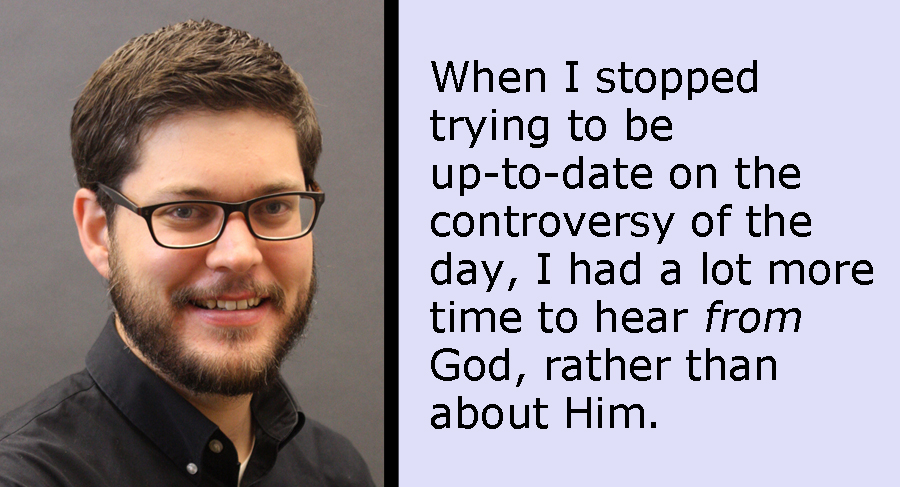
And guess what? I found that I had a lot more time to hear from God, rather than about Him from someone on a podcast. I found that I was freer to hear the questions the students actually had, rather than the ones I forced on them. And I found that it’s a lot easier to follow Jesus when you’re not fighting over Jesus.
So last week, a video of Victoria Osteen made the rounds. If you didn’t know, she is the wife of America’s most famous mega-pastor Joel Osteen. The clip is from a sermon in August wherein Victoria makes some…how do you say…provocative claims about proper motivation for obeying God. (If you haven’t seen it yet, then count yourself blessed and forget I mentioned it.)
Here’s what naïve Chase would’ve probably done in response to this clip if it had come along in my early days of ministry: I would’ve torn the thing to bits, shared all the parody videos, and read every blog that critiques the Osteens’ errant theology. I might’ve even used one of the parody videos in our weekly gathering or taught an entire lesson in response. In other words, I would’ve wasted a lot of time doing battle against something that had virtually zero influence on the people in my care.
Let me suggest this template for responding to public Christian controversies in your collegiate ministry context.
- Pray for the individuals caught in sin or espousing false teaching.
- Example: Pray for the Osteens and those influenced by their teaching ministry.
- Examine yourself in light of Scripture.
- Example: Ask God to show you where you have selfish motives in your obedience to him. Repent as necessary.
- Listen to your students. Respond when necessary.
- Example: If your students aren’t being influenced by the controversy, then press on in your disciple-making as if nothing has happened. If they have questions about it, then address the controversy.
You see, as you focus your energy on developing mature Christians who believe and apply the gospel to all of life, they will be equipped to address the counterfeits on their own. If at times, the controversies catch their attention and your students have questions, then embrace those as teachable moments. But remember, they are just that—moments—and not the normal pattern for your ministry.
Most of all, avoid the temptation to define yourself and your ministry by what you’re against. Is the gospel exclusive? Yes. Does God draw some hard lines in Scripture? Yes. But most clearly, he reveals himself in the person and work of Jesus Christ who gave most of his energy on earth to proclaiming the good news of the Kingdom.
Chase Abner is Collegiate Evangelism Strategist for the Illinois Baptist State Association.


 iB2 News