Archives For November 30, 1999

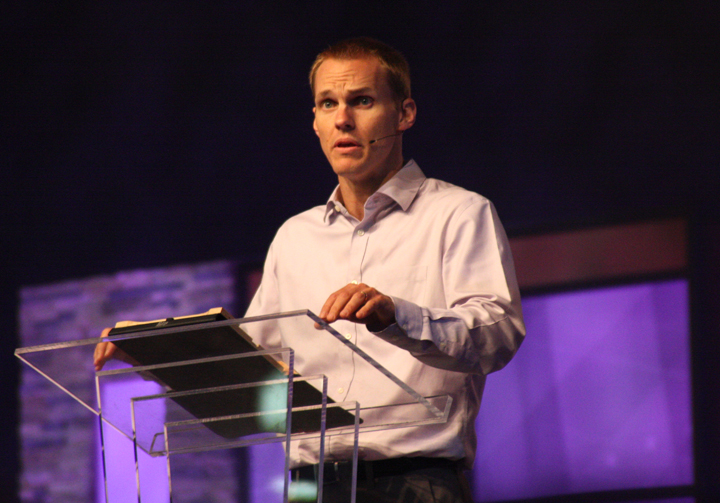
IMB President David Platt addresses staff and missionaries in a town hall meeting Thursday, August 27. Photo courtesy IMB

IMB President David Platt addresses staff and missionaries in a town hall meeting Thursday, August 27. Photo courtesy IMB

Richmond, Va. | The International Mission Board announced it will be eliminating 600-800 of its staff and missionaries in an effort to eliminate the board’s revenue shortfalls, which also includes a complete reset of the organization.

The plan was announced at an Aug. 27 town hall meeting that included senior leadership and missionaries and staff. Missionaries and non-field staff joined the meeting via digital media. Trustees were briefed on the plan at their Aug. 25-26 board meeting.

“With a really heavy heart, I announced to the staff this morning that the only viable way forward involves a great reduction of personnel and staff,” shared IMB Executive Director David Platt in a press conference following the town hall meeting. “We need a major adjustment in the number of personnel, to reduce the total number by 600-800 people.”

“These are not just figures. These are faces, brothers and sisters, who have spent their lives spreading the gospel to those who’ve never heard it,” he continued. The IMB currently has approximately 4,800 missionaries in the field and 450 staff which together equal 80 percent of its budget. The reduction represents up to 15% of the organization’s staff.

While giving through the Cooperative Program and Lottie Moon Christmas Offering has increased in the last few years, the IMB projects it will fall $21 million dollars short of its current budget this year. This follows several consecutive years of budget shortfalls and six years of expenditures totaling $210 million dollars more than has been given to the IMB.

In recent years, the organization has covered budget shortfalls through cash reserves and selling property. These measures along with plans set in place by previous leaders to reduce its staff and missionary size through attrition are “no longer viable in light of current reality,” stated Platt.

“We praise God for the reserves and property sales that made this possible and for leadership which chose to spend these resources for the spread of the gospel,” he said. “But we cannot continue to overspend. For the sake of short-term financial responsibility and long-term organizational stability we must act.”

Phase one of the plan is the voluntary retirement or resignation of missionaries and staff. Platt stressed no one would be pressured to leave during this first phase.

Phase two is the conclusion of the reset where decisions will be made to work through how missionaries will be used. “We must hold each other accountable in higher standards in our work…We can’t employ everyone who wants to work for the International Mission Board,” said Platt. The goal is to finish the reset by early 2016.

Platt encouraged everyone to boldly ask God where he was calling them to move. “God is not sidelining anyone in this process,” he said, noting opportunities for Christians to move overseas for their professions, education and retirement while they can also share Christ and plant churches.

“These realities, while they are financial, are ultimately spiritual,” Platt said. “God is ultimately orchestrating everything for his glory.”

The reset will be completed on knowledge IMB senior personnel will gain in coming days and months, as they evaluate what is needed around the world in various fields. “I certainly don’t have a forecast for what all that looks like,” said Platt. In all this the IMB is “trusting God to lead and re-direct 600-800 people in the days to come.”

The goal of the reset is to “get to a healthy place in the present in order to be in a healthy position for the future,” Platt said. “We want to move forward with innovative vision, wise stewardship, and high accountability to the churches we serve, the peoples we reach, and the God we worship.”

The IMB has provided a FAQ sheet related to its organizational reset that is available on the IMB website.

The 170-year-old organization is the primary international missions sending agency of the Southern Baptist Convention.

By Lisa Sergent with additional reporting by Morgan Jackson.

David_Platt_PastorsConference“The more we aggressively take the gospel into other cultures,” said International Mission Board President David Platt, “the more forcefully we will face the adversary on his doorstep….And let us be sure, he will not go down without a fight.”

Preaching the final message of the 2015 SBC Pastors’ Conference, Platt said, “Unreached people are unreached for a reason…all the easy ones are taken.”

And what the trends mean for your church

An Illinois Baptist team report

"Imagine if you could spend 10 focused minutes each Sunday morning in extraordinary prayer on two major needs locally, in your church, in America, or across the world.” SBC President Ronnie Floyd’s “Call to Prayer” that began at the Annual Meeting in Baltimore now turns to Sunday mornings, starting with one worship service in January.

SBC President Ronnie Floyd’s “Call to Prayer” that began at the Annual Meeting in Baltimore now turns to Sunday mornings, starting with one worship service in January.

1. Churches respond to “Call to Prayer”
“It is past time for us to prioritize prayer personally and in the church,” SBC President Ronnie Floyd wrote on his blog in early December. “For far too long, we have seen what we can do; it is time for us to see what God can do. This can only happen when we pray.”

Floyd’s continued call to prayer—leading to the June 2015 SBC Annual Meeting in Columbus, Ohio—began about two years ago with a series of meetings for pastors and church leaders. Floyd began quoting famed Puritan preacher Jonathan Edwards who called believers to “extraordinary prayer” for revival in America.

“God’s people will be given a spirit of prayer,” Edwards wrote in 1746, “inspiring them to come together and pray in an extraordinary manner, that He would help his Church, show mercy to mankind in general, pour out his Spirit, revive His work, and advance His kingdom in the world as He promised.”

Today’s growing urgency in prayer coincided with planning for the 2014 IBSA Annual Meeting in November. “We will either hunger for God’s righteousness out of desperation or…out of devastation,” IBSA President Odis Weaver told messengers. The November meeting peaked in a Concert of Prayer for Spiritual Awakening in Illinois and across the U.S.

“I believe we need to cry out to God for spiritual awakening, and for revival in our churches,” said IBSA Executive Director Nate Adams. He led more than 400 pastors and church leaders through a prayer cycle lamenting the lost condition of people in Illinois, repenting of apathy and ineffectiveness, interceding for spiritual awakening, and commiting to pursuit of revival in our churches.

Afterward, many pastors said they would lead similar prayer events when they returned home.

Now Floyd is asking churches to dedicate an entire Sunday morning service to prayer in January: “Just imagine if 100 churches, 500 churches, or several thousand Southern Baptist churches would turn a Sunday morning into insuring that Jesus’ House would be a genuine house of prayer for all the nations.
Just imagine what could happen if, from this point forward, you could spend 10 focused minutes each Sunday morning in extraordinary prayer on two major needs locally, in your church, in America, or across the world.”

Jonathan Edwards imagined the outcome. He called it the “revival of religion.” We would call it “advancement of the Gospel”—the salvation of lost souls, renewal of our churches, and restoration of moral sensibility to the nation.

In your church: SBC churches will likely give prayer a higher profile in 2015, but what are we praying for? How will we sustain prayer in our congregations as more than a once-in-a-while emphasis? Consider a Concert of Prayer in January. As Floyd wrote, “If we do not plan to pray, we will not pray!

2. Evangelicals cope with minority status
Say goodbye to Mayberry. The culture is shifting. What was once called good is now called evil, and vice versa, just as Isaiah said of his own times. The majority opinion in the U.S. approves of same-sex marriage, and many other sexual matters—once outside the norm—are being accepted by society at large. But, while the morals and mores are changing, Southern Baptists are not.

We still stand on the Word.

“One of the biggest challenges for conservative Christians is moving beyond a Bible Belt mentality, or a moral majority mentality,” said Russell Moore, president of the SBC’s Ethics and Religious Liberty Commission, “and seeing ourselves instead as in many cases a prophetic minority speaking to a larger culture about things that matter.”

Moore called on pastors and church leaders to “prepare people for what the future holds, when Christian beliefs about marriage and sexuality aren’t part of the cultural consensus but are seen to be strange and freakish and even subversive.”

“The Bible Belt is collapsing,” Moore has concluded.

The main evidence of that in Illinois is same-sex marriage which became legal June 1. Churches, at one point concerned they would be forced to perform
gay weddings, instead began addressing their bylaws as means of protection.

Another response by evangelicals is to make the church a place of refuge, said John Stonestreet, commentator for Breakpoint Ministries. “People who are enslaved to porn and suffer different forms of brokenness need to be able to come to the church and find answers. The church needs to offer hope and solutions. We need to say, ‘Here’s an option. Here’s the hope; here’s the gospel; here’s the truth; here’s Jesus; and here’s the cross.’”

Moore concurs. “We must have a voice that speaks to the conscience, a voice that is splattered with blood. We are ministers…not of condemnation, the devil can do that, we are ministers of reconciliation, which means that we will speak hard words…truthful words to address the conscience, even when that costs us everything.”

In your church: Church leaders are ministering from a new vantage point, but with the same apologetic. The challenge will be to confront cultural ills in a way that is biblically faithful and yet winsome. The message hasn’t changed, but some in our society today need to hear the truth truly spoken in love.

At a meeting in Asia, young missionaries surround new IMB President David Platt to pray for him as he seeks to mobilize churches. Photo by Hugh Johnson/IMB

At a meeting in Asia, young missionaries surround new IMB President David Platt to pray for him as he seeks to mobilize churches. Photo by Hugh Johnson/IMB

3. Young leaders urge peers to “re-engage”
The evidence has been building for a few years now: young Baptists are back. Or on their way back, at least.

They’re more visible at the Southern Baptist Convention’s annual meetings, and, in 2014, at two meetings on the gospel and marriage hosted by the Ethics and Religious Liberty Commission. They’re also beginning to look remarkably similar in age to the leaders of several of the denomination’s entities. At the ERLC’s October national conference, 125 young leaders had dinner with President Russell Moore and the heads of the SBC’s two missions agencies, Kevin Ezell and David Platt. At four years, Ezell is the longest-tenured at his post; Moore took the ERLC reins in 2013, and Platt was elected in August.

“There’s never been a better time in my lifetime to re-engage as a Southern Baptist than right now,” Ezell, president of the North American Mission Board, said at the meeting. “I really believe that God is up to something very special in the Southern Baptist Convention.”

Many young Baptists likely would cite the election of Platt, 36, as one of the highlights of 2014. Midwestern Seminary President Jason Allen, himself 38, blogged that when he announced Platt’s election during a September chapel service, students (and faculty and staff) broke into applause for the missiologist and author of bestseller “Radical.”

More than 1,000 miles away in Richmond, Va., young missionary appointees gathered around Platt shortly after his election to congratulate him and tell him how “Radical” and his messages on reaching the nations had helped lead them to the international mission field.

After Platt’s election, some Baptist leaders expressed concern that his Birmingham congregation, The Church at Brook Hills, gave a lower amount through traditional Cooperative Program channels, instead sending a large portion of their gifts directly to the SBC Executive Committee and International Mission Board.

But even with those concerns, established leaders affirmed Platt’s ability to mobilize young people to share the gospel to the ends of the earth. Southwestern Seminary President Paige Patterson noted it in a blog post published shortly after Platt’s election, calling for “thanksgiving to God for the presence of a young leader who has obviously garnered the hearts of the younger generation and who will have the opportunity to lead them to a commitment to the world mission enterprise.”

One blogger put it a little more plainly, noting Platt may be just the right voice to deliver tough love to would-be male missionaries outnumbered by female “Journeymen” appointed through the IMB.

“Lend your voice to addressing the issue of young males wimping out of Journeyman service,” William Thornton wrote at SBC Voices. “These guys think you walk on water, Mr. Radical. Give ‘em both barrels on this and see what happens.”

In your church: Look for increased excitement from your own young leaders now that the authors and speakers they’ve followed for several years are in prominent positions. Be prepared for them to want to go to the hard places for ministry and missions. “That’s where we hear young couples saying they want to go, that they want to be radically obedient to what God has called us to do for the nations,” said IMB trustee chairman David Uth. “The passion is there.”

4. Growing persecution: From “the Nun” to “resurrection people”
Before Ebola dominated headlines, another one-word threat struck fear in the hearts of many around the world—and even here. The war of terror and persecution waged by ISIS, or the Islamic State of Iraq and Syria, was the story of the year earlier in 2014.

ISIS chased religious minorities high into the mountains of Iraq. They filmed beheadings and broadcast them as warnings to the rest of the world. And they stirred many in the Western world to stand with the persecuted church. The Arabic letter “Nun” was used on social media pages to symbolize solidarity with those persecuted for their faith in “the Nazarene,” or Jesus.

It’s not just a problem in the Middle East. In Nigeria, 1,505 Christians were killed for their faith in the first seven months of 2014, according to non-profit Jubilee Campaign. North Korea again topped Open Doors’ list of most persecuted countries, highlighted by the imprisonment of American Kenneth Bae, who was finally released in November. Others, including Pastor Saeed Abedini in Iran, remain in prison.

Closer to home, Christians felt a different kind of persecution. Businesses and non-profits faced government fines for not providing abortion-causing contraceptives. The mayor of Houston, Texas, subpoenaed the sermons of pastors who were against the city’s pro-LGBT ordinance.

Christian leaders here urged believers to remember who they belong to. “The answer to the decline of religious freedom and the change in the moral climate is not found in waging incessant cultural wars, filled with rage at our changing culture,” said LifeWay Research President Ed Stetzer. “Simply put, you can’t hate a people and reach a people at the same time.”

Instead, he urged Christians, “Let’s live like the resurrection people, adorning the gospel with lives of grace. Even in our passion to defend freedoms increasingly at risk, let’s remind ourselves this generation is desperately in need of the love of Christ, lived and shared.”

In your church: Be prepared to think globally about persecution. How can your church go beyond your normal prayer times to intercede for those under threat for their faith?

Be alert to what government bodies are doing. Speak out when religious liberties are threatened. The IRS prohibits churches from supporting candidates, but not from speaking on issues related to faith.

SBC’s Frank Page speaks frequently about the future of the Cooperative Program, painting a hopeful picture despite years of declining offerings. Photo by Morris Abernathy

SBC’s Frank Page speaks frequently about the future of the Cooperative Program, painting a hopeful picture despite years of declining offerings. Photo by Morris Abernathy

5. Cooperative missions for a new generation

Most Baptists agreed the Cooperative Program, the denomination’s chief method of funding missions and ministry, is the best way for churches together to pursue the Great Commission. But how to fix the CP, plateaued and trending slightly downward for years, is up for debate. The election of David Platt as IMB president revealed how his church and other large churches have bypassed their state conventions, even though CP gifts for national and international missions are supposed to be routed first through the state level.

“I have heard some people say, ‘The big problem is that the younger generation simply isn’t educated about CP,’” blogged pastor J.D. Greear after Platt’s election. “That may be true for a small percentage of people, but the bigger problem is probably that they are educated about it. The more they find out about CP giving, the less they are motivated to give.”

Meanwhile, blogger Bart Barber spoke up for the reliability of the system itself, calling those who disagree with the way CP funds are allocated to greater involvement in SBC life. “…Within the Cooperative Program approach you can pursue any ministry, reallocate any budget, or adopt any methodology that you can convince enough of your fellow churches and fellow pastors to adopt,” Barber posted at SBC Voices.

“Bring on the changes! Make your proposals! Go to the floor of the SBC Annual Meeting! Attend your state convention meeting! Advocate tirelessly and fearlessly for the improvements you’d like to see. Whatever they are and however much adaptation they would require, I’m betting that almost none of it would actually require any changes at all in the Cooperative Program.”

SBC Executive Committee CEO Frank Page continued his campaign for increased giving through the Cooperative Program, touring the nation (including Chicago) to talk with younger pastors and leaders. “I’ll drop the Cooperative Program if you can show me something else that long-term is effective and engages every church concurrently and consistently in an Acts 1:8 strategy,” Page has said on several occasions. “Show it to me, and I’ll support it….But I
haven’t found it yet.”

In your church: More conversation about CP in the national SBC could mean it’s time for a refresher course in your local church. A class for young or new Baptists is an opportunity to teach about why Baptists give cooperatively. One big reason: CP helps missionaries focus on their mission field, instead of fundraising. Another reason: CP helps the local church have a balanced missions strategy, supporting work on all their Acts 1:8 mission fields.

-With reporting from Baptist Press

Read all of the December 22 Illinois Baptist at http://ibonline.IBSA.org.

“The more our lives are devoted to spreading this gospel,” said David Platt at an October meeting near St. Louis, “…do we really think that our adversary and the spiritual forces of evil in the heavenly realms are going to sit back and just watch that take place?"

“The more our lives are devoted to spreading this gospel,” said David Platt at an October meeting near St. Louis, “…do we really think that our adversary and the spiritual forces of evil in the heavenly realms are going to sit back and just watch that take place?”

NEWS | Meredith Flynn

Arnold, Mo. | Voice crackling with intensity, David Platt painted a picture of the current status of the gospel: With seven billion people in the world, even the most liberal estimates leave 4 or 5 billion who do not know Christ. And a couple billion of those have never even heard the gospel, added the recently elected president of the Southern Baptist International Mission Board.

“If that’s true in the world…then we don’t have time to play games in the church,” he told the crowd gathered at First Baptist Church in Arnold, south of St. Louis.

“We don’t have time to waste our lives on a nice, casual, comfortable, cultural version of Christianity. Because, number one, that’s not Christianity. Number two, God’s created us for something so much greater than that.”

Hundreds of people gathered Oct. 6 for the St. Louis-area stop of the Send North America Experience Tour. The two-hour service, facilitated by the North American Mission Board, was part of a multi-city effort leading up to the national Send North America Conference in August 2015.

Worshipers of all ages stood and sang before Platt came to the podium. He started his message with the bleak reality of billions of people who don’t know Christ. Then, he preached better news from the Book of Acts. Reading from the end of chapter 7 through the beginning of 8, he told the audience that it’s “ordinary people” through whom the gospel is spread.

In a part of northern India known as a spiritual graveyard, Platt said, a chicken farmer and a school superintendent attended a disciple-making training session where they were assigned to go out into the villages and ask how they could pray for the people there. The two men didn’t expect success, Platt said, but they went anyway. Near the end of their time in the village, they met a man who said he had heard about Jesus, and wanted to know more. The man went to get his family so that they could hear the good news too. Around 20 people in the village came to Christ. A few years later, there are 350 churches in villages in that part of India.

“Let’s put aside an unhealthy dependence on places and programs and realize that the gospel in ordinary people has power,” Platt said. But it’s not their own power. The extraordinary power of the Holy Spirit was at work in Acts and is still at work in Christians today, and through that it, believers proclaim the gospel, Platt said.

Many believers say they witness through their lives, by being kind. “Hopefully, that’s a given,” he said, as the audience laughed. “Nobody gets on a witness stand and smiles. They speak. They testify. And this is why the spirit is in us, that we might speak the gospel.”

Through the power of the Holy Spirit, early disciples also prayed and fasted, he continued. And they suffered.

“How will we ever show the world a proper, clear picture of Jesus if everything always goes right for us?” Platt asked. Suffering makes sense in the life of a believer.

“If our lives are on the front lines making the gospel known in our communities and cities and to the ends of the earth, we can expect to be met with the full force of hell.”

Alan and Jean Lasley sat three rows from the front of the auditorium with their pastor and his wife and another couple from First Baptist Church in Red Bud. Platt’s simple delivery was the thing he would take away from the evening, Alan said.

“Just be more intent on telling others about Jesus,” Jean said of what she had heard. A simple message for sure, and clear. As Platt concluded his message, he appealed to every ordinary disciple in the room.

“In a world and a time and a place where God has put us, in a city where God has put you, let’s say we consider our lives worth nothing to us if only we may finish this race and complete this task the Lord Jesus has given us.

“Ordinary people in this room, every single follower of Christ with extraordinary power….wherever God leads you, whether he leaves you here the rest of your life, or sends you to people who’ve never heard the gospel. Testify. Preach. Pray. Give. Even suffer, for the spread of this gospel, to the ends of the earth.”

Meredith Flynn is managing editor of the Illinois Baptist newspaper.

Note: The column below is excerpted from a response to “Is ‘missional Calvinist’ an oxymoron?” by Eric Reed. Read the original column here.

COMMENTARY | Josh Flowers

Two weeks ago I sat in a village in Brazil where I have been ministering alongside a Presbyterian national missionary. Over lunch that day, I had challenged the methodology of this brother for being too theological. I asked him if he really thought they were ready for this level of deep thinking. He defended his methodology. A few hours later, in front of our small group, my partner asked those in attendance if the material was too deep or too theological. The aged spokesman of the group stood up and emphatically responded, “Absolutely not!” He continued to explain that they must hear and study the deep teachings of the Bible to grow in their faith.

…My family left Illinois in 2009 to attend seminary and are now in serving the IMB in the Amazon Basin. I left a good job and proximity to family and friends. These were not decisions taken lightly. The Lord called our family to share Jesus Christ with the many UPGs in the Amazon Basin. The cost has been high in the eyes of the world, yet Acts 20:24 has remained an important verse during our transition to the mission field. It has been worth it. I say all this in response to your apparent fear that evangelistic zeal might be in jeopardy. With all my heart I want every group in Brazil to hear the message of the gospel and respond affirming their need for Christ. However, one day I will return to the United States. On that day, I don’t want the then current missionaries redoing what I’m investing my life into right now. I want those brothers of the villages where we’re working to be active in their faith reaching into the furthest corners of the Amazon to reach every tribe for Christ. If that means that baptism numbers don’t look as good, so be it.

David Platt is a man who has the anointing hand of God upon his life. His passion for reaching the lost is incredible. While his theology may be different than the status quo, I believe his selection is providential for driving Southern Baptist missions endeavors. I pray that our national and state convention leaders will choose to support the leader of the IMB as God’s anointed man for this time. As for me, my family, and my colleagues, we will support David Platt as he pushes Southern Baptists to attack lostness around the globe.

Respectfully,
Josh Flowers
IMB Missionary, Brazil

John Calvin, 1509-1564

John Calvin, 1509-1564

COMMENTARY | Eric Reed

Like “jumbo shrimp” and “paid vacation,” some phrases bring together contradictory words and give them new meaning. They’re called oxymorons. Even that is an oxymoron, connecting two Greek words meaning “sharp” and “dull.” And there’s “awfully good,” “near miss,” “minor miracle,” and “adult children.”

Some would say we should add to the list “missional Calvinist.”

The election of David Platt as president of the International Mission Board prompted this hallway conversation:

“What’s the effect of Calvinism on missions?”

“Historically, not so good.”

“Oh, I guess I’d better read up on Calvin.”

Yes, that may be helpful in understanding some objections raised about the choice of Platt, but there’s a new breed of Calvinists today, identified by the editorial director of The Gospel Coalition, Collin Hansen, as “Young, Restless, and Reformed.” In his 2008 book, Hansen coined the term “the new Calvinism.”

Historically, strongly Reformed denominations weren’t strongly committed to missions. It is true that a couple of brands of Presbyterians were early leaders in the missions movement, sometimes blazing trails that Southern Baptists would later follow. Lottie Moon’s own biography is littered with Presbyterian missionaries who shared her field in China and, as deeply, her passion for converting lost peoples.

But for most Reformed denominations the passion didn’t last. The record of “old Calvinism” is that conversions declined over the years as the emphasis on evangelism was eclipsed by the dedication to discipleship and doctrine.

Although Southern Baptists generally would say “evangelistic discipleship” is not an oxymoron, the two seem to get pitted against each other in the debate over how people are actually saved. The challenge for Platt will be to bolster the evangelistic zeal of missionaries on the field while he espouses more disciple-making and less easy-believe-ism.

If he’s concerned about abuse of “the sinner’s prayer” in leading people to Christ (at the 2012 Convention, Platt famously tried to explain his challenge of Southern Baptists’ favorite evangelism tool), then he must clearly explain how IMB missionaries are to guide converts to the point of public commitment.

Baptists, historically, have been good at helping seekers commit to Christ and show it by believer’s baptism. We’ll have to watch the baptism numbers from our foreign fields to see how well the union of Reformed theology and missional praxis works. Is it—or isn’t it—an oxymoron? Platt, and his IMB, will be Southern Baptists’ most public test of that question.

No one doubts Platt’s passion. Even his biggest supporters rib him for his intensity. “Do it for the nations, David,” a famed Reform pastor teased during a panel discussion in Baltimore. The crowd laughed, recognizing one of Platt’s driving phrases. But Platt is serious about it.

“For the Nations” might serve well as IMB’s motto under Platt’s leadership. There’s nothing oxymoronic about that.

Eric Reed is editor of the Illinois Baptist newspaper.

David Platt, 36, was elected president of the Southern Baptist International Mission Board on Aug. 27.

David Platt, 36, was elected president of the Southern Baptist International Mission Board on Aug. 27.

COMMENTARY | Eric Reed and Meredith Flynn

one_blogThe first time I saw David Platt was at the SBC pastors conference in 2012, explaining fervently why he questions use of the sinner’s prayer. In his preaching, Platt marries Reformed theology with a passion for missions.

The first time I heard of David Platt, he had just been called to pastor a megachurch in Birmingham, Alabama—at age 26. Leaders of the church were promising they would surround their new pastor and guide him through a ministry that would challenge a man with three times his experience. Platt had completed three degrees at New Orleans Baptist Theological Seminary and served as assistant professor and dean of the chapel. Truly, he was a wunderkind.

He still is.

But at 36, it’s fair to ask if he’s ready for the enormous responsibility of leading a $300-million-dollar-a-year missions enterprise with 5,000 employees. His church’s record of bypassing the Cooperative Program for most of its giving to IMB and international missions has been reported. And Platt comes to office with many mission trips to his credit, but this position will be his first as a career missionary.

Still, we could be seeing the start of a long and remarkable tenure such as those of the giants who helmed our missions endeavors in the days of our greatest Gospel advance.

Let us pray so.

-Eric Reed

two_blogThe first words I ever heard David Platt speak weren’t his own. At a collegiate conference several years ago, he walked on stage and started preaching through the first half of Romans. Paul’s actual words.

After the audience frantically paged through their Bibles to find where he was, they sat in rapt attention. It was an urgent message, one that clearly challenged these early 20-somethings to listen, respect the Word, and understand it in a new way.

The most exciting news about David Platt’s election as the new president of the International Mission Board may well be his ability to challenge young people to a deeper understanding of Scripture, and a more intentional following of God’s will for believers.

Several years later on a Good Friday, a slightly older group gathered for several hours of teaching during one of Platt’s “Secret Church” simulcasts. As they scrambled to fill in hundreds of outline blanks during his rapid-fire message, the challenge again was clear: focus, listen, learn. And, let’s all do whatever it takes to get the gospel to more people around the world.

Right after IMB trustees elected Platt last month, a group of young missionaries reportedly gathered around to congratulate him and thank him for the influence his messages and the book “Radical” have had on their lives. These newly appointed missionaries have followed God’s call to the ends of the earth.

Let’s pray many, many more will accept the challenge.

-Meredith Flynn

Pre-ruling panel discussion explores impact of Hobby Lobby case and threats to religious freedom

NEWS | Meredith Flynn

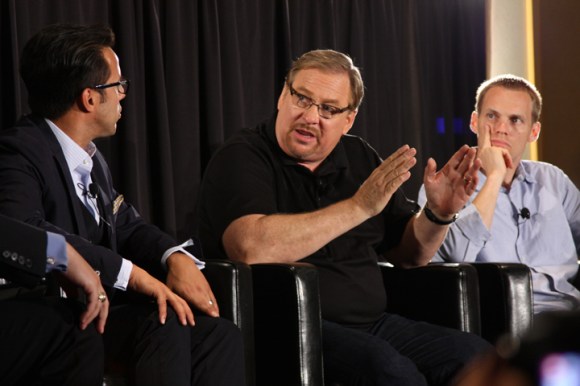
Pastors Rick Warren and David Platt (center and right) joined a panel discussion in June on Hobby Lobby and religious liberty. The panel was sponsored by the Ethics and Religious Liberty Commission during the Southern Baptist Convention in Baltimore.

Pastors Rick Warren and David Platt (center and right) joined a panel discussion in June on Hobby Lobby and religious liberty. The panel was sponsored by the Ethics and Religious Liberty Commission during the Southern Baptist Convention in Baltimore.

After the Supreme Court’s June 30 ruling in favor of Hobby Lobby, many Christians celebrated the decision that opens the door for “closely held” companies to refuse to cover abortion-inducing drugs in their employee health care plans.

“A great day for Religious Liberty!” tweeted Southern Baptist Convention President Ronnie Floyd, with the hashtag #hobbylobby.

“This is as close as a Southern Baptist gets to dancing in the streets with joy,” wrote Russell Moore, president of the SBC’s Ethics and Religious Liberty Commission. Moore presented an award to the Green family, who owns Hobby Lobby stores, during the SBC Annual Meeting in June. The Greens filed suit against the Department of Health and Human Services two years ago over what has become known as the abortion-contraceptive mandate in the Affordable Care Act.

“… We simply cannot abandon our religious beliefs to comply with this mandate,” CEO David Green said then.

The Hobby Lobby case has brought new visibility to religious liberty issues. But Texas pastor Robert Jeffress told Fox News “the victory will be short lived.”

“…People of faith are going to increasingly come into conflict with governmental mandates that violate their personal faith,” said Jeffress, the pastor of First Baptist Church, Dallas, according to a report by The Christian Post.

Imperiled religious liberty was the focus of a panel discussion in Baltimore during the Southern Baptist Convention last month. Religious freedom is a critical issue for churches, panelists said, but it’s still flying under the radar for most of them.

Moore and the ERLC hosted the conversation that include pastors Rick Warren and David Platt, and Samuel Rodriguez, president of the National Hispanic Christian Leaders Conference. The panel focused on the Hobby Lobby Supreme Court case but also veered into other questions concerning religious freedom.

The panelists’ main point was clear: All church members must be aware of issues that threaten religious liberty, standing firmly in a Gospel that compels Christians to stand up for their religious freedoms, and for that of others.

Before the Court ruled in favor of Hobby Lobby, Moore said the verdict would be one of the most significant decisions affecting religious liberty in years. The case and several others, like the Washington florist who was sued when she declined to provide flowers for a same-sex wedding, have raised awareness about religious freedom and threats to it.

But religious liberty isn’t just tied to current events or cases. It has ancient roots.

“Before religious liberty is a political issue or a social issue, religious liberty is a Gospel issue,” Moore said during the panel discussion. People come to Christ when the Word of God addresses their conscience, he explained. An uncoerced conscience.

“We don’t believe that the Gospel goes forward by majority vote,” he said. “We believe that the Gospel goes forward by the new birth, and so we need freedom in order to do that.”

Refusing to fight for religious liberty now, Moore added, will be highly detrimental to future generations. “If we shrug this off, what we’re doing is consigning future generations, and we’re consigning people’s consciences, to a tyranny that we are going to be held accountable for.”

There are also ramifications for Christians living and working in contemporary society. Platt, pastor of The Church at Brook Hills in Birmingham, Ala., said during the panel discussion he felt convicted about how many of his church members are aware of how their freedoms could be threatened.

People in churches “need to know it’s coming,” Platt said. “It’s going to affect every person in every profession in the church. This is not just for certain groups.”

Costly faith

One lesson from the Hobby Lobby case, Moore said, is that threats can simmer under the surface for a long time before they bubble up. “Many people assume that religious liberty violations come with shock and awe, with tanks coming in. And religious liberty violations typically happen this way, with a bureaucrat’s pen…By the time the issue gets to you, you have not even seen how it has already advanced.”

Perhaps because so many flagrant violations of religious liberty happen in other countries, the issue can seem like what Moore termed “other people’s problems.” That’s why it’s key to champion freedom not just for Americans, or Christians, the panelists said. “If it’s them today, it’s us tomorrow,” Warren said of other religious groups facing threats to their freedom.

Concerning religious liberty in America, the panelists talked about voting as one area that can breed complacency. If you preach sanctity of life and biblical marriage and religious liberty on Sunday, Rodriguez said, but then vote in a way that runs counter to those things on Tuesday, isn’t that hypocrisy? “Our vote must be a reflection of my Christian worldview belief.”

One other cause for a lack of concern, Platt said, is a lack of urgency. Many church members aren’t taking risks for the Gospel, he said. Faith doesn’t cost anything for many of us. But, he said, “When you believe in a resurrected king, you speak about him all the time, and whatever he says you do, no matter what it costs you in the culture.”

The nations need You

Meredith Flynn —  September 23, 2013

pull quote_PLATTHEARTLAND | David Platt

Editor’s note: David Platt, pastor and author of the New York Times bestseller “Radical,” led this Prayer for the Nations during the Sept. 10 inauguration of SBC Ethics & Religious Liberty Commission President Russell Moore.

Our Father who art in heaven, hallowed be Your name in all the earth. O God, cause Your name to be made known as holy among all nations. We confess that You are sovereign over every country and You hold every leader, every king, every queen, every dictator, every prime minister and every president in the palm of Your hands.

None of them are ultimately sovereign over anything. You are ultimately sovereign over everything. You alone are Lord, You alone are holy, You alone are mighty, and You alone are just, so we pray, O God, particularly in our day, rise up and cause Your righteousness and Your peace and Your justice to reign among the nations.

And in Your justice, we pray, remember mercy. Have mercy upon those in high positions. Have mercy upon the hungry, the weak, the oppressed, the poor, the neglected and the persecuted. Have mercy upon our friends and upon our enemies, upon those who are near to us and upon those who are far from us. And have mercy upon Your church, O God.

Help us, by Your grace and with Your Gospel, to proclaim Your glory to the ends of the earth, particularly among the peoples who have yet to hear of Your love.

Lord Jesus, the nations of the world need You. We need You to save us from our sin and to save us from ourselves, and we praise You for Your life, Your death and Your resurrection, which make such salvation possible. By your blood, you have ransomed men and women for God from every tribe, tongue, people and nation, and so we pray today for the nations in anticipation of the day when You will receive the praise You are due from every people group on the planet … in anticipation of the day when You will usher in a new heaven and a new earth and Your people drawn from every nation of the earth will dwell with You in holiness and happiness, safety and security, free from sin and suffering, forever and ever.

We are still today, and we know that you are God. And we trust, we hope, we know that You will be exalted among the nations, and You will be exalted in all the earth. Toward that end we pray in Jesus’ name, Amen.

David Platt is pastor of The Church at Brook Hills in Birmingham, Ala. This column appeared at BPNews.net.

pull quote_BRIDGES_augCOMMENTARY | Erich Bridges, from Baptist Press

The backlash against striving to be a “radical” follower of Jesus started earlier this year.

Giving your all for Christ – including your life – goes back to the earliest Christian disciples and has been one of the marks of true faith throughout church history.

“Radical” living, however, has a more specific meaning in this controversy, stoked by several articles in Christian publications. It refers to the commitment young evangelical leaders, particularly Southern Baptist pastor/author David Platt, have urged American Christians to make.

In a popular series of books and teachings beginning with “Radical: Taking Back Your Faith from the American Dream” (2010), Platt has challenged American believers to forsake the comfortable, materialistic, watered-down Christianity many of us practice. In its place, he calls for the kind of sacrifice and obedience that might lead some to give up possessions, go to risky places to proclaim the Gospel, maybe even suffer and die for Christ.

He’s been joined by evangelical voices such as Francis Chan (“Crazy Love”), Kyle Idleman (“Not a Fan”) and others calling for a faith that looks more like the one found in the New Testament than the one commonly seen in suburban American churches.  

Hold on, respond the critics. You’re setting up an elite category of super-sanctified commando Christians, leaving the rest of us feeling like inadequate, second-class believers. What about everyday folks who quietly go about their lives and provide for their families, while faithfully worshipping God and serving others? Are they failing the test of basic discipleship if they don’t leave their homes and families and do something “radical” for Christ?  

“The heroes of the radical movement are martyrs and missionaries whose stories truly inspire, along with families who make sacrifices to adopt children. Yet the radicals’ repeated portrait of faith underemphasizes the less spectacular, frequently boring, and overwhelmingly anonymous elements that make up much of the Christian life,” wrote Matthew Lee Anderson (founder of the influential Christian blog “Mere Orthodoxy”) in a March cover story for Christianity Today magazine.

“[T]here aren’t many narratives of men who rise at 4 a.m. six days a week to toil away in a factory to support their families. Or of single mothers who work 10 hours a day to care for their children. Judging by the tenor of their stories, being ‘radical’ is mainly for those who already have the upper-middle-class status to sacrifice,” Anderson wrote.

Anthony Bradley went a step further in a commentary for the Acton Institute, reprinted in WORLD Magazine in May. He called the push to be “radical” – and the “missional” church movement generally – manifestations of a “new legalism” among evangelicals.

Bradley, a well-known commentator and professor at The King’s College in New York, said he reached that conclusion after a long conversation with a Christian student struggling over what to do with his life.

“I continue to be amazed by the number of youth and young adults who are stressed and burnt out from the regular shaming and feelings of inadequacy if they happen to not be doing something unique and special,” Bradley wrote.

“Today’s millennial generation is being fed the message that if they don’t do something extraordinary in this life they are wasting their gifts and potential. The sad result is that many young adults feel ashamed if they ‘settle’ into ordinary jobs, get married early and start families, live in small towns, or as 1 Thessalonians 4:11 says, ‘aspire to live quietly, and to mind [their] affairs, and to work with [their] hands.’

“… The combination of anti-suburbanism with new categories like ‘missional’ and ‘radical’ has positioned a generation of youth and young adults to experience an intense amount of shame for simply being ordinary Christians who desire to love God and love their neighbors (Matthew 22:36-40)…,” Bradley wrote. “Why is Christ’s command to love God and neighbor not enough for these leaders?”

This supposed “shaming” of young Christians sure is news to me.

I seldom pass up a chance to challenge young people to get involved in local and international missions – and I’m regularly inspired by their responses.

Ask counselors who work with young missionary candidates and campus ministers who mentor students, and they’ll tell you the same thing: Millennial Christians want to make a difference in the world. They want to serve the poor and fight injustice. They want to act on Christ’s command to take the Gospel to the nations. Sometimes they get impatient with parents and other elders who try to hold them back. And they’re willing, even eager, to go to some of the toughest places on earth.

True, not everyone is equipped by God to go to such places. Those who do go need to demonstrate a clear calling from God; otherwise they’ll never make it when the going gets hard. But everyone can participate in the task through awareness, prayer, support and local church mobilization.

The old division between “regular” church folks and the special few who go to the mission field has been bridged by the vast new opportunities for participation afforded by modern travel, technology and networking – and the rediscovery of the biblical truth that reaching all peoples is the mission of the whole church and everyone in it.

The only non-negotiable requirement is obedience.

One of the young people profiled in Platt’s “Radical” is Genessa Wells. The Texas Baptist teacher lived and served in Egypt for two years – and died there at age 24. She wasn’t a martyr; she was killed in a bus accident in the Sinai just one day before the terror attacks of Sept. 11, 2001. I never met her, but I had the privilege of attending a memorial service for her a few days later in Cairo.

Wells, who had an angelic singing voice, had planned to pursue her study of music in seminary after she came home from Egypt. She never made it back, but she packed enough passion for several lifetimes into her brief life.

Shortly before she moved to the Middle East in 1999, she wrote: “I could give up (on overseas service) and get married and become a music teacher. All of this is very noble and to be quite honest, sounds good to me! But in my heart, I want to change my world – more than I want a husband and more than I want comfort. I need this opportunity to grow and to tell others about Jesus. One of my favorite praise songs says, ‘I will never be the same again, I can never return, I’ve closed the door.'”

Two years later, in her last email home, she quoted another praise song: “‘Open the eyes of my heart, Lord, open the eyes of my heart, I want to see you … shining in the light of your glory….’ It seems that everything we do comes down to one thing: His glory. I pray that all our lives reflect that…. It seems like a floodgate has been opened in my heart . I have a passion for it I never knew God had given me. He’s given it to me for His glory.”

She shared her passion for God with Egyptians, with Palestinians in refugee camps, with Bedouin in the desert. If she had lived, she might have gone home to Texas, gotten married, started a family, become a music teacher. Or she might have opted to serve long-term overseas. Either way, she had one grand purpose in life: to love God and praise Him wherever she went and in whatever she did.

Erich Bridges is an International Mission Board global correspondent. Visit Worldview Conversation, the blog related to this column.