Archives For November 30, 1999

Trends and news about secular culture

Young people fill the pews at Capitol Hill Baptist Church in Washington, D.C., pastored by Mark Dever.

Young people fill the pews at Capitol Hill Baptist Church in Washington, D.C., pastored by Mark Dever.


COMMENTARY | Meredith Flynn

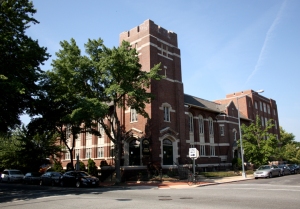
Mark_Dever_blogA 16-page church bulletin leaves little to the imagination. At Capitol Hill Baptist Church in Washington, D.C., worship attenders know exactly what they’re getting into from the time they walk into the split-level, high-ceilinged sanctuary, less than a mile from the U.S. Capitol.
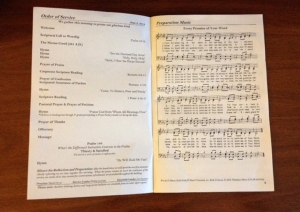
The order of service, printed neatly on the inside cover page, lists every hymn, prayer, and Scripture reading. Every song is there in entirety – not just lyrics, but actual music.

Even the Nicene Creed gets its own page, with three paragraphs of explanation about where it came from and why we recite it. (“I said this in church for 28 years,” said one visitor, “and nobody ever explained it to me.”)

Your first impression is that this church is good at welcoming new people. They remember well that not everyone who walks in the door has been here before, and maybe they’ve never been in any church before. But it’s more than that. There’s a shrewdness here (in the nicest sense of the word), and an attention to detail that may be best matched just down the street under the Capitol Dome.

Capitol Hill Baptist Church is a church for its very unique city.

Capitol_Hill_exterior_blogWhat’s most interesting is that there are Millennials here – that elusive generation that’s giving churches fits around the country. A variety of ages are represented at Capitol Hill, but the congregation skews young. A few families sat in “bulkhead” seating at the back of the sanctuary, with a little extra leg room to accommodate a fidgety toddler. The rest of us were packed into crowded pews – between 900 and 1,000 are here for worship on Sunday mornings.
Capitol Hill isn’t doing what most churches do to try to reach Millennials. Lately, the normal prescription is a relaxed dress code, coffee bar in the lobby, and maybe a violinist in the worship band. But here in Washington, what’s reaching Millennials is orderliness. And 5-minute prayers (four of them). And a 55-minute sermon based on one chapter of Psalms.

Capitol_Hill_bulletin_blog“You will be bored if you don’t open your Bible and leave it open,” Pastor Mark Dever said before his message on Psalm 143. “All I’m gonna do is talk about what’s in the Bible.”

The service lasted more than two hours, but people still stuck around to chat afterward. Some milled around the small bookstore tucked into a corner of the overflow room just off the main sanctuary. Coffee and cookies and conversation were had downstairs.

There are few surprises at Capitol Hill, besides the fact that this church on a quiet tree-lined street is ministering effectively in a difficult place, using methods that you never would have thought would work. Combined with age-old truth.

“You may have come in here as an adversary of God’s, an enemy,” Dever said at the end of his sermon. “But there’s no reason you have to leave that way.”

Meredith Flynn is managing editor of the Illinois Baptist newspaper.

The_BriefingTHE BRIEFING | Meredith Flynn

Ronnie Floyd, elected president of the Southern Baptist Convention last week in Baltimore, is calling on Baptists to rally in Columbus, Ohio, next summer to pray together for spiritual awakening.

“As I work with our Order of Business Committee as well as other leaders, I will respectfully request that we dedicate as much time as possible in next year’s convention to pray extraordinarily for the next Great Awakening,” Floyd wrote in a June 16 column for Baptist Press. “I want to call you to Columbus to what could be one of the most significant prayer gatherings in our history.

Floyd, pastor of Cross Church in northwest Arkansas, said in Baltimore that America’s greatest need is a great awakening. Prior to the convention, he organized two national gatherings for Baptist pastors to pray together.

“Our convention has bemoaned our decline in baptisms, membership, attendance and giving far too long,” Floyd wrote. “Now is the time for us to take aggressive action by calling out to God together in prayer.

“At the same time, we must take the needed strategic actions to change our trajectory as a convention of churches. While we face these critical times, we know God is doing some amazing things right now through Southern Baptists. As we celebrate those to the glory of God in Columbus, we will also call out to God in urgent desperation.”

Read Floyd’s column at BPNews.net, and click here to read more of the Illinois Baptist’s coverage from Baltimore.

Stanley explains tweets during SBC meeting
Georgia pastor Andy Stanley sparked a long online conversation when he tweeted during the Southern Baptist Convention’s annual meeting, according to a Christian Post report. The Baltimore meeting focused heavily on revival and spiritual awakening. Stanley, pastor of North Point Community Church in Alpharetta, was not at the meeting but tweeted on the topic several times, including, “Instead of praying for revival leaders of the SBC should go spend three weeks with @perrynoble Why pray for one when you can go watch one.”

Stanley was referring to Pastor Perry Noble of New Spring Church in South Carolina. He told The Christian Post that in the tweet and others during the meeting, he was referring to revival in the local church, rather than in a great awakening sense. “I can understand the confusion and I definitely contributed to it,” said Stanley, who still exhorted the local church to take actions that can lead to spiritual awakening.

“I love the local church. And I’ll admit I get a bit stirred up when I hear church leaders talk about the need to reach more people while refusing to make the changes necessary to actually get the job done.” Read more at ChristianPost.com.

Millenials tell Barna: Top 5 things to do before 30
Barna’s recent study of Millenials – “20 and Something” – delves into what the generation believes about life and work. Including the five things they most want to accomplish before they turn 30: gain financial independence (59%), finish their education (52%), start a career (51%), find out who they really are (40%), and follow their dreams (31%). Read more at Barna.org.

Be fruitful, says Pope
After celebrating Mass with 15 married couples at the Vatican, Pope Francis warned against childlessness. “It might be better – more comfortable – to have a dog, two cats, and the love goes to the two cats and the dog,” he said, according to a report by Religion News Service. “Then, in the end this marriage comes to old age in solitude, with the bitterness of loneliness.”

The pope’s remarks came on the heels of a report that Italy’s birth rate fell to a record low in 2013. The U.S. birth rate hit a record low in 2012, but about 4,700 more babies were born in 2013, according to the Centers for Disease Control and Prevention.

List locates world’s most persecuted countries
Christians face the worst persecution in North Korea and Somalia, according to the 2014 World Watch List. For 12 years, North Korea has topped the list released by non-profit organization Open Doors. Syria, Iraq, Afghanistan, Saudi Arabia, Pakistan, Iran and Yemen also are in this year’s top 10, along with the Maldives, a chain of islands off the coast of India.

SBC_annual_meeting_logoBaltimore | The Southern Baptist Convention’s annual meeting officially starts here June 10, but Baptists are already on their way to Charm City for pre-Convention festivities. Here’s our list of what to watch for over the next few days:

1. Southern Baptists will elect a new president, and their choice could point to the lasting legacy of Fred Luter, elected two years ago as the SBC’s first African American president. A victory for Maryland pastor Dennis Kim could mean Baptists have embraced Luter’s charge to bring more diverse voices to the leadership table. Electing Ronnie Floyd might mean they’ve taken to heart Luter’s pleas for revival, and believe that Floyd, who organized recent prayer gatherings for church leaders, is a president who can lead Baptists toward the repentance required for spiritual awakening. And a vote for Kentucky pastor Jared Moore, the youngest candidate at 33, could signify older Baptists recognize the importance of engaging the next generation of leaders.

All three have expressed their desire to help Baptists unify around the Great Commission and cooperative missions. Click here to read short profiles of each candidate, and link to their Baptist Press Q&A’s.

2. How much will numbers matter? Attendance at the Convention will likely be a hot topic before and after the final tallies come in – last year’s registration in Houston was uncharacteristically low for a southern city, and some think Baltimore’s messenger total could rival the decades-low point set in Phoenix in 2011. Low attendance might reignite conversation about an online meeting/voting process, which some bloggers have advocated for in recent years.

In another mathematical matter, the SBC Executive Committee will discuss whether to bring a recommendation to the floor to amend Article III of the Constitution, which governs how many messengers individual churches may send to the annual meeting. Some have questioned whether the amendment would inhibit participation from smaller churches, since it would increase the financial contribution required to send additional messengers (more than two). But Executive Committee President Frank Page has vowed not to do anything that will hurt small churches.

3. Same old culture war? The issues might be similar to those in recent years – marriage chief among them – but Southern Baptists tactics in the culture war seem to be shifting. Ethics & Religious Liberty Commission President Russell Moore has encouraged Christians to embrace the strangeness of their beliefs and to avoid “more culture war posturing” for the sake of a “Christ-shaped counter-revolution.” At least two issues could put his encouragements to the test: A California congregation that recently split over whether to affirm same-sex lifestyles, and a proposed resolution on gender identity issues.

All that plus crab cakes, regular cake (courtesy of famed Baltimore baker Duff Goldman), and a special tour of the city highlighting favorite daughter Annie Armstrong. Check back here for frequent updates, or go to Facebook.com/IllinoisBaptist and Twitter.com/IllinoisBaptist. Thanks for traveling with us!

THE BRIEFING | Meredith Flynn

A California congregation voted May 18 to retain their pastor, Danny Cortez, who had announced three months earlier that he affirms same-sex lifestyles. The decision by New Heart Community Church in La Mirada, Ca., brings the Southern Baptist Convention to “a moment of unavoidable decision” just before its annual meeting in Baltimore, said Southern Seminary President Albert Mohler.

Cortez blogged May 29 on Patheos.com that New Heart will “formally peacefully separate” June 8, when a group affirming traditional church teachings about homosexuality leaves the congregation. The church took three months to study and pray over the issue after Cortez told them about his beliefs in February. Prior to Cortez’ confession to his church, his teenage son told him he was gay and posted a “coming out” video on social media sites.

The_BriefingIn May, the church voted to keep Cortez as pastor and become a “third way” church that stands in the middle ground between condoning and condemning same-sex relationships.
“So now, we will accept the LGBT community even though they may be in a relationship,” Cortez wrote on Patheos.com. “We will choose to remain the body of Christ and not cast judgment. We will work towards graceful dialogue in the midst of theological differences.”

Despite the church’s decision, “there is no third way,” Mohler said on his blog.

“A church will either believe and teach that same-sex behaviors and relationships on sinful, or it will affirm them. Eventually every congregation in America will make a public declaration of its position on this issue. It is just a matter of time (and for most churches, not much time) before every congregation in the nation faces this test.”

That New Heart’s decision is in conflict with The Baptist Faith & Message, the SBC’s statement of faith, could result in discussion and/or action when messengers gather in Baltimore.

“I am confident that the Southern Baptist Convention will act in accordance with its own convictions, confession of faith, and constitution when messengers to the Convention gather next week in Baltimore,” Mohler said.

“But every single evangelical congregation, denomination, mission agency, school, and institution had better be ready to face the same challenge, for it will come quickly, and often from an unexpected source. Once it comes, there is no middle ground, and no ‘third way.’”

Other news:

Poll: Most believe same-sex couples should be able to adopt
A new Gallup poll shows 63% of Americans believe same-sex couples should be allowed to adopt a child. The percentage of approval is higher than approval for same-sex marriage, which, according to another recent Gallup poll, is at 55%. Read more at Gallup.com.

Imprisoned pastor still sharing the Gospel
The wife of a U.S. pastor imprisoned in Iran says his sentence may be extended because he’s leading people to Christ. “I don’t see him [witnessing] as an act of defiance,” Naghmeh Abedini told Baptist Press about her husband, Saeed. “Knowing Saeed’s heart as a pastor, he’s seeing people in such a dark place…on death row for murders and rapes, and just seeing people who are in prison whose future is so dark. Knowing Saeed’s heart, I know that his heart was to give them the hope that he’s found in Christ that no one can take away, even in prison.”

Abedini, a U.S. citizen, was sentenced last year to eight years in prison for his involvement in the Iranian house church movement. He moved to the U.S. in 2005 and was arrested two years ago during a trip to build an orphanage in Iran. Read more at BPNews.net.

SBC leaders call for ‘renewed passion’ amid declining numbers
Southern Baptist churches reported more than 310,000 baptisms in 2013, but the total was 1.46% less than the previous year. The Annual Church Profile report, compiled by LifeWay Christian Resources in cooperation with Baptist state conventions, also showed declines in church membership (down 0.9%) and primary worship attendance (down 2.2% to 5.8 million worshipers).

“I am grieved we are clearly losing our evangelistic effectiveness,” said Thom S. Rainer, president of LifeWay Christian Resources. “I continue to pray for revival and a renewed passion for the Great Commission in our churches. May God renew all of us, including me, with a greater heart for the lost.” Read more at BPNews.net.

A Southern Baptist task force addressed declining baptisms in a report released in May, ahead of the denomination’s June meeting in Baltimore. Read their report here.

Viewing habits: What do we all have in common?
Sheldon Cooper, at least according to research by the Barna Group. Their survey found “The Big Bang Theory” is the most commonly watched show among American adults (30%) and the Millenial generation (31%). And with 23% it was #2 on the list for practicing Christians. Among that group, Sheldon, Penny and the gang lost out by two percentage points to “NCIS.” Read more at Barna.org.

HEARTLAND | Eric Reed

Owen Cooper was a prophet. “We live in an age when it is popular to be tolerant and it is a stigma to be called intolerant,” the chemical engineer from Mississippi preached to messengers at the Southern Baptist Convention. “Tolerance of a half truth soon leads to tolerance of an untruth and then to tolerance of an error,” he warned. “Social and political pressures in the name of tolerance are quenching the flame of missionary zeal.”

Owen_Cooper_0616

Photo from Mississippi Historical Society website

Cooper was describing his own time, but his convention sermon delivered in Atlantic City in 1964 has proven an apt description of our time.

Among Cooper’s insights: Christianity is losing ground in the U.S., world population is growing faster than the Christian faith, and Islam is on the rise; baptisms in SBC churches are declining, more ministry is focused on places where Southern Baptists are strong than to regions and nations where evangelical witness is weak, and the word “witness” itself is almost lost from our vocabulary – and our activity.

“Southern Baptists are losing their mission zeal because of a growing feeling among many theologians and the laity that, after all, man is not lost.” He cited contemporary articles declaring the beginning of “the post-Christian era.”

In 1964? Really?

“Perhaps it is well to ask ourselves the question, ‘What is wrong?’” Cooper said. “‘What is the trouble? Why the diminution of spiritual momentum in the world, and in our country, and in our denomination?’”

In the two decades after World War 2, the Southern Baptist Convention grew rapidly. An emphasis on Sunday school and evangelism that reached the burgeoning families of returning GIs swelled the ranks. The SBC eclipsed the mainline denominations that peaked in 1964 and started their downward spiral. Even as the SBC rallied for growth in membership, Cooper sounded an alarm. Ten million Southern Baptists were on the church rolls, but three million of them couldn’t be accounted for. Baptisms flatlined.

The numbers are no better today. With 15.7 million members officially, our churches report only 5.8 million in worship on any given Sunday. And baptisms are down for seven out of the last nine years, after 40-plus years mostly plateaued. We peaked in 1972.

“We may find ourselves somewhat in the position occupied by Gideon when his followers included…those who follow the crowd as well as the earnest and dedicated,” Cooper said. Apparently some thinning of the herd at the watering hole wouldn’t hurt. “It’s too easy to join a Baptist church,” he stated.

But more than the incipient decline, Cooper decried the loss of commitment to evangelism. “The Southern Baptist Convention was organized for the purpose of ‘directing the energies of the whole denomination for the propagation of the Gospel.’ Witnessing was acknowledged as our principle objective; it must continue to be such.”

Cooper, a layman, was very public about his faith. (Even in 1964, he said personal witnessing would be considered “intolerant, bigoted, and improper” in many circles.) One of only two laymen elected president of the SBC, he served two terms starting in 1973.

In the 1964 sermon, Cooper called on messengers to increase Cooperative Program giving. In 1962, he said, citing the most recent statistics available, 10% of receipts by Southern Baptist churches went to the CP missions and 8% to state missions; today CP giving is down to 5.4% per church, on average. And he called for more money, missionaries, and church planters in distant and unreached parts of the U.S.

But mostly Cooper called for a return to witnessing: “The challenges and problems faced by Southern Baptists, yea even in Christianity for that matter, seem overwhelming when viewed in their totality. Yet broken into their component parts, it becomes much simpler. As Southern Baptists, as Christians, our task is to ‘win them one by one.’

“Ask men to witness,” he urged. “At the time a person joins the church, he should understand that part of his responsibility is to witness, and opportunities should be provided for Christian witness…Without the primacy of missions and witnessing, the church is without true purpose,” Cooper said, “the pulpit is without power and the pew is without potency.”

Eric Reed found Owen Cooper’s 1964 convention sermon while researching the SBC for the Illinois Baptist series B-101. Cooper, from Yazoo City, Mississippi, was a member of the SBC Executive Committee at the time he delivered it.

THE BRIEFING | Meredith Flynn

Oregon and Pennsylvania became the 18th and 19th states to approve same-sex marriage after judges struck down their states’ same-sex marriage bans May 19 and 20.

An Oregon appeals court denied a request to stay the ruling, and no appeal has been filed in Pennsylvania. In both states, the attorney general has said she would not defend the ban.

Layout 1Earlier in May, Arkansas became the first southern state to issue marriage licenses to gay couples. Arkansas joined the list of states in limbo between a judge’s decision and current law. In Kentucky, Ohio and Tennessee, the debate is over whether to recognize same-sex marriages performed in other states.

Only one same-sex marriage bans remain unchallenged – North Dakota – after lawsuits were filed late last week in Montana and South Dakota. The Minneapolis attorney who filed suit in South Dakota told the Post he will do the same in North Dakota within six to eight weeks.

Same-sex marriages were scheduled to begin June 1 in Illinois after the passage of SB10, the “Religious Freedom and Marriage Fairness Act.” But many counties began issuing licenses after Attorney General Lisa Madigan gave clerks the go-ahead in March.

According to a Gallup poll released May 21, 55% of Americans approve making same-sex marriage legal, including 78% of those in the 18-29 age bracket.

More news:

Baptist seminary criticized over admission of Muslim student
Southwestern Baptist Theological Seminary President Paige Patterson faced criticism this month when a blogger reported the school had admitted a Muslim student to its Ph.D in archaeology program. Patterson told the Southern Baptist Texan that the student “had had no other options for Ph.D. work in his field,” and that he hoped to win him to faith in Christ. Patterson also said, “We required that the student would agree with our moral standards while a student at Southwestern. It was no problem for him.”

The decision, which Patterson said he is responsible for, was debated online after Oklahoma pastor Wade Burleson published the report on his blog. Trustee chairman Steven James said the board will discuss the issue at its scheduled meeting in September. According to the Texan, Southwestern’s website includes requirements for graduate-level courses including “a mature Christian character” and “desire for Christian ministry.”

Boy Scouts president stands by decisions made last year
Robert Gates, president of the Boy Scouts of America, said he supports the organization’s decision last summer to include openly gay participants, and would have extended the policy change to include adults too. But Gates, a former U.S. Defense Secretary, also said it’s time to let the issue rest, according to a report on ChristianPost.com.

“Given the strong feelings – the passion – involved among our volunteers on both sides of this matter,” Gates said at the organization’s annual meeting May 23, “I believe strongly that to reopen the membership issue or try to take last year’s decision to the next step would irreparably fracture and perhaps even provoke a formal, permanent split in this movement with the high likelihood that neither side would survive on its own.”

Southern Baptist Convention Annual Meeting to focus on prayer, revival
Restoration, revival and prayer are the themes of this year’s Southern Baptist Convention annual meeting, scheduled for June 10-11 in a city known for its place in American and Baptist history. And baseball and crab cakes.

SBC President Fred Luter will preside over his final annual meeting as his second one-year term draws to a close. He told Baptist Press this year’s meeting theme is similar to last year’s – revival – with added importance given to prayer. The meeting also will include a Tuesday night revival service. “…We just come for worship and the word,” Luter said. “That’s it. No business will be conducted.”

Three candidates will reportedly be nominated to succeed Luter: Ronnie Floyd, pastor of Cross Church in northwest Arkansas; Dennis Manpoong Kim, pastor of Global Mission Church of Greater Washington, and Jared Moore, pastor of New Salem Baptist Church in Hustonville, Ky. Read more about the SBC Annual Meeting at BPNews.net.


Where_Was_God_posterTHE BRIEFING | Meredith Flynn

Film documents storm recovery
One year after a tornado killed 24 people in Moore, Oklahoma, survivors are sharing their stories in a new documentary film. “Where was God? Stories of Hope After the Storm” was produced and promoted in partnership with several churches and faith-based groups, including the Baptist General Convention of Oklahoma.

“We want to remind people that God is always near, no matter what,” said pastor and executive producer Steven Earp. “There is not a single thing that we could ever go through that our heavenly Father does not understand, and there is not a single dark place that He has not already walked.” Read more at BPNews.net.

Sudanese woman won’t recant, faces death sentence
A Sudanese doctor was sentenced to death after she refused to reject her Christian faith. Meriam Yahia Ibrahim, 27, was convicted of apostasy April 30 and given 15 days to recant. “I am a Christian, and I have never been a Muslim,” she told the judge, according to Morning Star News. Ibrahim, who is due to give birth soon, is married to Daniel Wani, a South Sudanese Christian who also is a U.S. citizen.

Her sentence, set to be carried out two year’s after her child’s birth, is representative of “increasing Islamization” of Sudan sparked by the secession of South Sudan in 2011, Christianity Today reported. Read more at ChristianityToday.com.

Americans inflate church attendance
It’s easier to be honest online, at least about church attendance. A new study by the Public Religion Research Institute found Americans inflate their levels of religious participation, especially when answering questions about it over the phone. For example, 36% of Americans who took PRRI’s telephone survey said they attend services weekly or more, compared to 31% who answered an identical question on a self-administered online survey.

Among white evangelical Protestants, 9% answering over the phone said they seldom or never attend services, while 17% reported the same on the online survey. PRRI reports young adults, Catholics and white mainline Protestants are most likely to over-report their church attendance. Read more at publicreligion.org.

‘Gay Christian’ publisher out of National Religious Broadcasters
WaterBrook Multnomah resigned this month from the National Religious Broadcasters (NRB) network over a controversial book published by an affiliated imprint, Convergent Books. “God and the Gay Christian: The Biblical Case in Support of Same-Sex Relationships” by Matthew Vines theorizes that Scripture doesn’t condemn monogamous same-sex relationships.

Though WaterBrook Multnomah and Convergent are separate entities with the same leader, employees of both companies are reported to have worked on the book. According to a Christianity Today report, NRB President Jerry Johnson wrote in a letter to his board, “This issue comes down to NRB members producing unbiblical material, regardless of the label under which they do it.”

Baptist history gets hip-hop treatment
“Now this is a story all about how the Baptists became what they are now…” Rapping seminary study Ashley Unzicker took the outline from one of her classes and set it to the “Fresh Prince of Bel-Air” theme song, creating a 5-minute ode to Baptist history that starts with religious persecution in England, and concludes with the election of Fred Luter as the SBC’s first African American president. Now, that’s fresh. Watch the video on YouTube.

Blessed bikers

Meredith Flynn —  May 19, 2014
Rainy weather

The annual Blessing of the Bikes April 27 in Decatur went on despite stormy weather.

HEARTLAND | Meredith Flynn

It wasn’t a great weather day for the annual Blessing of the Bikes in Decatur, Ill. Gray clouds piled up in the sky on Sunday afternoon, April 27, and then came a downpour, just as hundreds of motorcyclists made their way to and from the Harley-Davidson store to be prayed over by volunteers in orange vests.

Every spring, riders gather in Decatur and at the Bald Knob Cross in southern Illinois to be blessed. Over the sounds of revving engines, pray-ers put their hands on the shoulders of each rider and ask God for a safe motorcycle season.

It’s a tradition IBSA’s Pat Pajak has kept for several years, including the most recent blessing. He hustled home from a preaching engagement that Sunday afternoon to change into his Harley shirt, blue jeans and leather vest. On the way to the blessing, he stopped to help a couple whose bike had hit a pothole and slid down an embankment.

“After patching up a cut on the wife’s chin and helping her husband wrestle the bike out of the mud and wet grass, I shared how the Lord had watched over them,” Pajak said. “Our discussion led to the Blessing of the Bikes, which they were headed to, and ultimately the Gospel.

“Standing on the side of Highway 51 in the rain, I had the privilege of leading both of them to Jesus Christ.”

Pajak was 30 minutes late by the time he got to the Harley-Davidson parking lot, but he – and his new brother and sister in Christ – had already been extraordinarily blessed.

F.A.I.T.H Riders is a ministry for motorcyclists who want to use their passion for biking to share the Gospel. For information about how to start a chapter in your church, contact Pajak at (217) 391-3129.

Sonja Conrad was baptized during a spring crusade at First Baptist Church, O'Fallon, Ill.

Sonja Conrad was baptized during a spring crusade at First Baptist Church, O’Fallon, Ill.

THE BRIEFING | Meredith Flynn

A task force appointed to study declining baptisms in the Southern Baptist Convention released its report May 12, detailing five problems they believe have contributed to the recent downward trend. The task force, appointed last year by the North American Mission Board and comprised mostly of pastors, also suggested five solutions focused on prayer, evangelism and discipleship.

When it was published in June 2013, the Annual Church Profile (ACP) report showing the previous year’s facts and figures sounded several alarm bells: 25% of Southern Baptist churches reported zero baptisms. And 60% of churches baptized no one in the 12-17 age bracket.

“We have a spiritual problem,” the task force acknowledged in its report. “Many of our SBC pastors and churches are not effectively engaged in sharing the gospel and yet continue business as usual. We need a sense of brokenness and repentance over the spiritual climate of our churches and our nation.”

Churches also need to get back to celebrating baptisms, the group said. “Many of our churches have chosen to celebrate other things as a measure of their success rather than new believers following Christ in baptism. We have drifted into a loss of expectation.”

To address the decline, the task force suggested five focus areas for pastors that correlate to five problem areas (spiritual, leadership, discipleship, next generation, and celebration):

1. Pray for spiritual awakening.

2. Model personal evangelism and provide pathways. (NAMB has introduced a new evangelism tool called “3 Circles: Life Conversation Guide.)

3. Create a disciple-making culture.

4. Serve the next generation.

5. Celebrate evangelism and baptism.

“…We encourage our fellow SBC pastors to join us in owning this problem,” the task force said. “Together, we can seize this opportunity to lead our churches and be part of the solution.”

For more on the task force’s report, evangelism tools, and a new video challenge, go to www.namb.net/baptismtaskforce.

Boko Haram offer to release kidnapped girls may be ploy, Nigerian Southern Baptist says
Terrorist group Boko Haram released a video Monday offering to release about 100 of the Christian girls they’ve kidnapped, in exchange for the release of Boko Haram prisoners in Nigeria. But the offer could be a tactic to buy time to strategize, Adeniyi Ojutiku told Baptist Press. Ojutiku is a Southern Baptist and co-founder of Lift Up Now, a Christian-based grassroots organization addressing political, economic and social challenges in his homeland Nigeria.

“They have wiped out families. They have killed generations of people, even infants,” Ojutiku said of Boko Haram. “They have maimed people for life. They have killed hundreds and thousands of people. And then to conceive that you would negotiate with such very, very despicable … people who commit such heinous crimes, it is unthinkable to me.

“These people must be prosecuted,” he said. “There cannot be sustainable peace without justice.” Read the full story at BPNews.net.

Arkansas becomes first southern state to issue marriage licenses to same-sex couples
County clerks in Arkansas were thrown into a state of confusion by Judge Chris Piazza’s decision to overturn the state’s ban on same-sex marriage on Friday, May 8. By Monday, clerks in some counties were issuing marriage licenses to same-sex couples, while others had decided not to. Attorney General Dustin McDaniel filed paperwork to temporarily extend the ban Monday, the Associated Press reported, but clerks can continue to issue marriage licenses to same-sex couples until the state’s Supreme Court processes documents from both sides on Tuesday.

Translators work to get Bible into dangerous territory
Ten million landmines may still be buried in Angola, left over from a 27-year civil war that ended in 2002. But Wycliffe Associates, known for their efforts to translate the Bible into every language, is working to take God’s Word to the southern African nation, The Christian Post reports. “These people have been ravaged by brutality and poverty,” said Bruce Smith, president and CEO of Wycliffe Associates. “They live in daily danger of stumbling onto hidden land mines. But worst of all, many have never even heard a word of scripture in their own language.” Read more about Wycliffe’s Angola project at ChristianPost.com.

HGTV stops production on show starring Christian brothers
A reality show in the works about two house-flipping brothers was shelved after the group Right Wing Watch posted about David and Jason Benham’s beliefs about marriage, homosexuality and abortion. “Flip it Forward” would have followed the Benham brothers as they helped six families renovate homes, reports ChristianityToday.com. “We promised we would give Jesus glory whether in victory or defeat,” David Benham said after the show’s cancelation. “Sure seems like we’ve been defeated lately. But you know what? God is bigger than all of this.”


Russell Moore, president of the Ethics and Religious Liberty Commission, has used the phrase “convictional kindness” to describe how Christians ought to engage a vastly different culture than the one their parents and grandparents knew.

Russell Moore, president of the Ethics and Religious Liberty Commission, has used
the phrase “convictional kindness” to describe how Christians ought to engage a vastly different culture
than the one their parents and grandparents knew.


NEWS | Meredith Flynn

Southern Baptists’ generals in the culture war demonstrated their new strategy at an April meeting for church leaders. But the tactic, softer in decibels but not doctrine, was met by criticism from opponents using modern weaponry – social media.

“The way that we are going to be able to speak to the people in our culture…is not by more culture war posturing, but by a Christ-shaped counter-revolution,” said Russell Moore, president of the Southern Baptist Ethics and Religious Liberty Commission.

The conference on sexuality and the Gospel was the ERLC’s first major event since Moore assumed leadership from Richard Land, who served as the denomination’s main voice on issues such as abortion and first amendment rights.

The event came with a sort of confession: the culture war as we knew it is over.

“We’re all in agreement that the cultural war is over when it comes to homosexuality, certainly when it comes to gay marriage,” Florida pastor Jimmy Scroggins said at the ERLC’s summit. In his urban context of West Palm Beach, Scroggins said, “The question is what are we going to do in the church.”

Some might call this “post-culture war America.” Others might conclude that we’ve entered a new phase, culture cold war, with new weapons such as Twitter and a new battlefield, ironically, inside the church.

Embrace the strangeness
This new culture has been on the horizon for a while: Marriage rates across all demographic groups have fallen continuously since 1970, Andrew Walker of the ERLC noted during his summit breakout session. Cohabitation rates are up too: USA Today reported last year that for almost half of all women between ages 15 and 44, their “first union” was cohabitation instead of marriage.

Also on the rise: Approval for redefining marriage. A recent ABC News/Washington Post poll reported 59% of Americans approve of same-sex marriage.

Addressing sweeping social and cultural changes was one emphasis of the April 21-23 meeting in Nashville, but speakers also talked about how church leaders ought to interact with increasingly specific questions arising at their churches. Like what to do when a transgender person expresses repentance and belief in Christ. Or how to counsel college students when premarital sex is not only accepted, it’s expected on the first date.

A few days before the ERLC summit, Moore appeared on ABC’s “This Week” to discuss religion and politics with a panel of evangelical and conservative leaders. He talked about the falling away of nominal, in-name-only faith, and the increasing “strangeness” of Christianity. Moore told moderator Martha Raddatz, “It’s a different time, and that means…we speak in a different way.”

“We speak to people who don’t necessarily agree with us. There was a time in which we could assume that most Americans agreed with us on life, and on abortion, and on religious liberty and other issues. And we simply had to say, ‘We’re for the same things you’re for, join us.’

“It’s a different day. We have to speak to the rest of the culture and say, ‘Here’s why this is in your interest to value life, to value family, to value religious liberty.’”

During the Nashville meeting, social media provided plenty of evidence of the divide. The meeting was one of Twitter’s top trending topics on its first day. Feedback from attenders was positive, but others watching the summit online spoke out, often harshly, against what speakers said.

That Christian views are seen as strange isn’t surprising, Moore said on the ABC broadcast.

“Many people now when they hear about what evangelical Christians believe, their response is to say, ‘That sounds freakish to me, that sounds odd and that sounds strange. Well, of course it does. We believe that a previously dead man is now the ruler of the universe and offers forgiveness of sins to anyone who will repent and believe.”

Reclaim the strangeness of Christianity, he urged at the Nashville meeting, basing it on the death and resurrection of Jesus.

So, what should we say?
Throughout the summit, speakers stressed the supremacy of the Gospel and clarity of what the Bible teaches about sexuality. Christians shouldn’t apologize for it, said Andrew Walker. Preaching an almost-Gospel is no match for the sexual revolution, Moore said.

Or, as Southern Seminary’s Denny Burk put it, “We have to be grave about these things.”

Scripture calls Christians to speak the truth, but to speak it in love. “We have to reject ‘redneck theology’ in all of its forms,” Jimmy Scroggins said during a panel discussion on the Gospel and homosexuality. “Let’s stop telling ‘Adam and Steve’ jokes.” (God created Adam and Eve, not Adam and Steve…)

As the audience chuckled, Scroggins continued, “Let’s be compassionate because these are people that are in our community, these are people who are in our churches, these are people who have grown up in our youth groups, and these are people that we’re trying to win to Christ, and we want to care for them as a people created in God’s image.”

Speaking with “convictional kindness” has been a major part of Moore’s message in his first year as ERLC president. “I hope to speak with civility and with kindness and in dialogue with people with whom I disagree,” he told Christianity Today last year.

It’s a timely endeavor, especially when social norms run ever more contrary to the Gospel. J.D. Greear pastors The Summit Church in Raleigh-Durham, N.C. At a church that reaches a large number of college students, sexual ethics are a topic of constant conversation.

“Sex gets at the core of who we are. Its dysfunction and its damage is deep, but the Gospel goes deeper still,” Greear said. “Because where sin abounds, grace much more abounds, and the great brokenness of sex presents an even greater opportunity for the Gospel.”

The May 26 issue of the Illinois Baptist will examine in more detail how speakers at the summit addressed contemporary threats to biblical sexuality and marriage. The ERLC also will look more closely at “The Gospel, Homosexuality, and the Future of Marriage” at a conference scheduled for Oct. 27-29 in Nashville.