Archives For November 30, 1999

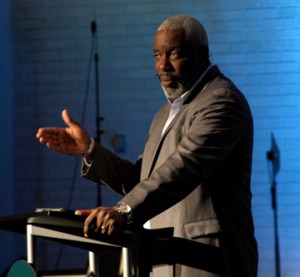
Evangelistic_churches_3HEARTLAND | The average Southern Baptist church in the Midwest has 54 people in worship on Sunday mornings, and baptized three last year. But a North American Mission Board study found the top evangelistic churches in the region are charting a different course, said Joel Southerland, NAMB’s executive director of evangelism strategies.

The Midwest’s top evangelistic churches with less than 250 in worship attendance averaged 119 in worship and had 23 baptisms. Churches with more than 250 in worship averaged 71 baptisms.

Southerland shared findings from the NAMB study of the top 20 evangelizing churches in every U.S. state at the Illinois Baptist State Association’s Evangelism Conference in March, and in a breakout session at the Midwest Leadership Summit earlier this year. The study resulted in a list of “7 Secrets of Top Evangelistic Churches in the SBC.”

  1. It has a lot to do with the pastor. NAMB studied the pastors of top evangelistic churches and found that the majority described their leadership style as “charismatic” or “transformational,” outranking innovative, command and control, servant, situational, laissez-faire and pace setter.

The pastors they studied were at the churches 10-plus years on average, Southerland said, and 70% of them preach a sermon series on evangelism every year. More than half (55%) put more emphasis on evangelism than discipleship, and 90% share the gospel outside the church at least once a month.

  1. Top evangelistic churches are really good at the Sunday morning experience. Of the pastors surveyed, 93% described their worship as lively and celebratory, 95% were contemporary or blended in worship style, and 96% said they intentionally cultivate a guest-friendly atmosphere. And 70% give an invitation at the end of the service.

Southerland outlined several worship takeaways: make church exciting, work on the quality, be intentionally evangelistic on Sunday morning, and aim for something better than “friendly.” People aren’t looking for friendly, he said, they’re looking for friends.

  1. These churches are actively engaged and serving the community, no matter the size of the congregation. Of the pastors surveyed, 88% said they were well engaged in the community. Of mid-sized top evangelistic churches, 30% attempt service-based ministry efforts to share the gospel regularly, as do 37% of large churches.

It’s OK to start small with community engagement, Southerland counseled, just start somewhere. And preferably not in a vacuum. Talk to community leaders about the needs are, and how your church can help. Involve non-Christians, using the service as an opportunity to share the gospel with them.

  1. Top evangelistic churches communicate well, internally and externally. The average pastor makes too many assumptions about how much people know, Southerland said. They assume the congregation knows the church’s vision, that members are as passionate about reaching people as the pastor, and that they don’t need constant motivation.

But all of those things—and more—need to be communicated. Luckily, more avenues for communication exist now than ever before. Of the top evangelistic church pastors surveyed, 97% use a church Facebook account regularly, Southerland cited. Half of pastors and staff intentionally “friend” guests on Facebook.

  1. Virtually all top evangelistic churches make a big deal out of baptisms—97%, the NAMB survey reported. And 79% of pastors of churches in the mid-size church category preach a yearly sermon on baptism, as do 74% of large-church pastors.

The takeaways, Southerland said, are to preach at least once on baptism every year, provide a forum for people to give their own, recorded testimonies, help baptismal candidates invite family and friends to the service, and train your church to celebrate new spiritual life.

  1. They treat guests really well. In non-evangelistic churches, Southerland said, the service is for the members and guests just happen to be there. Evangelistic churches are the opposite; of the congregations NAMB surveyed 67% of mid-size churches and 85% of large churches had a person responsible for “first impressions” ministry targeted to visitors.

A large majority (70%) emailed, called and sent written mail to a guest within seven days of their visit.

  1. Top evangelistic churches emphasize inviting and personal evangelism. The pastors of the churches NAMB studied were very busy mobilizing their church members to be a witness in the community; 50% offered evangelism training, and 70% of their guests came to church as a result of a personal invitation from a member. Among mid-sized churches, 62% have visitation or organized outreach at least once a month, and 58% of large churches do the same.

Churches that train members in personal evangelism, Southerland said, baptize two-and-a-half times more people than those that don’t.

The value of a verbal witness cannot be underestimated, he said during a message at the IBSA conference. Especially when most people are broken and looking for a solution to their problems.

“We are far too timid when it comes to sharing the gospel. We are too scared of the culture.” But, “The culture is not near as bad as it could be or will be someday. We’re to take the gospel to the culture and change the culture with Jesus Christ.”

COMMENTARY | Chase Abner

Chase_Abner_callout_April15Recently, I was at an event for church leaders that focused on the state of marriage in America. There were audible gasps and shaking heads as speakers shared statistics indicating the declining support for a traditional view of marriage.

My first reaction was, “How is this news surprising to anyone?” Perhaps I was being a little smug. I forgot that not everyone
has had my experience peering into the worldviews of college students for more than a decade.

And from my days as an undergraduate until now, I’ve witnessed a steady, quickening march towards a new definition of sexual morality, and, yes, marriage.

My experiences as a student, campus minister, and IBSA’s collegiate evangelism strategist have given me a unique perspective on how attitudes and ideas on campus are very predictive of where public opinion is heading. By the time a hot-button issue hits the heartland, it’s already been debated and settled by the opinion makers on campus.

As Christians, and as church leaders, we can’t afford to ignore the fact that worldviews are formed on college campuses. Simply put, recent college graduates are extremely influential in our communities and they, most likely, have been steeping in a culture where Jesus is not honored as king and the Bible is not respected. And relativism isn’t the only obstacle to the gospel. There are absolute truths found on campus—even sacred ones—but they aren’t necessarily truths that Christians can embrace.

Students who are graduating from our colleges and universities go on to lead influential lives. They’re teaching in our schools. They’re being elected to lead our governments. They are lawyers, doctors, and more. They are getting married and raising children.

Campuses are where young, energetic, gifted people are figuring out how they will leave their mark on the world. They are mission fields where the nations are gathering to formulate their worldviews, and training grounds for the next generation of great church leaders.

Shouldn’t reaching college students be a central component of our churches’ mission strategy?

It is nearly impossible to overstate the church’s opportunity to change the world through college ministry. In Illinois, we have more than 200 campuses representing over 900,000 college students. And 43,000 of those are international students.

What potential!

Chase Abner directed the Baptist Collegiate Ministry at Southern Illinois University before moving to Springfield to serve as IBSA’s collegiate evangelism strategist.

THE BRIEFING | Meredith Flynn

In the wake of Saturday’s massive earthquake near Kathmandu, Nepal, Christian workers asked for prayer for the devastated country:

• Pray for basic shelter, water and food. These necessities are a high priority right now since no one is allowed back in their homes.

• Pray for God’s people to deeply know His comfort and peace during this time. Pray they will share Him with people around them.

• Pray for people in Nepal and surrounding areas during the continuing aftershocks and aftermath of this disaster. Southern Baptist assessment teams will began the damage Monday to find the best ways to respond.


Potential presidential candidate Dr. Ben Carson will not address the Southern Baptist Pastors’ Conference this summer as scheduled, Baptist Press reports. Several Baptists, including the Baptist 21 group of younger SBC leaders and pastors, had expressed concern about Carson’s membership in a Seventh-day Adventist Church, and that his appearance at the conference could look like a political endorsement.


Three years after the death of Prison Fellowship founder Charles Colson, Russell Moore reflects on media coverage surrounding the Watergate conspirator’s life and eventual conversion to Christianity. For those who were cynical about Colson’s transformation, writes the president of the Ethics and Religious Liberty Commission, “…we shouldn’t be angered by those who don’t get the full measure of the man. We should instead hear in some of this cynicism the cry of every human heart, a disbelief that there can be any such thing as final and total forgiveness of sin.”


Zondervan announced last week Charles Colson’s last book, “My Final Word: Holding Tight to the Issues that Matter Most,” will be released Aug. 4. Topics in the collection of writings will include “the rise of Islam, same-sex marriage, the persecution of Christians, crime and punishment, and natural law,” The Christian Post reports.


Atlanta-area pastor Andy Stanley says local churches should be the “safest place on the planet for students to talk about anything, including same-sex attraction.”

“We just need to decide, regardless of what you think about this topic–no more students are going to feel like they have to leave the local church because they’re same-sex attracted or because they’re gay,” said Stanley, pastor of North Point Community Church, at the Catalyst West conference April 17. Read the full story at ChristianPost.com.

A controversial Houston ordinance is now in effect, following a judge’s ruling on a petition drive led in part by some pastors in the city. HERO, or Houston Equal Rights Ordinance, made headlines last year when the city subpoenaed the sermons and other communications of five pastors who were against the ordinance. (The subpoenas were later withdrawn.)


Religious leaders are encouraging President Barack Obama to appoint a special envoy to monitor religious freedom in the Middle East and parts of Asia. The special envoy position has been vacant since it was created last year in the Near East and South Central Asia Religious Freedom Act, Baptist Press reports.


Are you one of the many football fans bent out of shape since Tim Tebow’s exit from the NFL? Good news: A Philadelphia pretzel company has created a way to celebrate his return. The “Tebowing” pretzel, shaped like the quarterback kneeling in his famous praying pose, started as a publicity stunt but soon went viral. The New York Daily News reports the Philly Pretzel Factory plans to donate proceeds from the pretzels to a charity involving Tebow, who has signed a one-year contract with the Philadelphia Eagles.


Friendly mergers

nateadamsibsa —  April 27, 2015

HEARTLAND | Nate Adams

Recently I attended a memorial service in Dupo, Illinois, for Wendell Hooks, who was my grandfather’s cousin. Wendell was 96 when he passed, and was a longtime member and deacon at the First Baptist Church there in Dupo.

Nate_Adams_April27I could certainly write more about Wendell and his life of dedication to his family, his work, his church, and his Lord. But I didn’t know him long. In fact, he was 90 when we first met in person at a Baptist associational meeting, just about the time he was transitioning from his home to an assisted living facility. It was there that we got acquainted over the past few years.

I didn’t have to spend much time with Wendell to realize that we were of the same family. From years of observing my mother and my grandparents, I quickly recognized the Hooks sense of humor and the familiar twinkle in his eye whenever he was
expressing it. I recognized the strong work ethic, the personal disciplines, and the tenacious dedication to both church and pastor. Yes, he was definitely a Hooks.

And he helped me remember that I am a Hooks too. Most people probably think of me as an Adams. I look like my dad, and I’m in a ministry profession like my dad, and I write pieces in this paper, like my dad did.

But cousin Wendell reminded me again how much Hooks is merged in to my Adams. My personality, my drive and discipline, my organizational bent, and yes my sense of humor, are all probably more Hooks than Adams. And I could have just as easily been a Sunday school teacher or deacon as an executive director, because it is really a layperson’s commitment to church and pastor that motivates me, more than a desire for ministry vocation. That’s the Hooks in me.

Chances are you enjoy that same “friendly merger” of family traits in your life. You are a blend, not only of your mom and dad, but also of grandparents and even generations before them. Some of those traits you recognize, and some of them you are still discovering.

I like to think that same sort of positive “blending” is happening in my spiritual life too, and in yours. Each of us is the unique, eternal person that God “knits us together” to be in our mothers’ wombs. But that person is also born in sin and needs redemption. Once I come to know Christ, he doesn’t discard my human identity. He simply redeems it and transforms it. He returns it to his image, to what it was supposed to be.

I love it that the Holy Spirit allowed the writers of the Bible to continue expressing their own unique identities and personalities and styles. Yet they also wrote with a perfect consistency and harmony, demonstrating that their individual voices were each inspired by the Holy Spirit.

During cousin Wendell’s memorial service, I was able to reflect for a few moments on the Adams and Hooks families that have blended into me, and for that matter the Adams and Schultz families that are blending into my children. With each new generation, there is consistency, and yet uniqueness.

And the same is true of my spiritual identity in Christ. I am not a clone of any one person, or even of God. I am a one-of-a-kind blend of both God’s unique workmanship and his redemptive work in Christ. Like David in Psalm 139, I am fearfully and wonderfully made. And so are you.

I’m grateful to cousin Wendell for reminding me that I am a friendly merger of both Adams and Hooks. And we can all be grateful to God, for giving us identities that are unique, and yet that enjoy a friendly merger into His likeness, day by day.

Nate Adams is executive director of the Illinois Baptist State Association.

Diana_Davis_blog_calloutEditor’s note: Diana Davis is an author, columnist and minister’s wife. This column appeared in the April 6 Illinois Baptist. Visit Diana’s website at http://www.dianadavis.org.

HEARTLAND | Diana Davis

When a first-time guest completes a guest registration card at your church, what happens next? The most common answer to that question: absolutely nothing. No, it’s not an intentional oversight, but without an ongoing, immediate follow-up plan, your church may miss the opportunity to reach guests for Christ and include them in your church family.

Need fresh ideas? Tweak some of these to fit your unique church:

First-time guest online survey. People love to give an opinion! Create a brief survey on your church’s website. (See a sample survey at dianadavis.org) Carefully study survey responses.

Same-day contact. A specially trained volunteer makes a brief phone call to each guest on Sunday afternoon after they visit your church.

E-mail and/or snail mail. Assign volunteers to send a swift, personal email or card to each first-time guest.

Small group personal invitation. Provide contact info to an appropriate small group or Sunday School class for each family member. A member of that small group may offer to meet the guest at a specific door to escort them to class the next time they visit.

Coffee, anyone? An Indiana church delivers three coupons for a free drink in their coffee area, encouraging the guest to return for three consecutive Sundays. In a different church, volunteers deliver a church coffee mug to the guest’s door before they get home from church.

Pastor’s letter. Many pastors prepare a warm letter or e-mail to welcome first-time guests; some even jot a handwritten note. Pastor Ted Traylor at Olive Baptist, Pensacola, often texts or phones first-time guests on Saturdays, inviting them to come back on Sunday.

Notice that church members—not just ministry staff—accomplish the majority of follow-up. Newcomers want to hear what you love about your church. They desire relationships, and relationships provide evangelistic opportunities.

When God brings a first-time guest to your church this Sunday and they complete a guest registration card, what will happen next?

“The harvest is abundant…pray to the Lord of the harvest to send out workers into His harvest” (Luke 10:2).

THE BRIEFING | Meredith Flynn

The uproar over Indiana’s Religious Freedom Restoration Act continued as lawmakers introduced changes to the bill that opponents say put business owners at risk to be forced to compromise their beliefs.

The original RFRA, signed into law March 26 by Gov. Mike Pence, came under national fire from corporations, celebrities, and others who said it would allow discrimination against gay people. Supporters of the law said it would protect the religious liberty of business owners by shielding them from government action if they refused to provide services for same-sex weddings.

The_BriefingThe changes to the law, signed by Pence one week after he approved the original RFRA, say “no member of the public may be refused services by a private business based on sexual orientation or gender identity,” Baptist Press reports.

The controversy, wrote Philip Bethancourt of the Ethics and Religious Liberty Commission, has served to make religious liberty “a new culture war wedge issue.”

“One indication of this change is the frequent use of ‘religious freedom’ in scare quotes, suggesting that it is merely a cover for something more malicious,” Bethancourt wrote on ERLC.com. “Danger arises when our first freedom becomes a second-class culture war issue.”


Christians in Kenya grieved on Easter Sunday for 148 people killed at a university last week by terror group al-Shabaab. The Associated Press reported on the Easter service at Our Lady of Consolation Church in Garissa, where Bishop Joseph Allessandro said, “We join the sufferings of the relatives and the victims with the sufferings of Jesus. The victims will rise again with Christ.”

During the April 2 terror attack at Garissa University College, the shooters separated Christian students from Muslims and killed the Christians, AP reported.


What do Americans believe about Jesus? According to new research by Barna, most say he was a real person, a little over half believe he was God, and 62% say they have made a personal commitment to him that is still important in their life today.


And what about the church? LifeWay Research found that while 55% of Americans say the church in America is declining, 65% believe attendance is admirable.


More interesting research: Pew says current trends forecast that Muslims will almost equal Christians in number by 2050, and the global percentage of “nones” who have no religious affiliation will actually decrease.


“We’ve got a long way to go” on race relations, said Ethics and Religious Liberty Commission President Russell Moore at a March summit on racial reconciliation and the gospel. “Our sin keeps wanting us to divide up. But to the faithful, Jesus promises, ‘You will be called overcomers.’” Read the Illinois Baptist‘s coverage of the summit here at ib2news.org.


Did you catch the premiere episode of “A.D.: The Bible Continues” on Sunday? Christianity Today is recapping each installment of the new miniseries produced by Mark Burnett and Roma Downey, which details the history of the early church following Jesus’ death and resurrection.

Editor’s note: This is part 1 of the Illinois Baptist’s coverage of a recent summit hosted by the Ethics and Religious Liberty Commission on racial reconciliation and the gospel. Read part 2 next week here at ib2news.org.

NEWS | Meredith Flynn

Weeks of riots in Ferguson, Missouri, following the police shooting of a young black man, Michael Brown. More protests in major cities after the death of another African American, Eric Garner, during an arrest. And with the shooting death of 12-year-old Tamir Rice in Cleveland, the culmination of a summer of racial unrest in America. And it was only the beginning.

Chants of “Hands up, don’t shoot” in the streets gave way to “Black lives matter,” and in personal conversations, the question has become “Why now?” and “I thought we had made so much progress on race relations in the U.S.”

A sad and challenging summer, followed by a new round of unrest in Ferguson after a condemning report from the U.S. Department of Justice, leaves many thinking, “Apparently not.”

And the church wonders, What can we do? And in some corners Christians have asked, What does the gospel require us to do?

“How do we as people formed by Christ start to have those conversations out in the world?” said Ethics and Religious Liberty Commission President Russell Moore at a March summit in Nashville. “It starts if we’re in the same body, gathered around the same table, praying with one another, praying for another, serving one another, being led by one another, and then we will stand up for and speak up for one another.”

The state of race relations in America, from Ferguson to New York, and coast to coast, is demanding fresh thinking and producing new preaching on race in all kinds of churches—including here in Illinois.

More than 500 current and future church leaders gathered at LifeWay Christian Resources last month to address racial reconciliation and the gospel. The second-annual Leadership Summit hosted by the Ethics and Religious Liberty Commission brought together nearly 40 speakers who presented on a wide range of topics: multi-ethnic ministry, Islam, the SBC’s history on racial issues, pop culture, and more.

In each message and panel, the summit’s key theme was clear: Racial reconciliation is a gospel issue. The gospel reconciles people to God and to one another, but sin is still at work in the world, causing tension, division, strife and violence.

The solution, leaders said at the summit, is for the church to preach and live out the gospel on matters of race. To examine itself for any lingering race-related sin of pride, and to work together to fight the common enemy of racism.

“We’ve got a long way to go,” Moore said in his opening address. “Our sin keeps wanting us to divide up. But to the faithful, Jesus promises, ‘You will be called overcomers.’ And we shall overcome.”

Summit attenders gathered in the aisles and at the altar to pray together at the start of a March meeting on racial reconciliation and the gospel.

Summit attenders gathered in the aisles and at the altar to pray
together at the start of a March meeting on racial reconciliation and the gospel.


Learning how to see each other
“All creatures of our God and King; lift up your voice and with us sing…”

The first hymn led by band Norton Hall and worship leader Jimmy McNeal took on extra significance as the words reverberated around the auditorium. All creatures, lifting up their voices, together. African American, Anglo, Hispanic; male and female; young and old. At the summit, mostly young.

The picture painted in “All Creatures of Our God and King” isn’t possible when people are left to their own devices, summit speakers said. The gospel is central to racial reconciliation. In perhaps one of the few times the Good News has been compared to mayonnaise, Dallas pastor Tony Evans said it acts as an “emulsifier,” like the eggs that helps combine the ingredients in his favorite sandwich condiment.

“Grabbing a black Christian and a white Christian, a red Christian and a yellow Christian, a Baptist and a Methodist, Pentecostal,” Evans preached as the crowd clapped and agreed with Amen’s. “He’s able to pull them together when you understand that the gospel can change an environment, and can do anything.”

Thabiti_Anyabwile_blogThe mission of reconciliation can be seen in the Bible from the very beginning, said Washington, D.C., pastor Thabiti Anyabwile (right). Preaching from the book of Genesis, he urged his listeners to consider how they look at people different from themselves, in light of the fact that everyone is made in the image of God.

“Every person we have ever looked at, smiled at, greeted, encouraged, insulted, slandered, touched, is a person bearing the marks of divine likeness, the ‘imago dei.’ So, racial reconciliation must begin with our learning the habit of seeing each other as together made in the image of God, and therefore possessing inestimable, unfathomable dignity and worth and preciousness.”

But seeing other people is such a commonplace occurrence, Anyabwile continued, and then there’s the problem of sin. That’s why true reconciliation requires a constant renewing of the mind. How a Christian treats people of different ethnicities is such a key part of living out one’s faith that it ought to be a category of discipleship, the pastor said.

“That [racism has] moved so rapidly to be a despised thing is wonderful,” he said. “But along the way, I think many Christians have been so afraid of the label, so afraid of the discussion, and so afraid of the implications, that they don’t even want to have the conversation.”

Working out the reconciliation that Christ has achieved for us is one of the most underdeveloped areas in Christian discipleship in the U.S., he said. A believer can live his whole life without someone sitting down with them to explore their identity in Christ.

And so, Anyabwile said, “We’re weak when the Fergusons erupt around us, we’re weak when we watch Eric Garner choke to death on a city sidewalk. We feel incompetent when we see a Tamir Rice shot in Cleveland.

“We don’t know quite what to say or what to do, when the (Department of Justice) reports come out, whether it’s telling us that ‘hands up don’t shoot’ isn’t true, or whether it’s telling us that, man, this police department is shot through with racist practice….It immobilizes us, because we’re not discipled, because we don’t have this as a category in what it means to mature as a Christian, as a follower of Christ.”

THE BRIEFING | Meredith Flynn

Brighton Presbyterian Church in Rochester, N.Y., is the first church to leave the Presbyterian Church (USA) after a majority of the denomination’s districts voted to change its definition of marriage. The amendment to the group’s constitution, which will become official this summer, alters the marriage definition from “a man and a woman” to “two people, traditionally a man and a woman.”

The_Briefing“Our reason for leaving is centered on the status of biblical interpretation within the PC(USA),” Brighton spokeswoman Kerry Luddy told The Christian Post. “We believe that Scripture’s meaning and intent should not be altered to fit a current culture.”


“Heaven visitation resources” like Don Piper’s book “90 Minutes in Heaven” are no longer available from LifeWay Christian Resources. Spokesman Marty King told Baptist Press LifeWay stopped ordering “experiential testimonies about heaven” last summer, and has pulled the remaining products from stores and its website.

LifeWay’s decision followed the adoption of a resolution on “the sufficiency of Scripture regarding the afterlife” by messengers to the Southern Baptist Convention’s annual meeting last summer.


Legislators introduced this month a bill that would allow adoption and foster care agencies to operate within their religious convictions concerning placing children with same-sex couples. “This commonsense bill simply ensures that these child welfare providers can keep doing what they do best and are treated the same as the rest,” said Rep. Mike Kelly (R-Pa.), according to a WORLD News Service report.

Illinois is one of four states where agencies have discontinued adoption and foster care services because they would have been required to place children with same-sex couples.


More than 83,000 Bibles were shipped to Cuba this month through a partnership between Southern Baptist agencies, churches and individual donors. The Eastern Cuba Baptist Convention, which will receive 32,000 Bibles, reported more than 29,000 professions of faith last year, said Kurt Urbanek, International Mission Board strategy leader for Cuba. “The growth is so incredible, that’s why Bibles are so important.”


“If it wasn’t for the Baptists, I don’t know what I would do,” said one homeowner whose basement was repaired after severe flood damage wrought by Hurricane Sandy. More than two years after the storm devastated parts of New York and New Jersey, volunteers working through Southern Baptist Disaster Relief are still rebuilding and repairing homes in the region.


Tony_EvansNashville, Tenn. | “Jesus reversed over 800 years of racial discord in 24 hours,” Tony Evans preached this afternoon at the ERLC’s Summit on the gospel and racial reconciliation.

Walking his listeners through John’s account of Jesus’ encounter with the Samaritan woman at the well, Evans, pastor of Oak Cliff Bible Fellowship in Dallas, made application to modern times:

Jesus met the woman on common ground, at Jacob’s well (John 4:6). “Jews didn’t like Samaritans, Samaritans didn’t like Jews, but since they both loved Jacob, that’s where he stopped,” Evans said. The Old Testament patriarch was viewed as the father of both Orthodox Jews, and the pariah Samaritans.

He didn’t hide who He was. The woman at the well knew Jesus was Jewish (John 4:9), even though he didn’t say it. But though he looked and talked like a Jewish man, Evans noted, he didn’t act like one to the woman, who other Jews would have viewed as an outcast. Nor did he try to be something he wasn’t.

God is not asking you to stop being different than you are to reach somebody different than you are, Evans said. He doesn’t want white people to be black or vice versa. “He’s asking both to be biblical.”

Jesus earned the right to deepen the conversation. “Because he was willing to drink out of her cup” at the well, Evans said, “he has now earned the right to take a normal discussion about water and turn it into a discussion about eternal life” (John 4:13-14).

Jesus was about his father’s business. Father God plays an integral role in the story of the woman at the well. The conversation changed when the Samaritan woman brought Him up, trying to change the subject when Jesus reveals he knows her current situation (John 4:19-20).

Jesus uses the opportunity to show her what she’s always known to be true about her history, her background, and her identity isn’t, in fact, true. Jesus’ words apply to the racial absolutes we live by too, Evans inferred.

“Black is only beautiful when it’s biblical, and white is only right when it conforms with holy writ,” he said.

Many more Samaritans believed in Jesus because of the woman’s testimony, John writes. How can the reversal detailed in the story happen in just 24 hours, Evans asked. Because Jesus was about his father’s business.

Watch the Summit online at live.erlc.com.

Nashville, Tenn. | Racial reconciliation is the main topic of the Ethics and Religious Liberty Commission’s 2015 Leadership Summit, which starts today at 1 p.m. The Illinois Baptist is in Nashville covering the event, which today includes plenary sessions on:

  • Why racial reconciliation is a gospel issue
  • Ferguson, Eric Garner, and your community
  • Key issues in racial reconciliation: Poverty, fatherlessness, criminal justice and urban ministry

Tonight, ERLC President Russell Moore will interview civil rights leader John Perkins, and speakers Danny Akin and H.B. Charles will explore how racial reconciliation is shaped by the gospel and the Great Commission. The evening session will conclude with a panel discussion on the church and multi-ethnic ministry.

The Summit was originally scheduled to focus on pro-life issues, but unrest in Ferguson, Mo., and other U.S. cities caused ERLC leaders to change the topic. “Racism and injustice are not just social ills; they are sins against God,” Moore said last year.

“This summit will help equip us to tear down carnal divisions, to bring about peace, so that churches reflect the kingdom of God.”

LifeWay Research has found that while 86% of Protestant senior pastors have congregations with one predominant racial group, only 40% of American churchgoers believe their church needs to become more ethnically diverse.

Check back here for news from the Summit, and in the next issue of the Illinois Baptist.