Archives For November 30, 1999

THE BRIEFING | Meredith Flynn

GuideStone Financial Resources has joined a long list of organizations suing the federal government over the abortion/contraceptive mandate within President Obama’s healthcare reform package.

GuideStone, the Southern Baptist Convention’s health and benefits entity, filed suit Oct. 11 along with two other organizations – Oklahoma-based Reaching Souls International, and Truett-McConnell College in Cleveland, Ga. Baptist Press reports:

The suit contends the religious liberty of the entities and other non-church-related organizations covered by GuideStone’s health plan, is violated by a rule issued by the Department of Health and Human Services to implement the 2010 health-care law. The HHS regulation requires employers to pay for coverage of workers’ contraceptives, including drugs that can cause abortions, but does not provide an exemption for entities like those that filed suit.

“GuideStone plans do not cover drugs or devices that can or do cause abortions,” GuideStone President O.S. Hawkins said in a written release from the entity Monday (Oct. 14).

“We reluctantly take this step because we are committed to protecting the unborn and preserving the religious freedom that is guaranteed under the laws of this nation,” he said. “This mandate runs rough-shod over these foundational principles.”

The Becket Fund for Religious Liberty is representing in GuideStone in the suit, which is the 74th such complaint filed against the mandate. Read more at BPNews.net.

Opposing voices in Illinois marriage debate head to the Capitol
People for and against same-sex marriage will rally in Springfield this week in hopes of swaying the votes of lawmakers back in town for the fall veto session. It’s not clear whether sponsors of the Religious Freedom and Marriage Fairness Act have the votes needed to pass the measure (it stalled in the House last May), but same-sex marriage supporters are planning a rally and march around the Capitol today, October 22. On Wednesday the 23rd, the Illinois Family Institute will host a prayer rally and “Lobby Day” at the Capitol.

Southern Baptist task force addresses baptism decline
A group of leaders assembled by the North American Mission Board will meet over the next few months to discuss the decline in baptisms across the Southern Baptist Convention. “Our baptismal trends are all headed in the wrong direction,” NAMB’s vice president for evangelism, Al Gilbert, told Baptist Press. “With a burden to penetrate lostness in North America, we must pray and think through what we can and should do to turn around this decline.”

According to the 2012 Annual Church Profile, Southern Baptist churches baptized fewer than 315,000 people last year, the first time baptisms dropped below that number since 1948. The 2012 total was 5.5% less than the previous year.

Gilbert and Ed Stetzer, president of LifeWay Research, will facilitate meetings for the group, which consists of 15 pastors and leaders from Southern Baptist entities. Baptist Press reports the task force hopes to conclude their work in May 2014. Read more at BPNews.net.

Graham’s ‘My Hope’ event set for Nov. 7-10
Billy Graham’s next evangelistic event could be his largest crusade ever. More than 25,000 churches have signed up to take part in My Hope America, which asks Christians to invite non-believers into their homes and churches to watch Graham preach on the power of the cross. His message will be broadcast Nov. 7-10 on various outlets; go to myhopewithbillygraham.org for a full list and schedule.

Spokesperson Brent Rinehart told The Christian Post, “Woven within Graham’s message are the faith stories of two popular musicians: rapper LeCrae who overcame addiction and the pull of the gang lifestyle to see his life changed by an encounter with Jesus; and former Flyleaf lead singer Lacey Sturm who fought depression, hopelessness and suicidal thoughts only to be rescued by the love of a Heavenly Father and the hope that comes through a relationship with His Son.”

The event’s website also includes additional evangelistic videos and online training materials for those who sign up for the outreach.

From alien to understood
Brant Hansen writes about growing up in church with Apserger’s syndrome on CNN’s Belief blog. The Christian radio host’s experience is specific to his circumstances, but probably will encourage anyone who’s ever felt like an outsider. Hansen writes of his earlier church experiences: “I wondered if I was so broken, such a misfit that God simply took a look at me and decided to move on.” But “…Jesus himself finally reached me.” Read more at CNN”s Belief blog.


CELEBRATION YEAR – (From left) Georgia Griffin, Goebel Patton, and Maxine Ferrari, all members of Second Baptist in West Frankfort, turned 100 in 2013.

CELEBRATION YEAR – (From left) Georgia Griffin, Goebel Patton, and Maxine Ferrari, all members of Second Baptist in West Frankfort, turned 100 in 2013.

HEARTLAND | Meredith Flynn

Goebel Patton will turn 100 years old this week. But he’s not the only one in his community, or even his church, to celebrate that milestone this year. Maxine Ferrari and Georgia Griffin, fellow members of Second Baptist in West Frankfort, already celebrated their 100th birthdays in 2013.

The unique situation – three centenarians in one church – attracted the attention of a local newspaper and has given their church cause to celebrate. Together, they represent 238 years of church membership at Second Baptist.

Patton joined the church in 1926 as a 13-year-old. “Back in that day, the only social activities were at church,” he says. Drawn to Second Baptist for the fellowship with other young people his age, he has stayed for 87 years, and still serves as chairman of the finance and properties committees. He also started a men’s prayer group in 1991, and reports they’ve met every single Tuesday morning since then.

Having Patton, Ferrari and Griffin as part of the church “ties us to our history,” says Pastor Brett Beasley. The 100-year-olds help younger people understand the church’s history, and give a perspective of what church life was like and how it’s changed.

Their faithfulness is also a source of encouragement, Beasley says. Two years ago, Ferrari arrived at church on a messy wintry morning when only about half of the church’s regular attenders were there. Beasley remembers good-naturedly teasing his congregation: “Maxine made it today, so really nobody’s got an excuse.”

Each of the centenarians has already received a birthday party this year, but Second Baptist is hoping to celebrate the three of them together some time in the future.

Happy Birthday indeed.

pull quote_adamsCOMMENTARY | Nate Adams

Earlier this summer, I wrote about my desire to worship in every Illinois Baptist church. Even though it would take years and years of attending a new church every week, I can’t think of a better way to invest my Sundays than to meet, and listen to, and worship with, as many Illinois Baptists as possible.

Since writing about that desire, I’ve already been invited to worship in eight new churches for the first time on a Sunday morning. Some have been invitations to come and speak, and some have been invitations to simply join the church for worship, which I enjoy just as much. But I am so grateful for each of these churches that responded to my simple question, “May I come to your church?” with the same gracious answer: “Sure, we’d love to have you.”

It’s made me wonder how many people are asking that same question every week about your church or mine. They probably don’t ask it directly of us. In fact, they probably don’t even ask it out loud. But they drive past, or read about, or perhaps hear someone talking about our church. And they wonder what it would be like to go inside.

Of course, their question is really multiple questions. What exactly happens in there on Sunday mornings? How would I know where to go and when to do what? Would I know anyone, and do they know anything about me? How would I be treated? Would I like it? Would I want to go back? Do I know anyone who would go with me? What about my kids?

I think we would all like to answer the simple question, “May I come to your church?” positively and warmly. Of course we want new people to come to our church! But if we really expect it to happen, we have to realize that these “questions behind the question” reveal potential barriers that may be keeping people from taking the first step.

For example, my sons tell me that most people their age will not seriously consider attending a church that does not have a decent web site. It’s not necessarily that they are looking for a technologically sophisticated church. It’s just that their generation gathers information that way. Whether they’re trying to answer a trivia question or shop for the best price or consider attending a church, they usually go to the web first, to check things out.

An effective church web site can be a wonderful tool for helping people anonymously answer their questions about your church in advance. But some people are going to look to the newspaper, some to the phone book, and some are going to want to call the church on Saturday night. In other words, an effective, inviting church is going to do everything it can to answer the questions behind, “May I come to your church?” before they are ever asked out loud.

Of course, just as important as answering these questions in advance is answering them on site at the church, especially on Sunday. A first time guest to your church needs all kinds of help that your regular attenders don’t need.  That would seem obvious, but I am sometimes surprised at how difficult it is to find a church’s service time, or address, or directions. And even if the church is easy to find, it can be unclear where to park, or what door to enter, or where to go once you’re inside.

Fortunately, almost all of the churches I attend, even for the first time, do a great job of communicating in advance, and welcoming warmly when I arrive. And if I’ve not yet been to your church on a Sunday morning, I would still love to come and join you in worship. But far more important than my asking this question are the many people in your community who may be asking it silently every week: “May I come to your church?”

Nate Adams is executive director of the Illinois Baptist State Association.

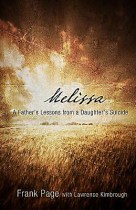
Frank Page, president of the SBC Executive Committee, wrote a book about his daughter, Melissa, his grief after her suicide, and how church leaders can help people living with the deep pain of mental illness.

Frank Page, president of the SBC Executive Committee, wrote a book about his daughter, Melissa, his grief after her suicide, and how church leaders can help people living with the deep pain of mental illness.

THE BRIEFING | Meredith Flynn

Editor’s note: This article is excerpted from the September 30 issue of the Illinois Baptist. The first part of the article headlined The Briefing last Tuesday, but this section takes a closer look at how the church, and specifically church leaders, can minister to individuals and families struggling with mental illness and suicide.

At the Southern Baptist Convention this summer in Houston, mental health and the church was a much-discussed topic, with messengers approving a resolution to “oppose all stigmatization and prejudice against those who are suffering from mental health concerns.” The resolution also called on churches to “look for and create opportunities to love and minister to, and develop methods and resources to care for, those who struggle with mental health concerns and their families.”

When it comes to mental health, “the church has had a tendency to say we’re going to leave that up to the professionals,” said Pastor Hal Trovillion, pastor of First Baptist, Manteno, Ill., and a former youth and family counselor. The problem is that for the most part, those professionals don’t take God into account.

Melissa_book_coverThe church has an opportunity to engage in the critical ministry of offering spiritual help to those in deep pain.

Jesus’ ministry did just that, Pastor James Shannon says. His church, People’s Community Church in Glen Ellyn, has sponsored several support groups (grief, divorce, substance abuse, etc.) and plans to do more in the future. An experienced and degreed counselor, Shannon is dedicated to helping hurting people find wholeness. His mission is to help people transition from “walking wounded” to “wounded healers” so that they can minister effectively to others.

“The point where a person is hurt the most is the point where God can equip them to do ministry, and I think that’s so vital for people to understand.”

The potential for those who have struggled with mental illness to be used in ministry to others with similar stories is encouraging, but the need to alleviate pain is often more pressing. What can churches do now to help people who are depressed and possibly contemplating suicide, and their families?

Frank Page has clear advice for pastors who likely are ministering or will minister to people in deep pain. Teach good theology, help people learn how to control their thoughts, and steer clear of trite advice, he counsels in his book “Melissa: A Father’s Lessons from a Daughter’s Suicide.”

“Stay quick with Scripture but sparing with human philosophy,” writes Page, whose oldest daughter took her own life almost four years ago. Currently serving as president of the Southern Baptist Executive Committee, Page was a pastor for many years and he and his wife, Dayle, raised their three daughters in the church. In the book, which includes a letter at the end of each chapter to those contemplating suicide, he says, “We were not a family whose daughter kills herself.”

Page is using his national platform to help Christian leaders understand the complexity of suicide and mental health issues. First, “be a learner,” he writes. “No one on this side of eternity can fully understand or articulate the complex nature and theological mysteries surrounding the horrible act of suicide nor of the loss of rational thought that typically leads up to it.

“Grow your observations, increase your insights, but don’t place pressure on yourself to grasp it all or to promise the absolute answer to every question.”

At the same time, Page writes, pastors should make themselves more knowledgeable about mental illness. “The church many times has been woefully inadequate in reaching out to persons who either experience mental illness themselves or are dealing with it in their families. …And when we as pastors, not in dismissiveness perhaps but at least in ignorance, give them ‘snap out of it’ advice (or something in that family of faulty counsel), we do more harm than good.

“More than ever – if you intend to serve your congregation well – you need a working knowledge of what causes mental illness and depression and how to assist its sufferers with the best kind of loving assistance.”

Read Religion News Service’s interview with Frank Page here, or watch his interview with LifeWay’s Ed Stetzer.

Senate chaplain likens government shutdown to ‘madness’
In a prayer in the U.S. Senate chamber last week, Senate Chaplain Barry Black asked God to “save us from the madness” of the ongoing government shutdown. Black, a Seventh-day Adventist minister who has served as chaplain of the Senate since 2003, also used words from Psalm 51 in his prayer. “We acknowledge our transgressions, our shortcomings, our smugness, our selfishness, and our pride,” he said. “Create in us clean hearts, oh God, and renew a right spirit within us. Deliver us from the hypocrisy of attempting to sound reasonable while being unreasonable.”

The Washington Post’s On Faith blog ran an article yesterday about the role pride is playing in the federal government’s shutdown. Read it here.

Leaders, scholars remember Chuck Smith“His impact can be seen in every church service that has electric guitar-driven worship, hip casually-dressed pastors, and 40-minute sermons consisting of verse-by-verse Bible expositions peppered with pop-culture references and counterculture slang,” sociologist Brad Christerson said of California pastor Chuck Smith, who died last week. Read Christianity Today’s story on Smith, who helped a generation of “Jesus People” find their faith.

Mississippi church apologizes for racial discrimination
First Baptist Church of Oxford, Miss., decided it’s never too late to right a wrong. This summer, the church nullified a 1968 decision to deny African Americans use of its building facilities and resources. The policy hadn’t been enacted for many years at the church, but it also had never been officially overturned. Pastor Eric Hankins and deacons wrote a resolution to repeal the earlier decision and apologize for it, and Hankins preached on corporate repentance. Read the full story at BPNews.net.

Chris Davis seeks godliness above stats
The Baltimore Orioles missed this year’s playoffs, but first baseman Chris Davis celebrated several individual achievements, winning 2013’s homerun and RBI crowns. “I just want to be known as a godly man,” he said in story on BPNews.net. “That’s more important than any legacy on the field or numbers you leave behind. Read Joshua Cooley’s profile of Davis here.

Editor’s note: One in five Americans report experiencing a mental illness, but an honest discussion of mental health has long been absent from many churches. Read the Sept. 30 issue of the Illinois Baptist for more on the issue, and how two Southern Baptist leaders – Frank Page and Rick Warren – are speaking out to fight the stigma associated with mental illness.

I’m glad it’s out in the open – at least a bit more than it used to be.

When I served as managing editor for a pastors’ magazine, it seemed that every few years we published an article about clergy depression. Every time we received a slough of e-mails, and a few phone calls. I took those calls. “At least I know I’m not the only one,” pastors would say.

And after some of the longer, darker calls, I responded with my own story.

My mother, the choir director, committed suicide.

I rarely talk about it, even now, and only with those who really need to hear the story. I’ve never typed it, until now. It looks odd on the screen.

Twenty years have passed, but I still wonder how a Christian who spent her whole life in the church, a woman of faith who led me to faith in Christ, could reach such a point of hopelessness. But it happened. After decades-long illness, sometimes physical, sometimes emotional, she lost hope in earthly life.

About three years afterward, I was serving a church as pastor. A deacon took his life. He couldn’t cope with the death of his wife of 50 years; antidepressants couldn’t ease his pain; a shotgun did.

I told his daughter, who had sat with her parents about eight rows from the back for most of those 50 years, my story. We cried. We hugged. We wondered to each other how Christians can lose hope. And we wondered if it could happen to us. God forbid.

I had to preach that dear old deacon’s funeral. I told how he took us seminary students under wing and drove us to nursing homes to preach on Sunday afternoons, how he shared the love of Jesus with lost souls in their last days, and rejoiced when octogenarians finally came to Jesus. But I also had to speak about his own death. That was the first time I dealt publically with the issue of Christians and suicide.

And yes, I do believe that Christians who commit suicide still go to heaven. The doctrine of eternal security is very comforting. “No one can snatch them out of my hand,” Jesus said (John 10:28). I shared that with my congregation. And I tried to offer help as we all asked the inevitable question: “What could I have done?”

Be more willing to talk mental illness. That’s what we all can do. I’m so sorry that prominent Southern Baptist families, the Warrens and the Pages, are suffering the tragic loss of loved ones. But if they can use their national platforms to rescue hurting people, then some good will come from it.

-DER

One in five Americans reported experiencing a mental illness in a single year; one in 10 takes an antidepressant.

One in five Americans reported experiencing a mental illness in a single year; one in 10 takes an antidepressant.

“…The day that I’d prayed would never happen, happened.”

In an interview last month with CNN’s Piers Morgan, Rick Warren recalled standing with his wife, Kay, in their son’s driveway in April, waiting for police to confirm their worst fears – Matthew, 27, had committed suicide after a long struggle with mental illness.

“We were sobbing. We were just sobbing,” Warren said.

The interview was the Warrens’ first since their son’s death, but the couple has been vocal on social media and from Saddleback’s pulpit about Matthew’s life and their grief. They’re also speaking out about the long-held stigma against mental illness in the church.

“It’s amazing to me that any other organ in your body can break down and there’s no shame and stigma to it,” Warren said in his first sermon back at Saddleback after a leave of absence. “But if your brain breaks down, you’re supposed to keep it a secret. …If your brain doesn’t work right, why should you be ashamed of that?”

Following Matthew Warren’s death, his parents created a fund in his name, in part to help develop resources for churches to use as they reach out to struggling families in the community and in the congregation.

There are many people in churches suffering from mental health issues, says Hal Trovillion, a former counselor and current pastor of First Baptist Church in Manteno, Ill. “The thing is that those people tend to feel as though others look at them badly, because of whatever their situation,” he says.

“The church needs to just turn that around. What many of them need is simply love and acceptance and a welcoming heart and help to deal with the issues at hand.”

Read the full cover story from latest issue of the Illinois Baptist and access the e-reader edition here.

Wife of Amish schoolhouse shooter shares hope in new book

Marie Monville’s quiet life crumbled violently in 2006, when her husband shot 10 young girls in an Amish schoolhouse in Nickel Mines, Pennsylvania. Her new book, “One Light Still Shines,” tells her story since that day, with a focus on how God sustained her family.

“Within the eye of the storm, the presence of God came and settled upon me,” Monville writes on her blog, whisperandwonder.wordpress.com. “Although I ‘knew’ God all my life, this moment of desperation propelled me to now KNOW him like never before.”

“One Light Still Shines” was released Monday, September 30, by Zondervan. Read more about on CNN’s Belief blog.

Missionary family trapped in Kenyan mall during terrorist attack

When terrorists seized a mall in Nairobi, Kenya, on September 21, a Southern Baptist missionary couple and their five children were inside. Baptist Press reports International Mission Board missionaries Chris and Jamie Suel and their kids had walked into Westgate Shopping Mall shortly before the terrorists. The Suels separated to shop before the attack began, and were reunited after five harrowing hours. The seige lasted three days and resulted in as many as 200 deaths. Read more at BPNews.net.

Jewish prayer book believed to be oldest ever found

The Green Collection, a biblical archive headed by Hobby Lobby president Steve Green, has identified what their scholars say is likely “the oldest Jewish prayer book ever found.” The manuscript is dated circa 840 C.E. and is in its original binding, the Green Collection reported in a press release. The prayer book will eventually be displayed at a Bible museum in Washington, D.C., scheduled to open in 2017. Read more at ChristianityToday.com.


Are you religious, spiritual or secular? College students weigh in

A new study found college students are pretty evenly divided on how they describe themselves spiritually, ChristianPost.com reports. The email survey was conducted by the Institute for the Study of Secularism in Society and Culture at Trinity College (Hartford, Conn.), whose researchers asked: “In general, would you describe yourself more as a religious, spiritual or secular person?” 32.4% answered “spiritual;” 31.8% said “religious;” and 28.2% identified themselves as “secular.”

The research is based on the responses of 1,873 students representing 27 states and 38 colleges. Read the full story at ChristianPost.com.

pull quote_flynnIn the struggle to keep young people in church – or bring them back – are we simply choosing one trend over another?

COMMENTARY | Meredith Flynn

Blogger Rachel Held Evans sparked numerous online conversations this summer with her posts about young people and church. Evans, 32, is a lightning rod in the evangelical community, having already tackled evolution and gender roles in her books. Her columns this summer on CNN’s Belief blog about why millenials are leaving the church are probably less polarizing, but likely more important too.

The disconnect between young people and the church is a real, documented problem. And the news is bleak: Barna found 59% of young Christians will leave the church permanently or for an extended period of time at some point after they turn 15.

Evans posits that young Christians can see straight through the church’s attempts to keep them. She writes, “Many of us, myself included, are finding ourselves increasingly drawn to high church traditions – Catholicism, Eastern Orthodoxy, the Episcopal Church, etc. – precisely because the ancient forms of liturgy seem so unpretentious, so unconcerned with being ‘cool,’ and we find that refreshingly authentic.”

Young Christians, Evans says, don’t want a change in style; they want a change in substance.

Indeed, candles are cool again. And robes and vespers services and responsive readings. In fact, some churches have gotten so cool that those of us millenials who have grown accustomed to stopping by the coffee station before heading into the service are no longer cool enough. We’ve aged out of our own demographic.

That’s what happens when you emphasize style over substance. Style is divisive. So is substance, but we’re promised it will be if the church is focused on the Gospel.

Evans claims substance trumps style, but she’s still advocating for a change in the latter. The instruments of the ancient church have much deeper roots in church history than online giving and electric guitars, but they’re still accessories we use to “decorate” the corporate worship experience and draw people to participate.

None of those things are inherently right or wrong. But they are part of the overall style of a church, and hopefully not its substance.

I know the authentic, unpretentious church Evans writes about in her blog post. I grew up there, except mine was a Southern Baptist church that didn’t follow the contemporary wave of the early 1980s and 90s, but instead waved real palm branches on Palm Sunday. We dressed to the nines, sang along with a pipe organ, and recited the same prayer of contemplation every week. And in my small youth group, kids still struggled with their faith. Some even left the church.

Style may attract people to a church, but it won’t keep them in. No matter how old the style, or how young the people. The church needs something substantial, and fortunately, we have it.

Blogger and LifeWay editor Trevin Wax wrote that he mostly agrees with Evans’ style vs. substance thesis, but would tweak it this way: “What millennials really want from the church is substance. Not a change in substance, necessarily, just substance will do.”

And that never goes out of style.

Tuesday_BriefingLeaders debate disconnect between millenials and the church

THE BRIEFING | Meredith Flynn

“Some millenials, like many from generations before us, want the church to become a mirror – a reflection of our particular preferences, desires, and dreams,” Trevin Wax blogged earlier this summer.

“But other millenials want a Christianity that shapes and changes our preferences, desires, and dreams.”

Those words from Wax, managing editor of LifeWay’s “The Gospel Project,” succinctly explain the debate sparked in July by a blog post by Rachel Held Evans. At issue: the millennial generation (generally defined as those born around and after 1980), the church, and the perceived distance between the two.

Evans, a 32-year-old author right on the edge of the millenial divide, shared on CNN’s “Belief” blog that too often, church leaders think they can bridge the gap with better, cooler style choices in music, technology, and the entire worship experience. But, “we’re not leaving the church because we don’t find the cool factor there; we’re leaving the church because we don’t find Jesus there,” Evans wrote.

She gives to church leaders who want to appeal to young Christians: “…I explain how young adults perceive evangelical Christianity to be too political, too exclusive, old-fashioned, unconcerned with social justice and hostile to lesbian, gay, bisexual and transgender people.

“I point to research that shows young evangelicals often feel they have to choose between their intellectual integrity and their faith, between science and Christianity, between compassion and holiness.”

Evans’ column lit up social media and garnered thousands of comments on CNN’s site, where it’s still getting feedback more than a month after it posted. Other Christian leaders responded too, agreeing with some of Evans’ points but also offering their own take on the problem: 59% of young people disengage from the church for an extended period of time or for good, according to Barna.

It’s an important conversation to have, said Chase Abner, IBSA’s collegiate evangelism strategist. “Like it or not, Millenials will soon be at the helm of our churches, schools and governments. Let us labor that they might hear and respond in faith to Christ.”

It’s the in’s and out’s and how to’s of that labor that had leaders talking about Evans’ blog post. Trevin Wax noted that although Evans says Millenials long for Jesus in the church, the ideal church she describes may not look like Him.

“When I read the Gospels, I’m confronted by a Jesus who explodes our categories of righteousness and sin, repentance and forgiveness, and power and purity,” he blogged. “I see a King who makes utterly exclusive claims, and doesn’t seem to care who is offended.”

Wax writes later, “Rachel says Millenials want to be ‘challenged to holiness,’ but the challenge she appears to be advocating is one on our own terms and according to our own preferences.”

Several leaders who commented on Evans’ post turned the focus away from the church and took a harder look at Millenials themselves. Are today’s young Christians giving the “me generation” a run for their money when it comes to self-centeredness?

“I’m sorry Millenials, but I’m going to have to throw us under the bus here: we do not have everything figured out,” wrote author Brett McCracken on The Washington Post’s On Faith” blog. “And if we expect older generations and well-established institutions to morph to fit our every fickle desire, we do so at our peril.”

In response to Evans’ suggestion that church leaders sit down with young Christians and talk about what they’re looking for in a church, McCracken proposed the opposite. “Millenials, why don’t we take our pastors, parents and older Christian brothers and sisters out to coffee and listen to them?”

Jason Allen, president of Midwestern Baptist Theological Seminary, echoed that idea in a column on Baptist Press, but took it a step further by calling on church leaders and parents to help young people experience the church as a member of the body, rather than just part of various age-graded programs.

“When they are disconnected from the congregation, it should not surprise us that young adults, who have never known the church as a whole, are disinclined to embrace it when their age-graded group has run its course.”

Allen wrote he wants his children to get to know people at all stages of life in the church – from young couples to senior citizens. That focus on relationships is increasingly important to young Christians, Abner said. In a day when technology can make anyone an expert on anything – even Christianity – young people want to know whether the information we have is making a difference in the world.

“They can’t see that just from shaking your hand before or after a service. They can’t see that just because you teach the Bible well,” Abner said. “But they can see it in the way you love your spouse and children. They can see it in the way you follow Jesus at work. They can see it in the way you refuse to compartmentalize your devotion to the Gospel.”

Read more about young people and the church in the next issue of the Illinois Baptist, online this Friday at http://ibonline.IBSA.org.

Kazakh Baptists fined for meeting
Authorities in Kazakhstan fined 18 Baptists this summer for participating in religious activity not authorized by the state, Baptist Press reports. The country’s Administration Code bans participation, leadership or financing of any unregistered religious community. Forum 18, a religious freedom organization based in Norway, reported three Baptists fined an two months’ average salary for leading the meetings, and 15 others were fine one month’s average salary for attending worship.

Kazakhstan’s Council of Baptists don’t seek state registration, maintaining that the country’s constitution and international human rights commitments forbid requiring government approval for worship. Read more at BPNews.net.

Doves offer something for everyone
The nominees for the 44th annual Dove Awards showcase Christian music’s diversity, from rock to hip-hop, Southern Gospel to praise & worship. “The Doves represent the best of the best – in all genres of Gospel music, celebrating talent, ministry and outstanding performances,” said Jackie Patillo, executive director of the Gospel Music Association. The Dove Awards will be presented Oct. 15 and broadcast Oct. 21 on the UP network. Worship leaders Matt Redman and Chris Tomlin each received nine nominations, and will vie for song of the year with “10,000 Reasons” and “Whom Shall I Fear,” respectively. Read the full list of nominees at DoveAwards.com.

NAMB offers online resources to encourage church leaders
With Pastor Appreciation Month coming in October, the North American Mission Board is providing churches with resources to encourage and support their leaders. NAMB is encouraging churches to pick one Sunday to lift up their pastors during a worship service. The web page NAMB.net/honoring_pastors offers posters and bulletin inserts with 50 practical, specific ways lay leaders can encourage their pastors and their families year-round. Read the full story at BPNews.net.

“Leila’s Big Difference” is 7-year-old Mackenzie Howell’s latest project to help Haiti. Photo by Kristi Burden

“Leila’s Big Difference” is 7-year-old Mackenzie Howell’s latest project to help Haiti. Photo by Kristi Burden

NEWS | August 26, 2013

On the first page of “Leila’s Big Difference” by Mackenzie Howell, a little girl stands with her arms crossed as the words “Too Little” float around her.

As the baby of her Haitian family, Leila sometimes feels held back by her youth. But when a teacher tells her class the story of a young shepherd who kills a giant that’s been menacing his community, it inspires Leila and her schoolmates to band together to make a difference.

First-time author Mackenzie likely can empathize with her main character. The 7-year-old Texan started trying to make a difference in Haiti when she was just five years old. The book is her latest project to raise money for relief efforts in the country where hundreds of thousands were displaced after a massive earthquake three years ago.

The first 400 copies of “Leila’s Big Difference” are nearly sold out, and Mackenzie has spoken at two local churches about the project. Her story was also featured in the Beaumont Enterprise newspaper. She has already sent $1,565 in book sales to the Illinois Baptist State Association for continued work in Haiti.

“When you hear about missions in action, Mackenzie is a true example,” said Bob Elmore, IBSA’s short-term missions coordinator, who has led several mission teams from Illinois to Haiti since the quake. “Her heart was touched by a need, she determined what she could do and didn’t limit herself. Her efforts are truly making a difference.

“This is commendable for anyone, but astounding for a 7-year-old.”

It started two years ago, when Mackenzie saw a TV show about the one-year anniversary of the earthquake and told her mom she wanted to do something to help. The Howells organized a coin drive at her preschool and a bake sale at their church. They raised more than $1,400 and sent the money to International Mission Board missionaries Jo and David Brown, who were instrumental in the re-building process.

The missionaries then connected Mackenzie with Elmore and IBSA’s continued work in Haiti through short-term mission trips. She sent IBSA the proceeds from her next project – selling homemade sidewalk chalk, playdoh, crayons and finger paints through a local mall’s program for enterprising kids. Her donation helped build a church in Port-au-Prince that doubles as a school.

This summer, with a 15-month-old brother in the house, Mackenzie decided she needed a project he couldn’t get in the middle of. “So we decided to do a book,” she said.

She enlisted the help of Jace Theriot, a 9-year-old in the Sunday School class her mom teaches at their church, Hillcrest Baptist in Nederland, Texas. Jace illustrated Mackenzie’s story, giving life to Leila, her kind-hearted teacher Mr. Bertin, and her lush homeland.

The two recently had a signing party where they autographed 150 copies of their book. And ate pizza and cookies, Mackenzie added.

Watching her daughter “gives me such an appreciation of the Lord being willing to use us,” Alison Howell said. “Because for her, the calling is so clear, and we could see how genuine it was, that it reminded me that the Lord really wants to use us.”

Mackenzie corresponded with Elmore as she created the story, e-mailing him questions about Haiti. Alison said he asked the questions of a young boy and girl in Haiti, so Mackenzie could use their input too. The young writer also researched the country online.

“She was so adamant,” Alison said about her daughter’s will to write the book. “And that’s been the really neat thing in this process, that she has wanted to do this. She has had the passion. Not one time has she said, ‘Mom, this is getting old,’ or ‘I don’t want to work on this story.’”

And while the book has made Mackenzie a bit of a local celebrity, her parents are careful to remind her of the spiritual lessons she’s learning.

“One of the things we’ve learned…is how blessed we are to live in America, and how much we have,” Alison said. “And so we’ve tried to teach her that when much is given to you, much is expected from you.”

“Leila’s Big Difference” by Mackenzie Howell is available for order here.

Tuesday_BriefingTHE BRIEFING | Lisa Sergent and Meredith Flynn

Exactly three months ago, the Illinois Senate passed the “Religious Freedom and Marriage Equality Act.” On February 14, the state seemed poised to become the tenth to legalize same-sex marriage. But today, the bill is still awaiting a vote on the Illinois House floor.

The hold-up could be due in part to the efforts of religious leaders and groups like the Illinois Family Institute (IFI), who have made known their opposition to the bill. IFI has organized recent rallies in front of the offices of state representatives, and a coalition of African-American pastors in the Chicago area are using automated phone calls to urge voters around the state to contact their local representatives and tell them to vote no. The calls are voiced by Rev. James Meeks, a former state representative and influential Chicago area pastor. In the calls he states, “In my view, same-sex marriage should not be the law of the state of Illinois.”

Reports in March and April indicated the bill was as many as 12 “yes” votes short. But Rep. Greg Harris, the bill’s sponsor, told Chicago’s ABC News last week that proponents of same-sex marriage are “very close” to passing the legislation.  According to a Sunday Chicago Tribune editorial, “Harris needs 60 votes, and we’re told he’s a mere three to five short, with plenty of fence-sitters.”

Governor Pat Quinn has expressed his impatience with the House’s failure to vote on the bill. “It’s time to vote,” he said last week. “Illinois passing marriage equality in to law, I think, sends a great signal to the people of our state and the people of America. So it’s important to Illinois (that) the House of Representatives get going.”

The Illinois General Assembly’s session ends May 31.

Just last week, legislators in Rhode Island and Delaware voted to legalize same-sex marriage in their states, and yesterday, Minnesota became the 12th state to legalize same-sex marriage. Governor Mark Dayton is expected to sign the bill into law today.

Other news:

Bill would change state’s abstinence-focused curriculum
A bill that would change sex education curriculum in Illinois is awaiting a vote by the Senate. Heather Steans, a Democratic Senator from Chicago, is sponsoring the bill that would replace the state’s abstinence-based model of sex-ed with curriculum that would also emphasize contraception and awareness of sexually transmitted diseases. Opponents, including the Illinois Family Institute (IFI), say the legislation would subject young children to “graphic sexual information to which most parents would find highly objectionable and inappropriate.” According to an IFI press release, “If the ‘comprehensive’ sex education bill, HB 2675, is passed, it will establish a one-size-fits-all approach to sex education and remove local community control over choosing true ‘age- appropriate’ curriculum, another term used in the bill.” Read a Chicago Tribune story about the issue here, or visit the Illinois Family Institute’s website.

After guilty verdict, Gosnell could face death penalty
Notorious abortion provider Dr. Kermit Gosnell was convicted on three counts of first degree murder Monday, and could face the death penalty. Gosnell, 72, was charged with ending the lives of babies born alive at his Philadelphia clinic. He also was found guilty of involuntary manslaughter in the death of 41-year-old Karnamaya Mongar. During the trial, pro-life advocates waged a “Tweet Fest” to raise awareness about the charges against Gosnell, which had gone unmentioned by most mainstream media outlets. Read more at ChristianPost.com.

Politics plays a role in pastors’ environmental views
Pastors’ views on the environment are largely linked to the political party they identify with, according to a new study by LifeWay Research. The survey of 1,000 Protestant pastors found 43% agree with the statement, “I believe global warming is real and man made,” while 54% disagree. But the numbers are more extreme along political party lines: 76% of pastors that are Democrats strongly agree with the validity of man-made global warming, but only 7% of pastors identifying as Republicans express the same belief. Pastors also weighed in on whether their churches are actively taking steps to reduce their carbon footprint; read more at LifeWayResearch.com.

Barna study explores mass exodus of Millenials from the church
Barna’s extensive research on the Millenial generation has resulted in some alarming statistics, like the fact that 43% of church-going Millenials drop out of church sometime between high school and turning 30. The research also generated some interesting distinguishing characteristics of these “spiritually homeless youth.” Read about Barna’s three categories for Millenials who have left the church – nomads, prodigals, and exiles – at Barna.org.