Archives For November 30, 1999

COMMENTARY | Chip Faulkner

As a missionary with the Southern Baptist International Mission Board, I served among people groups in which genuine Christ-followers made up a very low percentage of the population, and where governments were not supportive of evangelical churches or the public proclamation of the gospel. The level of persecution, while not extremely severe, was certainly more intense than what the majority of evangelical churches in America are facing.

Still, it doesn’t take much of a spiritual barometer to sense the cultural storm building here towards those who preach and apply Scriptural standards.
Callout_Aug14_edited-1At a recent meeting of pastors and Christian leaders in our area, we discussed how many politicians and governing bodies in our nation and state are taking a strong stance against Christian values—such as biblical marriage. The pastors and ministry leaders did not express fear or panic at the awareness of growing persecution, but there was concern that we must be better prepared to respond correctly to mounting attack.  

After that meeting, I came back to the office and began making notes that turned into a Bible study on persecution. Authentic followers of Christ Jesus that “desire to live a godly life” will be persecuted for their faith (2 Tim. 3:12). Since the New Testament was written to believers and local churches in a sensual society similar to that of modern America, we can appreciate the relevance of the Word in an era of mounting persecution.

First, we should be prepared. Jesus forewarned of persecution by saying that his disciples would be “delivered up” by their relatives and close friends (Luke 21:12-16). So, let us “not be surprised” at the fiery trials that come our way, and we should “rejoice and be glad” to suffer for the name of Christ (1 Peter 4:12-16).  

As Christian facing inevitable persecution, we also should be prayerful. Our human nature is to desire revenge and retaliation, but Jesus commands that we “pray for those who persecute you” (Matt. 5:44-45). Remember that the weapons at our disposal are “not of the world” (2 Cor. 10:4). Trials develop spiritual maturity in intercession. Suffering for the faith increases our empathy and specifies our prayer.

It is important that we be proactive. Since persecution is new to most American believers, we need to sharpen our skills in strategically and fearlessly going on the offense with the gospel. Churches are feeling threatened by the rapidly changing culture. There will be a temptation for churches to react with a “fort” mentality and seek safety behind closed doors.

However, similar to the Christians in pagan Rome, we must take the initiative in “blessing those who persecute you” (Rom. 12:14). Just like the Father sent the Son into the world, we are sent into the world as salt and light (John 17:18; Matt. 5:13-16).

As children of God, we are to be pure. Granted, wickedness is getting darker in our society, but if we are “blameless and innocent” we have the opportunity to “shine as lights” (Phil. 2:14-15). The distinctions of our Christian worldview, values and morals certainly draw attack, yet this persecution will result in a purer church. God does his best work through clean vessels.

In seasons of persecution, it is vital that genuine believers and true churches draw closer together and be in partnership (Phil 1:6). Persecution will sadly reveal that the majority of members on church rolls are phony professors. Likewise, persecution will expose the startling number of false prophets currently serving as church leaders. When it costs everything to follow Christ, many will deny the gospel and join the ranks in assailing the saints. As church attendance wanes and income falls, it will be imperative to pool our resources and draw encouragement from one another (Phil. 1:3-6).

May we Christians also be positive. The apocalyptic literature in the Bible is there to encourage us. Read it and rejoice because God wins in the end! Jesus actually said we are considered “blessed” to be persecuted and that you will receive the “kingdom of heaven” (Matt. 5:10-11). Even if we “suffer for righteousness’ sake” we should not be fearful or troubled as we positively defend our hope with “gentleness and respect” (1 Peter 3:14-15).

Finally, we should persevere in the surpassing power of our Savior. If we remain “steadfast under trial” and “faithful unto death” we will receive the “crown of life” (James 1:12; Rev. 2:10). Echoing the testimony of Paul: “When persecuted, we endure; when slandered, we entreat” (1 Cor. 4:11-13).

The first waves of persecution are only beginning to wash across our country. Even though the price of proclaiming truth will prove enormous, may we go with our Savior “outside the camp and bear the reproach he endured” (Heb. 13:12-15).

Chip Faulkner pastors First Baptist Church, Bethalto.

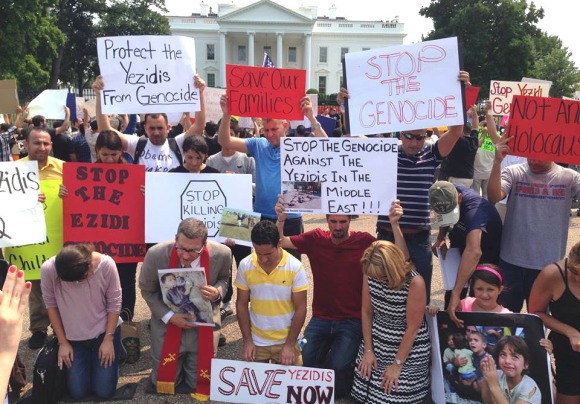
Rob Schenck (front, red scarf), president of Faith in Action and the National Clergy Council, prays Aug. 7 for the Yazidis and Christians suffering in Iraq. IMB photo

Rob Schenck (front, red scarf), president of Faith in Action and the National Clergy Council, prays Aug. 7 for the Yazidis and Christians suffering in Iraq. IMB photo

Christians around the world face heightened persecution

NEWS | From Baptist Press and IMB reports

An unfamiliar symbol began showing up on social media pages late last month. The curved line under a single dot is the Arabic letter “Nun,” reportedly used by militants in Iraq to mark the homes of Christians in the country.

“Nun” stands for Nazarene, or Jesus.

Extremists with the Islamic State of Iraq and Syria (ISIS) have forced Christians from their homes under threat of death. The Iraqi believers and other religious minorities joined millions of Syrian refugees already displaced by civil war. In a region rich with Christian history, many have noted, very little evidence of Christianity is left.

The onslaught of persecution this summer has awakened many in the Western church to the needs of Christians around the world. Many pastors and Christian organizations in July changed their Twitter avatars and Facebook profile photos to include the letter “Nun.” They also used the hashtag #WeAreN as a show of solidarity with the persecuted believers.

“The Islamic militants mean it for evil when they mark homes with ‘N’ for ‘Nazarene,’” wrote Russell Moore, president of the Ethics and Religious Liberty Commission. “They assume it’s an insult, an emblem of shame. Others once thought that of the cross.

“But in that intended slight, we are reminded of who we are, and why we belong to one another, across the barriers of space and time and language and nationality. We are Christians. We are citizens of the New Jerusalem. We are Nazarenes all.”

Iraqi refugee crisis

“There are no Christians left in Mosul.”

That’s how religious freedom advocate Nina Shea described conditions in Iraq’s second largest city in July.

Shea, director of the Hudson Institute’s Center for Religious Freedom, told CBN News that Islamic militants have eradicated virtually every trace of Christianity from Mosul, the center of Iraq’s Christian community for 2,000 years. Mosul is located on the site of the ancient city of Nineveh.

In June, militants with the Islamic State in Iraq and Syria (ISIS) extended an offer to let Christians in Mosul practice their Christian faith behind closed doors, after they paid a hefty tax and agreed not to proselytize. However, multiple sources in the region said that offer was later withdrawn and all Christians were told to leave or face execution.

Members of Assyrian Christian and Chaldean Catholic groups left empty handed, Shea said. Militants confiscated all of their possessions, including homes, cars, clothes “and even their wedding rings, sometimes with the finger attached if it would not come off.”

Christians aren’t the only religious minority targeted by ISIS. On August 3, militants seized the city of Sinjar, forcing the Yazidi Kurdish population to flee. Many escaped to the nearby Sinjar Mountains, a barren heap of rock where daytime temperatures can top 120 degrees.

More than 150 Yazidi immigrants rallied in front of the north lawn of the White House August 7 to plead for American involvement in the growing crisis. (President Obama announced that evening he had authorized military airstrikes on Iraq.) The protestors came from across the U.S. to rally on behalf of the Yazidis, who do not practice Islam but instead follow an ancient religion ISIS equates to “devil worship.”

Christians and religious minorities in other nations also have faced recent persecution due to war and religious hostilities:

Syria | The recently released International Religious Freedom Report included a daunting sentence about the country that shares Iraq’s northwestern border: “In Syria, as in much of the Middle East, the Christian presence is becoming a shadow of its former self.”

A three-year-old civil war has resulted in millions of refugees and increasingly persecuted religious minorities, including Christians caught between the regime currently in power and militants fighting against it. The report, released annually by the U.S. State Department as a picture of the state of international religious freedom the previous year, found that in the city of Homs, only 1,000 Christians remain. There were approximately 160,000 Christians there before the war.

Nigeria | Approximately 1,505 Nigerian Christians have been killed for their faith this year, as the Boko Haram terrorist group and other extremists continue their campaign of religion-based violence in the West African nation. Boko Haram and other groups have killed nearly as many Nigerian Christians in the first seven months of this year as were killed in all of 2013, the advocacy group Jubilee Campaign reported July 29.

Christians killed to date include seven fathers of the 223 Chibok school girls still missing after Boko Haram kidnapped more than 300 students in mid-April. (The group is dedicated to fighting the influence of Western education.) The fathers were killed July 20 when Boko Haram attacked the city of Damboa and hoisted a Boko Haram flag there, the Associated Press reported.

Response from the West

David Curry is president and CEO of Open Doors USA, which offers assistance to persecuted Christians around the world and lobbies repressive governments to cease religious persecution. In July, he called the plight of Christians in Mosul and the remainder of northern Iraq “unprecedented in modern times.”

“This latest forced exodus of Christians further shows why Western governments and the people in the West need to cry out in support for religious freedom in the Middle East and elsewhere,” Curry said in a statement. “If this does not move us concerning the near extinction of Christianity in the Middle East, it’s likely nothing else can.”

Since the United States invaded Iraq in 2003 to overthrow Saddam Hussein, nearly one million Christians have fled the country for safer surroundings.

In an editorial this month for The Christian Post, Curry expressed doubt that the persecution of Christians would ever be treated as “a major humanitarian crisis” by governments and secular media. “However, we should be able to count on our own family,” he wrote.

“The persecution of Jesus followers should be preached from every pulpit and prayed for at every kitchen table. One day soon it may be your faith that is under attack and you will be hoping that others will be praying for you…or even notice that it is happening.”

The International Mission Board and its ministry partner Baptist Global Response are coordinating relief efforts among Iraqi refugees. For more information about how to help, go to www.IMB.org.

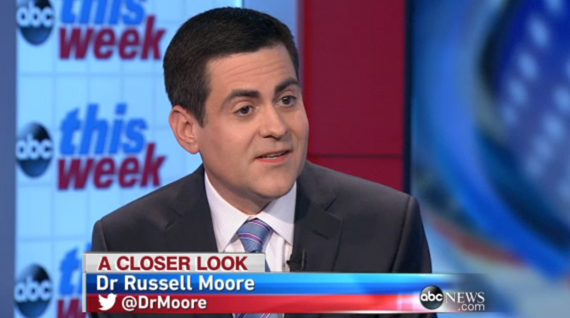
Russell Moore was joined on ABC's "The Week" by fellow panelists Franklin Graham, Ralph Reed and Cokie Roberts.

Russell Moore was joined on ABC’s “The Week” by fellow panelists Franklin Graham, Ralph Reed and Cokie Roberts. Photo from video on abcnews.go.com

NEWS | On Easter Sunday morning, ABC’s “This Week” featured a panel of guests discussing whether the influence of evangelicals is waning in the current culture. The group included Russell Moore, president of the Southern Baptist Ethics and Religious Liberty Commission, who said it is indeed a new day for Christians.

The percentage of people that are members of a church or synagogue has fallen from 70% in 1992 to 59% in 2013, said moderator Martha Raddatz, citing a Gallup statistic. She asked Moore if the numbers worry him, and what can be done about the decline.

“I’m not worried… because I think what we’re seeing is the collapse of a cultural, nominal form of Christianity,” Moore said. There was a time in America where in order to be a good person, to be seen as a good citizen, one had to nominally at least be a member of a church. Those days are over, and so we’re at a point now where Christianity is able to be authentic, and Christianity is able to be authentically strange.”

Moore pointed out that Christianity’s foundational beliefs are hard to grasp for the culture at large, but the disconnect isn’t unprecedented.

“Many people now when they hear about what Christians believe, what evangelical Christians believe, their response is to say, ‘That sounds freakish to me, that sounds odd and that sounds strange.’ Well, of course it does. We believe that a previously dead man is now the ruler of the universe and offers forgiveness of sins to anyone who will repent and believe.

“That’s the same sort of reaction that happened in the Greco-Roman empire when Christianity first emerged. So it offers an opportunity for the church to speak clearly, articulately, about what it is that we believe, to give a winsome and clear message about what the Gospel actually is.”

Raddatz asked Moore about his recent comment that “the illusion of a Moral Majority is no longer sustainable in this country.”

“Yes, it’s a different time,” Moore said on Sunday’s broadcast, “and that means that the way that we speak, we speak in a different way. We speak to people who don’t necessarily agree with us. There was a time in which we could assume that most Americans agreed with us on life, and on abortion, and on religious liberty and other issues. And we simply had to say, ‘We’re for the same things you’re for, join us.’

“It’s a different day. We have to speak to the rest of the culture and say, ‘Here’s why this is in your interest to value life, to value family, to value religious liberty.'”

The panel’s 10-minute conversation is available for viewing at the ABC News website.


THE BRIEFING | Meredith Flynn

The images in a new video produced by the North American Mission Board serve as reminders of how devastating were the tornadoes that ripped through Illinois, Indiana, and other Midwest states Nov. 17.The two-and-a-half minute clip also tells how Southern Baptist Disaster Relief volunteers and local churches, like FBC Washington, helped residents begin to pick up the pieces.

“I don’t know what we would have done, honestly,” says one storm victim helped by DR volunteers. “And it’s such a blessing.” Read more about tornado relief efforts in the Dec. 16 issue of the Illinois Baptist, online here.

Other stories:

Race, religion and Santa Claus
Fox News’ Megyn Kelly stirred up controversy when she said on air that Santa Claus is white – and Jesus is too. Her comments, made in response to a story on Slate.com, have revived a national conversation on the intersection of faith and race. Kelly’s reference to Santa got plenty of press, probably more than her statement about Jesus’ race. But culture writer Jonathan Merritt says it’s important to remember the Bible is mostly mum on the Messiah’s appearance.

“As some historians and theologians have posited, the silence of the Scriptures on the issue of Jesus’ skin color is critical to Christianity’s broad appeal with people of various ethnicities,” Merritt wrote for The Atlantic. “In a world where race often divides communities and even churches, the Biblical depictions of God’s son positions him as one who can bridge those divides.”

View Kelly’s response to the controversy on foxnews.com.

Bible reading tips for everyone
“Stress the simplicity of the Bible, and the people you are hoping will read the Bible next year may begin to wonder if they’re just too dumb to understand it,” says LifeWay’s Trevin Wax. On his blog, he offers advice on “How to get people to read the Bible without making them feel dumb.”

Thousands leave jobs for restaurant gigs
Not really, but @tipsforjesus probably has some considering a change of vocation. Across the country, people are leaving huge tips for restaurant servers under that tag line. The gratuities – some for thousands of dollars – haven’t yet been linked to a specific group or organization, but some believe former Pay Pal executive Jack Selby is behind the generous tips. Read the full story at ChristianPost.com.

Jesus is most successful meme ever
Two researchers have named Jesus the most successful meme in history, based on an analysis of Wikipedia entries about Him. Wondering exactly what a meme is? We were too. Merriam-Webster (via Wikipedia) defines is as “an idea, behavior, or style that spreads from person to person within a culture.”

Steven Skiena and Charles Ward have compiled their findings in a book, “Who’s Bigger? Where Historical Figures Really Rank.” Following Jesus on their top 10 list: Napolean, William Shakespeare, Mohammad, Abraham Lincoln, George Washington, Adolf Hitler, Aristotle, Alexander the Great and Thomas Jefferson.

Read the full story at ChristianityToday.com.

EgyptHEARTLAND | Charles Braddix, on Baptist Press 

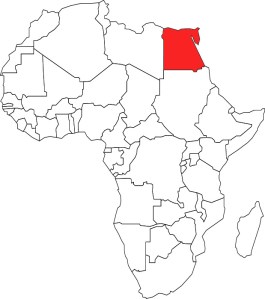
Christians and churches in Egypt need prayer this week, as violent protests continue in the country in response to the ousting of President Mohammed Morsi.

Egypt’s government cracked down on protestors last week; so far, nearly 700 people have died and 3,700 more are injured. And nearly 70 churches, Christian institutions and businesses have been attacked, burned or destroyed.

Beni Mazar Baptist Church in Minya, a city of 250,000 people 150 miles south of Cairo, was burned last week. No casualties or injuries were reported, although the pastor and his family live on the premises.

Months earlier, John Amin*, pastor of the Beni Mazar church, had said, “We live here at the church, so if someone attacks our church, they attack our home. The kids are afraid.”

Many in the community around the church are afraid, Amin said, but he still had a vision to see the church packed with those seeking Christ. “We want the community to see us and come and grow the church,” he said.

Minya reported the country’s highest number of attacks against churches, totaling 14. One of Egypt’s oldest Coptic Christian churches, the fourth-century Church of the Virgin Mary there, was torched and burned Wednesday.

In addition, the Egypt Bible Society bookstore in Minya was destroyed.

“Fear is a part of life in Egypt,” said a Christian worker who serves in the region. He encourages believers in Egypt not to give in to fear. “The enemy is strong here. He makes people afraid.”

Spiritual oppression is real, the worker said, stressing that boldness to share the Gospel, especially in difficult times, must come from the Holy Spirit.

*Names changed.

For Charles Braddix’ full story, go to BPNews.net.

cherry pieCOMMENTARY | On one special day every year, the Illinois State Capitol fills with the aroma of fresh-baked pie. Dubbed “Cherry Pie Day,” the event draws homeschooling families from across the state to Springfield, where they deliver the homemade desserts to legislators. It’s their way to thank lawmakers for their service, and to “sweeten the deal” while lobbying them on behalf of homeschooling interests.

Recently, a different group of volunteer lobbyists headed to the Capitol in support of a traditional definition of marriage. As the temperature outside hovered in the mid-20s, they prayed together under the gaze of a statue of Abraham Lincoln, and then streamed into the building to lobby their legislators to vote no on HB 10, the bill that would legalize same-sex marriage in Illinois.

A few steps from the gathering, a debate rose between a handful of the rally attenders, and two lone protesters who had come in favor of same-sex marriage. The dialogue bounced back and forth, intense but not ugly. Just each side having their say.

The speakers were eloquent, and each spoke directly from his or her experience. These were obviously well thought-out opinions, and deeply rooted. And, while they answered each other so quickly that they couldn’t have been listening very well, it was the very definition of a civil disagreement.

But it was still uncomfortable, especially compared to the rousing unity of the rally. As people walked by the small debating group, most of them kept a safe distance.

This is likely true of most conflicts, and it’s certainly been on display in the same-sex marriage debate in Illinois: It’s easier to express opinions – elegantly, even – with people who agree with you. But there’s nothing as messy as staring eye-to-eye with an opponent who fully believes he or she is right, on the very topic on which you believe they’re dead wrong.

That’s what the group on the Capitol lawn was doing. Both sides stared down the uncomfortable notion of disagreement and faced into the awkwardness of expressing an opinion, when someone was waiting to refute it with their next breath.

As Christians are navigating the difficulties of same-sex marriage in Illinois, surely many have wondered how they can “sweeten the deal” when they talk to their friends and families and acquaintances about the issue. Without the comfort of cherry pie, what can they add to their argument to help others see that it’s a valid view? How can they hope to turn the cultural tide with their words, when there are so many voices saying the opposite?

The answer was on display that day on the Capitol steps: It’s clear-eyed, unwavering, thoughtful, calm, prayed-through debate. And it will require courage and humility and a willingness to examine long-held beliefs. The only chance opponents of same-sex marriage have to add any sweetness to these conversations is to actually have them. Maybe over pie.

Why do Christians suffer?

Meredith Flynn —  December 6, 2012

Phillips_pullquoteCOMMENTARY | Rob Phillips

Horatio G. Spafford was a prominent attorney in Chicago in the 1800s and a friend of evangelist Dwight L. Moody. While Spafford was both respected and comfortable, he was not free from severe hardship.

First, he lost his 4-year-old son to scarlet fever. Then his real estate investments along Lake Michigan literally went up in flames in the Great Chicago Fire of 1871. Not long after that, his four daughters drowned in a shipwreck, and his wife Anna survived the ordeal only because the ship’s debris buoyed her as she floated unconscious in the Atlantic Ocean.

Crossing the sea to join his bereaved wife, Spafford was called to the captain’s deck as the ship sailed past the foamy deep where his daughters were lost. The captain informed him that the waters there were three miles deep. Returning to his cabin, Spafford penned these words to the now-famous hymn:

When peace like a river attendeth my way,
When sorrows like sea billows roll;
Whatever my lot, Thou hast taught me to say,
It is well, it is well with my soul

Why did such tragedy befall this godly man? Spafford may have wondered why, but ultimately he rested in the sovereignty of God.

We can better appreciate God’s sovereignty, even in the darkest nights, by observing 10 reasons we suffer, according to Scripture.

1. We suffer because we sin.
2. We suffer because others sin.
3. We suffer because we live in a sinful and fallen world.
4. We suffer because God allows us to make real choices.
5. We suffer to make us long for eternity.
6. We suffer to keep us from something worse.
7. We suffer to share in the suffering of Christ and be more like Him.
8. We suffer to honor God.
9. We suffer to grow spiritually.
10. We suffer to better anticipate the glories of heaven and the world to come.

Rob Phillips is director of communications for the Missouri Baptist Convention. This column is excerpted from Baptist Press; read the full version at BPNews.net.