Archives For November 30, 1999

COMMENTARY | Eric Reed
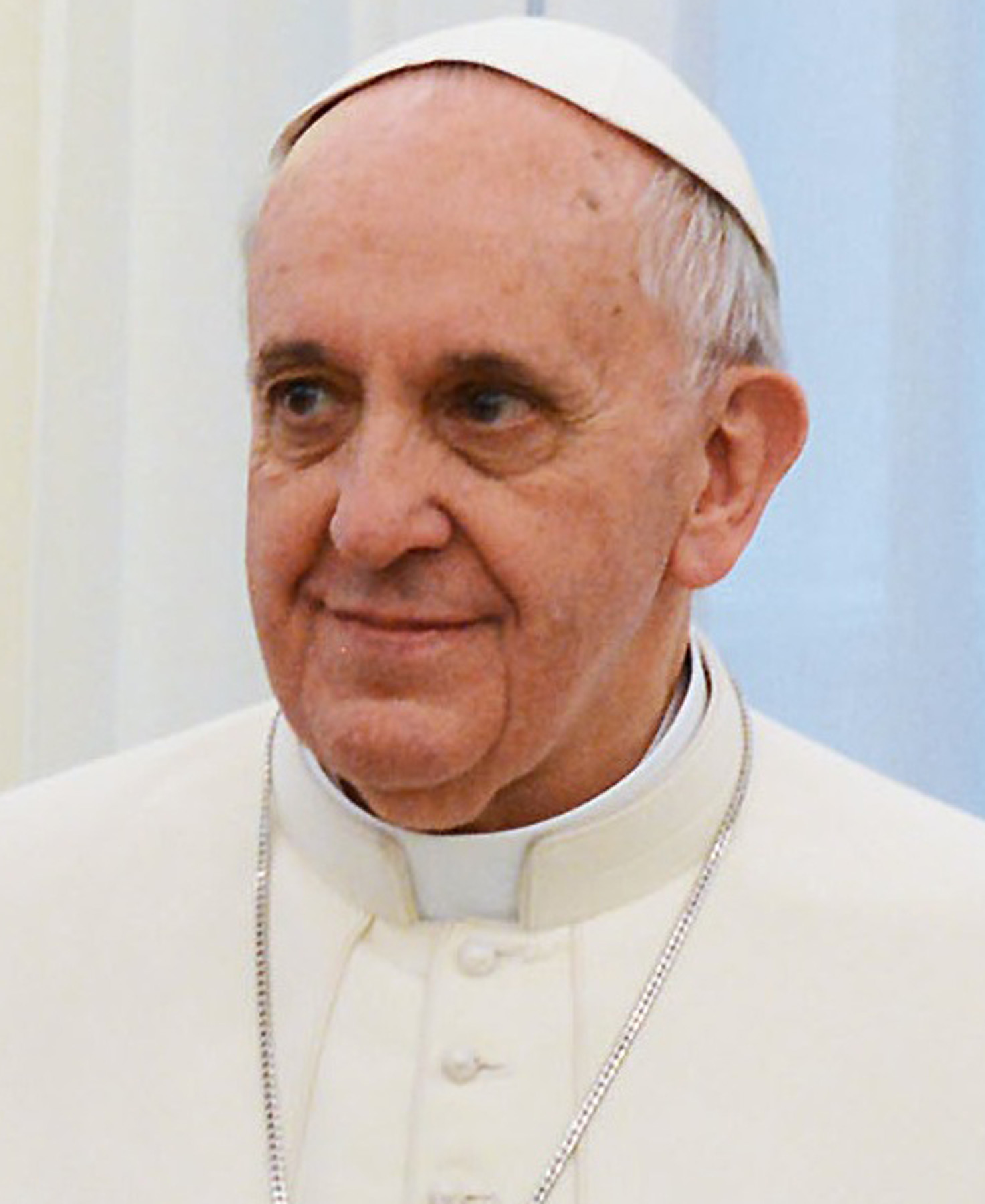
Pope FrancisAs Pope Francis hugged a disabled child, MSNBC’s Chris Matthews said, “What power this man has to make people feel good.” And it’s true. Even I, with all my Baptist objections to the papacy, got a catch in my throat at that scene on the Philadelphia airport tarmac when Francis stopped the car and got out to bless the child in the wheelchair. Yes, he makes people feel good.

Why else would millions line the streets for an eight-second glimpse of the pontiff waving from the back seat as his tiny Fiat passed by?

But CBS’s Jericka Duncan, to bishops at a press conference following the Philadelphia visit, was more pointed: Why didn’t Francis publicly tell people how he feels about the family, starting with the marriage of one man and one woman?

Francis has a history of making statements that, broadly interpreted, could make homosexuals, divorced people, those who allow for abortion, and even “women religious” believe there’s an open door for them in mainstream Catholic life and leadership. But Francis isn’t going to change his church’s doctrines on marriage, protection of the unborn, a male only priesthood. He can’t: 2,000 years of church history, conservative Catholics in the global south, and the College of Cardinals won’t let him.

So why make gestures that soothe postmoderns and liberal Americans, but don’t really change anything? Perhaps because, as Chris Matthews puts it, he wants people to feel good.

But that isn’t speaking the truth in love. Sure, Francis’s approach is long on love. Don’t we all see Christ exemplified in his embrace of the homeless and handicapped? But the more loving response to people struggling with sin and its effects is to tell the truth: We love you, but the church can’t embrace your beliefs when they are outside orthodoxy. That’s the lesson I’m taking from Francis’s visit.

Church leaders do no favors when we let people think some doctrinal issues are open for debate when they’re really not. I have witnessed this accommodation of feelings in conversations with non-Baptists and Millennial evangelicals pressured by the current wave of cultural liberalization. (“Why can’t my brother marry his boyfriend?” “You won’t accept my sister’s application for lead pastor?” No, sorry.)

We want to approach these conversations in love, but they must be grounded in truth. Letting people think what they want because we’d rather not hurt their feelings isn’t being loving—or honest. Love is grounded in truth, not feelings.

Read this and other articles in the 10/12 issue of the Illinois Baptist.

The BriefingA 26-year-old man who killed nine and injured perhaps nine others at an Oregon community college reportedly targeted Christians in the attack, said a Southern Baptist pastor whose granddaughter was shot and survived.

“The shooter asked a question, ‘Are you a Christian?’ And if they said yes, he said, ‘Good, because you’re going to see God in a second,’ and he shot them. My granddaughter hid and got a bullet through the leg,” Howard A. Johnson, founding pastor of Bethany Bible Fellowship (SBC) in Roseburg, told Baptist Press. “That’s pretty traumatic.” Read the entire story at BPnews.net.


ERLC goes to the dogs, cats, hamsters, birds…

The Ethic and Religious Liberty Commission of the SBC and the Clapham Group, released the Evangelical Statement on Responsible Care for Animals Sept. 30. “Our treatment of animals is a spiritual issue,” said ERLC President Russell Moore. “The Bible is clear that our being created in the image of God does not lessen our responsibility to steward the physical world well, but heightens it. This statement is a reminder that the gospel transforms our use and care of animals as we see all of God’s glory reflected in his good creation.” Read the statement at EveryLivingThing.com.


Southern Baptist Disaster Relief heading to South Carolina

The North American Mission Board mobilized two semi-trucks with supplies for South Carolina flood victims Oct. 5. NAMB will also deploy two recovery trailers as soon as roads in the areas are open. Like so many other facilities, the South Carolina Baptist Convention office building is nearly cut off at this time with flooded roads. Pray for the people of South Carolina and the disaster relief volunteers who will be sent to minister to them.


CP surpasses budget projection for fiscal year

The Southern Baptist Convention ended its fiscal year $1.1 million over its 2014–2015 budgeted goal and $2.5 million over the previous year’s Cooperative Program allocation budget gifts, according to Frank S. Page, president and CEO of the SBC Executive Committee.


Barna: Concerns over religious freedom have increased since 2012

A new study from the Barna Group reveals a significant rise in Americans’ belief that religious freedom is worse today than 10 years ago (up from 33% in 2012 to 41% today). The increase is the most marked by marked among Gen-Xers (29% to 42%) and Boomers (38% to 46%). While 34% of Millennials say religious freedom is worse today than it was 10 years ago, up from 25% in 2012.

Sources: Baptist Press, Barna Group, ERLC, EveryLivingThing.com

Sad truth: Pastors are sinners tooCOMMENTARY | John Gibson was fun and funny. He was smart and caring. He was a good teacher and a fine preacher. He was also troubled. He wrestled with depression for many years, and recently we learned he struggled with pornography.

That came to light because John confessed it in his suicide note.

I said “no way” when LifeWay Research President Ed Stetzer predicted 400 pastors might resign on the Sunday after 32 million names were revealed in the hacking of adulterous hook-up site Ashley Madison. Again I said “no way” when others predicted a wave of suicides among those outed in August.

In the end, Patheos blog reports, three Christian leaders resigned and one died.

I knew the man who died.

John Gibson was a few years ahead of me at New Orleans Baptist Theological Seminary. If memory serves, he was working on a doctorate and served as grader for my evangelism professor. He left to pastor a church, and some years later returned to New Orleans to serve on staff and eventually to teach. Some people knew of his struggle with depression. There aren’t many secrets on a seminary campus.

But apparently his wrestling with sexual addiction was not widely known. Gibson’s wife, Christi, said her husband knew he would lose his job when his name appeared on the hacked list, and he couldn’t face the humiliation.

Christi found his body in their seminary campus home on August 24. Then she had to tell their two children.

“There is brokenness in every single one of us. We all have things that we struggle with,” she told CNN last week. “It wasn’t so bad that we wouldn’t have forgiven it, and so many people have said that to us, but for John, it carried…such shame.”

Gibson’s family shared some of his story in a service at the seminary chapel. “My dad was a great man,” son Trey, 24, said. “He was a great man with struggles. My dad reached a point of such hopelessness and despair that he took his own life.”

“I still believe it could have been fixed,” Gibson’s wife said to cable news viewers. “It could have been healed.”

As a newsman, not much surprises me anymore. As a pastor, not much disappoints me, except the lack of grace when people need it most. To the sad truth that pastors are sinners, we offer this good news: Jesus died to save sinners.

Including pastors.

DER

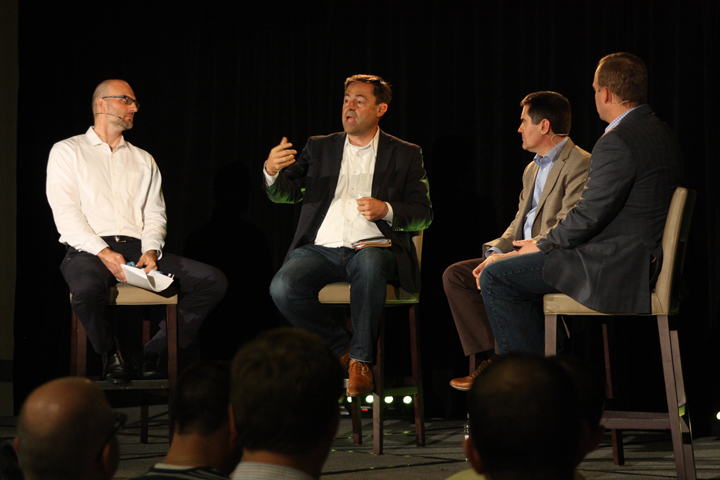
Mark Dever and Russell Moore (center) answered questions from 9Marks' Jonathan Leeman (left) and Phillip Bethancourt of the Ethics and Religious Liberty Commission (right).

Mark Dever and Russell Moore (center) answered questions from 9Marks’ Jonathan Leeman (left) and Phillip Bethancourt of the Ethics and Religious Liberty Commission (right).

Columbus | The culture has changed and is continuing to change–there’s no mistaking it. But Christians don’t have to live in fear, leaders said Monday night at a post-Pastors’ Conference gathering.

When asked what he would tell churches in the face of sweeping cultural change, Ethics and Religious Liberty Commission President Russell Moore quoted Luke 12:32: “Fear not, little flock, for it is the Father’s good pleasure to give you the Kingdom.”

“The main thing that I would say,” Moore said at the meeting hosted by the 9Marks ministry, “is let us be joyful, hopeful, convictional people who are not panicked, who are not distressed, and who are not tossed about by the wind.”

Moore echoed his Sunday evening Pastors’ Conference message, when he referred to the argument some have made about Christians being on the wrong side of history when it comes to cultural change.

“Brothers and sisters, we started on the wrong side of history. The right side of history was the Roman Empire. The wrong side of the history was a Roman cross. And the Roman Empire is dead, and Jesus is feeling fine.”

At the 9Marks meeting, Moore and Mark Dever, pastor of Capitol Hill Baptist Church in Washington, D.C., fielded questions submitted by the audience. The questions on current social issues covered a variety of topics, including homosexuality, transgenderism, and race. Dever, who also serves as president of 9Marks, urged pastors to pray with their congregations about pressing issues, and not just 3-minute prayers during transitions in the worship services. One of the main sources for his pastoral prayers, Dever said, is The Washington Post.

“…You need to pray for five or ten minutes; I mean, give some thought to your prayer.” When the Westminster Assembly of the 1640s would hold a day of prayer, they would pray as long as they would preach, Dever said. An hour-long sermon, followed by an hour-long prayer. “And the pastors would prepare their prayers every bit as much as they would work on preparing their sermons.”

Nearly 400 years later, maybe that’s an idea worth revisiting.

The_BriefingTHE BRIEFING | A new study from Pew Research stopped short of breaking the internet after it was released last week, but it did spark debate between leaders about what the report actually says about Christianity in America. The gist: Pew reported the percentage of American adults who describe themselves as Christians has dropped almost eight percentage points in the last seven years–from 78.4% to 70.6%. And the number of Americans who are religiously unaffiliated has risen from 16.1% to 22.8%.

Religion News Service writer Jonathan Merritt said the research shows political and theological ideology isn’t as important a factor in predicting decline: “Yes, mainline denominations remain in sharp decline, and yes, evangelicals have fared slightly better overall,” Merritt wrote. “Yet many evangelical bodies have begun shrinking as a share of the population as well. Roman Catholics—also theologically and politically conservative—are also declining significantly. This, despite these groups’ evangelistic zeal, orthodox theology, and conservative political stances.”

Joe Carter of the Ethics and Religious Liberty Commission (ERLC) countered Merritt’s piece with one of his own, pointing out that the Pew research also shows the share of evangelicals in America has stayed relatively steady: from 26.3% in 2007 to 25.4% in the new study.

“Merritt is correct that a key concern is the ‘growing number of people who are apathetic or antagonistic to the claims of Christianity,'” Carter wrote. “But that should not lead us to conclude that is evangelicalism that must change.” (Merritt responded here.)

Other observers explained why evangelicals shouldn’t necessarily view the report as a crisis:


Jeb Bush on religious liberty
“A big country, a tolerant country, ought to be able to figure out the difference between discriminating [against] someone because of their sexual orientation and not forcing someone to participate in a wedding that they find goes against their moral beliefs,” possible presidential candidate Jeb Bush told CBN’s David Brody. Read the full story at ChristianPost.com.


2016: Who gets your vote?
Both evangelicals and the overall American population say they place little importance on a presidential candidate’s age, physical appearance, endorsements, or education. But unsurprisingly, the two groups differ on a candidate’s religious faith, according to Barna’s 2016 election preview: 45% of evangelicals count faith among the most important factors in choosing a candidate to support, compared to 9% of all Americans.


International Mission Board adopts new missionary qualifications
Trustees for the Southern Baptist International Mission Board have approved a new, unified set of qualifications for missionaries applying for its various pathways of service. The new policy replaces old qualifications on the topics of divorce, baptism, families with teenage children, and speaking in tongues.
IMB President David Platt said, “[T]his policy does not mean we are lowering the standards for missionaries. Indeed, quite the opposite is true….The ultimate aim of this policy revision is to enable limitless God-exalting, Christ-following, Spirit-led, biblically-faithful, people-loving, high-quality Southern Baptist missionaries to serve with IMB through a multiplicity of pathways in the days ahead.”


Oscar idolatry?
Academy Award-winning actress Natalie Portman told The Hollywood Reporter recently she doesn’t keep her Oscar in plain view because “it’s a false idol.” Writing at Relevant.com, Josh Hayes (an editor for LifeWay’s The Gospel Project) explores her argument, and what the Bible says about idolatry.

THE BRIEFING | Meredith Flynn

After an unarmed man was shot and killed by a South Carolina police officer, urban ministry strategist D.A. Horton advocated “radical righteousness” instead of retaliation.

The_Briefing“Radical righteousness is lived out when we work to see a criminal receive proper punishment, instead of private revenge; public order instead of personal retaliation; and respond with practical righteousness in place of our personal rights,” said Horton during a chapel service at Charleston Southern University April 8. The North American Mission Board’s national coordinator for urban student missions said the church must pursue the “radical righteousness” Jesus prescribed in Matthew 5:38-42, according to Diana Chandler’s report for Baptist Press.

“I was not present for Mike Brown [in Ferguson, Mo.], for Tamir Rice [in Cleveland, Ohio], for Eric Garner [in New York City], for Ezell Ford [in Los Angeles] and for the multitude of names that have been going down. I wasn’t there when the officers got gunned down in Brooklyn,” Horton said.

“… But what I do know as a believer, there was a real world with real hurt. There [are] real issues going on out there. And if believers cannot look to the words of Christ, and be words of comfort and clarity to our culture, then we don’t need to be claiming to be the church.”


The American Humanist Association has dropped its lawsuit against a New Jersey school district, allowing students to continue saying “under God” during the Pledge of Allegiance. Read the full story at ChristianPost.com.


A prayer written by Southern Baptist pastor Jack Graham will be read around the country on May 7, the National Day of Prayer. Graham is a former president of the Southern Baptist Convention and current pastor of Prestonwood Baptist Church in the Dallas metro area.

“We repent of our sins and ask for Your grace and power to save us,” says Graham’s prayer, which will be read at Day of Prayer celebrations. “Hear our cry, oh God, and pour out Your Spirit upon us that we may walk in obedience to Your Word. We are desperate for Your tender mercies. We are broken and humbled before You.”


The Ethics and Religious Liberty Commission is urging Christians to promote an April prayer emphasis with the hashtag #PrayforMarriage. Last week, the Southern Baptist ethics entity issued a challenge to pray at 10 a.m. (Eastern time) on April 28, the morning the Supreme Court is scheduled to hear oral arguments in several same-sex marriage cases. The web page ERLC.com/article/prayformarriage includes a sample prayer guide.


A majority of Americans believe politics would be more civil and effective if politicians read the Bible more. Read more in Christianity Today’s report on the 2015 State of the Bible study from the American BIble Society.


More news from the State of Bible report: Of the nearly 7,000 languages used as first languages, more than half lack a completed Bible translation. At the same time, 72% of Americans believe the Bible is available in all the world’s languages. Read more at Barna.com.


By the year 2050, Pew Research has forecasted, 38% of the world’s Christians will live in Sub-Saharan Africa. Meanwhile, Europe’s share of the global Christian population will continue to decline, from 66% in 1910, to 26% in 2010, to 16% projected for 2050.

THE BRIEFING | Meredith Flynn

The uproar over Indiana’s Religious Freedom Restoration Act continued as lawmakers introduced changes to the bill that opponents say put business owners at risk to be forced to compromise their beliefs.

The original RFRA, signed into law March 26 by Gov. Mike Pence, came under national fire from corporations, celebrities, and others who said it would allow discrimination against gay people. Supporters of the law said it would protect the religious liberty of business owners by shielding them from government action if they refused to provide services for same-sex weddings.

The_BriefingThe changes to the law, signed by Pence one week after he approved the original RFRA, say “no member of the public may be refused services by a private business based on sexual orientation or gender identity,” Baptist Press reports.

The controversy, wrote Philip Bethancourt of the Ethics and Religious Liberty Commission, has served to make religious liberty “a new culture war wedge issue.”

“One indication of this change is the frequent use of ‘religious freedom’ in scare quotes, suggesting that it is merely a cover for something more malicious,” Bethancourt wrote on ERLC.com. “Danger arises when our first freedom becomes a second-class culture war issue.”


Christians in Kenya grieved on Easter Sunday for 148 people killed at a university last week by terror group al-Shabaab. The Associated Press reported on the Easter service at Our Lady of Consolation Church in Garissa, where Bishop Joseph Allessandro said, “We join the sufferings of the relatives and the victims with the sufferings of Jesus. The victims will rise again with Christ.”

During the April 2 terror attack at Garissa University College, the shooters separated Christian students from Muslims and killed the Christians, AP reported.


What do Americans believe about Jesus? According to new research by Barna, most say he was a real person, a little over half believe he was God, and 62% say they have made a personal commitment to him that is still important in their life today.


And what about the church? LifeWay Research found that while 55% of Americans say the church in America is declining, 65% believe attendance is admirable.


More interesting research: Pew says current trends forecast that Muslims will almost equal Christians in number by 2050, and the global percentage of “nones” who have no religious affiliation will actually decrease.


“We’ve got a long way to go” on race relations, said Ethics and Religious Liberty Commission President Russell Moore at a March summit on racial reconciliation and the gospel. “Our sin keeps wanting us to divide up. But to the faithful, Jesus promises, ‘You will be called overcomers.’” Read the Illinois Baptist‘s coverage of the summit here at ib2news.org.


Did you catch the premiere episode of “A.D.: The Bible Continues” on Sunday? Christianity Today is recapping each installment of the new miniseries produced by Mark Burnett and Roma Downey, which details the history of the early church following Jesus’ death and resurrection.

THE BRIEFING | Meredith Flynn

As Egypt responded to the apparent beheadings of Egyptian Christians with airstrikes on ISIS in Lybia, believers in the west used social media to grieve for the 21 Coptic Christians believed to have been killed.

The_Briefing“These are my brothers, faithful unto Christ even unto death, Russell Moore posted on Instagram with an image from ISIS’ video of hostages and their captors. “King Jesus puts heads back on, and puts worlds back together. Maranatha,” wrote the president of the Ethics and Religious Liberty Commission.

In a guest post on thegospelcoalition.org, Southern Seminary professor Tom Schreiner offered a biblical meditation on the executions of the Christians.

“Paul says that ‘to live is Christ, and to die is gain’ (Phil. 1:21). Still, the matter is not simplistic, and life is not easy,” Schreiner wrote. “We ‘weep with those who weep’ (Rom. 12:15). Paul said that if Epaphroditus had died he would experience ‘sorrow upon sorrow’ (Phil. 2:27). Grief floods the hearts of those left behind.”


Only 22% of people agree with President Barack Obama’s 2014 statement that terror group ISIL (or ISIS) “is not Islamic,” LifeWay Research reported in a series of surveys conducted last fall. But almost half of Americans also say the group is not a true reflection of the nature of Islam.


CNN will start a six-part series March 1 that the news channel says “discovers fascinating new insights into the historical Jesus, utilizing the latest scientific techniques and archaeological research.” The Christian Post reports the series, titled “Finding Jesus: Faith, Fact, Forgery,” will feature commentary from Ivy League theologians and Los Angeles pastor Erwin McManus, among others.


Illinois’ Baptist Children’s Home and Family Services recently achieved Hague accreditation for its adoption program, meaning BCHFS can continue to do home studies for adoptions in countries that require it. The accreditation is also a first step toward being able to complete adoption placements internationally, but adoption specialist Regina Thompson stressed the agency isn’t equipped to do so now.

“Our main reason for getting Hague accredited,” Thompson said, “was so that we could continue to do international home studies.”


Christianity Today reports Family Christian Stores – the largest chain of Christian bookstores in the U.S. by number of stores – has filed for bankruptcy, but “does not expect to close any stores or lay off any employees.”

“We have carefully and prayerfully considered every option,” President and CEO Chuck Bengochea said in a Feb.11 statement. “This action allows us to stay in business and continue to serve our customers, our associates, our vendors and charities around the world.”

This image was captured from a 2012 YouTube video Saeed Abedini made before his 2013 imprisonment for his faith.

This image was captured from a 2012 YouTube video Saeed Abedini made before his 2013 imprisonment for his faith. Photo from BP

Note: This article was compiled by Baptist Press, with reporting by Morning Star News (www.MorningStarNews.org).

HEARTLAND | As pastor Saeed Abedini nears the second anniversary of imprisonment in Iran, his wife Naghmeh is organizing a Sept. 26 worldwide prayer vigil for Abedini and other Christians persecuted for their faith.

“I’m doing a prayer vigil on this day to remember Pastor Saeed and others who are imprisoned for Christ, but also as a chance to come together as the Body of Christ and see the move of God as we pray together,” she said in a video posted on the Be Heard Project’s website, an initiative of the American Center for Law and Justice. “Please join me on this special day as we come together and pray.”

As of Sept. 18, groups had signed up to host individual prayer meetings at more than 418 locations in the United States, including Southern Baptist churches, the White House, the steps of state capitols, and Christian churches of various denominations.

Abedini is serving an eight-year sentence imposed Jan. 27, 2013, on charges he threatened national security by planting house churches in Iran years earlier. Iran refuses to recognize the U.S. citizenship Abedini gained in 2010.

Abedini faces death threats in prison, avoiding exercise sessions when radical Islamists would most likely try to kill him, the U.S. Center for Law and Justice reported in August. His wife and their two children remain in Idaho.

The prayer vigil comes as at least three other Christian pastors in Iran are facing charges deemed punishable by death, Morning Star News reported. Read more at BPNews.net.

Registration information for the prayer vigil is available at http://beheardproject.com/prayer-vigil/saeed.

COMMENTARY | Chase Abner

Note: This article originally appeared on Collegiate Collective, a new resource that features articles, podcasts, and videos designed to equip leaders to advance the gospel on college campuses.

Chase_Abner_calloutI’ve been around collegiate ministry for about eleven years. In those years, I’ve been witness to all sorts of public hubbub on the world stage of evangelicalism. At first, there was the challenge posed by Dan Brown’s “The Da Vinci Code.” Then there was a lot of back-and-forth about the Emergent Church and how post-modernism was going to erode all of Christendom. And that was just a precursor to Rob Bell’s “Love Wins” and the battle for the doctrine of hell. And Mark Driscoll has been the subject of his fair share of controversies. Throw “The Shack” and Calvinism into the mix and you’ve got yourself enough blog fodder to last you until the other side of eternity.

Early on, I somehow got the impression that a big part of my job as a campus minister was to help students be on the “right side” of all these public controversies. I read a lot of blogs and way too many blog comments. I sought out what side my heroes were on. I studied the Bible hard and I tried to provide my students with all the right answers.

However, there was one big problem.

They weren’t even asking the questions. Most of them didn’t even know who Brown or Driscoll or Bell or Calvin was. They were more concerned about passing their biology test or paying tuition in the spring or what they were going to say to their roommate struggling with depression.

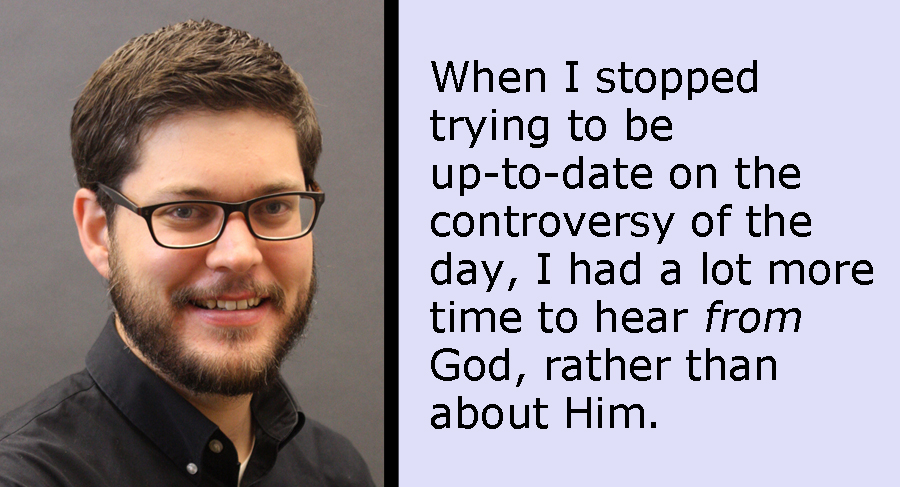
So I gave up. I stopped trying to be up-to-date on the controversy of the day. I decided that if it wasn’t something that was directly impacting my students, then I wouldn’t bother with it.

And guess what? I found that I had a lot more time to hear from God, rather than about Him from someone on a podcast. I found that I was freer to hear the questions the students actually had, rather than the ones I forced on them. And I found that it’s a lot easier to follow Jesus when you’re not fighting over Jesus.

So last week, a video of Victoria Osteen made the rounds. If you didn’t know, she is the wife of America’s most famous mega-pastor Joel Osteen. The clip is from a sermon in August wherein Victoria makes some…how do you say…provocative claims about proper motivation for obeying God. (If you haven’t seen it yet, then count yourself blessed and forget I mentioned it.)

Here’s what naïve Chase would’ve probably done in response to this clip if it had come along in my early days of ministry: I would’ve torn the thing to bits, shared all the parody videos, and read every blog that critiques the Osteens’ errant theology. I might’ve even used one of the parody videos in our weekly gathering or taught an entire lesson in response. In other words, I would’ve wasted a lot of time doing battle against something that had virtually zero influence on the people in my care.

Let me suggest this template for responding to public Christian controversies in your collegiate ministry context.

  1. Pray for the individuals caught in sin or espousing false teaching.
    • Example: Pray for the Osteens and those influenced by their teaching ministry.
  2. Examine yourself in light of Scripture.
    • Example: Ask God to show you where you have selfish motives in your obedience to him. Repent as necessary.
  3. Listen to your students. Respond when necessary.
    • Example: If your students aren’t being influenced by the controversy, then press on in your disciple-making as if nothing has happened. If they have questions about it, then address the controversy.

You see, as you focus your energy on developing mature Christians who believe and apply the gospel to all of life, they will be equipped to address the counterfeits on their own. If at times, the controversies catch their attention and your students have questions, then embrace those as teachable moments. But remember, they are just that—moments—and not the normal pattern for your ministry.

Most of all, avoid the temptation to define yourself and your ministry by what you’re against. Is the gospel exclusive? Yes. Does God draw some hard lines in Scripture? Yes. But most clearly, he reveals himself in the person and work of Jesus Christ who gave most of his energy on earth to proclaiming the good news of the Kingdom.

Chase Abner is Collegiate Evangelism Strategist for the Illinois Baptist State Association.