Archives For November 30, 1999

Lisa Sergent holds a musket used by a private who served under General George Washington. It is owned by history buff and pastor Dan Fisher (left).

Lisa Sergent holds a musket used by a private who served under General George Washington. It is owned by history buff and pastor Dan Fisher (left).

COMMENTARY | Lisa Sergent

There’s an old song that says, “Don’t know much about history.” What Dan Fisher knows has been largely ignored – or forgotten – in our time. Clergymen were heroes in the American Revolution, said Fisher, himself a Southern Baptist pastor and Oklahoma state representative.

Fisher, the pastor of Trinity Baptist Church in Yukon, Okla., travels the country presenting “Bringing Back the Black Robed Regiment.” A term coined by British sympathizers, the “regiment” were the pastors – Presbyterian, Methodist, Lutheran, Baptist and Episcopalian – who helped lead the fight for liberty from the British. He shared his message to a gathering hosted by the Illinois Family Institute this spring.

Portraying Lutheran pastor Peter Muhlenberg, later a general in the Continental Army who rallied his congregation to fight, Fisher said, “If the church doesn’t speak out, then who will? We were the men of the book, we were the men of truth, we were the men of true liberty because we knew that ultimately true liberty can only come though an internal relationship with Christ. When you have true liberty, then you can defend external liberty.”

Fisher shared how many of these 18th century pastors gave their lives and livelihoods in the fight to defend liberty. He encouraged today’s pastors to stand boldly for religious liberty. “What price are you willing to pay?” he asked.

He applies this aspect of United States history, forgotten by many, to today’s cultural issues. “There comes a time when our liberty must be protected,” said Fisher. “Friends, if we lose our external liberty we lose our internal liberty to believe and preach.”

Urging Christians to take a stand, Fisher stated, “Some 50% of today’s evangelicals don’t even bother to vote. And out of those who do vote, 25% vote the opposite of what Christians believe. Not on political issues, but on moral issues…How do we justify that?”

Fisher repeated second U.S. President John Adams’ warning to America in 1798: “We have no government armed with power capable of contending with human passions unbridled by morality and religion…Our constitution was made only for a moral and religious people. It is wholly inadequate to the government of any other.”

Lisa Sergent is director of communications for the Illinois Baptist State Association and contributing editor of the Illinois Baptist.

Baptists almost ‘dance for joy’ over religious freedom ruling

THE BRIEFING | Meredith Flynn

The U.S. Supreme Court ruled June 30 in favor of Hobby Lobby and Conestoga Wood Specialties, deciding that the companies do not have to cover abortion-inducing drugs in their employee health plans.

The 5-4 decision sets an important precedent for “closely held” companies (those owned by individuals or families) that object to what has become known as the abortion-contraceptive mandate in the Affordable Care Act.

In the opinion, Justice Samuel Alito wrote that under the standard set by Religious Freedom Restoration Act of 1993, “the HHS contraceptive mandate is unlawful.”

The_BriefingSouthern Baptist leaders responded quickly to the ruling. “It is an absolute victory for the proponents of religious liberty,” said SBC Executive Committee President Frank Page. “I am thankful that both common sense and conscience have seen a victory in a day where such victories are rare.”

Russell Moore, president of the SBC’s Ethics and Religious Liberty Commission, called the ruling an “exhilarating victory for religious freedom.” During the SBC Annual Meeting in Baltimore earlier this month, Moore presented an award to the Green family, who owns Hobby Lobby.

“As a Baptist, I am encouraged that our ancestors’ struggle for the First Amendment has been vindicated,” Moore said after the Court’s decision.

“This is as close as a Southern Baptist gets to dancing in the streets with joy.”

Read more at BPNews.net.

Court also rules on abortion clinic buffer zones
The Supreme Court struck down a 2007 Massachusetts law restricting pro-life advocates from congregating within 35-foot zones around abortion center entrances and driveways, Tom Strode of Baptist Press reports. Justices issued a 9-0 opinion on the matter, and Chief Justice John Roberts wrote that the law “imposed serious burdens” on free speech.

Marriage in limbo in several Upper Midwest states
Indiana has joined a list of states in which the definition of marriage is pending an appeal of a federal judge’s ruling. After Judge Richard Young struck down the state’s same-sex marriage ban June 25, a federal appeals court issued a stay two days later. Michigan and Wisconsin are in a similar situation, as seen in this map from USA Today (which doesn’t reflect the Indiana appeal). Same-sex marriage officially became legal in Illinois June 1, although some counties began issuing marriage licenses in the spring.

LifeWay survey: Domestic violence rarely preached about in church
Nearly three-fourths of Protestant pastors say domestic or sexual violence is a problem in their community, but 42% rarely or never preach on the topic. The survey, conducted by LifeWay Research and sponsored by Sojourners and IMA World Health, also found 74% of pastors know someone who has experienced domestic violence. Read more at LifeWayResearch.com.

Thief-turned-pastor shares testimony
George Aguilar, once an enemy of churches in Oklahoma, is now a pastor in his home country of El Salvador. After robbing from and vandalizing 11 churches in the Tulsa area, Aguilar came to Christ after one of the churches he stole from took him in. Read his story from The Baptist Messenger.


The_BriefingTHE BRIEFING | Meredith Flynn

Leading up to the Supreme Court’s expected ruling on a case involving Hobby Lobby, culture writer Jonathan Merritt took issue with calling the craft retailer a “Christian business” because of its dealings with China, one of the world’s worst offenders of human rights.

Hobby Lobby currently is fighting for an exemption to the government’s requirement that for-profit companies cover some abortion-inducing drugs in their employee health care plans. The Supreme Court’s ruling is expected this week.

The things Hobby Lobby claims to stand for, Merritt wrote for The Week magazine, including sanctity of life and religious liberty, are grossly undervalued in China.

“Hobby Lobby reminds us why for-profit businesses should resist calling themselves ‘Christian,’” he wrote. “The free market is messy and complicated and riddled with hypocrisy. Conducting business in today’s complex global economy almost ensures one will engage in behavior that is at least morally suspect from a Biblical standpoint.”

Merritt invited Russell Moore, president of the Ethics and Religious Liberty Commission, to respond to his article. Moore recently presented the Green family with the John Leland Award for Religious Liberty.

Forsaking business in China, Moore wrote, likely won’t help improve human rights there. Historically, he said, “open trade, in most cases, tends to help the development of political rights rather than hinder them.” If the Greens believed boycotting Chinese business would turn the nation’s government toward improved human rights, Moore said, they would.

But, “The Greens cannot control the decisions made by the Chinese government. They can, however, direct their own actions. And, as Americans, they can participate in a democratic republic in which the people are ultimately accountable for the decisions of their government.

“Buying products from companies that operate in a country that aborts children is not the same as being forced by the United States government to purchase directly insurance that does the same.”

Meriam Ibrahim released from prison, then rearrested
A 27-year-old mother of two imprisoned for her Christian faith was released June 23, but rearrested just hours later, The Christian Post reported this morning. Meriam Yahia Ibrahim, a Sudanese doctor, had been imprisoned with her young son and newborn daughter after she was found guilty of apostasy and adultery. (Because Ibrahim’s husband, Daniel Wani, is a Christian, their government does not recognize their marriage.) Her death sentence was to be carried out in two years. After Ibrahim was freed and her sentence commuted Monday, she was rearrested with her husband and children as they prepared to leave Sudan. Ibrahim’s case has drawn attention internationally and in the U.S., 38 members of Congress signed a letter asking the government to intervene on her behalf. Read more at ChristianPost.com.

Benched basketball star says ‘I know God has a plan!’
Isaiah Austin, a center for the Baylor University basketball team, was expected to be a first-round pick in the June 26 NBA draft. Instead, a diagnosis of Marfan syndrome will end his career, reported The Christian Post. He sat down for an emotional interview with ESPN, but was hopeful on Twitter and Instagram, using social media to talk about his faith in God.

“I know God has a plan!” Austin posted as part of a message on Instagram, with the hashtag #NewBeginnings. “I would love to thank EVERYONE who has reached out to me,” he tweeted under the handle God’s Child. “Toughest days of my life. But not the last! Life goes on. GOD IS STILL GREAT!”

Mohler: PCUSA marriage vote helps establish ‘clear divide’
When the General Assembly of The Presbyterian Church (U.S.A.) voted to allow pastors to conduct same-sex marriages, their decision set a dividing line in culture and in Christianity, said Southern Seminary President Albert Mohler.

“That very clear divide puts on one side those who stand with 2,000 years of Christian witness and on the very clear statements of Scripture, and, on the other side, those who stand with the moral revolution of the era…,” Mohler said on his daily podcast.

The Presbyterian denomination not only voted on the policy change for pastors, but also to amend their constitution to define marriage as between “two people” instead of “a man and a woman.” A majority of the PCUSA’s presbyteries must approve the amendment for it take effect, Baptist Press reported, but the departure of many conservative congregations makes the change a likely prospect.

NEWS | Meredith Flynn

Ask church leaders what is the single biggest threat to marriage right now, and most would probably give the same answer: the stunning wave of approval for same-sex marriage.

But a changing definition of marriage isn’t the only thing endangering the institution, said Baptist leaders at an April summit on sexuality and the Gospel. In fact, it may not even be at the top of the list.

Pornography has dulled the consciences of many Christians. Cultural trends have tended to devalue marriage at the expense of other arguably good things, like education, career and financial stability. And pastors may not feel the freedom or confidence to speak plainly about the issues affecting their congregations: sexual purity, marital fidelity, and what the Bible really says about all of it.

Faced with these threats to marriage, Andrew Walker of the Southern Baptist Ethics and Religious Liberty Commission said the church has a choice: “We can confront these changes, we can acknowledge them, we can work to combat them, or, sadly, we can conform to them.”

One thing the church can’t afford to do: nothing.

For today’s 20-somethings, marriage and family look very different than when their parents were making decisions about who to wed and how many kids to have. In 1960, 72% of American adults were married. In 1980, it was 62%. In 2012, it was just over 50%.

According to a 2013 study by the University of Virginia, the average age of first marriage now is historically
high – 27 for women and 29 for men. Waiting to marry has resulted in a lower divorce rate and better economic prospects for women; however, researchers also point to higher birth rates among unmarried women.

Almost half (48%) of first births are to unmarried women.

“What exists outside the church usually makes its way inside the church,” said Walker, the ERLC’s director of policy studies. In a breakout session at the Nashville summit hosted by the ERLC, he explored 11 threats to contemporary marriage, including:

The “soul mate” concept of marriage that emphasizes emotional and sexual fulfillment and partnership over biblical covenant and commitment.

Marriage as an aspiration. People marry later when they wait until they’re financially established, Walker said. “We need to mitigate against the [idea] that someone needs a Master’s degree and $75,000 in the bank” before they get married, he added.

– The rise of “professional marriages” where spouses have individual bank accounts and separate social lives.

Also on Walker’s list of external threats to marriage: divorce. Many would say it’s a threat inside the church too, although the statistics that place divorce rates the same or higher among Christians have been misreported, some researchers say. The more subtle danger may be Christians’ acceptance of the divorce culture.

In an interview last year with Christianity Today, ERLC President Russell Moore said divorce is one way Christians have surrendered to “the patterns of this age.”

“Evangelical Christians are as counter-cultural as we want to be, and it is clear that we are slow-train sexual revolutionaries, embracing the assumptions of the outside culture a few years behind everybody else,” Moore said. “This has had disastrous consequences.”

How these factors have marginalized marriage inside the church is supported largely by anecdotal evidence. The single adults in your congregation likely weren’t raised to focus on whom they would eventually marry. Marriage has been confined to “meeting the right person” for an entire generation (maybe more); it’s not something they can control. So young Christians focus instead on friendships, education and career. On top of all that, they’re haunted by the specter of divorce. Looking toward marriage seems strange to most of them, even limiting – and potentially disappointing.

David Prince is a Kentucky pastor who also spoke at the ERLC summit. He said that when he visits new parents in the hospital, he prays over their babies, and specifically for their future spouses. One grandfather in a hospital room expressed his disbelief that Prince was praying that way already, the pastor said.

The majority of Americans, and even more religious Americans, still have faith in the institution of marriage, according to research presented at the summit by sociologist Mark Regnerus. The question is whether they have enough faith to pursue it for themselves. In the absence of a “marriage culture,” wrote blogger Trevin Wax last year, Christians who marry early and stay married 40, 50 or 60 years will stand out. Which is good news for the church. “We’ll be ordinary oddballs,” Wax said. “So let’s not waste the opportunity.”

A healthier view
If negative influences on marriage and sexuality that exist outside the church have made their way inside, Scripture offers a better way forward. And it speaks to modern-day problems like pornography, said Southern Seminary professor Heath Lambert.

Likening porn to the “forbidden woman” in Proverbs 7, he told summit attenders there is a silent killer running rampant in churches. And it’s not growing acceptance of same-sex marriage.

“A greater threat to the church today is the Christian pastor, the Christian schoolteacher, the Christian Bible college and seminary student, who exalts sound theology, points to the Bible, and then retreats to the basement computer to indulge in an hour or three of internet pornography.”

Regnerus shared daunting numbers: When asked whether they had looked at porn on a given day, 11% of men said yes. Between 35 and 40% said they had within the last week, including 20-25% of Christian men between the ages of 18 and 39. And it’s not just men. In a reflection on biblical womanhood during the summit, Trillia Newbill said research from 2007 showed 13 million women clicked on pornographic web sites every month. Women represent one in three visitors to adult entertainment sites, she said.

“There is a stereotype and a really, really, really bad rumor that women don’t struggle with sexual sin,” said the ERLC’s consultant for women’s initiatives. “The sin that came into the world and corrupted all that was beautiful in the world, also corrupted us women.”

How can churches offer hope and the truth of the Gospel? By presenting marriage and sexuality in the same tone as Scripture, said Kevin Smith, who closed the conference with a message on biblical sexuality within marriage.

“…Certainly, let us avoid vulgarity and certainly let us avoid [language] that will remove the mystery of sexual intimacy between a husband and a wife,” the pastor and professor from Louisville, Ky., said.

“I’m kinda tired of preachers bragging about their hot wife.”

But Smith also warned church leaders not to let a sex-saturated society muzzle proclamations of biblical marriage and sexuality. Avoid the “flattening out” of sex that happens in our culture, which removes emotional, commitment and intellectual aspects of the one-flesh union of the Bible, Smith said.

“The one who is proclaiming the Word of God and speaking of sexuality in a biblical context, we’re trying to heighten the conversation. We’re not trying to make sex less dramatic, we’re trying to make sex more dramatic.”

And more biblical.

Meredith Flynn is managing editor of the Illinois Baptist newspaper. Read the IB online at http://ibonline.IBSA.org.

Young people fill the pews at Capitol Hill Baptist Church in Washington, D.C., pastored by Mark Dever.

Young people fill the pews at Capitol Hill Baptist Church in Washington, D.C., pastored by Mark Dever.


COMMENTARY | Meredith Flynn

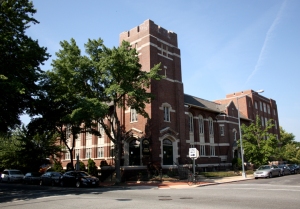
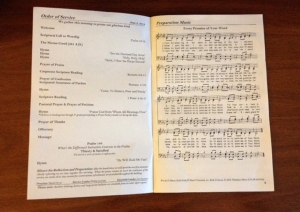
Mark_Dever_blogA 16-page church bulletin leaves little to the imagination. At Capitol Hill Baptist Church in Washington, D.C., worship attenders know exactly what they’re getting into from the time they walk into the split-level, high-ceilinged sanctuary, less than a mile from the U.S. Capitol.

The order of service, printed neatly on the inside cover page, lists every hymn, prayer, and Scripture reading. Every song is there in entirety – not just lyrics, but actual music.

Even the Nicene Creed gets its own page, with three paragraphs of explanation about where it came from and why we recite it. (“I said this in church for 28 years,” said one visitor, “and nobody ever explained it to me.”)

Your first impression is that this church is good at welcoming new people. They remember well that not everyone who walks in the door has been here before, and maybe they’ve never been in any church before. But it’s more than that. There’s a shrewdness here (in the nicest sense of the word), and an attention to detail that may be best matched just down the street under the Capitol Dome.

Capitol Hill Baptist Church is a church for its very unique city.

Capitol_Hill_exterior_blogWhat’s most interesting is that there are Millennials here – that elusive generation that’s giving churches fits around the country. A variety of ages are represented at Capitol Hill, but the congregation skews young. A few families sat in “bulkhead” seating at the back of the sanctuary, with a little extra leg room to accommodate a fidgety toddler. The rest of us were packed into crowded pews – between 900 and 1,000 are here for worship on Sunday mornings.
Capitol Hill isn’t doing what most churches do to try to reach Millennials. Lately, the normal prescription is a relaxed dress code, coffee bar in the lobby, and maybe a violinist in the worship band. But here in Washington, what’s reaching Millennials is orderliness. And 5-minute prayers (four of them). And a 55-minute sermon based on one chapter of Psalms.

Capitol_Hill_bulletin_blog“You will be bored if you don’t open your Bible and leave it open,” Pastor Mark Dever said before his message on Psalm 143. “All I’m gonna do is talk about what’s in the Bible.”


The service lasted more than two hours, but people still stuck around to chat afterward. Some milled around the small bookstore tucked into a corner of the overflow room just off the main sanctuary. Coffee and cookies and conversation were had downstairs.

There are few surprises at Capitol Hill, besides the fact that this church on a quiet tree-lined street is ministering effectively in a difficult place, using methods that you never would have thought would work. Combined with age-old truth.

“You may have come in here as an adversary of God’s, an enemy,” Dever said at the end of his sermon. “But there’s no reason you have to leave that way.”

Meredith Flynn is managing editor of the Illinois Baptist newspaper.

The_BriefingTHE BRIEFING | Meredith Flynn

Ronnie Floyd, elected president of the Southern Baptist Convention last week in Baltimore, is calling on Baptists to rally in Columbus, Ohio, next summer to pray together for spiritual awakening.

“As I work with our Order of Business Committee as well as other leaders, I will respectfully request that we dedicate as much time as possible in next year’s convention to pray extraordinarily for the next Great Awakening,” Floyd wrote in a June 16 column for Baptist Press. “I want to call you to Columbus to what could be one of the most significant prayer gatherings in our history.

Floyd, pastor of Cross Church in northwest Arkansas, said in Baltimore that America’s greatest need is a great awakening. Prior to the convention, he organized two national gatherings for Baptist pastors to pray together.

“Our convention has bemoaned our decline in baptisms, membership, attendance and giving far too long,” Floyd wrote. “Now is the time for us to take aggressive action by calling out to God together in prayer.

“At the same time, we must take the needed strategic actions to change our trajectory as a convention of churches. While we face these critical times, we know God is doing some amazing things right now through Southern Baptists. As we celebrate those to the glory of God in Columbus, we will also call out to God in urgent desperation.”

Read Floyd’s column at BPNews.net, and click here to read more of the Illinois Baptist’s coverage from Baltimore.

Stanley explains tweets during SBC meeting
Georgia pastor Andy Stanley sparked a long online conversation when he tweeted during the Southern Baptist Convention’s annual meeting, according to a Christian Post report. The Baltimore meeting focused heavily on revival and spiritual awakening. Stanley, pastor of North Point Community Church in Alpharetta, was not at the meeting but tweeted on the topic several times, including, “Instead of praying for revival leaders of the SBC should go spend three weeks with @perrynoble Why pray for one when you can go watch one.”

Stanley was referring to Pastor Perry Noble of New Spring Church in South Carolina. He told The Christian Post that in the tweet and others during the meeting, he was referring to revival in the local church, rather than in a great awakening sense. “I can understand the confusion and I definitely contributed to it,” said Stanley, who still exhorted the local church to take actions that can lead to spiritual awakening.

“I love the local church. And I’ll admit I get a bit stirred up when I hear church leaders talk about the need to reach more people while refusing to make the changes necessary to actually get the job done.” Read more at ChristianPost.com.

Millenials tell Barna: Top 5 things to do before 30
Barna’s recent study of Millenials – “20 and Something” – delves into what the generation believes about life and work. Including the five things they most want to accomplish before they turn 30: gain financial independence (59%), finish their education (52%), start a career (51%), find out who they really are (40%), and follow their dreams (31%). Read more at Barna.org.

Be fruitful, says Pope
After celebrating Mass with 15 married couples at the Vatican, Pope Francis warned against childlessness. “It might be better – more comfortable – to have a dog, two cats, and the love goes to the two cats and the dog,” he said, according to a report by Religion News Service. “Then, in the end this marriage comes to old age in solitude, with the bitterness of loneliness.”

The pope’s remarks came on the heels of a report that Italy’s birth rate fell to a record low in 2013. The U.S. birth rate hit a record low in 2012, but about 4,700 more babies were born in 2013, according to the Centers for Disease Control and Prevention.

List locates world’s most persecuted countries
Christians face the worst persecution in North Korea and Somalia, according to the 2014 World Watch List. For 12 years, North Korea has topped the list released by non-profit organization Open Doors. Syria, Iraq, Afghanistan, Saudi Arabia, Pakistan, Iran and Yemen also are in this year’s top 10, along with the Maldives, a chain of islands off the coast of India.

Blessed bikers

Meredith Flynn —  May 19, 2014
Rainy weather

The annual Blessing of the Bikes April 27 in Decatur went on despite stormy weather.

HEARTLAND | Meredith Flynn

It wasn’t a great weather day for the annual Blessing of the Bikes in Decatur, Ill. Gray clouds piled up in the sky on Sunday afternoon, April 27, and then came a downpour, just as hundreds of motorcyclists made their way to and from the Harley-Davidson store to be prayed over by volunteers in orange vests.

Every spring, riders gather in Decatur and at the Bald Knob Cross in southern Illinois to be blessed. Over the sounds of revving engines, pray-ers put their hands on the shoulders of each rider and ask God for a safe motorcycle season.

It’s a tradition IBSA’s Pat Pajak has kept for several years, including the most recent blessing. He hustled home from a preaching engagement that Sunday afternoon to change into his Harley shirt, blue jeans and leather vest. On the way to the blessing, he stopped to help a couple whose bike had hit a pothole and slid down an embankment.

“After patching up a cut on the wife’s chin and helping her husband wrestle the bike out of the mud and wet grass, I shared how the Lord had watched over them,” Pajak said. “Our discussion led to the Blessing of the Bikes, which they were headed to, and ultimately the Gospel.

“Standing on the side of Highway 51 in the rain, I had the privilege of leading both of them to Jesus Christ.”

Pajak was 30 minutes late by the time he got to the Harley-Davidson parking lot, but he – and his new brother and sister in Christ – had already been extraordinarily blessed.

F.A.I.T.H Riders is a ministry for motorcyclists who want to use their passion for biking to share the Gospel. For information about how to start a chapter in your church, contact Pajak at (217) 391-3129.

Justin_KinderCOMMENTARY | Justin Kinder

A recent article in the Illinois Baptist newspaper caught my attention:

“The Presbyterian Church USA chose not to include the song, ’In Christ Alone,’ in their new hymnal all because the song mentions the ‘wrath of God.’ On Christiancentury.org, Mary Louis Bringle, chair of the committee who made the decision, wrote that the song propagates ‘the view that the cross is mainly about God’s need to assuage God’s anger and that view could be harmful to future generations of worshippers.’”

I guess I shouldn’t be surprised by such an article in today’s day and age. However, I did almost spit out the Cheerios I was having for breakfast as I read it.

We must understand what the Bible says about sin and about God and His wrath. When our first parents Adam and Eve fell in the Garden of Eden, they let sin enter into our world. We are all sons and daughters of Adam. In other words, we are all born into this world as sinners. Adam and Eve did not escape punishment for their sin either. They were going to die a physical death and they also died a spiritual death. The same holds true for us: we are all going to die someday and before we ever come to know Jesus Christ as Lord and Savior, we are spiritually dead in our trespasses and sins.

We must also understand that God, the God of the Bible, is a holy God. He cannot tolerate sin. In fact, He hates sin and He must judge sin. We deserve God’s wrath for sin but God in His mercy and grace sent Jesus Christ to be the perfect sacrifice to take away the punishment and penalty for our sin. When Jesus was on the cross, He endured God the Father’s wrath for sin for us. I believe that shows amazing love and grace by God!

There is also further proof from the Bible that Jesus Christ endured God’s wrath for sin while He was on the cross. When Jesus was in the Garden of Gethsemane remember that He prayed, “My Father, if it is possible, let this cup pass from Me; yet not as I will, but as You will.” The cup that Jesus was talking about is referring to the wrath of God. Remember that Jesus also said while He was on the cross, “My God, My God, why have you forsaken Me?” He was quoting a psalm of David but in reality what was happening is that Jesus Christ was experiencing the wrath of God the Father at that very moment.

In John 3:36 it says, “Whoever believes in the Son has eternal life, but whoever rejects the Son will not see life, for God’s wrath remains on them.” In that passage, there is good news and bad news all at the same time. The bad news is this:  if you reject the cross of Jesus Christ, then the wrath of God still abides on you, but you don’t have to remain in that condition.  You can be saved.  Saved from what specifically? The wrath of God. Here is the good news then: when you believe on Jesus Christ as Lord and Savior the wrath of God is taken away from you and you are given eternal life. You are no longer under condemnation but under God’s grace. My friends, we must not sugarcoat the Gospel. We must speak the truth in love and not be afraid to offend people with the truth of God’s Word.

Justin Kinder is pastor of Main Street Baptist Church in Braidwood, Ill.

“Leila’s Big Difference” is 7-year-old Mackenzie Howell’s latest project to help Haiti. Photo by Kristi Burden

“Leila’s Big Difference” is 7-year-old Mackenzie Howell’s latest project to help Haiti. Photo by Kristi Burden

NEWS | August 26, 2013

On the first page of “Leila’s Big Difference” by Mackenzie Howell, a little girl stands with her arms crossed as the words “Too Little” float around her.

As the baby of her Haitian family, Leila sometimes feels held back by her youth. But when a teacher tells her class the story of a young shepherd who kills a giant that’s been menacing his community, it inspires Leila and her schoolmates to band together to make a difference.

First-time author Mackenzie likely can empathize with her main character. The 7-year-old Texan started trying to make a difference in Haiti when she was just five years old. The book is her latest project to raise money for relief efforts in the country where hundreds of thousands were displaced after a massive earthquake three years ago.

The first 400 copies of “Leila’s Big Difference” are nearly sold out, and Mackenzie has spoken at two local churches about the project. Her story was also featured in the Beaumont Enterprise newspaper. She has already sent $1,565 in book sales to the Illinois Baptist State Association for continued work in Haiti.

“When you hear about missions in action, Mackenzie is a true example,” said Bob Elmore, IBSA’s short-term missions coordinator, who has led several mission teams from Illinois to Haiti since the quake. “Her heart was touched by a need, she determined what she could do and didn’t limit herself. Her efforts are truly making a difference.

“This is commendable for anyone, but astounding for a 7-year-old.”

It started two years ago, when Mackenzie saw a TV show about the one-year anniversary of the earthquake and told her mom she wanted to do something to help. The Howells organized a coin drive at her preschool and a bake sale at their church. They raised more than $1,400 and sent the money to International Mission Board missionaries Jo and David Brown, who were instrumental in the re-building process.

The missionaries then connected Mackenzie with Elmore and IBSA’s continued work in Haiti through short-term mission trips. She sent IBSA the proceeds from her next project – selling homemade sidewalk chalk, playdoh, crayons and finger paints through a local mall’s program for enterprising kids. Her donation helped build a church in Port-au-Prince that doubles as a school.

This summer, with a 15-month-old brother in the house, Mackenzie decided she needed a project he couldn’t get in the middle of. “So we decided to do a book,” she said.

She enlisted the help of Jace Theriot, a 9-year-old in the Sunday School class her mom teaches at their church, Hillcrest Baptist in Nederland, Texas. Jace illustrated Mackenzie’s story, giving life to Leila, her kind-hearted teacher Mr. Bertin, and her lush homeland.

The two recently had a signing party where they autographed 150 copies of their book. And ate pizza and cookies, Mackenzie added.

Watching her daughter “gives me such an appreciation of the Lord being willing to use us,” Alison Howell said. “Because for her, the calling is so clear, and we could see how genuine it was, that it reminded me that the Lord really wants to use us.”

Mackenzie corresponded with Elmore as she created the story, e-mailing him questions about Haiti. Alison said he asked the questions of a young boy and girl in Haiti, so Mackenzie could use their input too. The young writer also researched the country online.

“She was so adamant,” Alison said about her daughter’s will to write the book. “And that’s been the really neat thing in this process, that she has wanted to do this. She has had the passion. Not one time has she said, ‘Mom, this is getting old,’ or ‘I don’t want to work on this story.’”

And while the book has made Mackenzie a bit of a local celebrity, her parents are careful to remind her of the spiritual lessons she’s learning.

“One of the things we’ve learned…is how blessed we are to live in America, and how much we have,” Alison said. “And so we’ve tried to teach her that when much is given to you, much is expected from you.”

“Leila’s Big Difference” by Mackenzie Howell is available for order here.

pull quote_FLYNNCOMMENTARY | Meredith Flynn

Do you ever get the feeling everybody’s looking at you? It happened to me a week ago, when I spent the day at the Illinois Capitol waiting for an anticipated vote on the same-sex marriage bill.

Those of you who read the coverage on this blog know that vote never happened. The bill’s sponsoring representative, Greg Harris, announced that his fellow legislators needed time to go home and talk to their constituents before they could come back in the fall and vote “yes” for same-sex marriage.

That’s the official news, which you likely already knew. What you don’t know is that, in retrospect, I felt as if I almost caused an incident because of a fashion decision.

That morning I chose to wear a bright, multi-colored shirt with horizontal stripes. Almost like a rainbow. I chose it because it’s pretty, no other reason. During the course of the day, it became apparent that my apparel was making a statement I did not intend.

That day, advocates on both sides of the debate held rallies in the Capitol rotunda. The pro-traditional marriage group met first to pray together. An hour later, a larger group of same-sex marriage supporters met. And that’s where I realized my clothes might be talking for me.

I was snapping photos for the Illinois Baptist newspaper, like I’d done at the previous gathering, when a friendly lobbyist stopped to talk to me. I knew she was working for conservative groups that opposed the legislation, and I had noticed earlier how polite she was to some same-sex marriage advocates who had listened in on the prayer meeting. I complimented her on that, and she said something like, “Well I think we can disagree on some things and still agree on others…like you and I probably agree on lots of things.”

I thought, well sure we do, including this. But as she kept talking, I realized she assumed she and I were on different sides of the marriage debate. Then, I noticed someone taking a cell phone photo of me. I looked down at my shirt.

Oh.

Then, uh-oh.

In a matter of moments, my (overactive) imagination envisioned those photos posted on Facebook, then CNN, with people making all kinds of assumptions about me and my beliefs, based on my colorful shirt.

“I better call my husband,” I thought to myself. “And my mom.”

Later, calmer, I began to consider this: As a reporter, I’ve tried to tell the Illinois marriage story fairly, while still holding firmly our convictions that God designed marriage as a union between one man and one woman. But in the moments when I feared my own identity might be in question, I realized how very personal the marriage debate is for the people who are involved.

For a moment, I saw the issue from a different angle. I considered from a new perspective why so much of the debate has been rancorous, why the atmosphere in the House gallery last Friday grew more and more tense as the vote was delayed, and why some same-sex marriage advocates are so angry with Christians.

And after my own brief fears that I would be identified as standing opposite my readers and my employer, I came to see how important it is that we as Christians have a loving attitude – compelled by how deeply we ourselves are loved by a holy God – toward those with whom we disagree.

This marriage business is a serious business; it’s emotional, and where we stand on it is closely tied to our identity. As people, as fellow citizens, as believers in Christ. Let’s walk in truth and in love – a precarious balance sometimes – so that others might look past the stripes on shirts, and see the One we’re called to reflect.

That said, I still think my shirt is pretty.