pull quote_BURKCOMMENTARY | Denny Burk

Editor’s note: This column is reprinted with permission from www.dennyburk.com.

After the Presbyterian Church U.S.A decided to drop the hymn “In Christ Alone” from their hymnbook, I posted a note about the decision on my blog. Reports say that the song’s reference to “the wrath of God” was just too much for those making the decision. The songwriters refused to give permission to amend the language, so the PCUSA decided to leave it out.

I have to say that I have been quite surprised at the response to this short post – a response that is still ongoing. I am not surprised, however, that the topic still provokes strong responses from people – strong reactions on both sides of the issue.

In some ways, how one feels about the wrath of God reveals almost everything that’s most important about a person. How one feels about God’s wrath defines a person’s view of hell, of the nature of God, and even of the meaning of the cross itself. Thus to get God’s wrath wrong means to get almost everything else wrong as well.

On Sunday, I preached a sermon in my church about hell and the wrath of God. In this message, I make the case that every true Christian will one day lift up his voice in celebration when God bares His arm in judgment against His enemies (Rev. 18:20). In other words, your ability to rejoice in God’s wrath will one day define whether or not you know Him at all.

What we believe about God and about His Son Jesus is the most important thing about us. And yet countless people recoil at the God of the Bible and turn instead to a god of their own imagination. Any formulation of deity that excludes God’s justice and wrath against sin is not the God of the Bible.

A wrathless god shorn of His justice is no god worth worshipping. Nor is he a god able to convict and save sinners. When wrath is taken away, so is the gospel. And that is why this discussion matters.

Denny Burk is associate professor of biblical studies at Boyce College, the undergraduate arm of Southern Seminary in Louisville, Ky. Listen to his message on the wrath of God at www.kenwoodbaptistchurch.com.

LifeWay_storeTHE BRIEFING | Meredith Flynn

LifeWay Christian Stores opened its third Illinois location August 1 and will celebrate with grand opening festivities throughout the month. The Wheaton store, located in the Town Square Wheaton on South Naperville Road, is formerly a Johnsen & Taylor Bookstore operated by Tyndale House Publishers.

“I’ve heard from many individuals and churches who are excited about LifeWay Christian Stores being here,” said store manager . “We are grateful to see the continuation of the ministry started by Johnsen & Taylor.”

LifeWay also operates stores on the campus of Moody Bible Institute in Chicago and in Carterville, Ill.

Other news:

‘Wrath of God’ too much for hymnal
The Presbyterian Church USA chose not to include the song “In Christ Alone” in their new hymnal, all because the song mentions the “wrath of God.” On ChristianCentury.org Mary Louis Bringle, chair of the committee that made the decision, wrote that the song propagates “the view that the cross is primarily about God’s need to assuage God’s anger,” and that view could be harmful to future generations of worshippers.

Southern Baptist leaders, including Ethics and Religious Liberty Commission President Russell Moore, have weighed in on the decision. Read his commentary on The Washington Post’s On Faith blog here.

Most churches still do VBS
A Barna study found 68% of churches held a Vacation Bible School last year, including 91% of Southern Baptist churches. The research also found that churches in the South are most likely to host VBS, along with churches with larger budgets and more adult worship attenders. And churches with “Buster” pastors, those aged 30-48, are the most likely to participate in VBS, according to Barna. Read more findings here.

Street preaching resumes on Bourbon St.
The city of New Orleans has revised an ordinance that prohibited street preaching on Bourbon Street, ChristianPost.com reports. The ban, enacted in 2011, controlled preaching from sunset to sunrise and forbade individuals or groups from gathering “for the purpose of disseminating any social, political or religious message…” Several preachers are suing the city after being arrested or threatened with arrest for preaching during last year’s Southern Decadence Festival, an annual pro-gay event. Read the full story at ChristianPost.com.

Graham calls for prayer for Abedini

Franklin Graham is urging people to pray for Pastor Saeed Abedini (right), an American imprisoned in Iran since last September. Graham, the son of evangelist Billy Graham and president of Samaritan’s Purse, spoke to FOX News about Abedini’s plight and the prayer vigil scheduled for Sept. 26 – the one-year anniversary of his captivity. He also questioned President Obama’s response: “President Obama has been silent on the issue as an American Christian endures the horrors of Evin Prison,” Graham said.

“Many in the international community are expressing outrage over this blatant example of religious intolerance,” he said. “I ask that our government do the same and demand that Pastor Saeed Abedini be released and allowed to return home to his wife and family in the United States.” Read more on reporter Todd Starnes’ FOX News page.


HEARTLAND | By Joe McKeever, on Baptist Press

Pastor, have you ever had a meltdown in the pulpit?

pull quote_MCKEEVERIn the news recently, two Atlanta radio jocks were fired for the on-air mocking they did of a New Orleans icon, former Saints football player Steve Gleason who has ALS (Lou Gehrig’s) and lives in a wheelchair and speaks through a computer.

They made fun of him, parodied his situation, and someone role-played Steve speaking of his coming death and such.

It was the ultimate in offensive.

In the article which ran here in New Orleans, one of the terminated men said, “What were we thinking?” The jocks apologized, and in a subsequent story, Gleason said he accepted their apology.

One of the men called it “a moronic two minutes.”

No argument.

I have had a few moronic two minutes in my long lifetime, and expect some of our readers have also.

I know a pastor who was so exasperated with his small congregation that in a Sunday morning sermon, he berated them for their laziness and unresponsiveness and, working himself up into a lather, stalked out of the service, leaving his people sitting there.

The deacons — I think the church had three — went to him that afternoon to try to bring him to his senses.

Later that day, in the evening service, the pastor apologized to the church and kept on talking. Big mistake. The more he tried to explain why he did what he had done, he slipped into that same rant and once again, walked out of church, leaving the members stunned.

You will not be surprised to learn he was fired that week.

An uncontrolled display of the flesh by an undisciplined minister has aborted many a ministry.

Impulsive humor is often repulsive humor.

Impulsive anger has caused a zillion problems. (Just the other day, I heard of a man who owned racehorses growing exasperated because a prize stallion kept fading in the stretch and failing to win. In a burst of anger, the owner took a shotgun and killed the horse on the spot.)

Impulsive buying by a husband or wife has ruined many a marriage.

“But the fruit of the Spirit is … self-control” (Galatians 5:22-23).

When Margaret and I were young marrieds, we moved 350 miles with our 1-year-old son to enroll in seminary. This was the first time Margaret had ever lived away from her hometown and I was trying to learn subjects like Hebrew and Greek while holding down a part-time job. The stress on our marriage was considerable.

On one occasion during one of our frequent arguments, I was so angry, I put my fist through the wall. Granted, it was only sheetrock and that’s not hard to do, but the sight of that — and the humiliation of having to go to the campus housing office and report it so it could be repaired — got my attention.

More and more, as I prayed about my temper, Galatians 5:22-23 kept returning to my mind. The solution to my anger, I realized, was not working on anger issues. It was to be filled with the Spirit and let Him bear His fruit through me.

As I grew in Christ, the temper — and everything else — came more and more under His control.

What to do after your moronic two minutes

I apologized to Margaret for the display of the flesh. She forgave me, then said, “I was goading you into it.” Her taking part of the responsibility helped me deal with it.

When any of us have such a meltdown, there is no substitute to the basic Christian steps all of God’s people are asked to do when they sin:

1) Repent.

2) Confess.

3) Apologize to our victims and the spectators.

4) Restore or repay, to the extent you can.

5) Learn from it.

6) Now, get up and try again. Do not park by your failures, do not grovel in your failings and do not camp out on your weaknesses. You can do all things through Christ who strengthens you, including overcoming this failing.

7) Put it behind you now and be proactive for the future. Anticipate moments and situations that could be stressful, and prepare. Pray!

You are not perfect and never will be in this life. But the Lord deserves servants who strive to please Him in all we do.

“Set a guard upon my mouth, O Lord. Keep watch over the door of my lips” (Psalm 141:3).

Uncontrolled and undisciplined anything is always unworthy of Christ-followers.

Joe McKeever, on the Web at http://www.joemckeever.com, is a Baptist Press cartoonist and columnist, a former longtime pastor and former director of missions for the New Orleans Baptist Association.

pull quote_ADAMS_augustCOMMENTARY | Nate Adams

This month two important committees will meet at the IBSA Building here in Springfield. Each typically meets only once per year, but when their jobs are done well, hours of preparation and follow up buttress those single meetings.

I’m referring to the IBSA Committee on Committees and the IBSA Nominating Committee. And it’s those hours of prayerful preparation prior to the meetings that deserve the attention and involvement of every one of us that understands what it takes for a thousand Baptist churches to work together here in Illinois.

You see, when IBSA churches cooperate, they give more than $6 million annually through the Cooperative Program, and they steward more than $9 million in annual resources through the IBSA budget. They provide a staff of around 40 to assist churches throughout the state in hundreds of different ways, and provide funding for dozens of church planters and other missions personnel.

Each year those churches provide the services of the Baptist Foundation of Illinois, and of Baptist Children’s Home and Family Services. They facilitate the operations of two statewide camps. They determine how much of their missions giving should go to the ministries of the national Southern Baptist Convention and how much should go to work here in Illinois.

And while the above only scratches the surface of their financial stewardship, IBSA churches work together to steward much more than money. They also steward the doctrinal and missional criteria for what it means to be a faithful, cooperating IBSA church. They set the riverbanks for how member churches will work together procedurally. They both preserve our history and seek to protect our future.

I could write much, much more about all our churches do together, but the more I would write, the more the question would emerge, “How do they do all that? How do a thousand diverse, geographically dispersed, busy churches of all sizes and styles work together to accomplish so much?”

As unglamorous or even mundane as it may sound, the answer to those questions, and the genius of how so many diverse churches are able to work together, is rooted in responsibilities like those of the Committee on Committees and the Nominating Committee. Year in and year out, these committees select trustworthy leaders who work within well-established processes to facilitate the near-miracle of cooperative missions among autonomous Baptist churches.

Have you guessed yet the point, the appeal, toward which I’m writing? This Great Commission system of cooperative missions depends on IBSA churches putting forth their most trustworthy, mature, and dependable members as candidates. The quality and effectiveness of our work together rises or falls on the servant leaders you recommend, whether from your church or from another.

This year’s deadline for submitting recommendations to these two important committees is August 9. You can download nomination forms quickly and easily from the home page article on http://www.IBSA.org. And you can read more there about the specific requirements of each IBSA committee or board. Or call Sandy Barnard at (217) 391-3107 for help submitting your nominations.

It’s been my privilege to work with some wonderful committee and board members over the past few years. But I’ve also observed that the number of churches supplying leaders for our committees and boards is fewer and less representative than it could be, and that each year we have far fewer recommendations than we have vacancies.

Between now and August 9, please consider recommending the most trustworthy servant leaders you know to serve on an IBSA committee or board. And be ready to say yes if you learn that someone has recommended you.

Nate Adams is executive director of the Illinois Baptist State Association.

Port-au-Prince | The Illinois volunteers are back home, but still thinking about their experiences in Haiti. Check out the images below, and pray with us for people who heard the Gospel last week, for Haitian pastors and leaders, and for Christians in the country who are reaching their families and friends with the truth of Jesus Christ. And read more about the trip in the August 12 issue of the Illinois Baptist, online at http://ibonline.IBSA.org.

We spent our first night away from home in the Miami airport, waiting to catch an early Sunday morning flight to Port-au-Prince.

We spent our first night away from home in the Miami airport, waiting to catch an early Sunday morning flight to Port-au-Prince.

New Life Children's Home, our oasis and home away from home for the week.

New Life Children’s Home, our oasis and home away from home for the week.

New Life's guest house coordinator, Lisa, shares the rules with the team. (The bus behind her was our transportation from the airport to the children's home.)

New Life’s guest house coordinator, Lisa, shares the rules with the team. (The bus behind her was our transportation from the airport to the children’s home.)

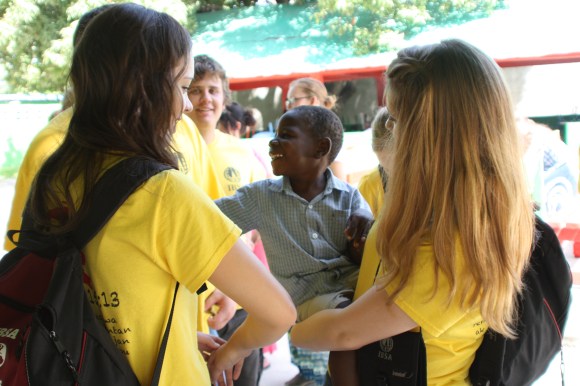
Moses, our first new friend at New Life. The kids there loved to interact with the team, despite our language barrier.

Moses, our first new friend at New Life. The kids there loved to interact with the team, despite our language barrier.

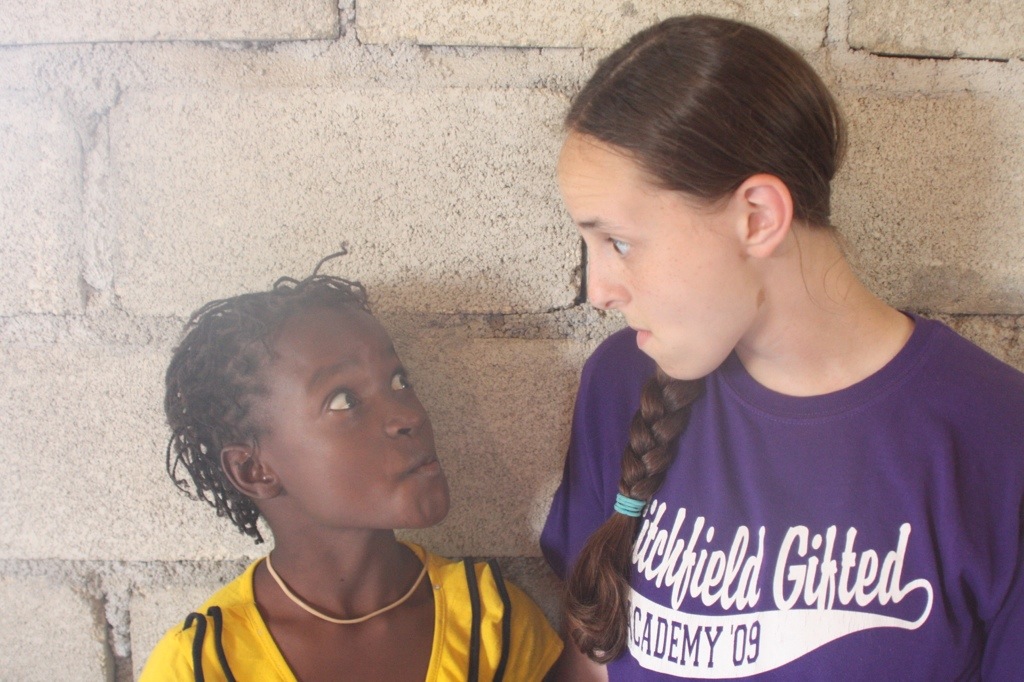
Abby Fleischer speaks a universal language - funny faces - with a child at New Life.

Abby Fleischer speaks a universal language – funny faces – with a child at New Life.

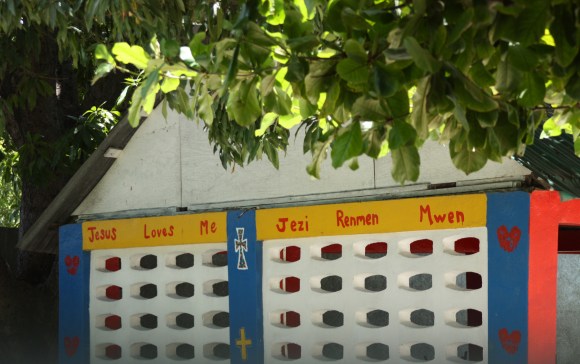
"Jesus Loves Me" in English and Creole painted on an open-air classroom at the children's home.

“Jesus Loves Me” in English and Creole painted on an open-air classroom at the children’s home.

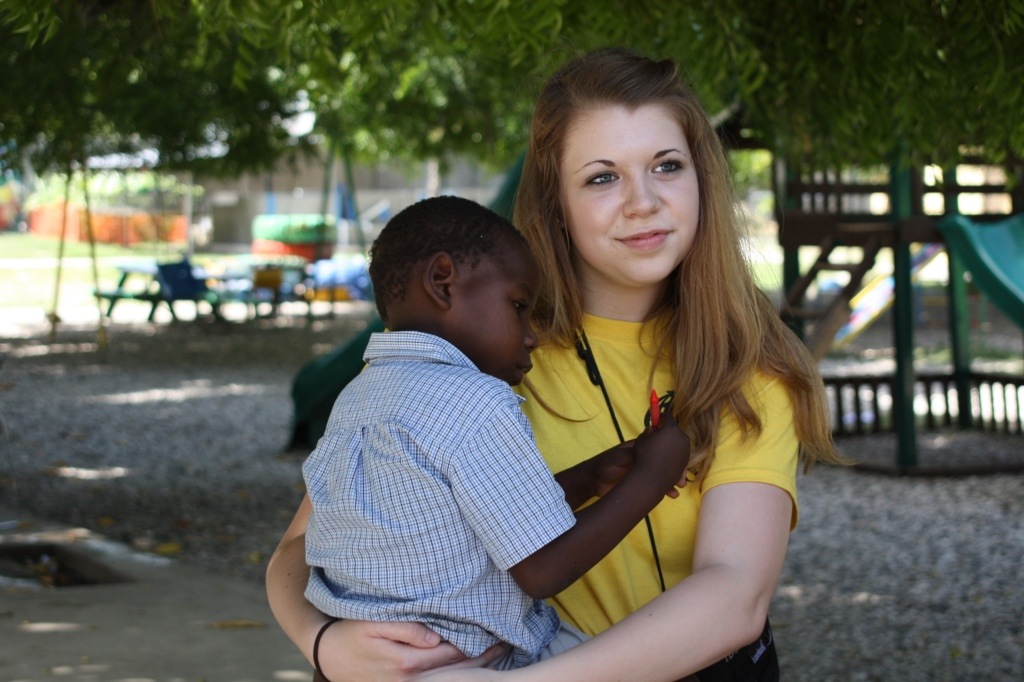
Autumn Wetzler from Waterloo makes a new friend. (This photo was taken right before he colored her face with a blue crayon.)

Autumn Wetzler from Waterloo makes a new friend. (This photo was taken right before he colored her face with a blue crayon.)

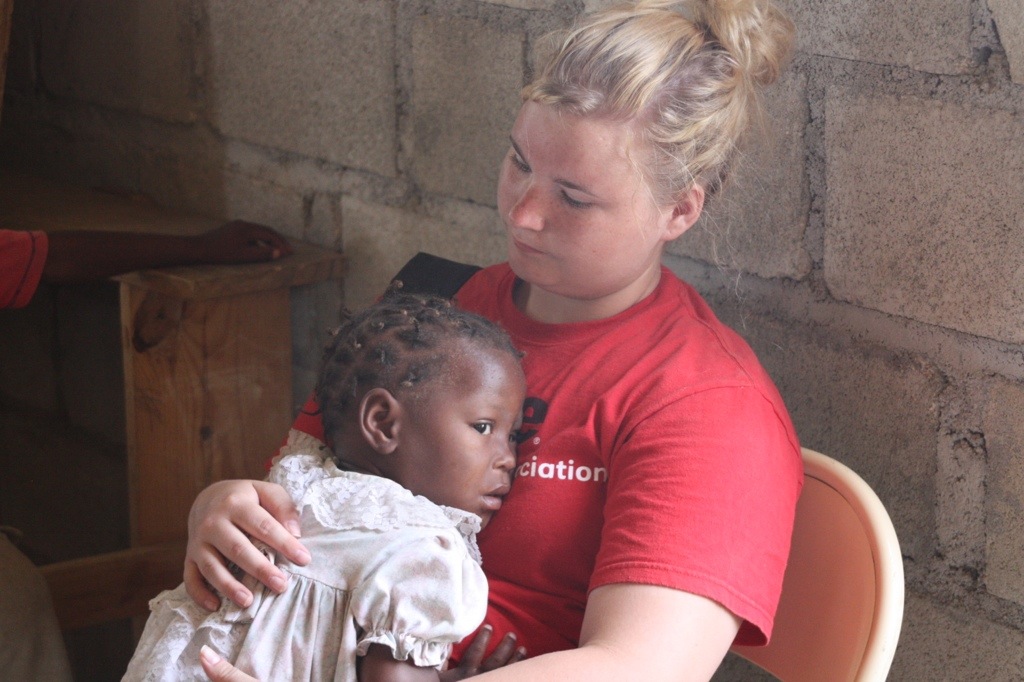
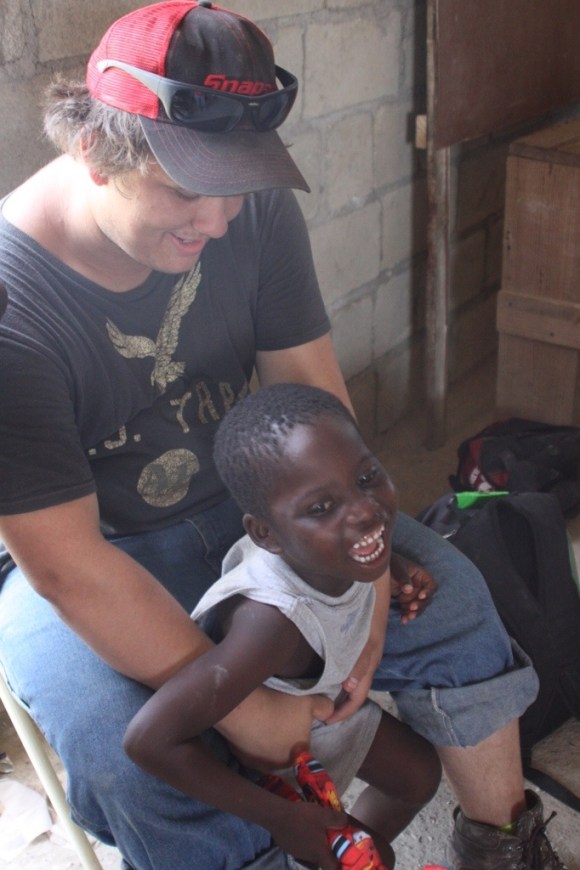
New Life takes care of several kids with special needs, including Christine, pictured here with Illinois volunteer Chris Flynn.

New Life takes care of several kids with special needs, including Christine, pictured here with Illinois volunteer Chris Flynn.

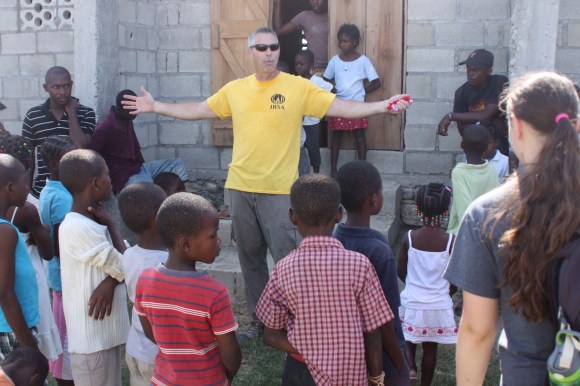
Our first day at our work sites: Kids were waiting at the church in Bigarade when we arrived.

Our first day at our work sites: Kids were waiting at the church in Bigarade when we arrived.
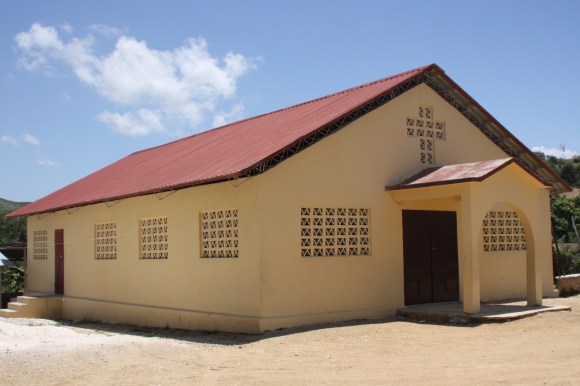
Last November, volunteers from Illinois helped build this church.

Pastor

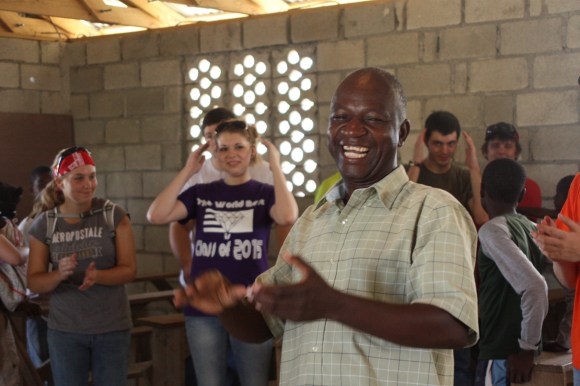
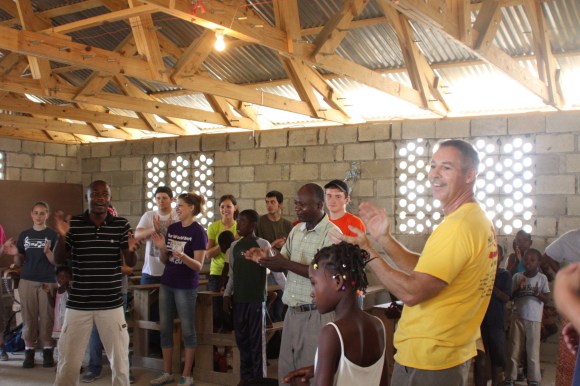
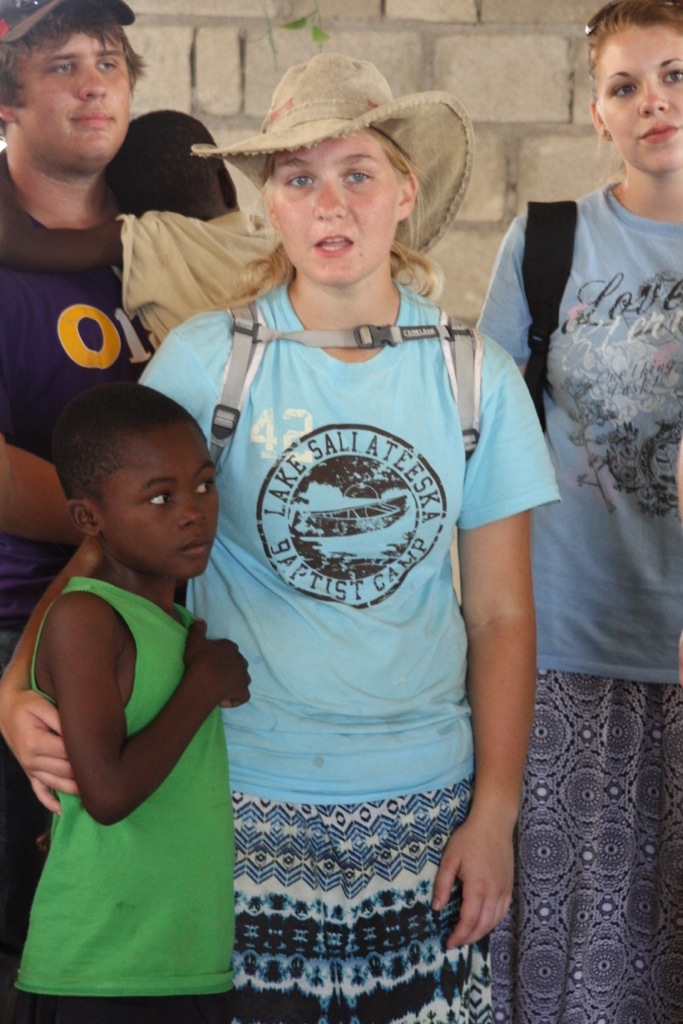
Pastor Estaphat, who leads Gosen Church, led us in a few songs before we walked to our construction sites.

Pastor Estaphat, who leads Gosen Church, led us in a few songs before we walked to our construction sites.

singing_church

Bob Elmore, our leader.

Bob Elmore, our leader.

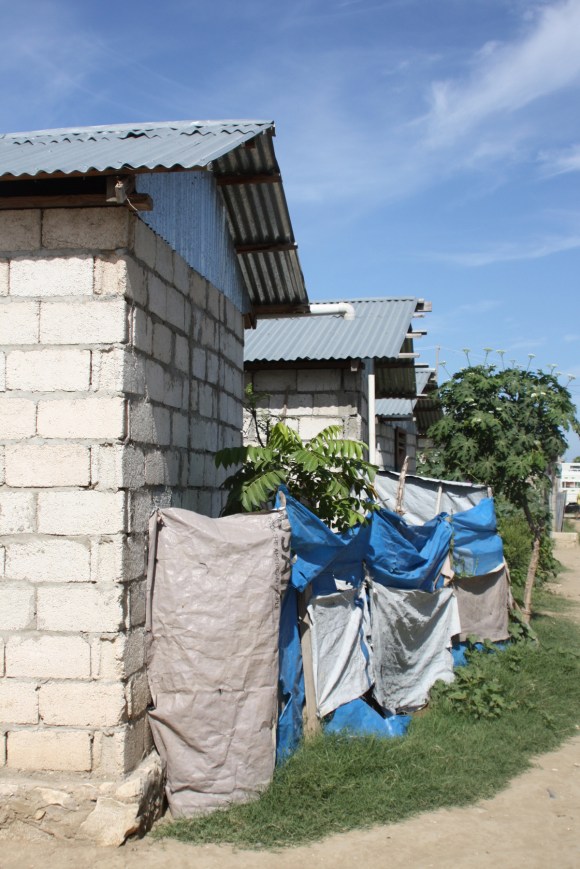
Many of the houses in Bigarade were built by Baptist Global Response after the January 2010 earthquake.

Many of the houses in Bigarade were built by Baptist Global Response after the January 2010 earthquake.

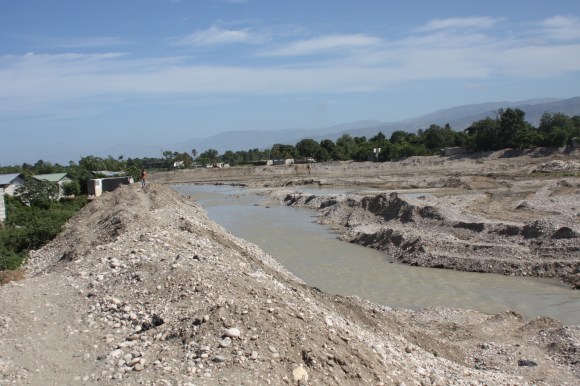
Late last year, Hurricane Sandy caused this river to flood, damaging homes in Bigarade and sweeping away some of the land built up around the river.

Late last year, Hurricane Sandy caused this river to flood, damaging homes in Bigarade and sweeping away some of the land built up around the river.

damage

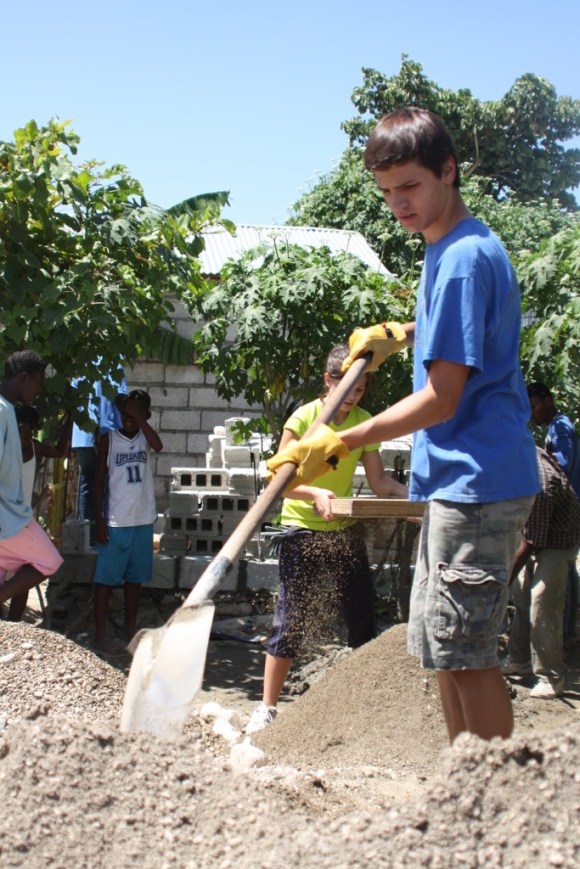
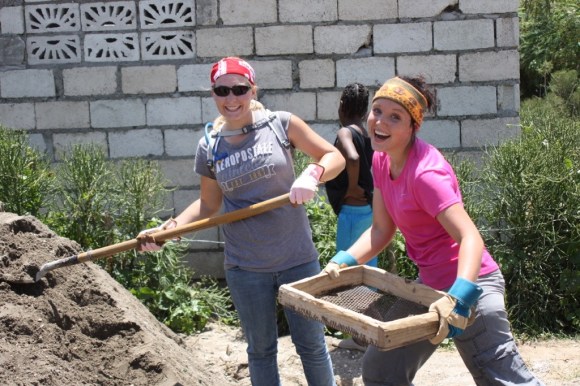
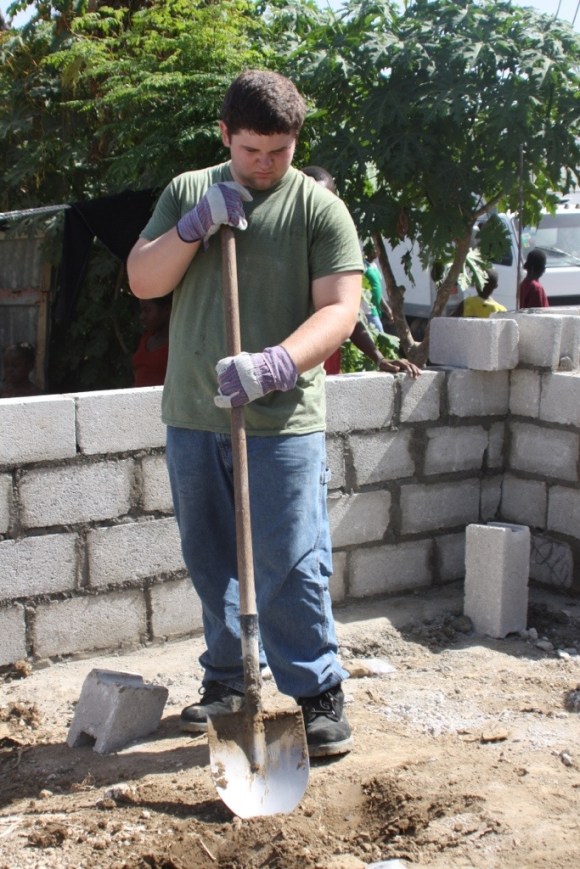
To make mortar, we sifted soil to get rid of the largest rocks and mixed the remaining material with concrete and water.

To make mortar, we sifted soil to get rid of the largest rocks and mixed the remaining material with concrete and water.

Our Haitian bosses and their helpers ran the construction sites during the week.

Our Haitian bosses and their helpers ran the construction sites during the week.

Thomas Ogens, who helped coordinate the building projects and deliver supplies, with Pastor Estephat's daughter.

Thomas Ogens, who helped coordinate the building projects and deliver supplies, with Pastor Estephat’s daughter.

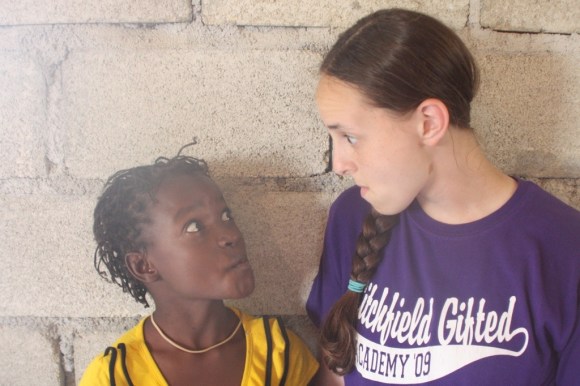
The kids loved to fix the volunteers' hair...

The kids loved to fix the volunteers’ hair…

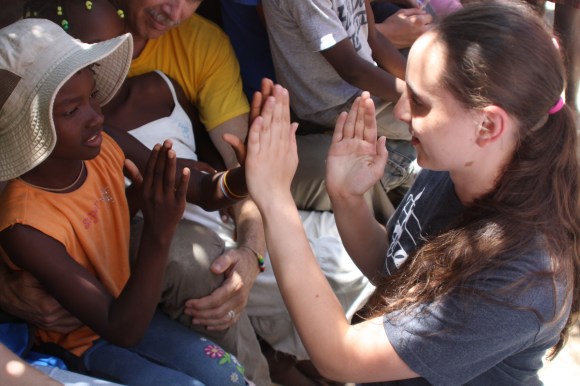
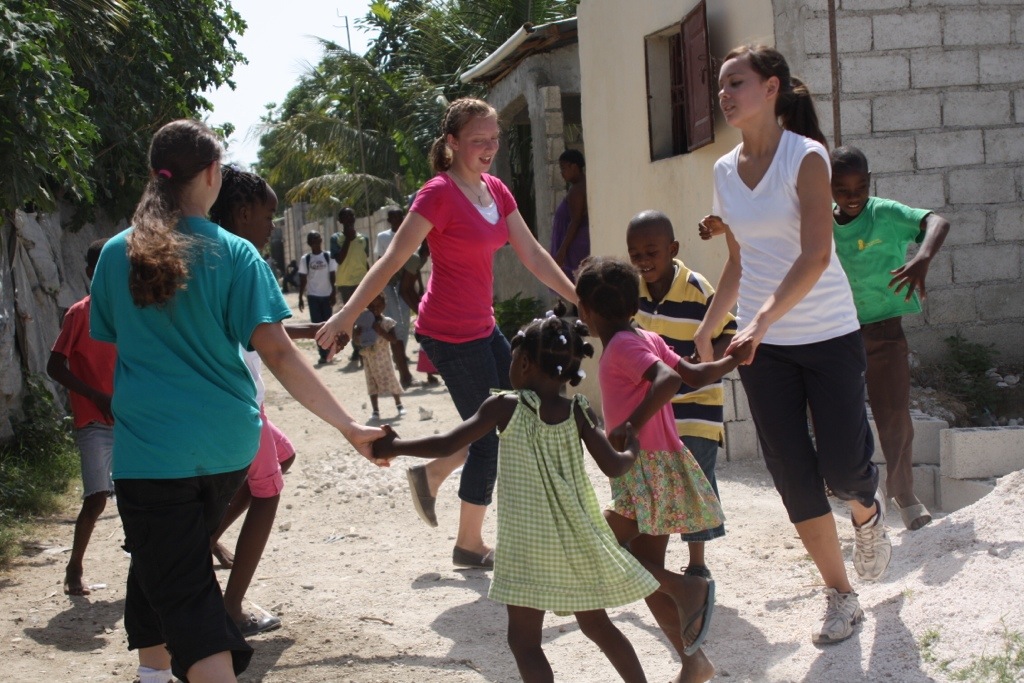
...and play clapping games.

…and play clapping games.

And look at pictures of themselves.

And look at pictures of themselves.

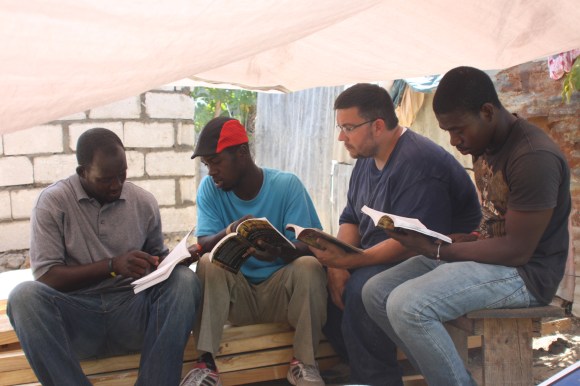
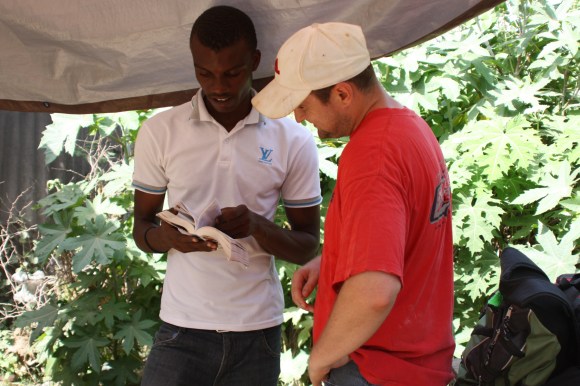
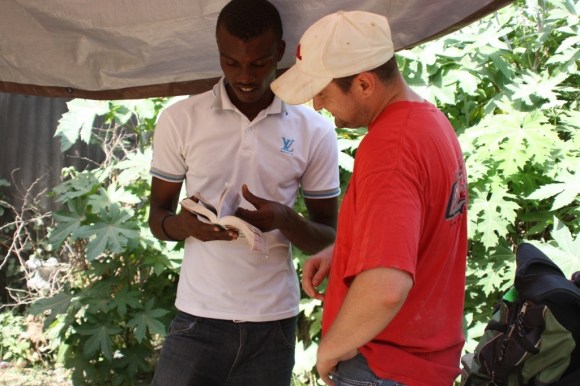
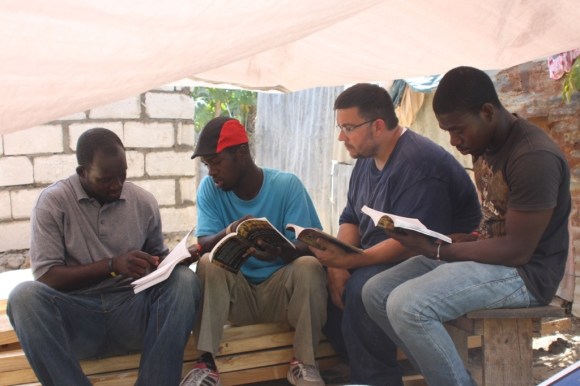
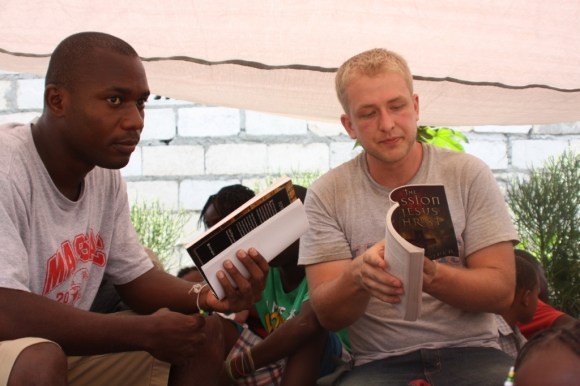
The team also had the opportunity to read the Bible and a discipleship book with our Haitian friends.

The team also had the opportunity to read the Bible and a discipleship book with our Haitian friends.

reading_2

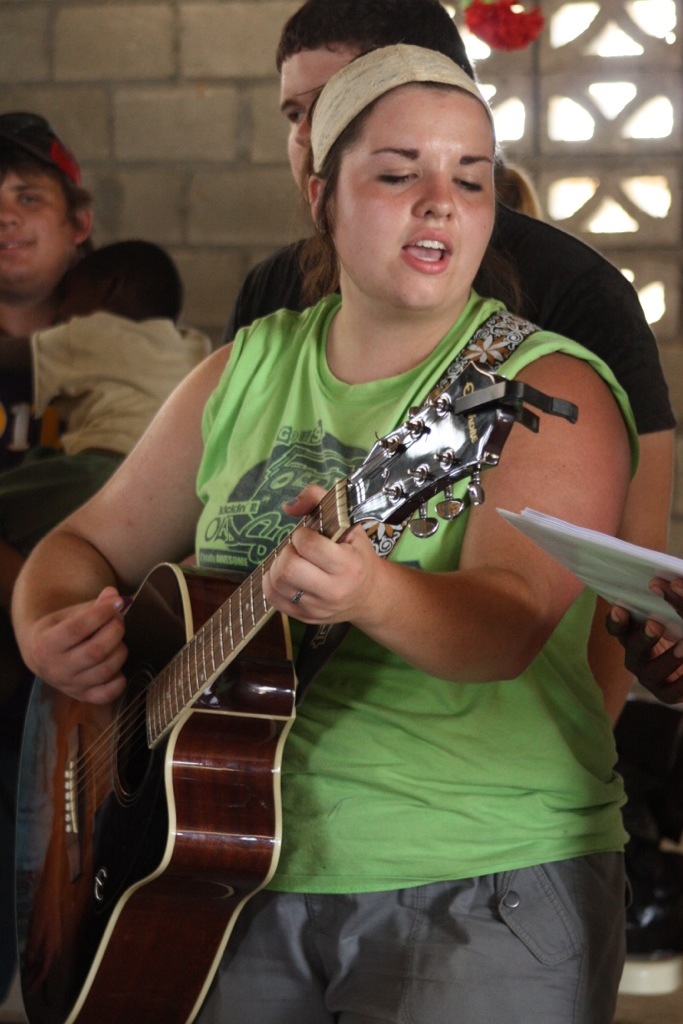
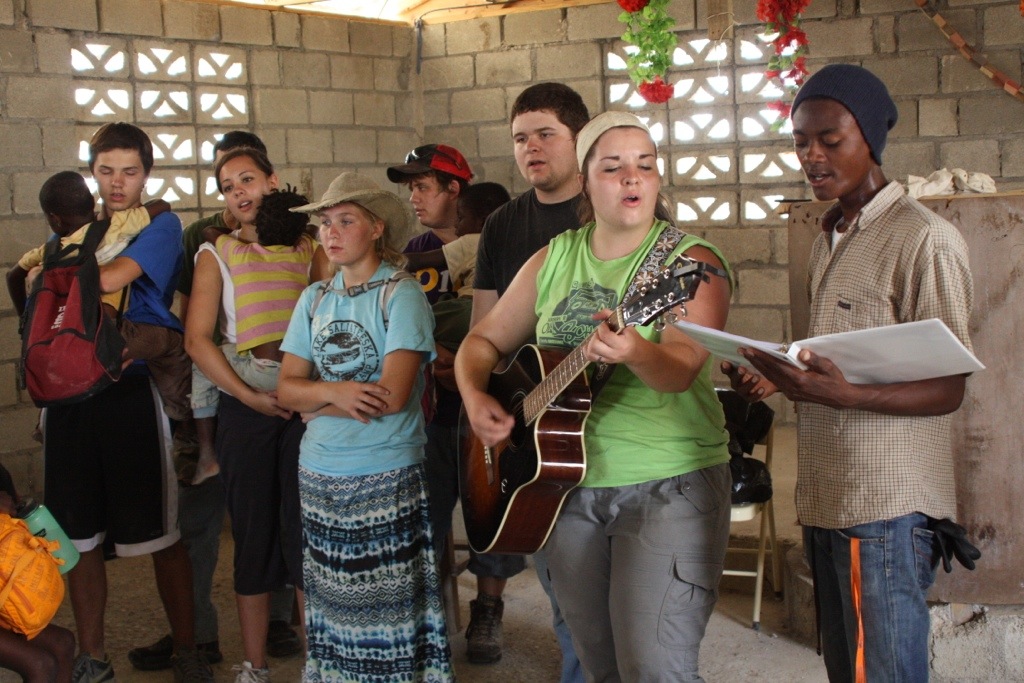
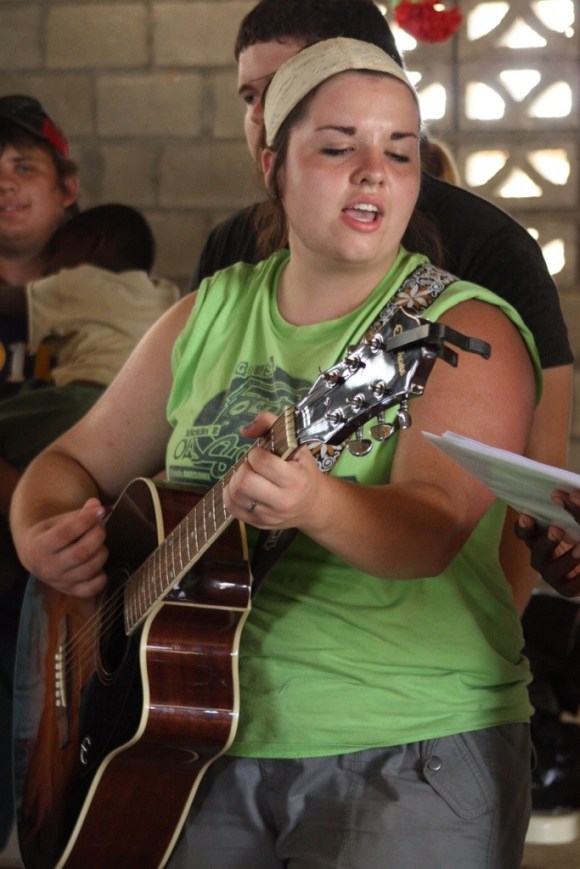
One day after lunch, Sarah Harriss led worship songs with her guitar.

One day after lunch, Sarah Harriss led worship songs with her guitar.

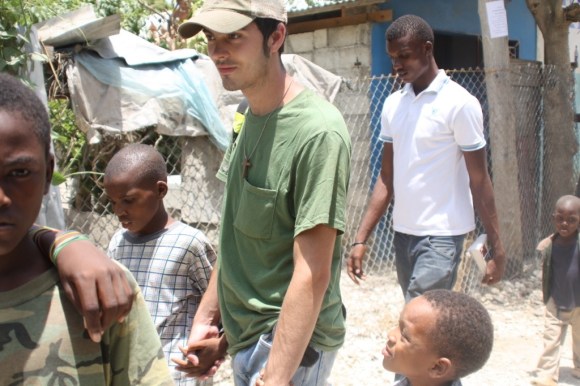
And the team walked through Bigarade singing praise choruses and hymns.

And the team walked through Bigarade singing praise choruses and hymns.

Riley_walking

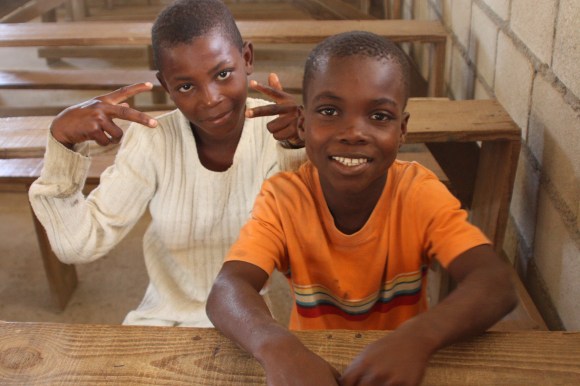
Some of the great faces we met in Haiti.

Some of the great faces we met in Haiti.

Preparing to put a roof on one of the new houses.

Preparing to put a roof on one of the new houses.

roof

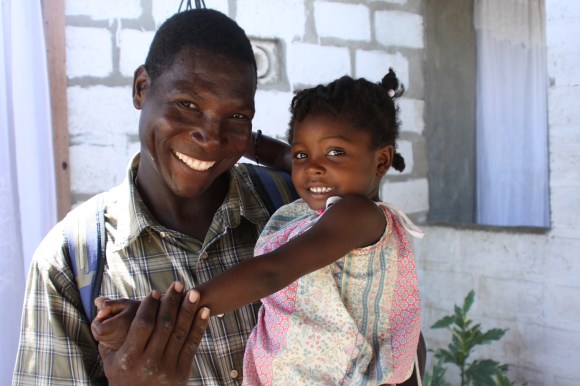
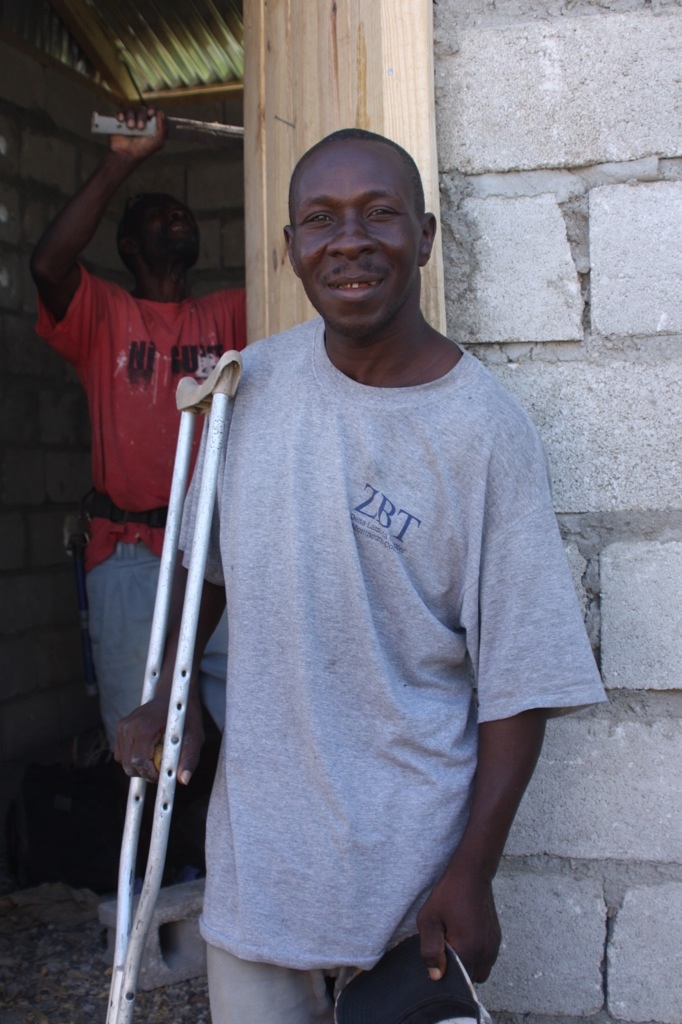
One of the homeowners standing in his new doorway.

One of the homeowners standing in his new doorway.

Bob Elmore leads "Our God is so big, so strong and so mighty" during worship and prayer time on our last morning at the job sites.

Bob Elmore leads “Our God is so big, so strong and so mighty” during worship and prayer time on our last morning at the job sites.

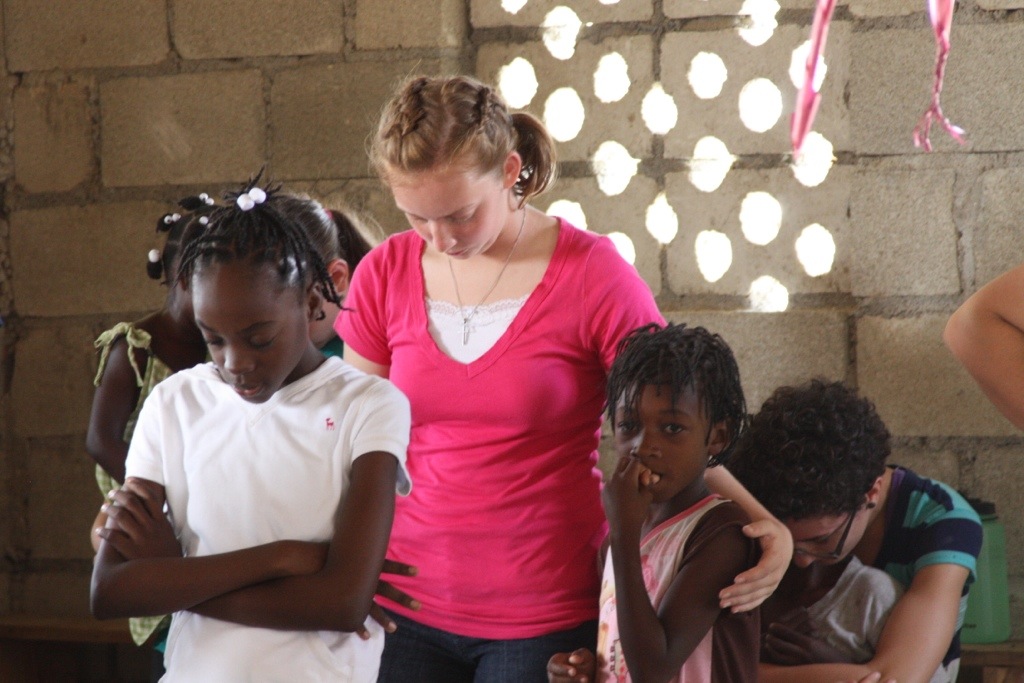
Each morning, we had one prayer in English and one in Creole.

Each morning, we had one prayer in English and one in Creole.

On our last full day in Haiti, we visited Pastor Evens and his church in the rural mountain community of Blanquette.

On our last full day in Haiti, we visited Pastor Evens and his church in the rural mountain community of Blanquette.

Blanquette_2Blanquette


On our last day in Haiti, the team shares their most memorable moments:
20130728-050014.jpg
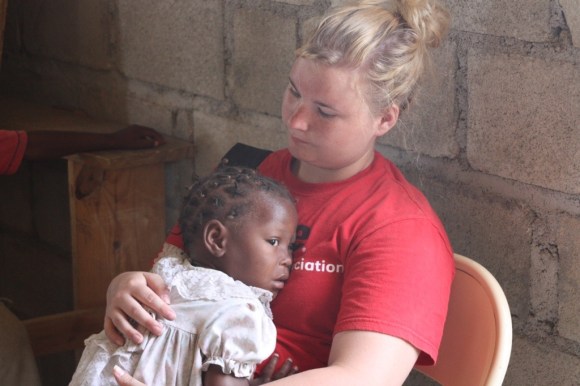
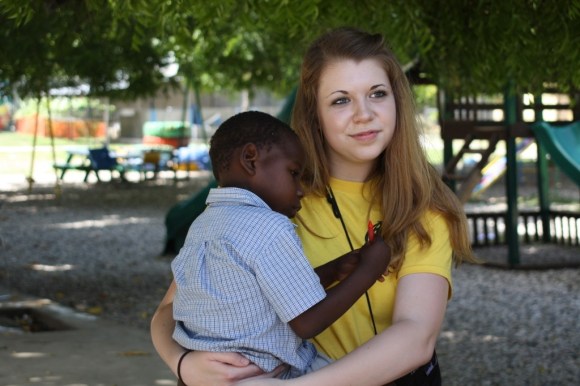
Autumn Wetzler, Waterloo, first trip to Haiti: It’s hard to pick one. Probably whenever I was out evangelizing and asked an elderly man about what God was doing in his life. He said he accepted Christ in 1981 and that his children were healthy and he was healthy. It was just neat to see how faithful he was throughout his life and how God was faithful to him. Or when we went to the orphanage and were rocking all the kids and they all feel asleep in our arms.

20130728-050232.jpg
Courtney Fallon, Columbia, first trip to Haiti: I found it just really beautiful how everyone lives their lives every day, and how they support each other and love each other. It amazed me how happy the children were, because in our American minds, we think you have to have stuff to be happy. But it’s not true. Sometimes I think they’re happier here than we are. It was also awesome to see the team interact with everyone the kids, even though we’re different from one another.
20130728-050402.jpg
Harli Tracy, Robinson, third trip to Haiti: I think on this trip, I’ve gotten closer to the people on my team and the people in Bigarade (where we worked) than I have before, and I’ve built more relationships this time. All the trips were really special in their own way- every time I’ve thought this one was the best. I don’t know, I think they’re all equal.
20130728-050553.jpg
Tad Arndt, Columbia, first trip to Haiti: The most memorable thing was probably the fan club of kids that followed me around. Even though language was a little barrier for us for a little while, we still connected. And it was really neat to see that you don’t need language to connect with people- God can connect us.
20130728-050719.jpg
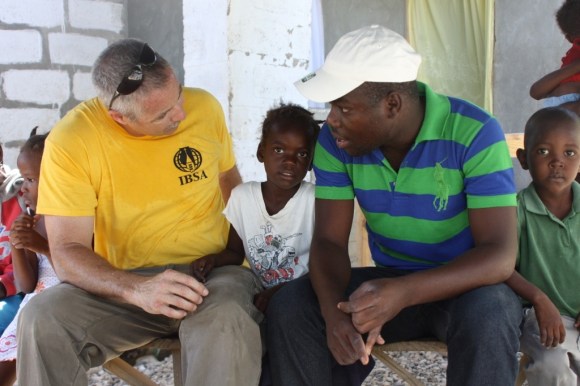
Bob Elmore (left), Springfield, has led multiple trips to Haiti: Watching Americans and Haitians share the Gospel. Not us presenting the Gospel and the Haitians translating, but together sharing Christ.
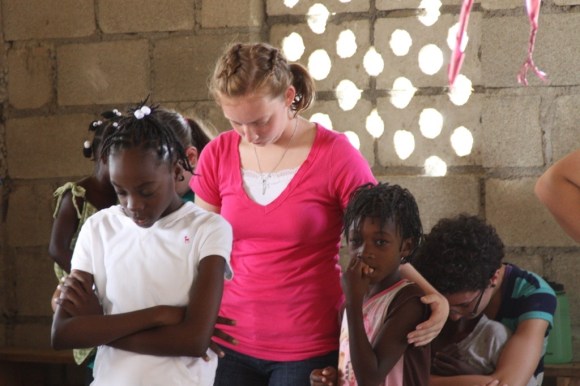
20130728-050858.jpg
Emily Ebert, Carlinville, second trip to Haiti: I found myself overwhelmed by the amount of love and trust I was given on this trip by the people of Haiti. Within the first three minutes of meeting a child, I have completely exhausted my conversational Creole, yet the children stay around all day, just to be with me. At the end of the day when I get on the tap-tap, I know that tomorrow their smiling faces will greet me, ready to spend another day playing clapping games. And that is when it hits me: I love these people. I love every hot and smelly, wonderful and beautiful part of this country, this culture and these people. And even on Sunday when I leave Haiti, I know I will see them again, because eternity starts now.
20130728-051006.jpg
Lynzie Emerson (left), Springfield, second trip to Haiti: This year I just felt like the team got along like one big group. I think I built more relationships with the kids this year. I love the fact that they’re so content with just the littlest things we give them, like dolls. And even though they’ve gone through a lot of hard times, thy just smile at us, and just appreciate any type of love that we show them. They don’t know us, but they just come to us and cling to us like they’ve know us their whole lives.
Lindsay Wasson (right), Harrisburg, second trip to Haiti: It’s waking up every morning with the feeling that I’m doing exactly what I was created to do. It’s the look in a lost soul’s eyes when you tell them of the hope found in Christ. It’s when a handicapped orphan says, “I love you too Lindsay.” It’s the love shared between believers in Christ that goes beyond all words. But best of all, it’s tearfully saying, “I’ll see you soon,” upon departure.
20130728-051237.jpg
Chris Flynn (right), Springfield, first trip to Haiti: Our first ride through Port-au-Prince may have been what I expected, but it was still astonishing to see. Desperately poor quality of roads, trash and traffic control, infrastructure in general. Yet the people I met this week remained kind and patient, willing to both learn and teach. For me, Haiti exposed the gifts I keep for myself and still take for granted. And the relationships developed this week, and the truths shared, proved once again that real joy comes not from the gifts, but the Giver.
20130728-051507.jpg
Cara Atienza, Robinson, first trip to Haiti: What I’ll remember the most is the amount of trust that they put in us even thought they don’t know us. Having children fall asleep on your lap that have never met you and that you’ve never talked to, means a lot. It’s an irreplaceable experience.
20130728-051628.jpg
Sara Harris’s, Columbia, second trip to Haiti: Getting close to them is harder because it hurts to leave, but it’s more fruitful, because you know you’ll come back to friends you’ve made here. My dad had been here in November and shown some of the kids a picture of me. One of the little girls ran up to me this time and said Sarah, Sarah! I couldn’t believe she remembered my name.
20130728-051659.jpg
Brian Harriss (second from right), Columbia, third trip to Haiti: Reading the Bible with guys at the work site. We started with a Christian book in Creole, and I had an English copy of the same book. There was Scripture in it, which gave me an opportunity to get out my Bble. Not only was I learning Creole, but they were learning English. It never hit me before: what a way to learn a new language…reading God’s Word.
20130728-051923.jpg
Jacob Mays, Herrick, first trip to Haiti: Awesome. It was an amazing experience to see things that not many people get to see, and witness to people and share the Gospel. It was just a really great opportunity, and I had a lot of great moments. I’m going to miss the team.
20130728-051950.jpg
Alex Hancock, Bethalto, first trip to Haiti: The most memorable thing for me is how humbled I was by this trip, and how different things around here are compared to America. It really makes a difference in how you think about the things you have at home.
20130728-052116.jpg
Levi Doty, Benton, first trip to Haiti: My favorite part of Haiti would have to be that even though these people have next to nothing, they seem to be happy. Even though they don’t have a clue who some of us are, they are willing to let us come to their home and talk to us. One day, some of the group went around and sang, but Brian and I went with an interpreter under our tarp on the work site, and they started to read Scripture in English and then Creole. By the time they were done, there had to be at least 20 Haitians and Americans under the tent. It was awesome.
20130728-052628.jpg
Matt Kountz (right), Belleville, first trip to Haiti: The regenerating and transforming power of the Gospel in the lives of the Haitians and Americans was what I have been blessed to see every day. I was able to see God work in faithful men to preach the Word in the face of death threats from voodoo practitioners and priests. I was able to see the light of Jesus cut through darkness and the Word of God transform hearts. There is nothing more beautiful then seeing the work of God’s grace on man and I was blessed to be able to witness God working mightily in Haiti.
20130728-060113.jpg
Riley Tullis, Columbia, first trip to Haiti: Probably my most memorable moment was when we went to one of the houses in Bigarade. I went through the Gospel with three kids about my age. They seemed like church kids. I shared my testimony with them, which was about me coming to Christ as a church kid. It really touched them, and I could see God working. It was like staring the Holy Spirit in the face. We prayed with them and they accepted Christ; I really hope they find a church and grow in Christ.
20130728-065333.jpg
Abby Fleischer, Carlinville, third trip to Haiti: A common misconception about mission trips is that they are solely about meeting physical needs; however, truthfully and biblically, there is much more to it. In Romans 12:12-13, we get a glimpse of biblical love, something which is clearly demonstrated on a daily basis here. The Haitians and the Americans learn more from each other daily how to love genuinely and sacrificially. We also experience 1 Corinthians 4:20, which states that the Kingdom of God is not of talk, but of power. Language barriers can prove to be a benefit when they show both parties that God often shows His love through other forms that we often fail to recognize.
20130728-065420.jpg
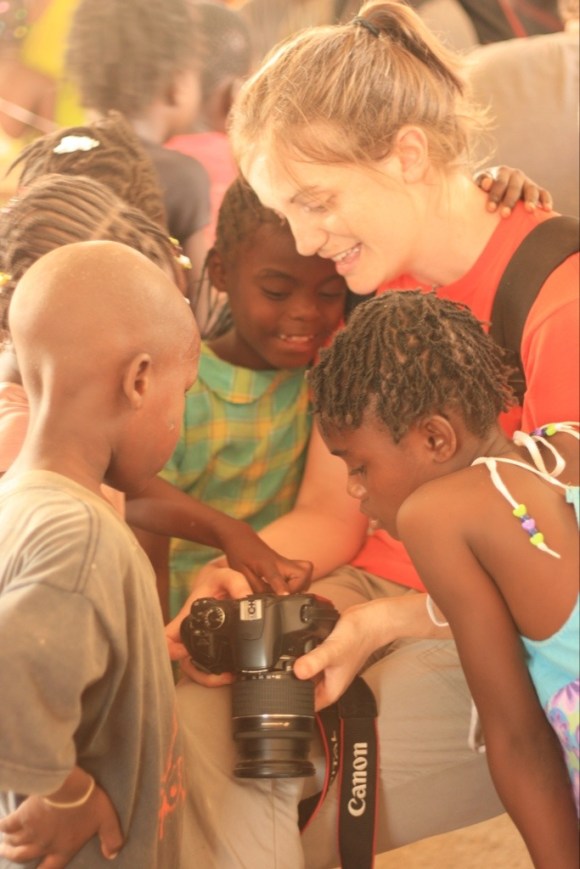
Meredith Flynn, Springfield, first trip to Haiti: Leading up to our week in Haiti, I was completely focused on how uncomfortable I might be. And even on our first day here, a week seemed like a long time to be this hot, this dusty, this out of my element. But at some point during the week, it became less important for me to feel comfortable. And I know without a doubt I didn’t muster that on my own. It could only be the Lord who helped me get over my American ideals of cleanliness and comfort, and to be patient when a thousand little hands are grasping at my camera for the rare opportunity to see their reflections. Can’t wait to be here again soon.

Haiti, Day 6

Meredith Flynn —  July 26, 2013

This week has been all about transformation. Not just change, but a dramatic, from-scratch process that turns a small plot of dirt into a new house, a child’s stare into a beaming smile, and a group of short-term volunteers into Americans who understand a little more about a new country, culture, and people.

20130726-191654.jpg

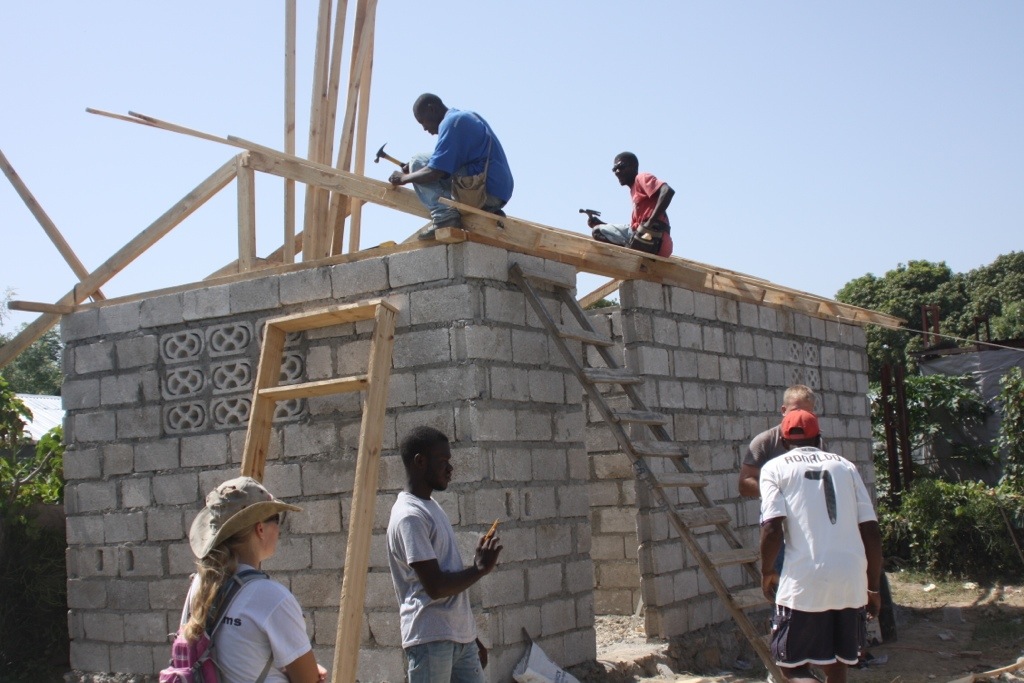
This man is standing in the doorway of his new house, one built this week through a partnership between Haitian workers and our group of (largely inexperienced) volunteers. We mostly handed them tools and cinder blocks and sheets of tin for the roofs, and they led the building projects out of their knowledge of how things work best here.

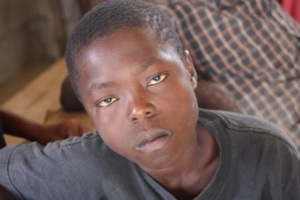
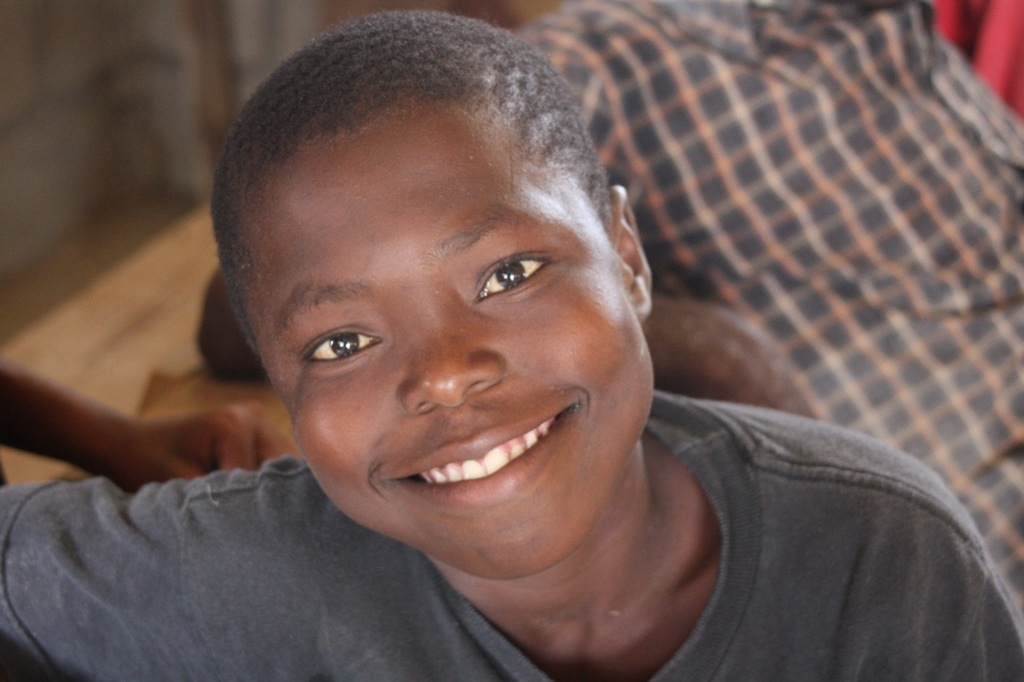
“Photo! Photo!” Everywhere, kids call out for you to take their picture and then show it to them. Many of the boys strike fighting poses or make tough faces. This boy, a fixture at the church where we ate our lunches, asked me to take this photo:

20130726-195226.jpg

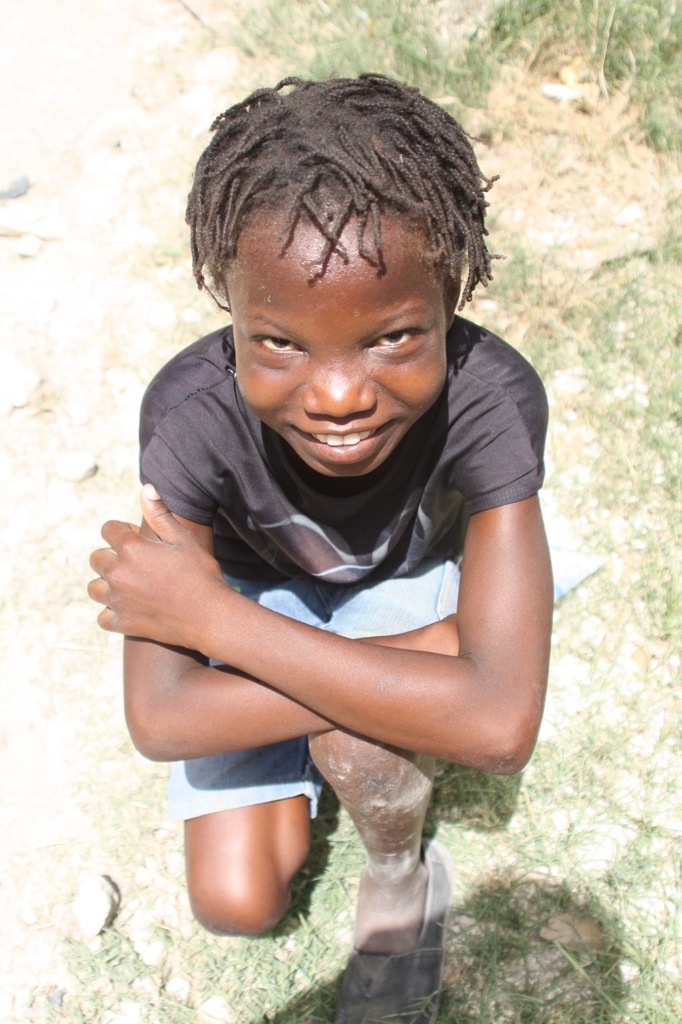
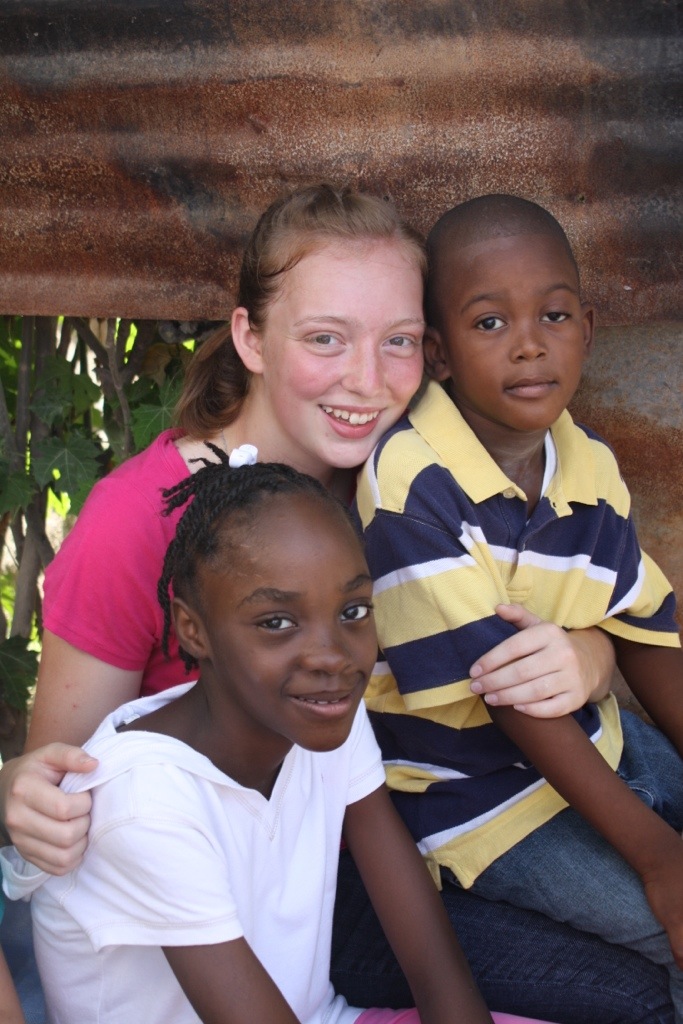
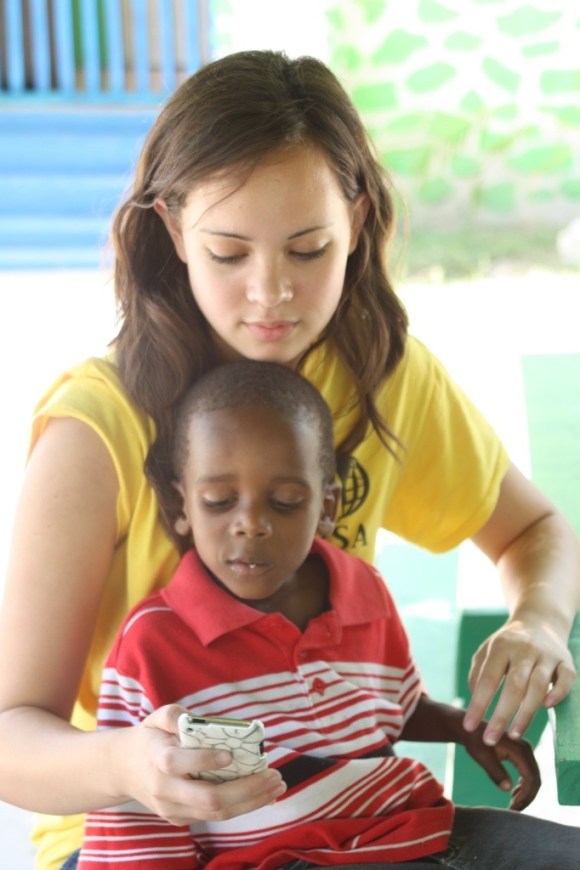
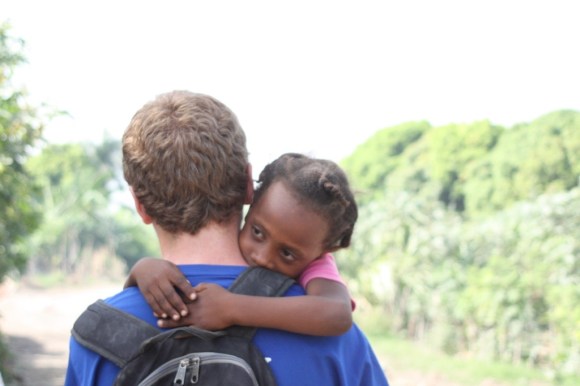
After I showed it to him, I asked him to smile for the next one. Maybe more than any other single ministry opportunity, this week was about spending quality time with kids. I watched my teammates love sacrificially all week, patiently holding a cell phone so they could marvel at a game on the screen; learning hand clapping games to pass the time before lunch; stooping down to pick up a shoeless toddler on the dusty road to our work sites. And earning smiles like these:
20130726-194953.jpg

Tomorrow, we’ll travel to Blanquette up in the mountains. Illinois churches have partnered with Pastor Evens there; as recently as last week, a Go team of students was there for Vacation Bible School. We’ll report more tomorrow on our visit, and the team’s final impressions of Haiti.

20130726-194247.jpg

In Port-au-Prince, this is how we start each morning before heading to our work sites. Enjoy the video, and then check out a few photos from today. Coming tomorrow: a wrap-up from our last ministry day in Haiti.

Error
This video doesn’t exist

20130725-195656.jpg
20130725-195822.jpg
20130725-200226.jpg
20130725-202725.jpg
20130725-202917.jpg
20130725-202949.jpg

A few snapshots from Wednesday in Port-au-Prince:

20130724-183036.jpg

20130724-183100.jpg

20130724-183126.jpg

20130724-183140.jpg

20130724-183208.jpg

20130724-183253.jpg

20130724-183325.jpg

20130724-183357.jpg

20130724-183413.jpg

20130724-183436.jpg

20130724-183454.jpg

Philippe Armand remembers well the day of the earthquake. Philippe, a former school teacher, is working this week as a translator for a team of Illinois volunteers serving in Haiti. He has done so several times since the January 2010 quake, which killed more than 200,000 in his country.

Philippe was in a meeting when the ground began to shake in the late afternoon January 12. The group thought it was a plane crash, since the meeting was near the Port-au-Prince airport. But when they went outside and saw the great cloud of dust covering their city, “We just thought it was the end of the world,” he says.

He started walking home, desperate to see if his wife and children were ok. All the way home, he saw death and destruction- “I can’t stop crying,” he says, recalling the hour-long walk home. “I tried to call my wife; I can’t because there was a problem. You can’t find anyone on the phone or text message.”

He remembers seeing one large house in ruins and thinking about what might have become of his own small home. When he finally got there, everyone was safe and the house was still standing. But fear had set in. Philippe says people lived outside for a long time, because they thought at any time, the shaking could start again.

Baptist Global Response (BGR), a ministry partner of the Southern Baptist International Mission Board, arrived on the scene soon after the quake, first to deliver food and later to help rebuild homes and churches. Including Phillipe’s church, Damien Baptist. And because school was out indefinitely, Philippe found a job as a guard at the BGR compound. That’s how he met Bob Elmore, the leader of this week’s team and several others over the past couple years.

BGR built several hundred homes, and other mission teams left their mark on Haiti too. But the change isn’t just physical. “After the earthquake a lot of people accepted Jesus,” Philippe says.

“Before the earthquake, there are many religions, many voodoo priests. After the earthquake, even the voodoo priests cry out [to] God. ‘God save me! If I am alive right now, [it’s] because of God.'”

20130723-201424.jpgPhilippe Armand (far left) studies a Christian book translated into Haitian Creole in a group led by Brian Harriss (third from left), a volunteer from First Baptist, Columbia, Ill.