Archives For November 30, 1999

50518 BIG pic

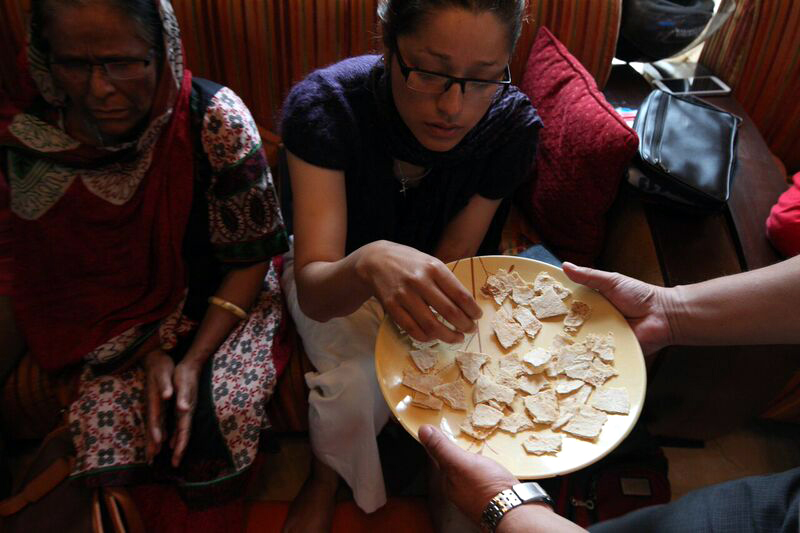
After their Lord’s Supper implements were destroyed in an April 25 earthquake, church attenders in Nepal used a dinner plate for bread and a bowl and spoon for the grape juice. IMB photo by Chris Carter

Kathmandu | When journalist Susie Rain (name changed) visited a small Nepali congregation after a catastrophic earthquake, they were singing the same song as one week before, when the walls in their meeting room began to shake. Rain, a writer for the Southern Baptist International Mission Board, described the worship service:

Twenty-five voices gain momentum, clapping hands, dancing and raising their faces to heaven in song, “Still I will love You and spread Your love to the people.” Spontaneously, the congregation breaks into prayer. This is the exact spot the song was interrupted a week ago, on April 25, by a 7.8-magnitude earthquake.

In the days after the quake, the death toll continued to rise, eventually topping 7,000. Thousands more were injured. Baptist Global Response, a ministry partner of the IMB, has begun assessing the damage and delivering supplies.

In Kathmandu, the church Rain visited celebrated the Lord’s Supper, even during an aftershock. Their dishes had been destroyed the week before. “They improvised with a bowl and spoon,” Rain posted on social media. “Wish you could have been there with me. You would have had tears in your eyes, too.”

International Mission Board President David Platt has written about how Christians can respond to the crisis in Nepal. Read his column here.

Courtney_Veasey_blog_calloutCOMMENTARY | Courtney Veasey

The Gulf Coast of the United States is a geographical magnet for tropical storms. Yet in August of 2005, the people of New Orleans were taken by surprise when Hurricane Katrina came inland and ravaged their city. People incurred innumerable losses, but most weren’t the result of the hurricane itself. Instead, much of the damage resulted from a lack of preparation before the storm came.

Levees were not up to code, little to no systematic evacuation plans were in place, and food supplies had been used more for celebrating a storm’s coming, rather than surviving its wrath.

Aware of the reality of hurricanes, yet grossly underestimating their true potential, the people of New Orleans were caught off guard and found themselves drowning in the waters of their own unpreparedness.

I moved to New Orleans to go to seminary just three weeks before Katrina’s arrival. My earthly belongings were lost in the flood and I found myself unable to return to school in the city for nearly a year. Ten years later, I’m still proud to call New Orleans my place of residence, but the unnecessary losses experienced during Katrina have caused me and others to do life there a bit differently than before.

Leaders have developed city-wide evacuation plans. We keep “hurricane kits” in our homes and cars, with bottled water and non-perishable food. It’s sad but true: It took experiencing such tremendous disaster to awaken this sense of urgency and preparedness in us.

How does this example of real-life crisis relate to how we should live as Christians? Consider for a moment the subject of persecution. Christianity in its many forms, the largest and most widely practiced faith in the world, is met with limitations and hostility in at least 111 countries, ahead of the 90 countries discriminating or harassing the second largest faith, Islam.

We commonly hear of the torture and killing of Christians in places like North Korea, Syria, and other middle- to far-eastern countries. Here in America, the seemingly distant reality of such experiences has contributed to a lack of urgency towards preparing to face the same here.

But Jesus, in both the Sermon on the Mount (Matthew 5:11-12) and in his words to the disciples just before his death (John 15:18-27), predicted an infallible forecast of persecution as the future reality for his followers. The word for “persecution” in the Greek is dioko, meaning “to chase down,” or “pursue.” This act can take shape in many forms, but regardless of how it comes, the real question is, will you be ready when it does?

What if we as Christians, while trusting in God’s providence and sovereignty, prepared for the inevitable crises of life, and also for persecution? What tools would we need in our spiritual hurricane kit? Let me suggest three:

1. Memorize Scripture. Put to memory passages that are both encouraging and that clearly communicate the gospel. Places to start are Psalm 27:1-3, Ephesians 6:10-20, and Romans 5:6-11.

2. Have a persecution song. Choose and memorize a go-to song that you can start singing the moment trouble begins, one that will encourage you to remain faithful. Songs to consider are “No Turning Back,” and “Blessed Assurance.”

3. Practice praise in pain. When you experience pain, whether it comes by way of getting shots, stumping a toe, physical illness, etc., practice going immediately to the throne of God in praise. You may get some funny looks, but this will serve as great conditioning for those times when it really counts.

Prepare for crisis; as a human being, you’re bound to experience it. Prepare for persecution; it’s promised for believers. And do so not only that you may stand, but also that others, even the persecutors themselves, may come to know Christ through your witness.

Courtney Veasey is a Ph.D. student and director of women’s academic programs at New Orleans Baptist Theological Seminary.

THE BRIEFING | Meredith Flynn

Barna’s most recent list of the country’s most unchurched cities is dotted with Illinois metro areas, but only two have populations that rank above the national unchurched percentage: 38%. (Barna defines “unchurched” as those who haven’t attended a church service in the last six months, except for a holiday or special occasion.)

The_BriefingThe metro area composed of Davenport, Iowa, and Rock Island and Moline in Illinois ranked 27th on Barna’s list of most unchurched cities, with an unchurched population of 42%. Chicago is a few places down the list, at No. 32 with 39% of the population unchurched.

Other familiar cities: St. Louis is 45th, Champaign/Springfield/Decatur is 53rd, and Harrisburg and Mt. Vernon (along with Paducah, Ky., and Cap Girardeau, Mo.) are 80th.


Does young = pacifist? Maybe not necessarily, according to a Harvard poll of young Americans that found nearly 60% approve of sending ground troops to fight ISIS.


Imprisoned pastor urges prayer | Saeed Abedini’s 35th birthday coincides May 7 with the National Day of Prayer in the U.S., which is the focus of a letter he wrote from prison in Iran. “As Ezra cried out to God in repentance and the Israelites joined him in weeping bitterly and turning from their sin, I would like to ask you to join me in repenting and praying for revival,” Abedini wrote. This story from The Christian Post also reports on the political chaos swirling around the pastor’s captivity and the fight for his release.


New nominees for persecuted countries list | The U.S. Commission on International Religious Freedom has recommended the State Department add eight countries to a list of the “world’s worst violators of religious liberty,” Baptist Press reports. The Central African Republic, Egypt, Iraq, Nigeria, Pakistan, Syria, Tajikistan and Vietnam all were nominated for the list of CPC’s (countries of particular concern), along with nine nations already on the list.


10 questions from Court’s marriage arguments | Transcripts of last week’s U.S. Supreme Court oral arguments on same-sex marriage are available online, as is this guide–provided by the Ethics and Religious Liberty Commission–to the 10 most important questions asked by the justices. For example, would it be unwise for the Court to redefine an institution as ancient as marriage? And would redefining marriage impose on institutions’ religious liberty, like the loss of tax-exempt status?

Evangelistic_churches_3HEARTLAND | The average Southern Baptist church in the Midwest has 54 people in worship on Sunday mornings, and baptized three last year. But a North American Mission Board study found the top evangelistic churches in the region are charting a different course, said Joel Southerland, NAMB’s executive director of evangelism strategies.

The Midwest’s top evangelistic churches with less than 250 in worship attendance averaged 119 in worship and had 23 baptisms. Churches with more than 250 in worship averaged 71 baptisms.

Southerland shared findings from the NAMB study of the top 20 evangelizing churches in every U.S. state at the Illinois Baptist State Association’s Evangelism Conference in March, and in a breakout session at the Midwest Leadership Summit earlier this year. The study resulted in a list of “7 Secrets of Top Evangelistic Churches in the SBC.”

  1. It has a lot to do with the pastor. NAMB studied the pastors of top evangelistic churches and found that the majority described their leadership style as “charismatic” or “transformational,” outranking innovative, command and control, servant, situational, laissez-faire and pace setter.

The pastors they studied were at the churches 10-plus years on average, Southerland said, and 70% of them preach a sermon series on evangelism every year. More than half (55%) put more emphasis on evangelism than discipleship, and 90% share the gospel outside the church at least once a month.

  1. Top evangelistic churches are really good at the Sunday morning experience. Of the pastors surveyed, 93% described their worship as lively and celebratory, 95% were contemporary or blended in worship style, and 96% said they intentionally cultivate a guest-friendly atmosphere. And 70% give an invitation at the end of the service.

Southerland outlined several worship takeaways: make church exciting, work on the quality, be intentionally evangelistic on Sunday morning, and aim for something better than “friendly.” People aren’t looking for friendly, he said, they’re looking for friends.

  1. These churches are actively engaged and serving the community, no matter the size of the congregation. Of the pastors surveyed, 88% said they were well engaged in the community. Of mid-sized top evangelistic churches, 30% attempt service-based ministry efforts to share the gospel regularly, as do 37% of large churches.

It’s OK to start small with community engagement, Southerland counseled, just start somewhere. And preferably not in a vacuum. Talk to community leaders about the needs are, and how your church can help. Involve non-Christians, using the service as an opportunity to share the gospel with them.

  1. Top evangelistic churches communicate well, internally and externally. The average pastor makes too many assumptions about how much people know, Southerland said. They assume the congregation knows the church’s vision, that members are as passionate about reaching people as the pastor, and that they don’t need constant motivation.

But all of those things—and more—need to be communicated. Luckily, more avenues for communication exist now than ever before. Of the top evangelistic church pastors surveyed, 97% use a church Facebook account regularly, Southerland cited. Half of pastors and staff intentionally “friend” guests on Facebook.

  1. Virtually all top evangelistic churches make a big deal out of baptisms—97%, the NAMB survey reported. And 79% of pastors of churches in the mid-size church category preach a yearly sermon on baptism, as do 74% of large-church pastors.

The takeaways, Southerland said, are to preach at least once on baptism every year, provide a forum for people to give their own, recorded testimonies, help baptismal candidates invite family and friends to the service, and train your church to celebrate new spiritual life.

  1. They treat guests really well. In non-evangelistic churches, Southerland said, the service is for the members and guests just happen to be there. Evangelistic churches are the opposite; of the congregations NAMB surveyed 67% of mid-size churches and 85% of large churches had a person responsible for “first impressions” ministry targeted to visitors.

A large majority (70%) emailed, called and sent written mail to a guest within seven days of their visit.

  1. Top evangelistic churches emphasize inviting and personal evangelism. The pastors of the churches NAMB studied were very busy mobilizing their church members to be a witness in the community; 50% offered evangelism training, and 70% of their guests came to church as a result of a personal invitation from a member. Among mid-sized churches, 62% have visitation or organized outreach at least once a month, and 58% of large churches do the same.

Churches that train members in personal evangelism, Southerland said, baptize two-and-a-half times more people than those that don’t.

The value of a verbal witness cannot be underestimated, he said during a message at the IBSA conference. Especially when most people are broken and looking for a solution to their problems.

“We are far too timid when it comes to sharing the gospel. We are too scared of the culture.” But, “The culture is not near as bad as it could be or will be someday. We’re to take the gospel to the culture and change the culture with Jesus Christ.”

Recent arguments in  the Supreme Court have raised religious liberty concerns.

Recent arguments in the Supreme Court have raised religious liberty concerns.

An exchange between Supreme Court Justice Samuel Alito and U.S. Solicitor General Donald B. Verrilli Jr. on Tuesday is raising concerns about religious liberty.

The Supreme Court was hearing arguments April 28 in the case of Obergefell v. Hodges, which challenges the Fourteenth Amendment of the U.S. Constitution regarding same-sex marriage and state’s rights. While the Solicitor General was arguing for same-sex marriage on behalf of the Obama Administration.

In the exchange, which has sounded alarm bells for many religious leaders, Justice Alito referenced a 1983 Supreme Court decision which stripped Bob Jones University of its tax exempt status for barring interracial dating and marriage among its students.

Justice Alto questioned, “Well, in the Bob Jones case, the Court held that a college was not entitled to tax exempt status if it opposed interracial marriage or interracial dating. So would the same apply to a university or a college if it opposed same-sex marriage?”

Solicitor General Verrilli replied, “You know, I – I don’t think I can answer that question without knowing more specifics, but it’s certainly going to be an issue. I — I don’t deny that. I don’t deny that, Justice Alito. It is — it is going to be an issue.” (Read the transcript)

After the audio and transcripts of the hearing were released, Albert Mohler, president, Southern Baptist Theological Seminary, wrote about the exchange on his blog, “Keep that in mind as you consider the oral arguments in Obergefell v. Hodges, the same-sex marriage case that sets the stage for the legalization of same-sex marriage in all fifty states — and sets the stage for what may well be, in the United States, the greatest threat to religious liberty of our lifetime.”

“Make no mistake,” Mohler warned. “The Solicitor General of the United States just announced that the rights of a religious school to operate on the basis of its own religious faith will survive only as an ‘accommodation’ on a state by state basis, and only until the federal government passes its own legislation, with whatever ‘accommodation’ might be included in that law.”

In an article for the Ethics and Religious Liberty Commission’s website, the organization’s President Russell Moore and Director of Policy Studies Andrew Walker called the exchange the “most shocking moment in the arguments.”

They wrote, “If a revisionist view of redefined marriage is treated as a matter of civil rights, then the government could seek to use its tax power to coerce religious institutions to violate their own God-given consciences and their constitutionally guaranteed free exercise of religion. The Founders warned us that the power to tax is the power to destroy. The Solicitor General is signaling that at least this Administration is quite open to destroying those who hold a view of marriage held by the Roman Catholic Church, the Eastern Orthodox, evangelical Protestants, Orthodox Jews, Muslims, many Sikhs and Buddhists. It was even a position held by the President himself until his most recent ideological evolution.”

Other Christian leaders released a document expressing their fears for religious liberty prior to the oral arguments taking place.

The “Pledge in Solidarity to Defend Marriage” calls for the defense of biblical definition of marriage and for the state not to interfere by changing that definition. It is signed by several nationally known religious leaders, including Franklin Graham, president and CEO of the Billy Graham Evangelistic Association and Samaritan’s Purse; Dr. Paige Patterson, President Southwestern Baptist Theological Seminary; Dr. James C. Dobson, President and Founder Family Talk Action; and Dr. Robert Jeffress, Senior Pastor, First Baptist Church, Dallas.

The pledge states, “Redefining the very institution of marriage is improper and outside the authority of the State. No civil institution, including the United States Supreme Court or any court, has authority to redefine marriage.

According to the document, “Experience and history have shown us that if the government redefines marriage to grant a legal equivalency to same-sex couples, that same government will then enforce such an action with the police power of the State. This will bring about an inevitable collision with religious freedom and conscience rights.”

It ends with a warning of civil disobedience if the Supreme Court should rule the same-sex marriage is the law of the land. “We will view any decision by the Supreme Court or any court the same way history views the Dred Scott and Buck v. Bell decisions. Our highest respect for the rule of law requires that we not respect an unjust law that directly conflicts with higher law. A decision purporting to redefine marriage flies in the face of the Constitution and is contrary to the natural created order. As people of faith we pledge obedience to our Creator when the State directly conflicts with higher law. We respectfully warn the Supreme Court not to cross this line.”

A ruling by the Supreme Court is expected in June.

Lisa Sergent is contributing editor of the Illinois Baptist newspaper.

COMMENTARY | Chase Abner

Chase_Abner_callout_April15Recently, I was at an event for church leaders that focused on the state of marriage in America. There were audible gasps and shaking heads as speakers shared statistics indicating the declining support for a traditional view of marriage.

My first reaction was, “How is this news surprising to anyone?” Perhaps I was being a little smug. I forgot that not everyone
has had my experience peering into the worldviews of college students for more than a decade.

And from my days as an undergraduate until now, I’ve witnessed a steady, quickening march towards a new definition of sexual morality, and, yes, marriage.

My experiences as a student, campus minister, and IBSA’s collegiate evangelism strategist have given me a unique perspective on how attitudes and ideas on campus are very predictive of where public opinion is heading. By the time a hot-button issue hits the heartland, it’s already been debated and settled by the opinion makers on campus.

As Christians, and as church leaders, we can’t afford to ignore the fact that worldviews are formed on college campuses. Simply put, recent college graduates are extremely influential in our communities and they, most likely, have been steeping in a culture where Jesus is not honored as king and the Bible is not respected. And relativism isn’t the only obstacle to the gospel. There are absolute truths found on campus—even sacred ones—but they aren’t necessarily truths that Christians can embrace.

Students who are graduating from our colleges and universities go on to lead influential lives. They’re teaching in our schools. They’re being elected to lead our governments. They are lawyers, doctors, and more. They are getting married and raising children.

Campuses are where young, energetic, gifted people are figuring out how they will leave their mark on the world. They are mission fields where the nations are gathering to formulate their worldviews, and training grounds for the next generation of great church leaders.

Shouldn’t reaching college students be a central component of our churches’ mission strategy?

It is nearly impossible to overstate the church’s opportunity to change the world through college ministry. In Illinois, we have more than 200 campuses representing over 900,000 college students. And 43,000 of those are international students.

What potential!

Chase Abner directed the Baptist Collegiate Ministry at Southern Illinois University before moving to Springfield to serve as IBSA’s collegiate evangelism strategist.

Letty and Luis Olmos of Iglesia Principe de Paz, Springfield, worship alongside other New Awakening Evangelism Conference attenders in Decatur.

Letty and Luis Olmos of Iglesia Principe de Paz, Springfield, worship
alongside other New Awakening Evangelism Conference attenders in Decatur.


Decatur, Ill. |
“I’ve seen God move,” said Baptist evangelism specialist Joel Southerland, “but I haven’t seen a movement of God in my lifetime.”

Spiritual revival and awakening—the kind of movement only God can bring—was the focus of IBSA’s New Awakening Evangelism Conference March 27-28 at Tabernacle Baptist Church in Decatur.

At a time when baptisms and worship attendance are in decline in many churches, and culture seems to be moving farther from God, the need for awakening is real. A church—the Church—cannot revive itself, speakers emphasized during the conference. But some responsibility for revival does fall on Christians—to prepare for a movement of God, to be desperate for it, and to provide a verbal witness for the hope they have in him.

“Revival changes God’s people,” said Southeastern Seminary professor Alvin Reid. “When God shows up you are not the same.”
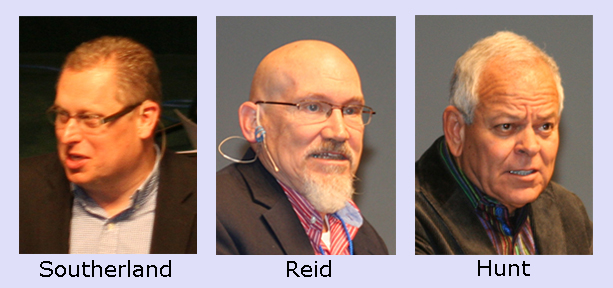
Evangelism_speakersOne of the major issues New Awakening speakers addressed is the declining number of young people Southern Baptist churches are reaching with the gospel. In 1972, there were 137,000 youth baptisms in Baptist churches, Reid said in a breakout on next generation ministry. Today, there are 70,000 or fewer per year.

“The real problem with that is that there are more teens today on the planet than there were in 1972,” said IBSA Evangelism Director Tim Sadler. “So, we’re reaching less, and there’s more of them.”

We haven’t seen a movement that touched young people since the “Jesus people” movement of the early 1970s, Reid said at the conference. That period of awakening was characterized by the Holy Spirit’s activity in and among churches—he was the main character in revival, just as he was in the Book of Acts.

“What about your ministry can only be explained as a Holy Spirit movement?” Reid asked. One man in the audience replied, “Yeah, git ‘er done!”

The same Holy Spirit that drew people in Acts 2 and in 1972 still draws people to God today, Sadler said. The gospel is the same, and the vehicle for communicating the message—the church—is the same. The issue is like someone once said, Sadler told the Illinois Baptist: “We don’t have a strategy problem, we have a sharing problem.”

But sharing the gospel is the calling of every Christian. “If you really know Jesus and He’s really changed you, try not to witness for ten years,” Reid challenged his breakout session audience in Decatur. “If you’re successful, come back and tell me what kind of Jesus you know.”

Make us desperate, Lord
If Christians haven’t seen a movement of God in their lifetimes, will they recognize it when it happens? In other words, when we talk about revival and awakening, what are looking for?

Sadler defines it this way:

“For me, a movement of God would be an extended period where the people of God are so moved by the presence and power of God, that they leave the confines of the church building, and they impact the city in such a way that God’s Spirit draws unbelievers to faith.”

It’s pervasive, he added, a turning of the spiritual tide. Undeniable. So why haven’t we seen it? Speakers at the New Awakening Conference outlined two possible reasons: “skill fade” in the area of evangelism, and a lack of desperation for revival.

Joel Southerland compared many church members and leaders to pilots who have lost their skills after relying too heavily for too long on autopilot. “Pilots are accustomed to watching things happen and reacting, instead of becoming proactive,” said Southerland, executive director for evangelism strategies at the North American Mission Board.

The church has fallen victim to the same phenomenon. “We have put our churches on autopilot” when it comes to evangelism, he said.

Dennis Nunn, founder of Every Believer a Witness Ministries, differentiated between the “come and see” evangelism model of the Old Testament, and the “go and tell” model in the New Testament.

“I believe we have come to accept what our church members will not do in evangelism because we have accepted the Old Testament approach,” said Nunn. Our witness will become less and less effective, he continued, because we think simply inviting people to church is evangelism.

And then there’s the matter of how much we want revival. The reason the Great Commission probably won’t be realized in our lifetime, Pastor Johnny Hunt said during the conference, is because we live for pleasure, not for the Word of God.

“Lord, forgive us,” said a conference attender from the Chicago suburbs, in response to Hunt’s words.

He continued, referencing Isaiah’s encounter in the temple: “It is not until you see God for who he is that you will see yourself for who you are and others for who they are,” and thus their need for God.

“We don’t witness because we haven’t seen God,” Hunt said. “We have not experienced revival because the church is not even close to desperate.”

Lord, forgive us.

God’s people are desperate for revival, Sadler said, when nothing but God will do; when we stop compartmentalizing our lives into church and work and family and hobbies, and let God be God over all of it.

“We need God to superintend every aspect of our lives,” he said. “It’s like Ephesians 3, where Paul prays that they would experience the fullness of Christ [and] be filled with his presence, so that it spills over into every aspect of our lives. So that we see our neighborhood differently.

“It’s our mission field.”

Reported by Lisa Sergent and Eric Reed for the Illinois Baptist newspaper

THE BRIEFING | Meredith Flynn

In the wake of Saturday’s massive earthquake near Kathmandu, Nepal, Christian workers asked for prayer for the devastated country:

• Pray for basic shelter, water and food. These necessities are a high priority right now since no one is allowed back in their homes.

• Pray for God’s people to deeply know His comfort and peace during this time. Pray they will share Him with people around them.

• Pray for people in Nepal and surrounding areas during the continuing aftershocks and aftermath of this disaster. Southern Baptist assessment teams will began the damage Monday to find the best ways to respond.


Potential presidential candidate Dr. Ben Carson will not address the Southern Baptist Pastors’ Conference this summer as scheduled, Baptist Press reports. Several Baptists, including the Baptist 21 group of younger SBC leaders and pastors, had expressed concern about Carson’s membership in a Seventh-day Adventist Church, and that his appearance at the conference could look like a political endorsement.


Three years after the death of Prison Fellowship founder Charles Colson, Russell Moore reflects on media coverage surrounding the Watergate conspirator’s life and eventual conversion to Christianity. For those who were cynical about Colson’s transformation, writes the president of the Ethics and Religious Liberty Commission, “…we shouldn’t be angered by those who don’t get the full measure of the man. We should instead hear in some of this cynicism the cry of every human heart, a disbelief that there can be any such thing as final and total forgiveness of sin.”


Zondervan announced last week Charles Colson’s last book, “My Final Word: Holding Tight to the Issues that Matter Most,” will be released Aug. 4. Topics in the collection of writings will include “the rise of Islam, same-sex marriage, the persecution of Christians, crime and punishment, and natural law,” The Christian Post reports.


Atlanta-area pastor Andy Stanley says local churches should be the “safest place on the planet for students to talk about anything, including same-sex attraction.”

“We just need to decide, regardless of what you think about this topic–no more students are going to feel like they have to leave the local church because they’re same-sex attracted or because they’re gay,” said Stanley, pastor of North Point Community Church, at the Catalyst West conference April 17. Read the full story at ChristianPost.com.

A controversial Houston ordinance is now in effect, following a judge’s ruling on a petition drive led in part by some pastors in the city. HERO, or Houston Equal Rights Ordinance, made headlines last year when the city subpoenaed the sermons and other communications of five pastors who were against the ordinance. (The subpoenas were later withdrawn.)


Religious leaders are encouraging President Barack Obama to appoint a special envoy to monitor religious freedom in the Middle East and parts of Asia. The special envoy position has been vacant since it was created last year in the Near East and South Central Asia Religious Freedom Act, Baptist Press reports.


Are you one of the many football fans bent out of shape since Tim Tebow’s exit from the NFL? Good news: A Philadelphia pretzel company has created a way to celebrate his return. The “Tebowing” pretzel, shaped like the quarterback kneeling in his famous praying pose, started as a publicity stunt but soon went viral. The New York Daily News reports the Philly Pretzel Factory plans to donate proceeds from the pretzels to a charity involving Tebow, who has signed a one-year contract with the Philadelphia Eagles.


A “security threat” against International Mission Board President David Platt’s Secret Church event April 24 forced Platt’s Radical ministry to move the simulcast from The Church at Brook Hills in Birmingham, Ala., to an undisclosed alternate location just hours before it began.

The threat was a small taste of what “our brothers and sisters in Christ experience in other countries,” Platt, former pastor of The Church at Brook Hills, said as the event opened according The Alabama Baptist. Threats cannot stop God’s church and His Word from accomplishing their purposes, Platt noted, and that all attempts to hinder the church ultimately help spread the Gospel more. Read more at BPnews.net

Friendly mergers

nateadamsibsa —  April 27, 2015

HEARTLAND | Nate Adams

Recently I attended a memorial service in Dupo, Illinois, for Wendell Hooks, who was my grandfather’s cousin. Wendell was 96 when he passed, and was a longtime member and deacon at the First Baptist Church there in Dupo.

Nate_Adams_April27I could certainly write more about Wendell and his life of dedication to his family, his work, his church, and his Lord. But I didn’t know him long. In fact, he was 90 when we first met in person at a Baptist associational meeting, just about the time he was transitioning from his home to an assisted living facility. It was there that we got acquainted over the past few years.

I didn’t have to spend much time with Wendell to realize that we were of the same family. From years of observing my mother and my grandparents, I quickly recognized the Hooks sense of humor and the familiar twinkle in his eye whenever he was
expressing it. I recognized the strong work ethic, the personal disciplines, and the tenacious dedication to both church and pastor. Yes, he was definitely a Hooks.

And he helped me remember that I am a Hooks too. Most people probably think of me as an Adams. I look like my dad, and I’m in a ministry profession like my dad, and I write pieces in this paper, like my dad did.

But cousin Wendell reminded me again how much Hooks is merged in to my Adams. My personality, my drive and discipline, my organizational bent, and yes my sense of humor, are all probably more Hooks than Adams. And I could have just as easily been a Sunday school teacher or deacon as an executive director, because it is really a layperson’s commitment to church and pastor that motivates me, more than a desire for ministry vocation. That’s the Hooks in me.

Chances are you enjoy that same “friendly merger” of family traits in your life. You are a blend, not only of your mom and dad, but also of grandparents and even generations before them. Some of those traits you recognize, and some of them you are still discovering.

I like to think that same sort of positive “blending” is happening in my spiritual life too, and in yours. Each of us is the unique, eternal person that God “knits us together” to be in our mothers’ wombs. But that person is also born in sin and needs redemption. Once I come to know Christ, he doesn’t discard my human identity. He simply redeems it and transforms it. He returns it to his image, to what it was supposed to be.

I love it that the Holy Spirit allowed the writers of the Bible to continue expressing their own unique identities and personalities and styles. Yet they also wrote with a perfect consistency and harmony, demonstrating that their individual voices were each inspired by the Holy Spirit.

During cousin Wendell’s memorial service, I was able to reflect for a few moments on the Adams and Hooks families that have blended into me, and for that matter the Adams and Schultz families that are blending into my children. With each new generation, there is consistency, and yet uniqueness.

And the same is true of my spiritual identity in Christ. I am not a clone of any one person, or even of God. I am a one-of-a-kind blend of both God’s unique workmanship and his redemptive work in Christ. Like David in Psalm 139, I am fearfully and wonderfully made. And so are you.

I’m grateful to cousin Wendell for reminding me that I am a friendly merger of both Adams and Hooks. And we can all be grateful to God, for giving us identities that are unique, and yet that enjoy a friendly merger into His likeness, day by day.

Nate Adams is executive director of the Illinois Baptist State Association.