Archives For November 30, 1999

News of interest to Illinois Baptists

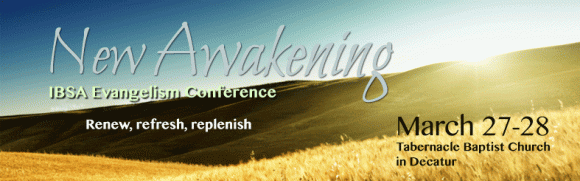
NewAwakeningwebbannerEvangelism conference to focus on revival

The New Awakening Evangelism Conference will bring three of the Southern Baptist Convention’s foremost teachers and revival preachers to Decatur, Ill., March 27-28.

Johnny Hunt, Alvin Reid, and Joel Southerland will speak during the conference at Tabernacle Baptist Church, which also includes 14 evangelism-themed breakout sessions.

“New Awakening” is the first statewide evangelism conference hosted by the Illinois Baptist State Association in several years. The theme came out of a season of personal study on the first and second Great Awakenings and other historic revivals, said Tim Sadler, IBSA’s director of evangelism.

“I was just convinced that our problem is not going to be fixed by a program; declining baptisms are not going to be fixed by another thing in a box.

“We need a move of God’s spirit; we need another awakening, and I’m praying that it starts here, in us.”

The conference comes at a time when leaders are calling Baptists in Illinois and across the country to heightened prayer for spiritual awakening and revival. Several factors have brought on the recent focus on awakening, Reid told the Illinois Baptist: Baptists are aware they’ve lost the “home field advantage;” numbers are declining and we don’t have the influence we once had.

“A lot of leaders are realizing we’re just not smart enough to build a program to fix this. We need a God intervention….I think we need to get to a place where there’s a sense of desperation.”

Reid, a professor of evangelism and student ministry at Southeastern Baptist Theological Seminary, will teach twice during large-group sessions at the conference, and also lead a breakout session reaching the next generation. Hunt, pastor of First Baptist Church, Woodstock, Ga., and Southerland, executive director of evangelism strategies for the North American Mission Board, also will preach twice in Decatur.

Attendees will choose three breakout sessions from a list of options including, reaching men with the gospel; attractional evangelism events; prayer and evangelism; Bible storying as a means of sharing the gospel; and more. The conference also will offer breakout tracks for women and church planters.

Chad and Rachel Ozee, planters of Journey Church in Bourbonnais, will lead in worship and will also give a bonus concert following the Friday evening session.

New Awakening begins Friday at 6:30 p.m.; the Saturday session is 8:30 a.m. to 2:30 p.m. The cost is $10 per person for IBSA churches, and $15 for churches not affiliated with IBSA.

A block of rooms has been reserved at the Decatur Conference Center and Hotel, located directly across the street from Tabernacle Baptist Church. Contact the hotel at (217) 422-8800, and ask for a room listed under the IBSA New Awakening Evangelism Conference.

For more information on the conference and to register, go to www.IBSA.org/evangelism.

By Eric Reed

Editor’s note: Baptist news editors met in coastal Alabama this week. Look for stories in the Illinois Baptist and online over the next few weeks.

Orange Beach, Ala. | It’s a wonder the local paper didn’t call this “The Battle of Mobile Gay.” This is, after all, the place where in 1864 Admiral Farragut famously condemned the torpedoes and ran his ship “full speed ahead” past Confederate forts and mines (called “torpedoes”) tethered in the Bay.

The 2015 version had attorneys dueling on the courthouse steps and clerks inside shuttering the marriage license window because the probate judge refused to accept applications from same-sex couples.

“I’m plumb ashamed of this town,” one applicant said outside the courthouse on Monday when he and his partner were unable to get married. On Thursday, that same man declared, “In Alabama! I never would’ve believed it!” as he waved his new license in the air with one arm and hugged his new spouse with the other.

Between Monday and Thursday, the Battle:

A federal judge in Mobile, Callie Granade (pronounced like the ammunition), had ruled Alabama’s ban on same-sex marriage unconstitutional on January 23. Marriage licenses were to be issued starting Monday. But on Sunday night, Chief Justice of the Alabama Supreme Court Roy Moore told the state’s probate court judges, who issue marriage licenses here, that the federal ruling did not apply to them.

On Monday, it was reported 60 counties started processing applications from same-sex couples; seven did not, including the state’s second most populous county, Mobile. Probate judge Don Davis ordered the license window, festooned with purple and gold Mardi Gras masks, shuttered. No licenses were issued to any couples, same-sex or otherwise.

By Wednesday, it was reported only 23 counties were issuing same-sex licenses.

Attorneys representing gay couples and Judge Davis went to court.

And Roy Moore went on TV.

The last time Moore opposed a higher court ruling, he was removed from the bench. That was over the monument to the Ten Commandments at the State Supreme Court. This time, Moore went to the court of public opinion.

For many observers, he appeared to win in Alabama, where his stance is based on a state’s right to amend its own constitution as 81% voters did in 2006, limiting marriage to the traditional, biblical definition. But on TV, against CNN’s Chris Cuomo, Moore lost, according to national pundits who gave the win to the news anchor/attorney.

It didn’t matter. Late Thursday, Granade ruled again. Probate courts must issue marriage licenses to all couples, despite the state constitution. And today, Friday, it is reported all counties’ license offices are open for business.

Frankly, in Alabama, many would never have believed it. I wouldn’t, because I grew up here.

As Baptist editors gathered for their annual conclave to hear reports from SBC entity heads and discuss journalism, I was also looking forward to a short visit to my old home. I didn’t expect to see history made.

I learned to report from that federal courthouse where TV reporters waited this week for the rulings, reporting breathlessly at 5, 6, and 10 on the latest developments—or lack of them. I covered the same county governments at the place where a half-dozen gay couples were wed in the hour after the marriage license office reopened. And I thought I understood this coastal town where half the people are Baptist and the other half are Catholic, and their alliance has kept the politics and the morals mostly conservative for 300 years.

Until now.

Leaders of the Baptist state convention in Alabama quickly commented: “The vast and overwhelming majority of Alabama Baptist leaders and other church members continue to affirm the biblical view of marriage and the historic declarations that Alabama Baptists have made concerning the marriage relationship,” executive director Rick Lance said.

But the comment did not appear on local newscasts in Mobile.

I did hear a comment from an SBC leader at this meeting that demands my consideration. Given the rapid liberalization of public opinion on same-sex marriage and other moral issues, is it possible that pastors and leaders of SBC entities will find themselves heading organizations that are more conservative than the people in the pews—especially younger people? (That’s just the opposite of what happened in mainline denominations in the second half of the 20th century, when leaders grew far more liberal than church members.) Our church members will be shifted by the tide of public opinion, he said, if we pastors and teachers don’t provide a firmer biblical foundation.

And the next wave is coming soon. From here, it’s full speed ahead to the U.S. Supreme Court, where a ruling possibly in June is likely to determine the legality of same-sex marriage in all 50 states. Expect Southern Baptists to speak to that, but will anyone listen?

The Baptists came to Alabama this week, but that wasn’t news. The world changed while we were here. That’s the news.

Eric Reed is editor of the Illinois Baptist newspaper and associate executive director for the Church Communications team of the Illinois Baptist State Association.


Church leaders from 13 states converge for regional Summit

NEWS | Illinois Baptist

“Listen to me, Midwest, the Father is seeking worshipers,” Frank Page intoned. “Every man woman, boy and girl on this globe needs to hear this message.”

The man who calls himself “the SBC’s Chief Encouragement Officer” rallied local church leaders to advance the gospel in a region where Southern Baptists are relatively few and often far between. “I’m not trying to build a bigger denomination,” the CEO of the Convention’s Executive Committee said, “I’m trying to encourage you to help bring worshipers to Christ.”

Spiritual awakening and church revitalization were main themes of the Midwest Leadership Summit held January 20-22.

“What we need, more than a strategy, more than a plan, we need a fresh awakening,” Kansas pastor Andy Addis preached in the opening session. “We want to see God do amazing things, we want to be his hands and feet, that’s why we’re here!”

More than 1,000 pastors and church leaders from the Upper Midwest convened in Springfield for the inspirational equipping conference held every three years. Called the North Central States Rally since its inception 50 years ago, the Summit was renamed this year as it expanded to include 10 Baptist state conventions representing 13 states, from West Virginia to the Dakotas.

The Illinois Baptist State Association hosted the event at the Springfield Crowne Plaza Hotel, providing a more central location as the Summit’s territory expanded on the western side. IBSA executive director Nate Adams chaired the planning committee.

“We drove 10 hours to get here,” one conferee from South Dakota said at the registration desk, telling how his association invited church leaders and brought them in a van.

“It took us two days,” a North Dakota pastor in a bolo tie responded, “but it’ll be worth it.” The buzz in the lobby was positive, as returning attenders told newcomers the value of meeting for leaders who share the challenges of ministry outside the traditional Southern Baptist stronghold.

Henry Hall has been attending the triennial leadership conference since 1984. The director of missions for Salem South Baptist Association said the event was originally designed “for the smaller churches, mission churches, where the pastors are spread out. And most of our churches in the southern part (of Illinois), we’re not as spread out,” Hall said.

“But around the rest of the country, you’ve got to go a long time to find another pastor. And by getting a group together that are all in the same boat, it’s very effective to help them in learning and being what God would have them to be.”

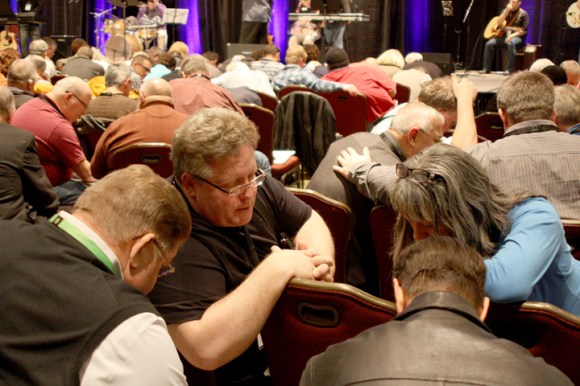
When Gary Frost led Summit attenders to intercede in small groups for children and youth, IBSA’s Pat Pajak (left) prayed with Ken and Kathy Schultz from Crosswinds Church in Plainfield, and a pastor from Iowa.

When Summit speaker Gary Frost led attenders to intercede in small groups for children and youth, IBSA’s Pat Pajak (left) prayed with Ken and Kathy Schultz from Crosswinds Church in Plainfield, and a pastor from Iowa.


Tony Manning lives in Fishers, Indiana, a community of 85,000 people, without a single Southern Baptist church—yet. “The need for everyone is the gospel, and that doesn’t change from East coast to West Coast,” said Manning, a church-planting and mission-teams strategist. “But what does change is how to do things. It’s important to understand the Midwest perspective and how to leverage that in sharing the gospel: How do you do it in Indiana? In Iowa? In Wisconsin?”

Woodie Ladnier has pastored in Iowa since 1991. Recently called to a new congregation, he came looking for fresh ministry ideas. “You know you’re not in the Bible Belt. People in the Midwest are friendly, but you have to earn their trust. You have to be more intentional, because your ol’ buddies aren’t just gonna go to church with you.”

The three-day summit was sponsored by the North American Mission Board, LifeWay Christian Resources, National WMU, and the 10
state conventions. Conferees attended three large-group sessions at the Crowne Plaza, filling the largest ballroom with praises. (“Bless the Lord, O my soul, O-o-o my soul,” they sang; and those three bass thumps ahead of the gutsy response “10,000 reasons for my soul to find…” echoed off the walls.)

Between worship sessions, leaders chose from 135 breakout sessions, state meetings, and affinity groups.

Plan to Pray for Evangelism
Robert Sterling
Imperial, Missouri

Robert Sterling knew his decision to attend the 2015 Midwest Leadership Summit was the right one after the first night. “I called my wife when I got back to the hotel room and said, ‘Well, I just got a spiritual ‘kicking’ and it was just what I needed,’” said the pastor of Windsor Baptist Church in Imperial, Missouri.

Andy Addis, lead pastor of CrossPoint Church, a video-driven multisite church with 11 campuses across Kansas, spoke during the opening session and based his message on Jesus’ parable of the barren fig tree (Luke 13: 6-9). “He reminded us that God expects His church to bear fruit,” Sterling said. “Not hopes; expects. Not wants; expects. That concept really resonated with me.”

Sterling came to the Summit with the intention of finding both guidance and practical tools to bring his church revitalization. He found what he needed in the event’s numerous breakout sessions. He chose sessions on revival, spiritual awakening, evangelism and leadership. He said each of them offered both insight and applicable advice.

“In one of the sessions the speaker said that more than double the baptisms occur in churches that offer evangelism training than those that don’t,” he said. He also learned that though a calendar full of events and programs may not be the best way to win souls to Christ, planning to pray is.

“We need to have more opportunities to pray,” Sterling said. “God uses whatever methods or means to reach people, but the opportunity to seek prayer is vital. Honestly, each of the sessions was very encouraging in terms of reminding us of truths we already
know, but often get lost or forgotten when you are in the middle of the forest.

“Probably my number one takeaway from this is that if I want the church to be revitalized and have a true love of God, I need to make sure that’s where my focus is, too. I need to become what I want them to become.”

Overcome isolation
Tim Batchelor
Princeton, Illinois

Tim Batchelor has pastored Bethel Baptist Church in Princeton, since 2010. Originally from North Carolina, he has found similarities between his upbringing (both of his grandfathers were farmers) and the rural northwest Illinois community he serves. But there are  differences too.

“In North Carolina, if you took the county that I grew up in, there are probably more Southern Baptist churches just in that county than in the entire northwest region of Illinois, and Sinnissippi Baptist Association specifically.”

When asked if his region of Illinois feels unchurched, Batchelor says yes.

“We were talking about that last night at dinner a little bit, and even on our way from our hotel to the session last night. Yeah, it does feel that way, and the need for church planting in particular.

“Sinnissippi Baptist Association has a really ambitious planting strategy; I think it’s just fantastic. But yeah, the need for church planting is huge.”

Second-gen strategies
Aidyl Lesada
Trenton, Michigan

Aidyl Lesada is from a Filipino congregation of about 100 people in Taylor, Michigan. “We are a mother church,” she says of Philippine International Church, which has planted several Filipino congregations in the area, and one just across the Canadian border.

There are about 20,000 Filipino people in Michigan, Lesada says. “Filipinos come here to work and pursue that American dream, and so they give their life, their time for that, and so I guess church will not be a priority. It will just be on the side for them, for them to feel good about it.”

Many have a Catholic background, so making the distinction between faith in Christ and cultural religion is important. Lesada’s church is reaching Filipinos who came to America to work in professional fields, and are now raising second- and third-generation children. Like her own son and daughter. Laughing, she describes them this way: “They’re Filipinos, but they’re not Filipinos.”

Social media for Millennials
Laura Chapman
Red Bud, Illinois

At Laura Chapman’s first Midwest Leadership Summit, the pastor’s wife from Red Bud attended breakout sessions that spoke some of her languages—statistics and social media.

Their congregation is medium-sized and located on the edge of the Metro East area. First Baptist Church of Red Bud, doesn’t have very many Millennials, she said, so a breakout on using social media to reach younger people was helpful.

“You know, there are a lot of people in our churches that don’t know what hashtags are, or keywords, or current things that reach people we’re not reaching,” Chapman said. “And I think just the how-to’s, the nuts and bolts of ‘you gotta update your website, you just have to do that…’ helps bring in generations that we’re not reaching. That was very helpful, and easy to implement.”

One breakout session leader at the Summit said if Millennials can’t find a Facebook page for a church, they wonder what that church is hiding. Chapman understands that kind of thinking. “Nobody in my generation and below trusts people…that’s kind of our thing. So, help them to know you.”

Urban challenges
Donald Johnson
Rock Island, Illinois

This wasn’t the first Midwest Leadership Summit for Donald Johnson, pastor of Destiny Baptist Church of Christ in Rock Island. He traveled to Indianapolis for the “North Central States Rally,” as it was called before this year, and was glad for a slightly shorter commute—three hours instead of five.

“But wherever it is, I’m willing to go, because of the value that we get out of it…We’ve been enriched,” said Johnson, whose church is part of Quad Cities Association.

Destiny’s vision statement is based in Isaiah 56:7, “to be a house of prayer for all races of people.” Their goal is to be multi-racial rather than multi-cultural, Johnson said. “There’s not going to be a segregated heaven, so I don’t want to have a segregated church.”

He was moved by Gary Frost’s closing sermon, which focused in part on the dangers children and teenagers face today. “He got into my neighborhood, which is the same neighborhood he has,” Johnson said. In his community, “We deal with the matter of significant fatherlessness.”

Frost’s message focused on returning to “the valley” after a mountaintop experience. Speaking on Jesus’ transfiguration in Mark 9, he noted how Peter wanted to build shelters for Jesus, Moses and Elijah.

“For me, it was good to be here,” Johnson said. “But I’m not going to be like Peter and John and say, ‘Let’s build three tabernacles here on the mountain and stay.’

“Because we gotta get back to the valley.”

Reported by Meredith Flynn, Eric Reed and Lisa Sergent, with Kayla Rinker and Nick Rynerson.

Even in Alabama

eric4ibsa —  February 10, 2015

NEWS | Eric Reed

Orange Beach, Alabama — As Baptist newspaper editors and executive directors of state conventions arrived in coastal Alabama Monday, the ground under our feet shifted a little. The day’s big news story: The state started issuing marriage licenses for same sex couples.

Even in Alabama, and only in a few counties, but it is happening. And to hear how the local news reporters tell it, no one imagined this day would come.

According to USA Today’s most recent marriage map, same-sex marriage is banned in 13 states, but court actions are pending in all 13. The federal courts ordered Alabama to begin issuing same sex marriage licenses, but Judge Roy Moore (of Ten Commandments monument fame) ordered state offices to ignore that mandate.

“I had to clarify this for the probate courts to ensure order. Ok? And it was about that, but it was also about that federal courts do not have the authority to redefine marriage,” Moore told media after a late intervention.

So 60 counties refused to process applications filed for the first time yesterday. But in five counties, including Birmingham’s Jefferson County, the state’s most populous, gay couples were given licenses and some were married.

In the second most populous county, Mobile, the clerk’s office was shuttered as a dozen couples sat on benches outside for several hours until the office closed.

And in Baldwin County, where the annual Baptist executive directors and editors meetings are being held, one couple was allowed to apply, but the form was not processed. More noteworthy was the protest outside the county office by 75 people holding signs bearing Bible verses.

“United we stand…together against gay marriage,” protestor Sarah Baggett told a local television station. “We believe marriage is between…a man and a woman and we want to show that….We believe the Bible states firmly that’s not correct and we believe God loves everyone but sin is sin and that’s wrong.”


Read more here: http://www.fox10tv.com/story/28059021/baldwin-county-to-only-accept-marriage-applications-for-same-sex-couples#ixzz3RMAi2QNq


At the 2013 Southern Baptist Convention, David Platt, at the time pastoring a megachurch in Birmingham, was asked about Alabama’s stance on same-sex marriage. He chuckled, saying Alabama was standing firm. Three years later, it’s no laughing matter.


Alabama Baptists felt the need to issue a statement today making their position clear. “The vast and overwhelming majority of Alabama Baptist leaders and other church members continue to affirm the biblical view of marriage and the historic declarations that Alabama Baptists have made concerning the marriage relationship,” executive director Rick Lance said.


“Therefore, any church that allows staff members to officiate at same-sex ceremonies is clearly outside biblical teachings about marriage and human sexuality, and they demonstrate that they are not in like-minded fellowship or friendly cooperation with Alabama Baptists and Southern Baptists.”


In Mobile, the marriage license office is closed again today, and nobody is getting married. Attorneys are preparing to file for another injunction.

Eric Reed is editor of the Illinois Baptist newspaper.

One Baptist leader says Scripture’s case for cooperation is the most compelling reason to work together.

Micah_Fries_blog“My entire life growing up, what I heard about the Cooperative Program was, ‘give to it because it works,’” said Micah Fries (left), vice president of LifeWay Research.

Indeed, historical evidence supports it—CP does work. Southern Baptists’ main method of supporting missions and ministry here and around the world, will turn 100 in 10 years, and has helped mobilize one of the largest missionary forces in the world.

Last year, Baptists gave more than $186 million through the CP Allocation Budget to send and support church planters in rural America and the country’s largest cities, and to get the gospel to places and people around the world that have never heard it. At a meeting of the SBC Executive Committee last year, CEO Frank Page called CP the best way to “concurrently, consistently and, yes, completely fulfill Acts 1:8 as a church body. Through that, you’re involved in missions and ministries all over the world, all the time.”

But the average percentage churches give through CP has fallen over the years, from 10.7% in 1982, to less than 5.5% the last few years.

In this climate of decline when it comes to cooperative engagement, there is a better, more compelling reason to work together than to do so “because it works,” Fries said during a breakout session at the recent Midwest Leadership Summit in Springfield, Ill. He argued for a theological foundation, rather than pragmatic justification.

“…I want to plead with you to go back to your churches and plead with your churches, go back to your associations and your state conventions and plead with them to be faithful at partnership mission, but not because it works. But because the Bible tells me so.”

A better rationale
Our need for a biblical foundation for cooperation, Fries said, starts with characteristics we have that are specifically human, and specifically American. In our consumer-driven culture, most people shop for churches like they shop for blue jeans. Where can I get the best product for the lowest cost? If the personal price is too high, they’ll look elsewhere.

That consumerism, along with pride, independence, and the valuing of perception over reality, runs counter to the ideas of community and cooperative engagement.

“…When you and I call for community in the context of the local church, and cooperation or collaboration between local churches, we need to understand that what we’re calling for is a radically counter-cultural identity,” Fries said. “It strips away the core of who we are, and calls us to be like Jesus.

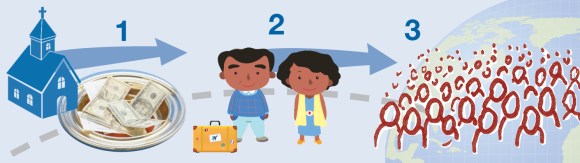
CP charts are complicated, Fries said, even for those who have long understood the system. “Stop making it so confusing for people.” “That’s what the Cooperative Program does," Fries said.

CP charts are complicated, Fries said, even for those who have long understood the system. “Stop making it so confusing for people. You put money in the plate, money goes to a missionary, missionary tells people about Jesus. That’s what the Cooperative Program does.”


“This is challenging. This is why it’s not enough to say, ‘We need to give to the Cooperative Program because it works.’ Because ‘it works’ is not a compelling enough reason to deny the core of who we are.

“Because it makes us to be like Jesus, because it helps to advance the gospel, because it helps to glorify God; those are compelling reasons to engage in counter-cultural activity.”

Younger Baptists are looking for more than pragmatic justification too, Fries said. The generation raised after the Conservative Resurgence spends more time thinking about what the Bible actually says, than arguing its truth. “So, you’re not going to compel them with pragmatic arguments, it’s going to have to a biblical rich, theologically rooted argument.”

Toward gospel advance
“Without a doubt, the high calling and common cause that unites diverse Baptist churches in cooperation is the Great Commission of Jesus to make disciples of all the world’s peoples,” IBSA Executive Director Nate Adams wrote for Resource magazine last year. “Wherever else Baptists may disagree, we are agreed on the priority of advancing the gospel, both across the street and around the world.”

CP also helps involve different kinds of churches in that mission, Page noted during the Midwest Leadership Summit. The SBC is a convention of small churches, including many ethnic congregations. “The Cooperative Program levels the playing field so everyone has opportunity to bring worshipers to God.”

Ultimately, biblical cooperation leads to an advanced gospel, which is “the compelling apologetic for collaborative mission,” Fries said. Choosing for the gospel to go forward through believers wasn’t the most pragmatic choice for God to make, he said; rather, he designed it that way because it brings him glory and brings us joy.

Read more from the Feb. 2 issue of the Illinois Baptist, online at http://ibonline.IBSA.org.

YE_blog92 profess faith at Youth Encounter

NEWS | Rick Gage stood in front of nearly 1,000 students and leaders meeting at the Prairie Capital Convention Center for the Youth Encounter evangelism conference. The room was much quieter than it had been just a few minutes earlier, when the Dec. 29-30 event kicked off with high-energy music, improv comedy from Team WordPlay, and a performance by illusionist Bryan Drake.

When Gage took the stage, he spoke first to leaders who brought students to the annual event, thanking them for investing in young people’s lives.

“We’re here to meet with God. We’re here to do business with God. And it’s our prayer—it’s your prayer—that God would use these next 24 hours to impact not just the teenagers’ lives, but all of our lives.”

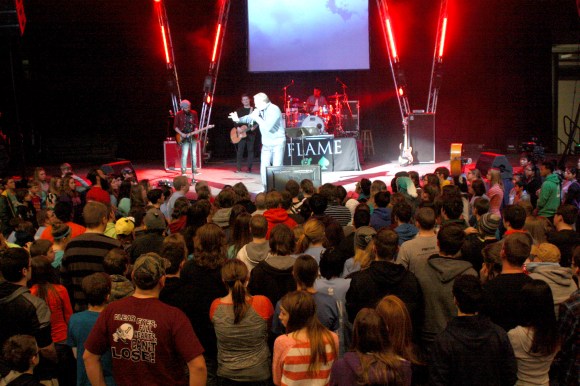
A few minutes later, after preaching a message on what it means to have an authentic relationship with God, Gage called students to the front who felt led to make a decision for Christ. They streamed down the aisles. Almost 300 people crowded near the stage (above) as the evangelist prayed over them and instructed them to head backstage to meet with counselors.

All told, 92 people made decisions to trust Christ at Youth Encounter, and 205 recommitted their faith. During the two-day conference, 20 students also answered the call to ministry, and 33 committed to pray for lost friends or family members.

“God has his hand on some guys and when they preach the gospel…I can’t explain it. I just watch it happen and shake my head, but when they preach, people respond to the gospel,” said IBSA’s Tim Sadler. “There’s an anointing that’s on their lives, and it’s just a powerful thing.”

Students met with counselors after each session to talk about spiritual decisions they felt led to make.

Students met with counselors after each session
to talk about spiritual decisions they felt led to make. Photo by Brooke Kicklighter

Gage knows how to “draw the net,” said state evangelism director Sadler, who also directs YE. The decision to invite Gage was strategic because of his experience as a youth evangelist, Sadler told the Illinois Baptist.

“And I’d also add into that, I’ve heard several of our youth leaders, our local church youth leaders, talk about how they intentionally sought to bring unsaved kids to Youth Encounter this year,” said Chad Ozee, pastor of Journey Church in Bourbonnais and YE’s backstage manager.

“And that’s the key. If they just bring their core kids, then there aren’t people here that don’t know Christ, to hear that message, to have that net drawn.”

‘I’m changed now’
Jay Huddleston brought 19 students to Springfield, and all 19 made some kind of spiritual decision at Youth Encounter. The pastor of Herrick Baptist Church said the group’s Bible study after the Monday evening session got so intense, the students didn’t even finish the pizza they’d ordered.

Huddleston knows personally how Youth Encounter can change lives. He answered God’s call to preach shortly after attending the event as a leader in 1996. He’d actually realized God was calling him years earlier, but still hadn’t responded. But when some young women from his group came back from YE ready to surrender their lives to God’s purposes, he knew he had to make a decision of his own.

“The girls were standing up there talking about how they were going to make a commitment and give their life to Christ, and I’m running.” He pastored two churches before coming to Herrick Baptist, where he has been for nine years.

One of the students he brought this year was 15-year-old Michael Mey, who made a decision to trust Christ during that Monday evening session. Mey went to YE last year, so he was more used to the event this year, he said. What drew him to respond was what Gage said about only having so much time to respond to God.

When asked if there are things he’ll do differently after his decision, Mey said, “I feel like I’m changed now.”

Arrested my soul
During his message in the first session, Gage told the story of how his own life changed when he was a football coach in his 20’s. In the same vein as the Apostle Paul, Gage listed his religious qualifications:

“I was raised up in a Christian home. I was raised up in Bible-believing churches. My father, Freddie Gage, who preached the gospel for more than 50 years around the world, saw more than a million people come to know Christ. I had a very godly mother. I’ve been surrounded by great men of God all my life.

“I mean, if anybody should have been a champion for God, it should have been me.”

But he wasn’t. Gage told students how he had walked the aisle as a child, but repentance hadn’t taken root in his heart. “For nearly 18 years of my life, I professed to be a Christian because of what I did when I was eight years of age. And on top of that, my father’s Freddie Gage. And I did OK for a while, until I learned how to do bad.”

The only thing that set him apart from his classmates and teammates, Gage said, was his presence at church on Sunday—until he went away to college. Drifting farther from God, he finally found himself at a church service where a family friend preached on repentance.

“And God used that service and that message that night to reveal to my heart and my mind that I had never truly repented of my sin,” Gage told students. “And when the invitation time was given there that night…the Holy Spirit of God that night arrested my soul.”

At Youth Encounter 2014, hundreds heard a similar message—and responded. Standing near the stage on the conference’s last day, one young man asked if the group going backstage after the invitation was going for the same reason he had the day before, to repent.

With confidence, he said, “I did that yesterday.”

In 2015, Youth Encounter moves to three regional events, each held on Columbus Day Weekend, October 11-12. For more information, watch http://www.IBSA.org/students.

NEWS | Andrae Crouch wrote songs so familiar now that most people probably have no idea where they originated. “My Tribute (To God Be the Glory),” “The Blood Will Never Lose Its Power,” “Jesus Is The Answer,” and “Soon and Very Soon,” to name just a few.

Crouch, 72, died yesterday after a heart attack January 3.

“Crouch was an innovator, a path-finder, a precursor in an industry noted for its conservative, often derivative approach to popular music,” wrote former Billboard editor Robert Darden in a tribute on ChristianityToday.com.

“He combined gospel and rock, flavored it with jazz and calypso as the mood struck him and the song called for it, and is even one of the founders of what is now called ‘praise and worship’ music. He took risks with his art and was very, very funky when he wanted to be.”

Those qualities are on display in this 2012 video of “The Blood,” performed by Crouch and a whole host of gospel music stars.

And what the trends mean for your church

An Illinois Baptist team report

"Imagine if you could spend 10 focused minutes each Sunday morning in extraordinary prayer on two major needs locally, in your church, in America, or across the world.” SBC President Ronnie Floyd’s “Call to Prayer” that began at the Annual Meeting in Baltimore now turns to Sunday mornings, starting with one worship service in January.

SBC President Ronnie Floyd’s “Call to Prayer” that began at the Annual Meeting in Baltimore now turns to Sunday mornings, starting with one worship service in January.

1. Churches respond to “Call to Prayer”
“It is past time for us to prioritize prayer personally and in the church,” SBC President Ronnie Floyd wrote on his blog in early December. “For far too long, we have seen what we can do; it is time for us to see what God can do. This can only happen when we pray.”

Floyd’s continued call to prayer—leading to the June 2015 SBC Annual Meeting in Columbus, Ohio—began about two years ago with a series of meetings for pastors and church leaders. Floyd began quoting famed Puritan preacher Jonathan Edwards who called believers to “extraordinary prayer” for revival in America.

“God’s people will be given a spirit of prayer,” Edwards wrote in 1746, “inspiring them to come together and pray in an extraordinary manner, that He would help his Church, show mercy to mankind in general, pour out his Spirit, revive His work, and advance His kingdom in the world as He promised.”

Today’s growing urgency in prayer coincided with planning for the 2014 IBSA Annual Meeting in November. “We will either hunger for God’s righteousness out of desperation or…out of devastation,” IBSA President Odis Weaver told messengers. The November meeting peaked in a Concert of Prayer for Spiritual Awakening in Illinois and across the U.S.

“I believe we need to cry out to God for spiritual awakening, and for revival in our churches,” said IBSA Executive Director Nate Adams. He led more than 400 pastors and church leaders through a prayer cycle lamenting the lost condition of people in Illinois, repenting of apathy and ineffectiveness, interceding for spiritual awakening, and commiting to pursuit of revival in our churches.

Afterward, many pastors said they would lead similar prayer events when they returned home.

Now Floyd is asking churches to dedicate an entire Sunday morning service to prayer in January: “Just imagine if 100 churches, 500 churches, or several thousand Southern Baptist churches would turn a Sunday morning into insuring that Jesus’ House would be a genuine house of prayer for all the nations.
Just imagine what could happen if, from this point forward, you could spend 10 focused minutes each Sunday morning in extraordinary prayer on two major needs locally, in your church, in America, or across the world.”

Jonathan Edwards imagined the outcome. He called it the “revival of religion.” We would call it “advancement of the Gospel”—the salvation of lost souls, renewal of our churches, and restoration of moral sensibility to the nation.

In your church: SBC churches will likely give prayer a higher profile in 2015, but what are we praying for? How will we sustain prayer in our congregations as more than a once-in-a-while emphasis? Consider a Concert of Prayer in January. As Floyd wrote, “If we do not plan to pray, we will not pray!

2. Evangelicals cope with minority status
Say goodbye to Mayberry. The culture is shifting. What was once called good is now called evil, and vice versa, just as Isaiah said of his own times. The majority opinion in the U.S. approves of same-sex marriage, and many other sexual matters—once outside the norm—are being accepted by society at large. But, while the morals and mores are changing, Southern Baptists are not.

We still stand on the Word.

“One of the biggest challenges for conservative Christians is moving beyond a Bible Belt mentality, or a moral majority mentality,” said Russell Moore, president of the SBC’s Ethics and Religious Liberty Commission, “and seeing ourselves instead as in many cases a prophetic minority speaking to a larger culture about things that matter.”

Moore called on pastors and church leaders to “prepare people for what the future holds, when Christian beliefs about marriage and sexuality aren’t part of the cultural consensus but are seen to be strange and freakish and even subversive.”

“The Bible Belt is collapsing,” Moore has concluded.

The main evidence of that in Illinois is same-sex marriage which became legal June 1. Churches, at one point concerned they would be forced to perform
gay weddings, instead began addressing their bylaws as means of protection.

Another response by evangelicals is to make the church a place of refuge, said John Stonestreet, commentator for Breakpoint Ministries. “People who are enslaved to porn and suffer different forms of brokenness need to be able to come to the church and find answers. The church needs to offer hope and solutions. We need to say, ‘Here’s an option. Here’s the hope; here’s the gospel; here’s the truth; here’s Jesus; and here’s the cross.’”

Moore concurs. “We must have a voice that speaks to the conscience, a voice that is splattered with blood. We are ministers…not of condemnation, the devil can do that, we are ministers of reconciliation, which means that we will speak hard words…truthful words to address the conscience, even when that costs us everything.”

In your church: Church leaders are ministering from a new vantage point, but with the same apologetic. The challenge will be to confront cultural ills in a way that is biblically faithful and yet winsome. The message hasn’t changed, but some in our society today need to hear the truth truly spoken in love.

At a meeting in Asia, young missionaries surround new IMB President David Platt to pray for him as he seeks to mobilize churches. Photo by Hugh Johnson/IMB

At a meeting in Asia, young missionaries surround new IMB President David Platt to pray for him as he seeks to mobilize churches. Photo by Hugh Johnson/IMB

3. Young leaders urge peers to “re-engage”
The evidence has been building for a few years now: young Baptists are back. Or on their way back, at least.

They’re more visible at the Southern Baptist Convention’s annual meetings, and, in 2014, at two meetings on the gospel and marriage hosted by the Ethics and Religious Liberty Commission. They’re also beginning to look remarkably similar in age to the leaders of several of the denomination’s entities. At the ERLC’s October national conference, 125 young leaders had dinner with President Russell Moore and the heads of the SBC’s two missions agencies, Kevin Ezell and David Platt. At four years, Ezell is the longest-tenured at his post; Moore took the ERLC reins in 2013, and Platt was elected in August.

“There’s never been a better time in my lifetime to re-engage as a Southern Baptist than right now,” Ezell, president of the North American Mission Board, said at the meeting. “I really believe that God is up to something very special in the Southern Baptist Convention.”

Many young Baptists likely would cite the election of Platt, 36, as one of the highlights of 2014. Midwestern Seminary President Jason Allen, himself 38, blogged that when he announced Platt’s election during a September chapel service, students (and faculty and staff) broke into applause for the missiologist and author of bestseller “Radical.”

More than 1,000 miles away in Richmond, Va., young missionary appointees gathered around Platt shortly after his election to congratulate him and tell him how “Radical” and his messages on reaching the nations had helped lead them to the international mission field.

After Platt’s election, some Baptist leaders expressed concern that his Birmingham congregation, The Church at Brook Hills, gave a lower amount through traditional Cooperative Program channels, instead sending a large portion of their gifts directly to the SBC Executive Committee and International Mission Board.

But even with those concerns, established leaders affirmed Platt’s ability to mobilize young people to share the gospel to the ends of the earth. Southwestern Seminary President Paige Patterson noted it in a blog post published shortly after Platt’s election, calling for “thanksgiving to God for the presence of a young leader who has obviously garnered the hearts of the younger generation and who will have the opportunity to lead them to a commitment to the world mission enterprise.”

One blogger put it a little more plainly, noting Platt may be just the right voice to deliver tough love to would-be male missionaries outnumbered by female “Journeymen” appointed through the IMB.

“Lend your voice to addressing the issue of young males wimping out of Journeyman service,” William Thornton wrote at SBC Voices. “These guys think you walk on water, Mr. Radical. Give ‘em both barrels on this and see what happens.”

In your church: Look for increased excitement from your own young leaders now that the authors and speakers they’ve followed for several years are in prominent positions. Be prepared for them to want to go to the hard places for ministry and missions. “That’s where we hear young couples saying they want to go, that they want to be radically obedient to what God has called us to do for the nations,” said IMB trustee chairman David Uth. “The passion is there.”

4. Growing persecution: From “the Nun” to “resurrection people”
Before Ebola dominated headlines, another one-word threat struck fear in the hearts of many around the world—and even here. The war of terror and persecution waged by ISIS, or the Islamic State of Iraq and Syria, was the story of the year earlier in 2014.

ISIS chased religious minorities high into the mountains of Iraq. They filmed beheadings and broadcast them as warnings to the rest of the world. And they stirred many in the Western world to stand with the persecuted church. The Arabic letter “Nun” was used on social media pages to symbolize solidarity with those persecuted for their faith in “the Nazarene,” or Jesus.

It’s not just a problem in the Middle East. In Nigeria, 1,505 Christians were killed for their faith in the first seven months of 2014, according to non-profit Jubilee Campaign. North Korea again topped Open Doors’ list of most persecuted countries, highlighted by the imprisonment of American Kenneth Bae, who was finally released in November. Others, including Pastor Saeed Abedini in Iran, remain in prison.

Closer to home, Christians felt a different kind of persecution. Businesses and non-profits faced government fines for not providing abortion-causing contraceptives. The mayor of Houston, Texas, subpoenaed the sermons of pastors who were against the city’s pro-LGBT ordinance.

Christian leaders here urged believers to remember who they belong to. “The answer to the decline of religious freedom and the change in the moral climate is not found in waging incessant cultural wars, filled with rage at our changing culture,” said LifeWay Research President Ed Stetzer. “Simply put, you can’t hate a people and reach a people at the same time.”

Instead, he urged Christians, “Let’s live like the resurrection people, adorning the gospel with lives of grace. Even in our passion to defend freedoms increasingly at risk, let’s remind ourselves this generation is desperately in need of the love of Christ, lived and shared.”

In your church: Be prepared to think globally about persecution. How can your church go beyond your normal prayer times to intercede for those under threat for their faith?

Be alert to what government bodies are doing. Speak out when religious liberties are threatened. The IRS prohibits churches from supporting candidates, but not from speaking on issues related to faith.

SBC’s Frank Page speaks frequently about the future of the Cooperative Program, painting a hopeful picture despite years of declining offerings. Photo by Morris Abernathy

SBC’s Frank Page speaks frequently about the future of the Cooperative Program, painting a hopeful picture despite years of declining offerings. Photo by Morris Abernathy

5. Cooperative missions for a new generation

Most Baptists agreed the Cooperative Program, the denomination’s chief method of funding missions and ministry, is the best way for churches together to pursue the Great Commission. But how to fix the CP, plateaued and trending slightly downward for years, is up for debate. The election of David Platt as IMB president revealed how his church and other large churches have bypassed their state conventions, even though CP gifts for national and international missions are supposed to be routed first through the state level.

“I have heard some people say, ‘The big problem is that the younger generation simply isn’t educated about CP,’” blogged pastor J.D. Greear after Platt’s election. “That may be true for a small percentage of people, but the bigger problem is probably that they are educated about it. The more they find out about CP giving, the less they are motivated to give.”

Meanwhile, blogger Bart Barber spoke up for the reliability of the system itself, calling those who disagree with the way CP funds are allocated to greater involvement in SBC life. “…Within the Cooperative Program approach you can pursue any ministry, reallocate any budget, or adopt any methodology that you can convince enough of your fellow churches and fellow pastors to adopt,” Barber posted at SBC Voices.

“Bring on the changes! Make your proposals! Go to the floor of the SBC Annual Meeting! Attend your state convention meeting! Advocate tirelessly and fearlessly for the improvements you’d like to see. Whatever they are and however much adaptation they would require, I’m betting that almost none of it would actually require any changes at all in the Cooperative Program.”

SBC Executive Committee CEO Frank Page continued his campaign for increased giving through the Cooperative Program, touring the nation (including Chicago) to talk with younger pastors and leaders. “I’ll drop the Cooperative Program if you can show me something else that long-term is effective and engages every church concurrently and consistently in an Acts 1:8 strategy,” Page has said on several occasions. “Show it to me, and I’ll support it….But I
haven’t found it yet.”

In your church: More conversation about CP in the national SBC could mean it’s time for a refresher course in your local church. A class for young or new Baptists is an opportunity to teach about why Baptists give cooperatively. One big reason: CP helps missionaries focus on their mission field, instead of fundraising. Another reason: CP helps the local church have a balanced missions strategy, supporting work on all their Acts 1:8 mission fields.

-With reporting from Baptist Press

Read all of the December 22 Illinois Baptist at http://ibonline.IBSA.org.

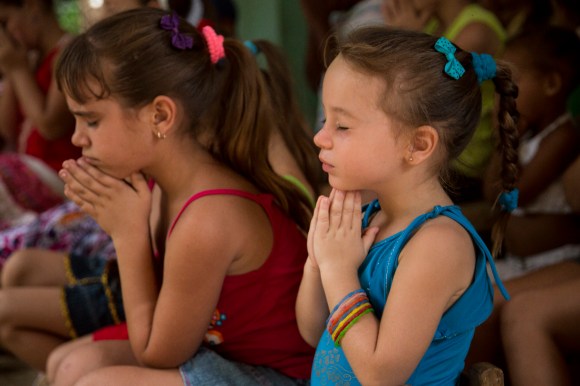
Cuban children learn to pray during a weekly meeting held in the home of two ladies with a passion to evangelize children. In 2010, the religious affiliation of Cuba was estimated by the Pew Forum to be 59.2 percent Christian (mostly Roman Catholic), 23.0 percent unaffiliated, 17.4 percent folk religion and the remaining 0.4 percent other religions. Wilson Hunter/IMB

Cuban children learn to pray during a weekly meeting held in the home of two ladies with a passion to evangelize children. In 2010, the religious affiliation of Cuba was estimated by the Pew Forum to be 59.2% Christian (mostly Roman Catholic), 23% unaffiliated, 17.4% folk religion, and the remaining 0.4% other religions. Wilson Hunter/IMB Photo from BPNews.net


NEWS |
President Obama’s announcement Dec. 17 that the U.S. will renew its relationship with Cuba had pundits talking about the political and economic implications. Meanwhile, many Christian leaders focused on what the decision could mean for Cuban believers.

Phil Nelson has traveled to Cuba 11 times since 2003, speaking about the gospel with college students and on one occasion, a university president.

“Everybody we met with, we talked with about the gospel,” said Nelson, pastor of Lakeland Baptist Church in Carbondale. The Cuban Christians he has worked with are “passionate about the gospel, unashamed about anything. They had a boldness that we just don’t know anything about here in the United States.”

Still, there is the specter of oppression, said Kevin Carrothers, who traveled with Nelson to Cuba in 2006. He remembers noticing from Cuban people and visitors to the country that no one wanted to draw attention to themselves. The stereotype most people apply to the Caribbean – bright clothing, a festive, celebrative atmosphere – didn’t hold water in Cuba, said the pastor of Rochester First Baptist Church.

Their mission team saw people come to Christ, though, including one woman who stopped them by the side of the road to ask for a drink of water. Nelson talked with her about the living water that Jesus offers; right there on the road, Carrothers said, she accepted Christ.

After Obama’s announcement, leaders weighed in on whether the decision would help or hurt people in the country. “This change is not going to help the Cuban people [under] a communist government in power for more than 50 years,” said Óscar J. Fernández, a Tennessee minister who holds political asylum from Cuba. “I will applaud if Cuba makes any concessions, but they are not [likely to do so],” he told Baptist Press.

But David R. Lema, whose family left Cuba for Spain when he was 7, said “any normalization of political ties between Cuba and the U.S., regardless of political implications or results, should prove beneficial for Christian work.”

“Travel for Americans going to Cuba would flow smoother and with less inconvenience—anyone that has gone to Cuba knows what I am talking about here,” Lema, director of New Orleans Baptist Theological Seminary’s Center for the Americas in Miami, told BP. “Churches and individuals will have more freedom to help the churches directly without having to worry about U.S. embargo violations.”

Carrothers said he didn’t know whether more mission teams will begin traveling to the Caribbean country. “What I do know, and what I think the reality is, is that where the church has been oppressed, and the church has been persecuted, the gospel has flourished.

“And that certainly was the case in Cuba, the gospel was flourishing in the midst of oppression.”

By Meredith Flynn, with additional reporting by Baptist Press

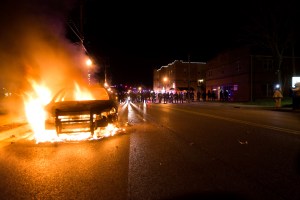
Numerous fires were set in Ferguson, Mo., following the decision by a grand jury not to charge Officer Darren Wilson in the shooting death of 18-year-old Michael Brown. Photo from BPNews.net by Victor Miller

Numerous fires were set in Ferguson, Mo., following the decision by a grand jury not to charge Officer Darren Wilson in the shooting death of 18-year-old Michael Brown. Photo from BPNews.net by Victor Miller

NEWS | Kayla Rinker

The plywood nailed to the windows of homes and businesses reminded Stoney Shaw of living near the threat of hurricanes when he was younger.

“People would brace themselves for the storm that was coming,” said Shaw, senior pastor at First Baptist Church of Ferguson. “That’s exactly what is happening here; a devastating storm. But praise God things seem to be winding down and there is a lot of rebuilding going on, which is what we’ve been praying for.”

Despite the rioting and arson surrounding the grand jury’s Nov. 24 decision not to indict Officer Darren Wilson for the shooting death of Michael Brown, Shaw said there are glimpses of hope among the ashes.

“On that very same plywood, artists have drawn pictures of encouragement and hope,” he said. “We are the real Ferguson people, black and white. As a whole we are not the ones marching and picketing, we are the ones getting looted and broken into. There are a lot of other narratives, but the reality is that this is a terrible tragedy and it does not have our best interest in mind.”

But because of that reality, it leaves Ferguson-area churches with a unique opportunity to minister to a broken and hurting community. Shaw said FBC is engaged with the city to promote positive changes.

For example, when the district closed a nearby school because of the impending threat of rioting, FBC opened its facilities to provide meals, tutors, and a safe place for the kids to be during the day. The City of Ferguson has also used FBC’s fellowship hall for their “Talk-Back” meetings for people to express their grievances and appeals for change to the mayor and city leaders.

“It’s exciting to be a practical part of the solution to a very complicated situation,” Shaw said. “I’ve said it before but we were at Ground Zero before it was Ground Zero. These are scary times and we are living in the shadow of that. God has called Christian people and churches in Ferguson to go and do what needs to be done together, in order to recover our fine city for Him.”

Sean Boone is pastor of New Beginning Christian Fellowship, an SBC church plant in nearby Hazelwood, Mo. “What I’m seeing and hearing is more about believers being white or black before being Christian,” Boone said. “As believers we must step back and ask are we rendering grace to both sides? Are we looking at everything through the lenses of U.S. citizens or (as) citizens of the body of Christ?”

He said only when believers answer these questions honestly can Biblical and fair solutions for all people be found.

“If we only rely on a system born out of the flesh of sinful man, we will constantly get flawed results,” Boone said. “One side or the other will always feel disenfranchised. Right not we are witnessing an expression of a group of people feeling hopeless. The church needs to address the reason for this hopelessness…which is sin.”

Shaw believes there are legitimate issues and injustices regarding the treatment and the voice of the majority of Ferguson residents. He said that more than anything, this tragedy has shined a light on those problems.

For starters, the African American subgroup in Ferguson makes up 70% of the city’s total population, but there is only one African American member of the city council. Shaw said the city needs to push for everyone to register to vote.

“We are blessed to have some neat African American ladies in our church who have started taking young adults in the 18 to 30 age range and teaching them the basics of our democratic republic,” Shaw said. “We have a nation of people who don’t know how it works. When only 10% of the majority 70% of the population is registered to vote in a city, it’s bad. People start to feel like they aren’t included and can’t change anything, which leads to looting and burning.”

And that idea of feeling included is what lays heavy on Shaw’s heart because he knows where it needs to begin: within the body of Christ. Though pastors and churches have come together to pray for one another in light of recent events, Shaw says that trend needs to continue.

“It sends a wonderful message that we are united as one body of believers,” Shaw said. “We need to get back to really associating with each other and that may require churches, whether predominately white or black, get out of their comfort zones: team up, serve together, go on mission together, fellowship together and even periodically do a pastor swap.”

“We are only racially divided if we want to be,” Shaw said. “We need to be living like Christ throughout this crisis.”

Special to the Illinois Baptist. Kayla Rinker is a reporter living in southwest Missouri.