Archives For November 30, 1999

News of interest to Illinois Baptists

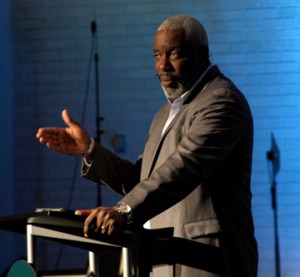
IMB President David Platt addresses staff and missionaries in a town hall meeting Thursday, August 27. Photo courtesy IMB

IMB President David Platt addresses staff and missionaries in a town hall meeting Thursday, August 27. Photo courtesy IMB

Richmond, Va. | The International Mission Board announced it will be eliminating 600-800 of its staff and missionaries in an effort to eliminate the board’s revenue shortfalls, which also includes a complete reset of the organization.

The plan was announced at an Aug. 27 town hall meeting that included senior leadership and missionaries and staff. Missionaries and non-field staff joined the meeting via digital media. Trustees were briefed on the plan at their Aug. 25-26 board meeting.

“With a really heavy heart, I announced to the staff this morning that the only viable way forward involves a great reduction of personnel and staff,” shared IMB Executive Director David Platt in a press conference following the town hall meeting. “We need a major adjustment in the number of personnel, to reduce the total number by 600-800 people.”

“These are not just figures. These are faces, brothers and sisters, who have spent their lives spreading the gospel to those who’ve never heard it,” he continued. The IMB currently has approximately 4,800 missionaries in the field and 450 staff which together equal 80 percent of its budget. The reduction represents up to 15% of the organization’s staff.

While giving through the Cooperative Program and Lottie Moon Christmas Offering has increased in the last few years, the IMB projects it will fall $21 million dollars short of its current budget this year. This follows several consecutive years of budget shortfalls and six years of expenditures totaling $210 million dollars more than has been given to the IMB.

In recent years, the organization has covered budget shortfalls through cash reserves and selling property. These measures along with plans set in place by previous leaders to reduce its staff and missionary size through attrition are “no longer viable in light of current reality,” stated Platt.

“We praise God for the reserves and property sales that made this possible and for leadership which chose to spend these resources for the spread of the gospel,” he said. “But we cannot continue to overspend. For the sake of short-term financial responsibility and long-term organizational stability we must act.”

Phase one of the plan is the voluntary retirement or resignation of missionaries and staff. Platt stressed no one would be pressured to leave during this first phase.

Phase two is the conclusion of the reset where decisions will be made to work through how missionaries will be used. “We must hold each other accountable in higher standards in our work…We can’t employ everyone who wants to work for the International Mission Board,” said Platt. The goal is to finish the reset by early 2016.

Platt encouraged everyone to boldly ask God where he was calling them to move. “God is not sidelining anyone in this process,” he said, noting opportunities for Christians to move overseas for their professions, education and retirement while they can also share Christ and plant churches.

“These realities, while they are financial, are ultimately spiritual,” Platt said. “God is ultimately orchestrating everything for his glory.”

The reset will be completed on knowledge IMB senior personnel will gain in coming days and months, as they evaluate what is needed around the world in various fields. “I certainly don’t have a forecast for what all that looks like,” said Platt. In all this the IMB is “trusting God to lead and re-direct 600-800 people in the days to come.”

The goal of the reset is to “get to a healthy place in the present in order to be in a healthy position for the future,” Platt said. “We want to move forward with innovative vision, wise stewardship, and high accountability to the churches we serve, the peoples we reach, and the God we worship.”

The IMB has provided a FAQ sheet related to its organizational reset that is available on the IMB website.

The 170-year-old organization is the primary international missions sending agency of the Southern Baptist Convention.

By Lisa Sergent with additional reporting by Morgan Jackson.

Starting July 1, the IRS will implement a $100-per-day per employ excise tax on some churches, depending on the number of full-time employees they have, and how they cover health care premiums (IRS Notice 2015-17).

Churches with one full-time employee, and churches with two or more full-time employees in a qualifying group plan will still be allowed to provide pre-tax reimbursement for health care benefits. But churches with two or more full-time employees who have individual policies (or where one or more employees are on their spouse’s insurance plan), will not be allowed to provide pre-tax reimbursement. Those churches may be penalized.

Most pastors who have health insurance through GuideStone will not be penalized, because GuideStone coverage is considered a group plan.

For those who have individual policies and serve churches with two or more full-time employees that would be penalized, IBSA is exploring the option of providing an IBSA Group Associational Plan through GuideStone, which would meet the group policy requirement and protect the church from the excise tax. Pastors interested in this plan should contact IBSA by April 30, as IBSA will only pursue this option is there is sufficient interest.

Additional information is available at IBSA.org.

Contact SylvanKnobloch@IBSA.org or call (217) 391-3133.

Editor’s note: This is part 2 of the Illinois Baptist’s coverage of a recent summit hosted by the Ethics and Religious Liberty Commission on racial reconciliation and the gospel. Read part 1 here.

Layout 1

Read the April 6 edition of the Illinois Baptist at http://ibonline.IBSA.org.

NEWS | If Southern Baptists are to be serious about Jesus’ Great Commission to make disciples of all peoples, said historian Matt Hall, they need to honestly think through where they’ve come from. Hall, Southern Seminary’s vice president for academic services, spoke in a video message about the SBC’s history with slavery, racism, and segregation during a March summit hosted by the Ethics and Religious Liberty Commission on racial reconciliation and the gospel. (The Convention was formed over a divide between Baptists in the North and those in the South who wanted to continue owning slaves.)

Hall also led one of the summit’s panel discussions, joined onstage by Moore, Philadelphia pastor K. Marshall Williams, SBC Executive Committee President Frank Page, and past SBC President Fred Luter.

Understanding the SBC’s past ought to inform how we address racial issues now, Moore said. The divide over slavery “really was a justification for evil and for wickedness,” he said.

“Which, to me, ought to cause us not so much to look back and say, ‘Weren’t they evil and weren’t they wrong?’ as much as it ought to cause us to look back and to say, ‘Look at these people who knew their Bibles, and who were preaching their Bibles, and who were trying to gather up money for world missions, and yet were not able to see this glaring and wicked sin and unrighteousness and injustice that they were part of.’

“That ought to not give us a sense of our superiority to them; it ought to give us a sense of humility to say, ‘If these people who knew their Bibles like this, could get this that wrong on an issue that is so basic to what Scripture is teaching, then we need the mercy and the power of God.’”

IBSA African American Church Planting Strategist Ed Jones has faced the obstacle of the SBC’s history, he said. Some African Americans have told him, “I don’t necessarily want to be part of the Southern Baptist Convention because of its past,” he told the Illinois Baptist during the summit. The Nashville meeting was an opportunity to tackle those issues head-on and bring things into the open.

Luter said the Convention’s history resulted in one question asked by every person who interviewed him in the months before his election: Why would a black man want to be president of the SBC? Frankly, he didn’t know much about the Convention’s history when he went from street preacher to pastoring New Orleans’ Franklin Avenue Baptist Church almost 30 years ago. A couple of years into his pastorate, several of his older church members suggested Franklin Avenue leave the SBC.

“…There’s nothing we can do about our past,” was Luter’s response. “But there’s a whole lot we can do about our future.”

Luter was on the SBC Resolutions Committee that in 1995 proposed a resolution adopted by Convention messengers apologizing “to all African-Americans for condoning and/or perpetuating individual and systemic racism in our lifetime,” and repenting “of racism of which we have been guilty, whether consciously or unconsciously.”

The applause and tears that accompanied his election as SBC president made June 19, 2012, “one of the greatest hours in the life of the Southern Baptist Convention,” Luter said as people in the Nashville auditorium clapped too. “My only concern is that hopefully it’s not the last time.”

“That’s where the real test is,” said Moore. “We’ve got the pictures of the presidents of the Southern Baptist Convention over there. Let’s come back in 20 years and if Fred Luter is an island in a sea of middle-aged white guys, that’s means that we have not been where we need to be.”

Can we keep the ‘beast feast’?
H.B. Charles was in the middle of a potential church merger when he was asked that question about a long-held tradition. Charles’ largely African-American church, Shiloh Metropolitan Baptist in Jacksonville, Fla., was considering combining with largely Anglo church across town. One member of that congregation was most concerned with whether Charles as pastor would let them keep their annual wild game dinner and evangelistic outreach, known as the “beast feast.”

“He looked at me and said, ‘Pastor, I know you’ll agree with me, that if one redneck comes to Jesus, it’s worth it all.’ And in that moment,” Charles said, “I just had a feeling everything was going to be all right.”

The summit’s lightest and most practical moments came when practitioners like Charles explained what racial reconciliation looks like in a church setting. Josh Smith, pastor of MacArthur Boulevard Baptist Church in Irving, Tex., experienced a similar would-be culture clash when a woman at his increasingly diverse church brought a tambourine to play during worship, and during his sermon.

Smith and his team decided the next day they would allow the tambourine playing during the worship, but not during the message. He explained their thoughts to the woman, who’s still at the church six years later. “It was a lot of those hard conversations,” Smith said of the church’s transition to be more diverse, “and I just felt like it was not as much from the pulpit as interpersonal conversations.”

Sometimes, unity is a matter to preach about, as Adron Robinson found when he became pastor of Hillcrest Baptist Church in Country Club Hills. Robinson, who attended the ERLC summit, said his first sermon series was on forgiveness, because the church had recently experienced a difficult time in its history when he arrived almost six years ago.

Hillcrest’s community is largely African American, Robinson said, and his church currently reflects their neighborhood. But during the summit, he said he was wrestling with one of the conversations happening onstage: Is it best for churches to reflect their communities, even if those communities are predominantly one ethnicity?

“I’m good with the fact that our church reflects our community, but I’m also wondering, Is that enough? Does a church need to look more like heaven?

“There’s some ease…some accomplishment in the fact that we look like our community, but I also think that there’s more for us to do, that the church needs to be more multi-cultural, more multi-ethnic,” Robinson said. He also sees a need for more unity between churches.

“We’re cordial and we speak, but there’s not really true fellowship,” Robinson said of some African-American and Anglo Southern Baptist congregations. “So, that’s been an issue, and I think it’s an issue on both sides. [I don’t think] that I’ve done everything that I can do to encourage that either.

“This conference has helped me see the need for communication, for us to sit down, share a meal, and actually build a better relationship, so that we can be the family that God has called us to be.”

Editor’s note: This is part 1 of the Illinois Baptist’s coverage of a recent summit hosted by the Ethics and Religious Liberty Commission on racial reconciliation and the gospel. Read part 2 next week here at ib2news.org.

NEWS | Meredith Flynn

Weeks of riots in Ferguson, Missouri, following the police shooting of a young black man, Michael Brown. More protests in major cities after the death of another African American, Eric Garner, during an arrest. And with the shooting death of 12-year-old Tamir Rice in Cleveland, the culmination of a summer of racial unrest in America. And it was only the beginning.

Chants of “Hands up, don’t shoot” in the streets gave way to “Black lives matter,” and in personal conversations, the question has become “Why now?” and “I thought we had made so much progress on race relations in the U.S.”

A sad and challenging summer, followed by a new round of unrest in Ferguson after a condemning report from the U.S. Department of Justice, leaves many thinking, “Apparently not.”

And the church wonders, What can we do? And in some corners Christians have asked, What does the gospel require us to do?

“How do we as people formed by Christ start to have those conversations out in the world?” said Ethics and Religious Liberty Commission President Russell Moore at a March summit in Nashville. “It starts if we’re in the same body, gathered around the same table, praying with one another, praying for another, serving one another, being led by one another, and then we will stand up for and speak up for one another.”

The state of race relations in America, from Ferguson to New York, and coast to coast, is demanding fresh thinking and producing new preaching on race in all kinds of churches—including here in Illinois.

More than 500 current and future church leaders gathered at LifeWay Christian Resources last month to address racial reconciliation and the gospel. The second-annual Leadership Summit hosted by the Ethics and Religious Liberty Commission brought together nearly 40 speakers who presented on a wide range of topics: multi-ethnic ministry, Islam, the SBC’s history on racial issues, pop culture, and more.

In each message and panel, the summit’s key theme was clear: Racial reconciliation is a gospel issue. The gospel reconciles people to God and to one another, but sin is still at work in the world, causing tension, division, strife and violence.

The solution, leaders said at the summit, is for the church to preach and live out the gospel on matters of race. To examine itself for any lingering race-related sin of pride, and to work together to fight the common enemy of racism.

“We’ve got a long way to go,” Moore said in his opening address. “Our sin keeps wanting us to divide up. But to the faithful, Jesus promises, ‘You will be called overcomers.’ And we shall overcome.”

Summit attenders gathered in the aisles and at the altar to pray together at the start of a March meeting on racial reconciliation and the gospel.

Summit attenders gathered in the aisles and at the altar to pray
together at the start of a March meeting on racial reconciliation and the gospel.


Learning how to see each other
“All creatures of our God and King; lift up your voice and with us sing…”

The first hymn led by band Norton Hall and worship leader Jimmy McNeal took on extra significance as the words reverberated around the auditorium. All creatures, lifting up their voices, together. African American, Anglo, Hispanic; male and female; young and old. At the summit, mostly young.

The picture painted in “All Creatures of Our God and King” isn’t possible when people are left to their own devices, summit speakers said. The gospel is central to racial reconciliation. In perhaps one of the few times the Good News has been compared to mayonnaise, Dallas pastor Tony Evans said it acts as an “emulsifier,” like the eggs that helps combine the ingredients in his favorite sandwich condiment.

“Grabbing a black Christian and a white Christian, a red Christian and a yellow Christian, a Baptist and a Methodist, Pentecostal,” Evans preached as the crowd clapped and agreed with Amen’s. “He’s able to pull them together when you understand that the gospel can change an environment, and can do anything.”

Thabiti_Anyabwile_blogThe mission of reconciliation can be seen in the Bible from the very beginning, said Washington, D.C., pastor Thabiti Anyabwile (right). Preaching from the book of Genesis, he urged his listeners to consider how they look at people different from themselves, in light of the fact that everyone is made in the image of God.

“Every person we have ever looked at, smiled at, greeted, encouraged, insulted, slandered, touched, is a person bearing the marks of divine likeness, the ‘imago dei.’ So, racial reconciliation must begin with our learning the habit of seeing each other as together made in the image of God, and therefore possessing inestimable, unfathomable dignity and worth and preciousness.”

But seeing other people is such a commonplace occurrence, Anyabwile continued, and then there’s the problem of sin. That’s why true reconciliation requires a constant renewing of the mind. How a Christian treats people of different ethnicities is such a key part of living out one’s faith that it ought to be a category of discipleship, the pastor said.

“That [racism has] moved so rapidly to be a despised thing is wonderful,” he said. “But along the way, I think many Christians have been so afraid of the label, so afraid of the discussion, and so afraid of the implications, that they don’t even want to have the conversation.”

Working out the reconciliation that Christ has achieved for us is one of the most underdeveloped areas in Christian discipleship in the U.S., he said. A believer can live his whole life without someone sitting down with them to explore their identity in Christ.

And so, Anyabwile said, “We’re weak when the Fergusons erupt around us, we’re weak when we watch Eric Garner choke to death on a city sidewalk. We feel incompetent when we see a Tamir Rice shot in Cleveland.

“We don’t know quite what to say or what to do, when the (Department of Justice) reports come out, whether it’s telling us that ‘hands up don’t shoot’ isn’t true, or whether it’s telling us that, man, this police department is shot through with racist practice….It immobilizes us, because we’re not discipled, because we don’t have this as a category in what it means to mature as a Christian, as a follower of Christ.”

Afshin_Ziafat_2NEWS | It was an English tutor who first showed the gospel to Afshin Ziafat.

As a first grader, Ziafat, who now pastors Providence Church in Frisco, Texas, moved to the United States with his family from Iran. It was 1979, a bad year to be Iranian in America, Ziafat told his listeners at the Ethics and Religious Liberty Commission’s summit on racial reconciliation and the gospel.

Ziafat’s family left Iran during the Islamic Revolution. “We had no idea what kind of unrest we were about to walk into,” he said.

The ongoing hostage crisis involving American victims meant Ziafat’s new home—Houston, Texas—was a hostile place. Radio stations played a new version of the Beach Boys’ song about Barbara Ann: “Bomb, bomb, bomb…bomb, bomb Iran…”

Rocks were thrown at his family’s home, and his parents’ tires were slashed. Ziafat and his brother were threatened at school.

And when he was in second grade, his tutor—who had taught him English by reading him books—gave him a small New Testament.

“You’re not going to understand this today, Afshin, but promise me you’ll hold on to it and read it when you’re older,” she told him.

Ten years later, Ziafat accepted Christ.

“Had any other American given me that New Testament, I would have thrown it away,” Ziafat said in Nashville today. “Because I didn’t trust them.

“You want to win a Muslim for Christ, I believe you have to earn the right to be heard. And she did it by the way she was loving me.”

“There are many more Afshin Ziafat’s today than there were back then, in your neighborhoods,” he said, “and God is calling us to step out. Listen to me folks— especially at a time when it is expected for us to distrust and maybe even hate Muslims.”

Ziafat ended his testimony with the story of the prophet Jonah, who knew that God was calling him to go preach to Assyrians who were not only his enemies, but also would conquer his people. Jonah’s book ends with a question from God about the people the prophet was called to go to, Ziafat noted:

“Should I not pity them?”

“You never get the answer from Jonah,” Ziafat said. “You know why? Because I think that questions goes out for us today….And I’m telling you, friends, we answer that question with the way we live our lives.

“The gospel calls me to step out of my comfort zone and go out to people who don’t look like me, who don’t dress like me, who are not of my skin color, but on top of that, especially those who are my enemies. Who I am expected to hate? When I show them love, the gospel is revealed.”

Tony_EvansNashville, Tenn. | “Jesus reversed over 800 years of racial discord in 24 hours,” Tony Evans preached this afternoon at the ERLC’s Summit on the gospel and racial reconciliation.

Walking his listeners through John’s account of Jesus’ encounter with the Samaritan woman at the well, Evans, pastor of Oak Cliff Bible Fellowship in Dallas, made application to modern times:

Jesus met the woman on common ground, at Jacob’s well (John 4:6). “Jews didn’t like Samaritans, Samaritans didn’t like Jews, but since they both loved Jacob, that’s where he stopped,” Evans said. The Old Testament patriarch was viewed as the father of both Orthodox Jews, and the pariah Samaritans.

He didn’t hide who He was. The woman at the well knew Jesus was Jewish (John 4:9), even though he didn’t say it. But though he looked and talked like a Jewish man, Evans noted, he didn’t act like one to the woman, who other Jews would have viewed as an outcast. Nor did he try to be something he wasn’t.

God is not asking you to stop being different than you are to reach somebody different than you are, Evans said. He doesn’t want white people to be black or vice versa. “He’s asking both to be biblical.”

Jesus earned the right to deepen the conversation. “Because he was willing to drink out of her cup” at the well, Evans said, “he has now earned the right to take a normal discussion about water and turn it into a discussion about eternal life” (John 4:13-14).

Jesus was about his father’s business. Father God plays an integral role in the story of the woman at the well. The conversation changed when the Samaritan woman brought Him up, trying to change the subject when Jesus reveals he knows her current situation (John 4:19-20).

Jesus uses the opportunity to show her what she’s always known to be true about her history, her background, and her identity isn’t, in fact, true. Jesus’ words apply to the racial absolutes we live by too, Evans inferred.

“Black is only beautiful when it’s biblical, and white is only right when it conforms with holy writ,” he said.

Many more Samaritans believed in Jesus because of the woman’s testimony, John writes. How can the reversal detailed in the story happen in just 24 hours, Evans asked. Because Jesus was about his father’s business.

Watch the Summit online at live.erlc.com.

Nashville, Tenn. | Racial reconciliation is the main topic of the Ethics and Religious Liberty Commission’s 2015 Leadership Summit, which starts today at 1 p.m. The Illinois Baptist is in Nashville covering the event, which today includes plenary sessions on:

  • Why racial reconciliation is a gospel issue
  • Ferguson, Eric Garner, and your community
  • Key issues in racial reconciliation: Poverty, fatherlessness, criminal justice and urban ministry

Tonight, ERLC President Russell Moore will interview civil rights leader John Perkins, and speakers Danny Akin and H.B. Charles will explore how racial reconciliation is shaped by the gospel and the Great Commission. The evening session will conclude with a panel discussion on the church and multi-ethnic ministry.

The Summit was originally scheduled to focus on pro-life issues, but unrest in Ferguson, Mo., and other U.S. cities caused ERLC leaders to change the topic. “Racism and injustice are not just social ills; they are sins against God,” Moore said last year.

“This summit will help equip us to tear down carnal divisions, to bring about peace, so that churches reflect the kingdom of God.”

LifeWay Research has found that while 86% of Protestant senior pastors have congregations with one predominant racial group, only 40% of American churchgoers believe their church needs to become more ethnically diverse.

Check back here for news from the Summit, and in the next issue of the Illinois Baptist.

Postmodern Martyrs

eric4ibsa —  March 16, 2015
Artwork by Kerry Jackson

Artwork by Kerry Jackson

The call to live–and die–for Christ in the age of terrorism. Are we ready?

By Eric Reed

THE WORLD | The scene is chilling, even a month after it happened: 21 men in orange jumpsuits are led along a beach in Libya by masked men holding knives over their heads, then to their throats. The men in orange are captives, Egyptians working in Libya; more important, they are Christians, Coptic Christians, with up to 20 million adherents, whose branch of the faith dates to the third century AD.

The masked men in black are ISIS rebels, part of the radical faction of Islamic extremists marching across Iran, Iraq and Syria, and taking control of towns and regions ceded by Al-Qaida in the battle with American and indigenous forces over the past decade.

The men in orange are forced to kneel, ordered to recant their faith in Jesus Christ, and when they refuse, they are pushed face down into the sand and the knife blades are placed against their throats.

Mercifully, the video ends there for American television viewers, but for the men in orange there is no mercy.

They are beheaded.
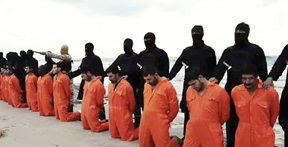
Coptic_ChristiansAnd we, believers watching in disbelief, are little comforted by the great distance between us and the bloodstained beach as we come to the twin realizations that ISIS is on the move with a brutality that the world has not seen in a long time, and we have entered a new era of martyrdom.

A growing threat here?
Sixteen past presidents of the Southern Baptist Convention joined current president Ronnie Floyd in sending an open letter to President Obama, urging the U.S. to “take the necessary actions now” against the ISIS terrorists. They called ISIS “a continuing threat to world peace in a way unknown to us since the Nazis of World War II…”

The March 1 letter came two weeks after the beheading of the Egyptian Christians, and a week after the report that ISIS captured more than 200 Assyrian Christians, including women, children and elderly people. “People are frightened, people are concerned,” concurred Frank Page, SBC Executive Committee President, who said he is often asked about the threat of ISIS. Page’s signature was one of the 17 on the letter.

The concern Page cites is not only about the abominable acts by Islamic extremists abroad—killing a young, female American aid worker, burning a Jordanian pilot alive—it’s about the growing threat on our own shores as young adults, Americans included, are wooed, recruited, and radicalized via the Internet to join ISIS forces in the Middle East. And if not there, to carry out terrorist acts here.

A Somali militant group, al-Shabab, released a video in late February calling for Muslims to attack malls in Britain, Canada, and the Mall of America in Bloomington, Minn. “Hasten to heaven,” the video advised, by disrupting the safety of “disbelievers” (meaning non-Muslims) “in their own land.”

U.S. Homeland Security Secretary Jeh Johnson said such groups are “relying more and more on independent actors to become inspired” and “attack on their own.” The threats should be taken seriously.

If this seems like an exaggeration of the growing threat, one only needs to consider the Boston Marathon bombing in April 2013. On trial now is Dzhokhar Tsarnaev, charged with the attack that killed three people and injured 260.

“The defendant’s goal that day was to maim and kill as many victims as possible,” said Assistant U.S. Attorney William Weinreb during opening arguments. “He believed that he was a soldier in a holy war against Americans. He believed he had taken a step toward reaching paradise. That was his motive for committing these crimes.”

Tsarnaev, with his older brother, was said to be “self-radicalized,” not identifying with a specific terrorist group, but with extremist Islamist beliefs and the wars in Iraq and Syria.

It is those new radicals who are hardest to identify and who may pose the greatest threat in the West. What seemed distant and improbable now feels near and possible. And the threat causes Christians to ask, are we ready?

Wish we’d all been ready
Since we first saw the 1972 film “A Distant Thunder,” many evangelicals have expected their faith would bring them to this moment. Recall the Christian teenagers, converted after they were “left behind” in the rapture, are clad in white. They are led to some secret place to face their death, and the film cuts from their horrified faces to their means of execution, the gleaming blade of a guillotine.

Didn’t we all gasp at that point? Naïve believers in the 1970s hardly imagined their deaths could be worse, but the untelevised portions of the ISIS video say otherwise.

Pastor Robert Jeffress of First Baptist Church of Dallas summarized the terrorist threat in an interview with Fox News: “These Islamists will not rest until they’ve exterminated every Jew and every Christian from the face of the earth, and if you think that is hyperbole, just listen to what they said on that Libyan beach after they butchered those 21 Christians.”

And the Pew Research Center reports threats against Christians worldwide are on the rise. In fact, “…Christians are at the top of the list,” researcher Peter Henne said. “Christians were harassed in 102 countries when you look at either governments or social groups.” Pew also reports an increase in anti-Semitism. “Overall we found that Jews are harassed in 77 countries around the world when you look at both government and social harassments together….It’s also a seven-year high of the number of countries in which Jews were harassed.” Pew’s example: Europe, where Jews were harassed in 34 of the region’s 45 countries.

We do not desire to traffic in fear, but the possibility of martyrdom on our own shores is increasingly real; and it forces us to consider what we may not have given serious thought in a long time: It could be us. It could be me.

And that demands a new theology of martyrdom.

The end of symbolic martyrdom
When Jesus called his followers to take up the cross, he was issuing a call to follow him, even unto death. Many have done so. The apostles died tragically at the hands of oppressors. Scripture reports that James the son of Zebedee was executed by Herod. The deaths of others were told by early church historians and tradition:

Andrew was crucified.

Peter was crucified upside down.

James the son of Alphaeus was stoned, then clubbed to death.

Thomas was run through with spears.

And Paul, it is believed, was beheaded in Rome, to name a few.

Jesus, the Savior-Martyr, was followed willingly and courageously by many across the centuries. And in the 20th century, we have the witness of Lutheran pastor Dietrich Bonhoeffer, who was hanged in a Nazi concentration camp for standing against Hitler’s Third Reich. But somehow, his forbearance in the face of a monolithic, systemic, political evil 70 years ago seems different from what we have seen recently.

We ask, is the death of these Copts the harbinger of the ordinary-believer martyr?

Certainly we are witnessing the death of the symbolic martyr, where the faithful Christian is willing to sacrifice social approval or career advancement in the name of the gospel; where the dutiful believer picks up his cross and marches to the marketplace, willing to suffer the slings and arrows of foulmouthed and hedonistic co-workers—but keeps his life. After all, Paul told Timothy that “in the last days, perilous times will come” and those who desire to live a godly life will be persecuted (2 Timothy 3:1, 12).

Many Christians have assumed the call to suffer for Christ meant the loss of religious liberties, particularly in the West. But now, we’re talking literal martyrdom. Since the murders of 12 students at Columbine High School in 1999, including Cassie Bernall and Rachel Scott who were credited with holding fast to their faith at gunpoint, martyrdom in the postmodern era has had a new face.

Today, the Christian faith really is a matter of life and death in ISIS-held regions of the Middle East, as several missions groups report the killing of indigenous children as their Christian parents refuse to deny Jesus.

And in the rest of the world, believers are challenged to take up the cross, not only in the spiritual sense, but in very real ways, here and now. Paul’s words in Philippians, “For me to live is Christ, and to die is gain,” take on stark new meaning.

So does Romans 8: “Because of You we are being put to death all day long…” And the need to hold to the promise written by a man facing his own execution: “For I am persuaded that not even death or life…hostile powers…or any other created thing will have the power to separate us from the love of God that is in Christ Jesus our Lord!”

What to do now
In the meantime, we pray.

“We ought, indeed, to pray for the gospel to go forward, and that there might be a new Saul of Tarsus turned away from murdering to gospel witness,” wrote Russell Moore, president of the SBC’s Ethics and Religious Liberty Commission.

“At the same time, we ought to pray, with the martyrs in heaven, for justice against those who do such wickedness. Praying for the military defeat of our enemies, and that they might turn to Christ, these are not contradictory prayers because salvation doesn’t mean turning an eye away from justice.”

Additional reporting by Lisa Sergent

Look for more on this topic in the newest issue of the Illinois Baptist, online at http://ibonline.IBSA.org.

NEWS | Eric Reed

Admittedly, the numbers are not great. But the tally of the 2014 Annual Church Profiles filed by IBSA churches shows the need in Illinois is growing, and the recent call to prayer for spiritual awakening is on target.

“The job is getting harder, the climb is getting steeper, the leaders are getting fewer—but the challenge is no less important,” said IBSA Executive Director Nate Adams prior to the report presented to the IBSA Board in its March meeting. In fact, the challenge grows, as does Illinois Baptists’ responsibility in our large and significant mission field.

The 2014 ACPs, completed by 95% of IBSA churches, showed declines in several areas including worship attendance (-10.5%), baptisms (-11%) and Sunday school/Bible study participation (-1.5%).

Adams expressed concern about the declines, especially in baptisms, which had increased in recent years. “The actual decline is about 3.4%” when comparing churches that reported in both 2014 and 2013. Several churches that reported baptisms in 2013 were “non-cooperating” in 2014, therefore their tallies were not included in the ACP tally.

Despite wintry weather, the IBSA Board met March 3 in Springfield, where Sandy Barnard (below) was honored for 30 years at IBSA.

Despite wintry weather, the IBSA Board met March 3
in Springfield, where Sandy Barnard (below) was honored for 30 years at IBSA.

Sandy_Barnard_0316

While total missions giving through the Cooperative Program was down slightly year-to-year, from $6.34 million to $6.1 million, the average percentage of undesignated offerings given by Illinois churches held steady from 2013 to 2014 at 6.8%. The national average was 5.5% in 2013, up from 5.4% the year before and marking the first upward tick in over 30 years.

The Board approved a plan to draft the 2016 IBSA budget based on projected CP giving of $6.4 million, and to hold the Illinois/national SBC split on Cooperative Program offerings at 56.75/43.25%. Gifts above the hoped-for goal will be shared evenly by IBSA and the national SBC at 50/50.

Four goals for 2016 were recommended by the board’s strategic planning committee and approved. They will guide planning for IBSA’s work next
year, with a focus on the development of leaders who grow healthy, evangelistic, reproducing congregations. Some goals may seem beyond our capability, said committee chairman Larry Wells, “but God can do it all through his people who pray and who work diligently for the kingdom.”

Adams explained the new focus on leadership development in his report to the Board, citing attendance of more than 300 Illinois church leaders at the January 20-22 Midwest Leadership Summit in Springfield as evidence of interest in, and hunger for, training and coaching. “I think we have such a long way to go in true, deep leadership development,” Adams said. “We’ve come a long way, but we have much more to do.”

Adams pointed to deployment of eight part-time zone consultants across the state and the work of the new Church Resources Team creating new conferencing opportunities and learning cohorts as ways IBSA is focusing on growing effective church leaders.

Board members braved a winter storm to attend the March 3 meeting, with some traveling icy roads in Central Illinois to handle state association business. That raised the question whether such meetings can be joined by telephone or over the internet. With 27 members present, a quorum was easily reached, so the meeting proceeded. A similar question about long-distance electronic participation in board and committee meetings was raised at the IBSA Annual Meeting in November. Board chairman Chip Faulkner reported the issue is presently under consideration.

The Board welcomed seven new members: Steve Hardin of Roland Manor Church in Washington, Curt Lipe of Faith Church in Galesburg, Scott Nichols of Crossroads Church in Carol Stream, Jay Simala of New Song Church in Zion, Sammy Simmons of Immanuel Church in Benton, and Daniel Wilson of Grace Church in Granite City.

For 30 years of service to Illinois Baptists, Executive Administrative Assistant Sandy Barnard was honored with a standing ovation, a gift, flowers, and cake. (Later, she was seen cleaning up after the party.)

Cathy Waters was recognized for 10 years’ service. She was recently promoted to the position of Ministry Coordinator for the Church Resources Team, organizing large events and conferences.

Eric Reed is editor of the Illinois Baptist newspaper and IBSA’s associate executive director for the Church Communications Team.

Editor’s note: March 1-8 is the Week of Prayer for the Annie Armstrong Easter Offering, which supports Southern Baptist missionaries all over North America. View more videos like the one below at anniearmstrong.com.

MISSIONS | As a traveling musical evangelist, Mark Lashey longed for a church in his Delaware city like the ones he visited around the country. Turns out the church Middletown, Delaware, needed was one he would start.

“I never had considered myself, or desired to be, a pastor or to plant a church,” Lashey says in a video for the 2015 Annie Armstrong Easter Offering. “But we unknowingly were really kind of tilling the soil for a church plant for 10 years, as we built relationships with people, our neighbors, our friends.

“And still feeling incapable and unqualified and all those different things, felt like we had to do something. So we started a Bible study in our home.” The Bible study grew into LifeHouse Church, which launched in 2012 and has seen 150-200 people baptized.

https://vimeo.com/113545138

-Story and video from the North American Mission Board