Archives For November 30, 1999

Teams wrap up work

Lisa Misner —  December 13, 2018

In states hit by hurricanes

IBDR logo

Just before tornados swept across central Illinois, Disaster Relief volunteers from the state completed a long season of hurricane relief in Florida and North Carolina. Illinois Baptist Disaster Relief (IBDR) volunteers put thousands of miles on the road traveling south and east in the wake of Hurricanes Florence and Michael.

“Illinois saw key partnerships develop during the hurricane season this year,” said IBDR State Coordinator Dwayne Doyle. “We partnered with Missouri in a significant way as we responded together in locations in both North Carolina and Florida. We served with Kentucky Baptists on one of their kitchens in North Carolina. We also served North Carolina Baptists for over two months in Lumberton.”

“We sent 12 or more teams to both North Carolina and to Florida,” Doyle added. “Chaplains, tree cutters, and flood recovery teams served the Lord well. We were happy to rejoice with several who found hope in Jesus as they were served by Southern Baptists.”

Doyle said it was also a significant year for the state’s mass feeding teams. “We were able to mobilize mass feeding teams to both states as well. This is the first time in several years that we participated in mass feeding of survivors.”

Prior to the Dec. 1 Taylorville tornado, IBSA volunteers had worked 16,817 hours responding to the hurricanes, and to flooding in Illinois and Iowa. They recorded 769 gospel presentations, distributed 1,341 gospel tracts and 937 Bibles, and witnessed 15 people accept Christ as Savior.

An IBDR team from the Heartland Baptist Network was the last Illinois team to serve in Lumberton, N.C., completing chainsaw work in early November before work transitioned to the recovery phase. In late November, teams from the Winthrop Harbor area, Heartland Network, and Kaskaskia, Salem South, and Williamson Associations wrapped up IBDR work in Bristol, Fla., for 2018.

Known for the yellow shirts they wear, the Illinois volunteers were joined for the first time by “green shirt” volunteers. Sarah Maddison, granddaughter of IBDR volunteers Don and Jan Kragness, and Andrew Cairel, son of Pastor Derrick and Angie Cairel of Liberty Baptist in Harrisburg, joined recovery teams in Florida in November. The high schoolers completed the required seven hours of training including DR 101.

For more information about Illinois Baptist Disaster Relief, go to IBSA.org/dr.

– Lisa Misner

Service begins at home

Lisa Misner —  December 10, 2018

26 tornadoes damage 500+ structures

By Meredith Flynn and Andrew Woodrow

DR group Taylorville

After a Dec. 1 tornado in Taylorville, Disaster Relief teams ministered to homeowners like Mark Sockel (center above), who put his faith in Christ after volunteers shared the gospel with him.

Illinois Baptist Disaster Relief (IBDR) volunteers were in Taylorville the morning after an EF-3 tornado damaged hundreds of structures in the town 30 miles southeast of Springfield. The Dec. 1 storms, rare this late in the year, spawned a record-high number of tornadoes in December—at least 26—and affected several central Illinois communities. The most severe damage was in Christian County, where more than 20 people were injured.

Disaster Relief teams mobilized to Taylorville Sunday, with assessors working to evaluate needs and one chainsaw team already working to remove limbs felled by the storm. Volunteers quickly set up an Incident Command Center at the Christian County Fairgrounds, and teams moved into First Baptist Church, Edinburgh.

Three days after the tornado, the Disaster Relief response continued, with around 35 volunteers serving each day and chaplains ministering to homeowners. One Taylorville resident, Mark Sockel, heard the gospel from Disaster Relief chaplain James Bathon, and responded by putting his faith in Jesus.

He had heard people say they’d been saved, Sockel said, but “I didn’t exactly know what that meant until today.” The Lord was calling him, he said, “and I just picked up the phone today.”

Jan Kragness also serves as a Disaster Relief chaplain. “When we’re here doing Disaster Relief, we want to help you physically,” she said in Taylorville. “But we’ve not done our job if we have not also done something to help you spiritually.”

After Sockel made his decision to trust Christ, the team talked to him about church, Kragness said, telling him “the name above the door of the church is not as important as what’s going on inside it.”

“But he did tell us he thinks he wants to look for a Southern Baptist church because he’d like to do Disaster Relief,” she said.

Teams serving in Taylorville have completed 35 jobs so far. Volunteers are cutting limbs, removing debris, and putting tarps on roofs. For more information about the response in Taylorville, e-mail RespondIBDR@gmail.com. To donate to Illinois Baptist Disaster Relief, go to IBSA.org/dr.

Every church, every nation

Lisa Misner —  December 3, 2018

Congregations engage in global missions through sacrificial giving to Lottie Moon Offering

Larry Pepper

Larry Pepper was a NASA flight surgeon before God put him on a different trajectory — working with the International Mission Board at hospitals in Africa.

Editor’s note: This year’s Week of Prayer for the Lottie Moon Christmas Offering for International Missions is Dec. 2-9.

Larry Pepper was on a trajectory. He was a NASA flight surgeon who was good at his job, active in his church, involved as a dad—and possibly headed for space. It wouldn’t be long before he ended up as a candidate finalist for a space mission. But God interrupted his plans. As Pepper (left in photo above) thought more and more about his life and its eternal significance, he felt God saying, “You’ve committed everything to me except your job.” It soon became evident God was drawing him to walk away.

“I was beginning to see the world through God’s eyes in terms of lostness,” said Pepper, an International Mission Board doctor in Africa. “For me, that meant seeing if I could use my medical skills in a way that had more kingdom impact.”

So more than two decades ago, he, his wife, Sally, and their three children packed up and moved to Africa—first to Uganda, then Lesotho and Tanzania. Over the years, the Peppers have spent countless hours at the bedside of the hurting, leading them to lasting hope in Christ.

Pepper’s hospital is at the end of a beaten-up road in Tanzania. The facility occasionally gets as full as it can get, and then runs on empty. In the past, it’s had moments where sick children slept two or three to a bed. It’s had moments where anesthetic drugs for C-sections and suture materials for surgery have run out.

Waiting room.jpg

WAITING ROOM – Because of the volume of need at Kigoma Baptist Hospital in Tanzania, the hospital may occasionally run out of room or resources. But IMB medical missionary Larry Pepper says churches always step up to fill in the gaps.

But the situation has never stayed that way for long, the doctor said. Over and over, churches have stepped up to cover the hospital’s needs, all the way from wheelchairs to building a new pediatric wing.

“Churches of all sizes have helped,” he said. “And because they have, we have seen God work to spread the gospel in amazing ways.”

Over the past 22 years, churches have supported the Peppers’ work through the Lottie Moon Christmas Offering®, the funding source that keeps them on the field. They have provided equipment, and they have met the hospital’s daily needs.

“We’re just two people,” Larry said. “But we find that when other people get a passion to come alongside us, God uses it to further his kingdom.”

The church connection
Every week, worshipers at a church in Shelbyville, Ky., pray for Pastor Fabio in Brazil. Chris Platt, pastor of Highland Baptist Church, says that’s because they’ve met Fabio—and that in turn has made missions personal.

Ever since Chris’s church partnered with the work of IMB missionaries Scott and Joyce Pittman in São Paulo, Brazil, several years ago, the needs there have had faces and names. As the people of Highland Baptist have traveled annually to carry out outreach in the city of 22 million, it’s made them see their part in the “whole ball of wax” that is the Great Commission, Chris said.

“You’ve got missionaries doing what they can and the church doing what we can,” he said. “When you go out into their city and meet the people, your love for missions just comes alive. You give more, you pray more, and you think more about missions.”

Highland Baptist is “no superstar missions church,” Platt said, but the annual trips have bolstered the Pittmans’ work and made the church see that it is “one piece of the puzzle.”

The same is true at First Baptist Church of Andersonville, Tenn., where members give $90,000 annually—the amount needed to fund one IMB missionary couple for a year. The commitment to give has caused a cultural shift in the church, said Pastor Steve Lakin—people are more involved in giving and going too. “We’re just a small church, but through our giving to the IMB, we see how God is using us.”

To learn more about the offering, visit www.IMB.org/lmco.

– Stories and photos from the International Mission Board

Living history

Lisa Misner —  November 26, 2018

‘Be sure you put your feet in the right place, then stand firm.’

– Wisdom from the 16th President, delivered at the Annual Meeting

By Illinois Baptist Team coverage
Lincoln on platform

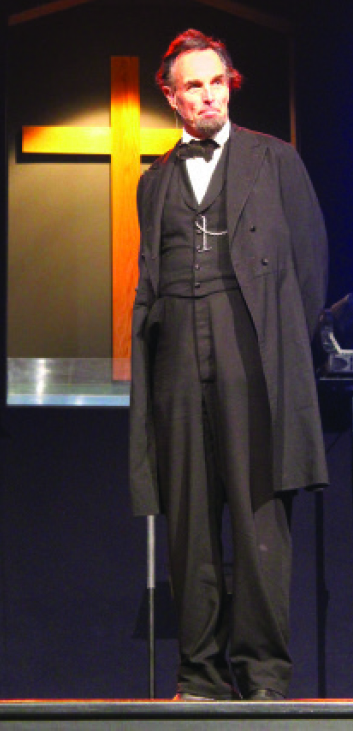
Fritz Klein, Abraham Lincoln interpreter

Jesse Webster’s church has a big dream. Webster, the young, bivocational pastor of Sugar Camp Baptist Church near Mt. Vernon, wants to purchase a large church facility in a different part of town and relocate his congregation to the new neighborhood. His church is on board and ready for the massive shift in direction. They sense God leading them this way.

“God began to burden our hearts for a people he wanted us to reach,” Webster said at the IBSA Annual Meeting Nov. 8. He once thought their historic building was the one thing his church wouldn’t be willing to give up. But, Webster said, “Where we were was hindering us from following God.”

The pioneering spirit of Sugar Camp and more than 200 other IBSA churches was on display at the Annual Meeting, held this year at First Baptist Church in Maryville. Webster joined IBSA Executive Director Nate Adams for a Wednesday evening service dedicated to the steps churches must take in order to reach our Illinois mission field with the gospel.

The vast spiritual need in Illinois, where at least 8 million people do not know Christ, was communicated most poignantly by the words of the state’s most famous pioneer. Delivered by renowned interpreter Fritz Klein, the wisdom of Abraham Lincoln echoed with new resonance in 2018, the year of Illinois’ bicentennial celebration.

“We are now surrounded by critical circumstances, well fitted to test our national faith. Indeed, to test our own individual virtue,” Klein said as Lincoln. In a presentation drawn almost entirely from Lincoln’s writing and speeches,

Klein brought to life the words of a President who cited Scripture and talked about faith more often than he is credited for today.

A century and a half after they were first spoken, Lincoln’s words imbued the meeting with a sense of urgency. “We’re going through a trial, and this fiery trial through which we pass will light us down, either in honor or dishonor, to the latest generation,” he said. “We shall nobly save, or meanly lose, this last best hope on earth.

“We cannot escape history.”

It’s that urgency that has compelled churches in Illinois to embrace a pioneering spirit, which doesn’t always guarantee success, but meets critical circumstances with determination, creativity, and faithfulness to the task.

“I don’t know if it will work,” Adams said of Sugar Camp’s plans. “But that’s what makes it pioneering spirit.”

Adjustments worth making
At the center of the Annual Meeting were four “Pioneering Spirit” challenges churches have embraced over the past year. At the 2017 gathering of Illinois Baptists, IBSA set a goal for at least 200 churches to embrace one or more of the challenges. At the final tally, 220 churches committed to go new places, engage new people, make new sacrifices, or develop new leaders.

When a church pursues that kind of spirit, they often have to make adjustments, said Tom Hufty, pastor of FBC Maryville. Preaching the annual sermon to close the meeting Nov. 8, Hufty used an acrostic to highlight the steps needed to make those adjustments:

A: Check your attitude
D: Make wise decisions
J: Jesus is at the center of our adjustments
U: Understand your enemy is a spiritual one, not flesh and blood
S: Submit to God regardless of your preferences
T: Trust the Lord

Hufty used Philippians 2:5-11 as a backdrop for his message, calling his listeners to the attitude Christ showed when he humbled himself for the sake of his mission. Some adjustments we look forward to, Hufty said. Others, not so much. But when the prize is valuable, the adjustments required are worth making.

“We have someone to value,” he said. “His name is Jesus. He’s in the middle of all our adjustments.”

As churches seek to advance the gospel, there will be growing pains, Adron Robinson preached in his president’s message Wednesday afternoon. The IBSA president and pastor of Hillcrest Baptist Church in Country Club Hills described the early church’s struggle with division—“growing pains,” he called them.

Acts 15 finds the early church in the middle of a major dispute. Some leaders were teaching that the Old Testament law of circumcision was required for salvation. The line they drew separated Jews from Gentiles, and diluted the new covenant established by Christ’s death the cross. The leaders were feeling superior because they had been chosen by God. They were the gatekeepers.

These “growing pains” in the early church had to be resolved because of the urgent need to get the gospel to more people, Robinson preached. Growing pains in churches today often result in racism, in division, in one group believing they’re superior over another. Our modern-day growing pains need resolution too, for the sake of the gospel.

“Salvation has never been about race, but it’s always been about grace,” he said. All believers in Jesus Christ have received the same grace—that’s why we should receive one another.

“It is amazing grace that saved wretches like us. It is amazing grace that God allows each of us to participate in the Great Commission to reach the world with the gospel,” Robinson said. “Let us grow in grace, so that we can endure the growing pains and preach his great gospel.”

Celebrating together
In his report to messengers at the meeting, Adams shared six highlights of the past year, beginning with a new enthusiasm for baptisms. Through the One GRAND Sunday emphasis last April, IBSA churches baptized 671 people. Youth Encounter, IBSA’s annual evangelism conference for students, saw a 32% increase in attendance over last year, Adams said, and 62 people received Christ at the event’s first four locations.

Through leadership development processes, IBSA has trained almost 7,000 leaders representing 500-plus churches. And in the area of Cooperative Program giving, Adams reported, Illinois has been sending more than 40% of CP gifts to the national SBC for decades. The current ratio is 56.5% for missions and ministry in Illinois, and 43.5% to the national SBC, ranking Illinois the 12th highest among 42 state conventions.

Adams and IBSA also recognized several individuals who have achieved ministry milestones:
• Becky Gardner, who, as chairperson of Southeastern Seminary’s trustees, is the first female chair of a seminary board;
• Phil Miglioratti, recently retired after 18 years as IBSA’s prayer ministries consultant;
• Dale Burzynski, who is celebrating 50 years as pastor of Ina Missionary Baptist Church; and
• Sandy Barnard, who will retire in January after more than 33 years at IBSA, most recently as executive administrative assistant.

Illinois Baptist Children’s Home and Family Services is celebrating its centennial anniversary this year. To mark the milestone, Adams presented BCHFS Executive Director Denny Hydrick with a $10,000 check during the BCHFS report.

In other business, messengers to the Annual Meeting:
• Re-elected Robinson as president, along with his three fellow officers who served IBSA last year. Adam Cruse, pastor of Living Faith Baptist Church in Sherman, was elected to a second term as vice president. Robin Mayberry of First Baptist Church, Bluford, was re-elected to serve as recording secretary, and Sharon Carty of Emmanuel Baptist Church in Carlinville was re-elected as assistant recording secretary.
• Adopted a budget with a Cooperative Program goal of $6.2 million.
• Approved changes to the IBSA Constitution presented for a second reading at this year’s meeting, and heard a first reading of proposed changes that include adding a nepotism clause to the BCHFS and BFI bylaws, mirroring wording currently in the IBSA Constitution.
• Welcomed 11 new churches affiliating with IBSA: Collinsville Community Church; First Baptist Church, Orion; First New Bethlehem Baptist Church, Chicago; Garden of Peace, Chicago; Grace Church, Metropolis; Harvest Bible Chapel, DeKalb; Iglesia Bautista el Calvario, Elgin; Manito Baptist Church; New Zion Baptist Church, Rockford; Real Church, Chicago; and Redemption Hour Ministries, Romeoville.

The 2019 IBSA Annual Meeting is Nov. 6-7 at Cornerstone Church in Marion.

– Illinois Baptist Team coverage

Rest and peace

Lisa Misner —  November 19, 2018

Effective ministry

By Nate Adams

The weeks leading up to and including our IBSA Annual Meeting are probably the busiest and most demanding of the year for me. I’m always relieved when it’s all over, and very ready to head home for some rest and peace. This year, however, I drove directly from that fun and challenging meeting to the funeral visitation for a relatively young pastor.

Driving home afterward, both the stress of the day and sorrow of the evening collided in my thoughts and emotions. I had just challenged hundreds of pastors and church leaders to a “pioneering spirit” that would go new places, engage new people, make new sacrifices, and develop new leaders. This wonderful pastor had been engaged in all those—church planting, evangelism, missions giving, and preparing tomorrow’s missionaries and pastors.

Yet I had just looked into the eyes of his grieving family and friends. And I knew him and his situation well enough to know that health and stress factors played a role in the timing of his life’s end. I found myself wondering if I shouldn’t personally invest as much time encouraging pastors and leaders to guard their health and prioritize their family as I invest challenging them to do more in ministry.

Effective ministry over the long haul requires that we take care of ourselves.

So, as the holidays approach again this year, a time when pastors and leaders are especially vulnerable to stress, exhaustion, and even depression, let me remind us that effective ministry over the long haul requires that we take care of ourselves, physically, mentally, emotionally, and spiritually. Here are four ways pastors and leaders can do that.

First, we can believe God’s Word and ask him, directly in prayer, to guard our hearts and minds with his peace. The Bible says quite plainly in Philippians 4, “Don’t worry about anything, but in everything, through prayer and petition with thanksgiving, present your requests to God. And the peace of God, which surpasses all understanding, will guard your hearts and minds in Christ Jesus.”

Second, we can take care of ourselves physically. No matter how much we feel has to be done, no matter how many demanding people are in our lives, there is always time for rest, for exercise, and for recreation.

Third, we can watch out for one another. Sensitive leaders in congregations can watch for signs of stress or poor health or depression in their pastor and come alongside to help. Pastors can check in on other pastors. Regular accountability meetings with another trusted leader are a great way to keep your health from spiraling downward.

And finally, many pastors could benefit from meeting with a trained counselor. Our friends at Baptist Children’s Home and Family Services now offer six free counseling sessions for both pastors and pastors’ wives, through their Pathway Counseling ministry.

These licensed, Christian professionals will listen and help you work through personal concerns and a plan for the future, all from a place of grace and confidentiality. Counseling is available at a dozen different locations across Illinois, and can begin with a simple phone call to (618) 382-3907.

Some of the most comforting words Jesus ever uttered are recorded at the end of Matthew 11 when he said, “Come to me, all of you who are weary and burdened, and I will give you rest. Take up my yoke and learn from me, because I am lowly and humble in heart, and you will find rest for your souls. For my yoke is easy and my burden is light.”

Ministry is challenging, and being a pastor or church leader can be stressful, even depressing, if you make the mistake of trying to carry its burdens alone. As you enter this busy holiday season, may you also find the rest and the peace you need to pioneer for the long haul.

Nate Adams is executive director of the Illinois Baptist State Association. Respond at IllinoisBaptist@IBSA.org.

What voters value

Lisa Misner —  November 5, 2018

Evangelicals choose issues over candidates

Vote Yeah

With a day to go before the U.S. mid-term election, new research may shed light on how evangelicals will vote. The Billy Graham Center Institute at Wheaton College and LifeWay Research in Nashville, Tenn., released an extensive study in October on how evangelicals voted in 2016, and how they feel about their decisions today.

The study explored the voting habits and political motivations of three groups of Americans: evangelicals by belief, self-identified evangelicals, and those who are not evangelical by belief or self-identity. (Evangelicals by belief are those who hold to four key theological statements developed by LifeWay Research and the National Association of Evangelicals.)

Among the findings: 53% of evangelicals by belief characterized their vote in the 2016 presidential election as being for a candidate, while smaller percentages said they cast their vote against Hillary Clinton (18%) or Donald Trump (15%). That only half of evangelical voters said they voted for their candidate in 2016 led researchers to conclude that evangelicals are “more issue-oriented than candidate-focused,” Christianity Today reported.

“I see no reason that focus on issues won’t be repeated next month,” said Ed Stetzer, referencing the Nov. 6 election. The executive director of the Billy Graham Center Institute detailed the research in a press release. “In 2016, many evangelicals chose to look past a candidate as an individual to vote for a specific issue, platform, or party a candidate represented, seeing the candidates more like objects of representation than as individuals whose values and ideals fit theirs.”

According to the research, two-thirds of evangelicals by belief agree committed Christians can benefit from a political leader even if that leader’s personal life does not line up with Christian teaching.

The 2016 election
In the 2016 presidential election, 9 in 10 evangelicals agree they felt strong support for their preferred candidate, with 69% strongly agreeing. And little has changed two years later. Today, 88% agree they feel strong support for who they voted for in 2016, with 70% strongly agreeing.

Among evangelicals who voted, most did so for Donald Trump. More than half of evangelicals by belief (58%) and self-identified evangelicals (53%) cast their ballot for the Republican nominee, while 36% of evangelicals and 38% of self-identified evangelicals voted for Hillary Clinton.

African-American voters with evangelical beliefs overwhelmingly voted for Clinton (86%), while more than three-quarters of white voters with evangelical beliefs voted for Trump (77%).

Around half of younger voters with evangelical beliefs cast their ballot for Clinton—47% of those 18 to 49. A majority of voters 65 and over who have evangelical beliefs voted for Trump (72%).

The survey also measured the issues at play in the 2016 presidential election. Both evangelicals by belief and self-identified evangelicals said an ability to improve the economy was the most important reason for voting the way they did, followed by positions on health care and immigration.

Few evangelicals by belief (5%) and self-identified evangelicals (4%) said abortion was the most important issue in deciding their 2016 vote. And 7% of evangelicals by belief and 6% of self-identified evangelicals chose likely Supreme Court nominees as the most important reason.

Working across divides
Most evangelicals by belief and self-identified evangelicals say the 2016 election brought to the surface some underlying divisions among Christians. Yet, most evangelicals also believe someone in the opposing party can be a devout Christian.

When evangelicals encounter someone using biblical beliefs to justify political views that are opposite of their own, few question their political opponent’s faith. Evangelicals by belief are most likely to say they are hopeful they can find common ground biblically.

“Jesus is not coming back on a donkey or an elephant,” said Stetzer. “We have to acknowledge that people vote for different and complex reasons and that Christians can differ on politics and agree on the gospel.”

– From LifeWay Research, with reporting by Christianity Today

By Andrew Woodrow

YE 2018 Marion

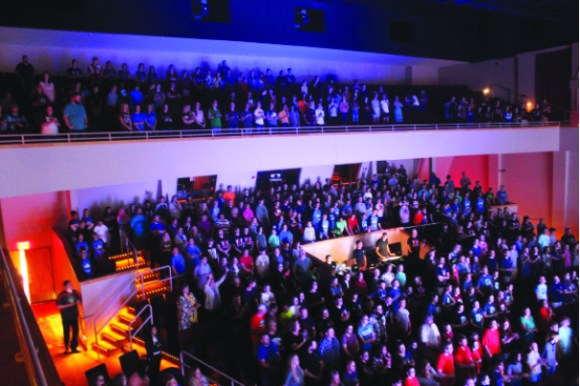
Hundreds of students and leaders gathered across Illinois in October for Youth Encounter, IBSA’s annual evangelism conference for students. In Marion (above), Decatur, and two sites in Chicagoland, almost 1,400 attenders heard from speakers and worship leaders who encouraged them to keep going in their faith, even as they face unprecedented challenges from the culture around them

For young Christians, following Jesus can be a lonely pursuit. Especially in today’s pressure cooker culture. It’s overwhelming, said student pastor Mark Davis, when young people have constant, instant access to information—and much of it beyond their years.

In that environment, discovering and developing your faith can be difficult. It’s easy to feel alone. At Youth Encounter, IBSA’s annual evangelism-focused conference for students, young believers have an opportunity to escape societal pressures for a while, and fully engage in worship with hundreds of other students like them.

They leave the conference—held this year in five locations around the state—better equipped to live out their faith and share it with the people around them.

Encouraged, emboldened
At Youth Encounter, middle school and high school students are led in worship by up-and-coming Christian artists, and inspired and challenged by some of the top student ministry speakers in the country.

But perhaps the greatest encouragement students receive from the conference is knowing they’re not alone.

“Oftentimes, the students feel that if they talk about their faith or visibly live it out, they’re going to be abandoned,” said Davis, pastor to students at Murdale Baptist Church in Carbondale. “Youth Encounter gives them a chance to see they’re not alone. And seeing there are other students in their area, not just a handful but hundreds of them, helps encourage and embolden their faith.”

For the first time this year, Youth Encounter events were scheduled in five locations across Illinois. Nearly 1,400 students and leaders attended the first four conferences, including sites in Decatur, Marion, and two in Chicagoland, and 62 people have given their lives to Christ. The final Youth Encounter conference for 2018 will be held Nov. 11 at First Baptist Church in O’Fallon.

https://player.vimeo.com/api/player.js

To students like Jade Nappier, Youth Encounter is a break “from the stress during the school year that can be hard to find at church.” Nappier, a student from First Baptist Church in Marion, also said Youth Encounter has helped her discover she’s not alone in exploring her faith, motivating her to “be the Christian I want to be.”

Selena Petrowich from Third Baptist Church in Marion has been coming to Youth Encounter ever since she can remember. Now a senior in high school, she describes how Youth Encounter helped her not feel alone in discovering her faith.

“A lot of people trying to come to Christ feel alone. I know I did. So, having more people around you that you know are exploring their own faith [makes it] definitely easier to share mine.”

Petrowich expressed how moving it is to see school acquaintances at Youth Encounter who wouldn’t otherwise show their faith. “What caught my eye was seeing so many teenagers actually open in wanting to learn about God,” she said. “That’s when you realize, ‘Okay, I can do this too.’ And for me, that was my biggest thing: realizing that not just older people can be interested in worship and in God.”

Changing world, unchanging Word
“One of the great things Youth Encounter presents to the kids is that while the culture is constantly changing, the Word is unchanging,” said Madison Presswood, minister of youth at FBC Marion. Presswood encourages his students to be less concerned with the media and warns them where their attention is kept the most is where their sphere of influence is the strongest.

There is also a need, though, to engage the culture without fear, Andrew Nippert encourages his students. “If a church wants to help their young people survive their culture they’re living in and help them prepare to engage with their culture and be gospel-relevant in their communities, you can’t be scared of the culture or of change,” said Nippert, youth and children’s minister at Third Baptist Church in Marion. “Because the one thing that should never change is God’s Word.”

Amid pressures from the world they live in, students are going to mess up, Nippert said. “But that’s why we work with them. That’s why we minister to them. Because they’re who need the Lord. We all need the Lord in our own way, and we just have to be willing to go to those that are, sometimes, the troublemakers. And give them the One who can lead them out of their troubles.”

Equipped to go out
Youth Encounter helps prepare students to take their faith into the community by exposing them to bands and speakers they can look up to, and by equipping them to live out their faith, despite cultural pressures.

“IBSA does a really good job getting solid speakers that unpack the gospel and the reality of Christ in a way that makes sense to the students’ worlds,” Nippert said. “So then, it’s a lot easier to walk back into their world with Christ at the center of what they’re doing.”
High school junior Seth Lindhorst has already been to the youth conference multiple times. He said Youth Encounter teaches students his age realistic ways to live out their faith “and still be normal.”

One of Lindhorst’s frustrations with societal pressures is the bombardment Christians receive for living a ‘boring’ life, despite attempts to be more involved and have appropriate fun outside the church. “It’s extremely difficult for a Christian my age,” said the student from Third Baptist in Marion. “So, the Christian youth in today’s culture feels pressured into doing things that really aren’t appropriate for kids our age.”

Coming to Youth Encounter, however, encourages him not to back down to the peer pressure.

“When I go back to school after Youth Encounter, I always walk with a jump in my step. It gets me pumped up,” Lindhorst said. “Youth Encounter equips you for the long run and gives guidelines you can use in your daily life. And as I’m singing songs, as I’m listening to the speaker, I’m thinking to myself, ‘How can I change my life to make Jesus’ name look better?’”

For more information about resources and opportunities for students, go to IBSA.org/students.

Pioneering-200-logo-layers-260x300The IBSA Pastors’ Conference and Annual Meeting are November 6-8 at First Baptist Church in Maryville. Find out how to make the most of your time there:

  1. Check out the exhibit hall. See how the IBSA ministry teams can assist your church. Find out what kind of services GuideStone Financial Services provides. Learn about the programs of study Baptist colleges and seminaries offer. Plus, there’s a Baptist Children’s Home and Family Services dessert reception celebrating 100 years of ministry to children and families in the exhibit hall following the Wednesday evening session. Yum!
  2. Network with old and new friends. You’re at a meeting with 100s of other pastors from cities and churches of all sizes, different backgrounds, full-time and bi-vocational, plus some just like you. Take the opportunity to talk with them about what they’ve experienced, achieved, and hope to do. Talk one child of the King to another about how to help and encourage each other.
  3. Go to the Pastors’ Conference dinner on Tuesday. Have some fried chicken, a Southern Baptist favorite, roast beef, backed rigatoni, mashed potatoes and gravy, buttered corn, salad, bread, and dessert. You’ll enjoy food, fun and fellowship Tuesday from 4:30-6 p.m. – all for just $10. Dine again at the church Wednesday evening at the IBSA Annual Meeting and eat dry-rubbed, smoked chicken, topped with cranberry barbecue sauce, pulled pork, mac and cheese, green beans, salad, bread, and dessert for just $12. Reserve tickets online until Nov. 1 at 4:30 p.m. or purchase them at the door.
  4. Welcome new sister churches. Established churches and some that have only recently constituted have gone through the credentials process and will be voted on during the meeting. There are 11 churches asking to join yours in IBSA.
  5. Tweet the Annual Meeting. Or Facebook it, but be sure to use #IBSA2018. Share what you’re learning and what inspires you. See something that you may have missed. Share your selfie with Honest Abe, Abraham Lincoln impersonator, Fritz Klein.

Learn more about the IBSA Annual Meeting.

Lincoln and HomeThe IBSA Pastors’ Conference and Annual Meeting are November 6-8 at First Baptist Church in Maryville. Here’s why you should come:
  1. Participate in democratic process. IBSA is your association. Vote on new board members, budgets, and resolutions (you can even submit one!). Elect association officers and learn how your denomination works.
  2. Be enriched. Hear IBSA President Adron Robinson preach the president’s message and Tom Hufty, senior pastor of FBC Maryville, bring the annual sermon. Be inspired by stories of churches who have embraced the Pioneering Spirit challenges and reports from ministry partners. Enjoy music by worship band Sixteen Cities, and a visit from Honest Abe himself, as portrayed by veteran Lincoln interpreter Fritz Klein. You’ll even have the opportunity to prayerwalk your way through the meeting and find new meaning in why you are there.
  3. Catch the Pioneering Spirit – 200 & Counting. As Illinois celebrates its bicentennial in 2018, we’re inspired by the fortitude of our forbearers, and we’re calling up a new generation of spiritual pioneers today. Find out how your church can join the challenge to 1) Go new places, 2) Engage new people, 3) Make new sacrifices, and 4) Develop new leaders.
  4. Invest in yourself and your church. Attend the Pastors’ Conference, listen to the speakers, and go the breakout sessions. Hear powerful messages from pastors and Bible teachers Darry Gaddy, Noah Oldham, and Matt Crain. Take notes to help you remember important points to bring back to your church and community for growing His Kingdom.
  5. Women’s Ministry. Ladies, you’re not left out. The Ministers’ Wives’ Conference and Luncheon is Wednesday morning and will feature powerful testimonies including a message from author and speaker Mary Mohler, wife of Southern Seminary President Albert Mohler. Come by the Women’s Ministry exhibit for all kinds of sweet treats and resources. Plus, the LifeWay Bookstore will be nearby.

Learn more about the IBSA Annual Meeting.

In the presence of a pioneer

Lisa Misner —  October 29, 2018

Pioneering-200-logo-layers-260x300By Nate Adams

Not long ago, I was invited by the Springfield Convention and Visitors Bureau to represent IBSA at a local event, recognizing organizations that have helped attract business to the Springfield area. IBSA was among that group because, in both 2015 and 2018, we hosted the Midwest Leadership Summit at the Springfield Crowne Plaza, drawing more than a thousand pastors and leaders from thirteen Midwest states to nearby hotels and restaurants.

The recognition event was held at the Abraham Lincoln Museum, and much to our delight, one of the presenters was Abraham Lincoln himself. As each of us were called to the platform, a Lincoln statuette was handed to us by a statuesque, flesh-and-blood Lincoln!

Of course, all of us know that our now beloved sixteenth President has been gone for more than 150 years. Our very convincing “Lincoln interpreter” was an actor named Fritz Klein, who looks remarkably like the historic Lincoln, and whose full-time profession is now portraying him in settings all over the United States.

May we be willing to go new places, engage new people, make new sacrifices, and develop new leaders.

Even so, as I was called to the platform, I found myself feeling a bit in awe of the towering figure who smiled and handed me my little statue. At his insistence, we each paused and posed for a quick photo. And for a brief moment, the warm smile and rehearsed mannerisms of Mr. Klein made me feel as if it were Mr. Lincoln who was pleased with me, and with IBSA.

Shortly after that event, I invited Mr. Klein to come and join us at our IBSA Annual Meeting this November. For one thing, it’s hard to imagine celebrating the Land of Lincoln bicentennial without some nod to Mr. Lincoln. But more importantly, I hope the image and memory of Abraham Lincoln will remind us that he was one of our state’s earliest pioneers, and that we need that pioneering spirit in our churches today.

Pioneers are willing to go new places, engage new people, make new sacrifices, and develop new leaders. Lincoln and his family personified these pioneering qualities, but so did dozens, and then hundreds, and eventually thousands of Baptists, who entered our fledgling state with both the Gospel and the desire to establish new churches.

In the early 1800’s, evangelism, church planting, missions giving, and leadership development were not easy. And they’re not easy in the early 2000’s. Even today, these kinds of missionary endeavors aren’t usually attempted or accomplished by complacent settlers, but by courageous pioneers.

By the time the IBSA Annual Meeting convenes in Maryville November 7-8, we hope to celebrate 200 years of statehood by also celebrating at least 200 Baptist churches who are embracing one or more of these “pioneering spirit” challenges. (Your church can register for these at www.pioneeringspirit.org.) A little more than 180 churches have embraced one or more of these challenges already, and we are hopeful that more than 200 will do so by the end of the IBSA Annual Meeting.

I don’t expect to have the kind of impact on Illinois or history that Mr. Lincoln did. But I do want to be the kind of pioneer that continues to bring both the Gospel and new Baptist churches to the places in Illinois that don’t have them yet. Welcoming new believers into heaven is so much more important than welcoming new business into Springfield. And of course the celebration event will be hosted by Someone so much more statuesque than Mr. Lincoln.

Nate Adams is executive director of the Illinois Baptist State Association. Respond at IllinoisBaptist@IBSA.org.