Archives For November 30, 1999

By IBSA Staff

Illinois Baptist churches celebrated 3,676 baptisms in 2018, an increase of 6.8% over the previous year. The increase is one highlight of the Annual Church Profile (ACP) reports completed by 97% of IBSA churches, a new record high.

Other indicators measured by the ACP reports are leading IBSA staff to focus increasingly on church revitalization and next generation ministry strategies, alongside the priorities of evangelism and leadership development, said IBSA Executive Director Nate Adams.

“We are clearly in a time and a culture, especially here in Illinois, where just having church services is not enough to sustain a church’s health, much less reach the lost,” Adams said. “Churches that survive and thrive in these days are intentionally looking for ways to reengage their neighborhoods, and to provide relevant ministries that can lead to gospel conversations, and invitations into a loving, local community of believers.”

Church plant statsIn 2018, IBSA churches engaged a statewide strategy focused on evangelism and baptism. One GRAND Sunday resulted in hundreds of reported baptisms during the Easter season. (Churches are invited to participate in One GRAND Month later this spring) One of the four Pioneering Spirit challenges, issued in 2017 and adopted by churches last year, also called for a new commitment to evangelism.

“We were encouraged to see baptisms increase by almost 7% in 2018, after four years of gradual decline,” Adams said. “I sense a renewed passion for evangelism among many churches, as evidenced by the 223 churches that committed to “Engage New People” as part of the Pioneering Spirit challenge, and by the 671 baptisms reported during last Easter season’s One GRAND Sunday.”

Missions giving was another area of growth in 2018. IBSA churches gave $5,991,634 through the Cooperative Program (CP), the Southern Baptist Convention’s main channel for financial support of missions and ministry. However, the Mission Illinois Offering, collected annually to support missionaries and ministries in the state, fell by 4.1% to $349,507.

Adams pointed out that while CP giving increased by 1%, 2018 missions giving was still about 10% below its peak levels back in 2009. With that increase, per capita missions giving in churches is actually higher, even though other key indicators, including worship attendance and Bible study participation, were lower last year.

“There simply aren’t as many attenders or givers in church as there were 10 years ago,” Adams said. “Many churches are now finding a need to focus on intentional revitalization strategies, and our IBSA staff is eager to help with those efforts.”

IBSA hosted more than 200 ministry leaders at the Illinois Leadership Summit Jan. 22-23, featuring teaching from experienced church revitalization veteran Mark Clifton. A second summit will be held March 15-16 in Chicagoland, with large-group sessions led by former Chicagoland pastor Jonathan Hayashi and J.J. Washington, a pastor and church revitalizer in Atlanta.

“Holding the Illinois Leadership Summit in Chicagoland allows us to design our conference to match the context of our churches,” said Mark Emerson, IBSA’s associate executive director for the Church Resources Team. “Our guest speakers are two men who have had success developing leaders and growing churches in an urban context like Chicago.”

The Chicagoland meeting is at Brainard Avenue Baptist Church in Countryside and will also include breakout sessions designed to help leaders reach the next level of leadership potential. For more information or to register, go to IBSA.org/Summit.


What churches need

Lisa Misner —  February 4, 2019

By Nate Adams

Mel Gibson and Helen Hunt once starred in a box office hit that bore the simple but provocative title, “What Women Want.” The movie’s premise, of course, is that men can be notoriously oblivious to understanding what women want. But after Gibson’s character receives an accidental shock from a hairdryer, he finds he can hear what the women around him are thinking. And that makes all the difference.

One of the serious take-aways from this romantic comedy is that we would all better understand what others want or need if we would just ask, and listen. None of us can hear one another’s thoughts, and most people are reluctant to talk openly about what they really need, at least until someone asks directly.

That’s one reason IBSA remains committed to an annual survey of churches each fall. It’s our way of asking churches what they really need, and hoping they will tell us, so we can help.

Our annual survey finds we have a lot in common.

Of course, Illinois Baptist churches are diverse, as we rediscover every year. From north to south and large city to rural community, each church’s size, setting, age, leadership, worship style, and culture make it unique, and deserving of individual consideration and attention.

At the same time, we found again this year that a handful of key needs appear consistently in many churches. For example, when asked what kind of assistance a church needs most, evangelism consistently again led the list of responses, followed by leadership development, and then spiritual renewal.

When asked what age groups churches need most assistance trying to reach, respondents consistently say they need help reaching college age and young adults, followed by students or youth. When asked about missions, churches ask for more help engaging in missions opportunities nearby, in Illinois, compared with international or North American mission fields.

We also ask in the survey how churches prefer to receive assistance or communication. Not surprisingly, churches prefer personal contact when possible, followed by e-mail and then phone. And recently, churches’ reported use of digital communications such as IBSA’s website or social media channels have actually slightly surpassed print communication channels, though both are still valued.

Every year we read and digest carefully this input from hundreds of churches. We seek to set our priorities and budget, and even hire and structure our staff, around the needs churches express. Here are two “take-aways” from this year’s survey I would like to communicate to every IBSA church:

First, you are not alone. Your church’s needs and even its frustrations are shared by many other churches. So don’t allow those needs to make you feel isolated. Use them as an opportunity to reach out and connect with other churches and leaders who have experienced the same needs, and who can advise or help.

Call IBSA for a connection or a consultation. Ask us to recommend a church that has found a way to meet the kind of need you have.

Second, choose to face your needs. Don’t just agonize over or lament them. Throughout the Bible, when God sees a need or hears a cry for help, he raises up a person, and that person leads others in a process that meets the need. Just ask Moses, or Gideon, or Solomon, or Nehemiah, or Jesus’ disciples, or the early church apostles. Paul promised the Philippian church, and us, that God would supply all their needs through his own riches in glory in Christ Jesus.

So what person and what process might God use to help meet your church’s greatest needs this year? He actually can read your mind. But he loves it when we admit our needs, and humbly ask for his help.

Nate Adams is executive director of the Illinois Baptist State Association. Respond at IllinoisBaptist@IBSA.org.

Start with ‘One’

Lisa Misner —  January 28, 2019

Baptists mobilize for year-long emphasis

By Meredith Flynn

pajak one

IBSA’s Pat Pajak (left in this IB file photo) will help Illinois Baptists engage with “Who’s Your One,” an initiative to help people share their faith in 2019.

Southern Baptist Convention President J.D. Greear is encouraging Southern Baptists to answer a simple question in 2019: Who’s your one?

The question is at the center of an evangelism and prayer emphasis Greear introduced last year to his own congregation, Summit Church in Raleigh-Durham.

“We asked each member of our congregation to identify one person they could pray for and seek to bring to Christ over the year,” Greear wrote in SBC Life. “The phrase we kept repeating was, ‘Who’s your one?’”

The idea isn’t complicated, Greear continued, but the intentional focus on evangelism worked. Summit Church baptized 700 people last year. Now, Greear is inviting churches across the SBC to participate in “Who’s Your One?” this year.

“Intentional evangelism has always been a defining characteristic of Southern Baptist mission,” Greear said. “And rightly so, because evangelism is the primary tool by which we fulfill the Great Commission.”

He will join Johnny Hunt, the North American Mission Board’s senior vice president of evangelism and leadership, to train associational leaders in the strategy during a simulcast Jan. 31. They’ll also introduce a kit designed to help pastors lead a multi-week emphasis in their churches encouraging every member to become more focused and intentional about evangelism.

“Associations have always served as a valuable partner in cooperation, mobilizing churches together,” Greear told Baptist Press. “It only seemed natural for every association in the country to work together.” There are 1,000-plus local associations, or networks, of churches across the SBC.

Prayer is at the core of the emphasis, said IBSA’s Pat Pajak, associate executive director of evangelism. “Every Illinois Southern Baptist is encouraged, challenged really, to begin praying for one person in 2019. As they pray for that person, we believe the Lord will begin to touch their heart to witness to them. We believe God will open an opportunity to share their testimony and a gospel conversation, allowing them to present the gospel sometime in 2019.”

He has used the phrase “each one reach one” to describe a one-by-one strategy to reach people with the gospel. “Who’s Your One?” is built on the same idea. There are more than 8 million people in Illinois who haven’t trusted Christ, Pajak said. It’s an overwhelming number, but strategies like “Who’s Your One?” could have a huge impact.

“There are 114,359 resident members in IBSA churches in Illinois,” Pajak said. “Can you imagine the impact we could have on our state if each active church member began praying daily for a relative, friend, neighbor, or coworker, and then looked for an opportunity to share the truth about the death, burial, and resurrection of our Savior?”

For more information about evangelism training, resources, and this year’s “Who’s Your One?” emphasis, contact Pajak at (217) 391-3129 or PatPajak@IBSA.org. You may also visit gospelaboveall.com to register and receive additional information about “Who’s Your One?”

Dr. King’s mountaintop

Lisa Misner —  January 21, 2019

By J.D. Greear

mlk day 2019

Our Declaration of Independence put forth a lofty ideal about the equality of races, one of the most eloquent and profound any government had ever made: “We hold these truths to be self-evident, that all men are created equal.” Yet many of the framers would return home to their slaves.

Our country has always had high aspirations of equality, but we’ve never been able to achieve them. Not during the century of our birth, when imported African slaves were bought and sold as subhuman property. Not after the Civil War, when Jim Crow laws kept newly liberated African Americans from the full rights of citizenship. Not today, when there are still disparities between the black experience of America and the white experience.

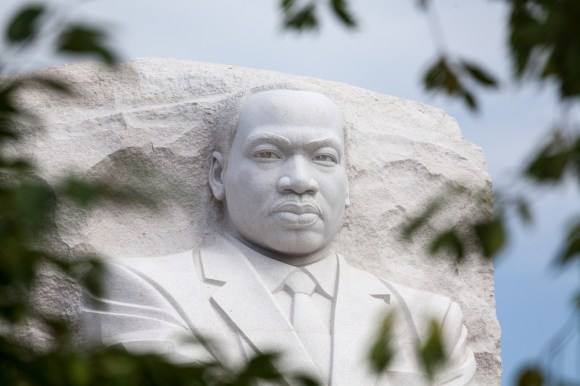
Sometimes I get discouraged with our lack of progress. But when I listen to the words of Dr. Martin Luther King Jr., I don’t hear the voice of defeat or discouragement. I hear the voice of someone who has seen something — something that, in God’s power, is possible; something God wants to give.

The mountaintop is where we see the world as God meant it to be, the world that Jesus died to recreate.

“We’ve got some difficult days ahead,” Dr. King said. “But it really doesn’t matter with me now, because I’ve been to the mountaintop. And I’ve looked over. And I’ve seen the Promised Land.”

The mountaintop is where we see the world as God meant it to be, the world that Jesus died to recreate. Multi-racial harmony is a preview of God’s eternal Kingdom, and God wants to display it first through His church. What our society has been unable to produce through its laws, God creates through the Gospel.

The Gospel teaches us that all men are created equal because they are each alike, made in the image of God. All races suffer from a common problem of sin and look toward a common hope in Jesus. The Gospel creates a new humanity, a redeemed race made up of all colors, in Christ’s image. God created the races to display His glory like a multi-splendored diamond, and we ought to see that glory first reflected in the church.

Dr. King looked ahead and boldly declared that God’s desire for racial harmony was possible. As we look to our future, would you join me in asking God to give us the courage to speak — and live — a similar word of counter-cultural, racially diverse, bold and unified faith?

I believe that God has appointed this moment in the world for the church to rise up and demonstrate the unity that the world searches for in vain. From that mountaintop we continue to dream; toward that promised land we continue to strive.

J.D. Greear is president of the Southern Baptist Convention and pastor of The Summit Church in Durham, N.C. This article first appeared at BPNews.net.

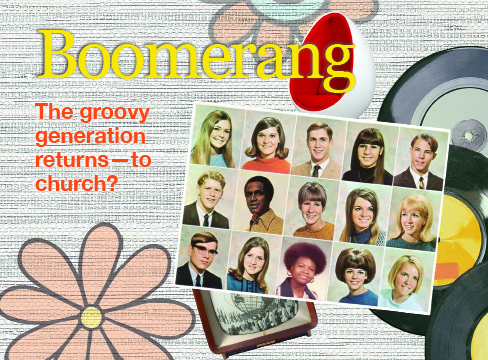
The generation that changed everything is changing its mind. Growing numbers of Boomers are interested in church again.

By Meredith Flynn

boomerang

The Boomers are coming! The Boomers are coming! Thom Rainer exclaimed as he reported new research showing that one-in-five Baby Boomers are more interested in spiritual things than they were earlier in their lives. One-in-five Baby Boomers represents about 19 million people, the president of LifeWay Christian Resources noted—presenting the church with a huge opportunity for growth and new ministry.

But the trend also means an increase in needs—for evangelism, discipleship, and intentional relationship-building. Many Boomers aren’t coming back to church as fully-formed Christians ready to participate in outreach ministries. They have questions. They can be skeptical.

Chaplain Matt Crain led a multi-generational church in southern Illinois before becoming a chaplain at Shawnee Christian Village in Herrin. At his church, Crain said, it was the Boomers who acknowledged, “I’ve been out of church for 20 years. And I’ve got a friend that said I really ought to try this.

“But I want you to know, pastor, I may not be back.”

Boomers may not be coming back to church in big waves yet, Crain said, but they have renewed interest and “they want to see if anything’s changed.”

The children of the 60s who fought hard for social change are also held responsible for the  ballooning the national debt. They’re “tanned and healthy and living way past average life expectancy,” Philadelphia Magazine reported. They also face financial and health crises avoided by the generation before them, Crain said.

“There is just under the surface an undertow current of ‘Wow, I see my own mortality now, and my health is beginning to fade,’” Crain said. “Am I going to have any legacy? Will it matter that I was here?”

Helping Boomers answer those questions is the church’s challenge—and an historic opportunity.

Prodigal generation
Boomers fill an interesting middle ground in American culture. Most were raised with a foundation of values straight out of Mayberry. But the tumult of their formative years took them far away from the comfort of Aunt Bea’s kitchen. In ways physical and spiritual, they moved away from what they knew as children, and raised their own families (which many started later in life than their predecessors) with new values.

But as they reach the later stages of their lives (the first Boomers turned 65 in 2011), they’re thinking about what really matters. And in some cases, they’re returning to a form of the faith they were raised with—although it may be more about personal spirituality than organized religion.

“We have seen some Boomers thinking more about eternity and about what really matters most in life,” said Doug Munton, pastor of First Baptist Church in O’Fallon. Boomers have the same spiritual needs as other generations, he said—a personal relationship with God through Christ, forgiveness of their sin, and meaning and purpose for their lives.

“They want to know what matters most deeply and how they can find that,” Munton said.
The research that showed Baby Boomers might be returning to their spiritual roots highlighted three reasons for the shift: more time on their hands, a realization of the brevity of life, and an awareness of life’s fragile nature. There are currently more than 70 million Baby Boomers, but data from the U.S. Census Bureau shows the group will shrink to 16.6 million by 2050.

It’s in this environment that the church can help meet practical needs of Boomers, as well as spiritual ones, Crain said. The simple things a church does to help a Boomer improve his or her quality of life can build relationships that can lead to gospel conversations. Encourage physical health, diet, and exercise, Crain suggested, or offer to take someone to a doctor’s appointment.

And when Boomers do come to your church, he added, they may be surprisingly nostalgic. “They are OK with singing some hymns,” Crain said. “They might put it to a new beat and add a couple of instruments…remember, they are children of the 60s.” In other words, don’t forsake “The Old Rugged Cross,” but jazz it up.

Ready to invest
At 62, Pastor Bob Dickerson is on the younger end of the Baby Boomer spectrum. But he identifies with a generation closer to the end of their lives than the beginning, and wanting to use their time well.

“I want to finish well,” said Dickerson, pastor of First Baptist Church in Marion. “I’m not going to accept just ‘doing stuff,’ because I don’t have enough time left to just do stuff.” Dickerson, and many fellow Boomers, want to see results from the things they do. They want what they undertake to matter.

At FBC Marion, retirees minister at the local homeless shelter. They’re involved in Disaster Relief. The church’s JOY choir of 70-80 older adults put on their first Christmas concert this year for an audience of more than 400. (JOY stands for “Just Older Youth.”)

Crain cited North American Mission Board church planting specialists who have noted the similarities between Boomers and their children. “Baby Boomers and Millennials are alike in the sense that they’re concerned with acts of love, kindness, justice, and mercy,” he said. “They want to know: What are you doing for our community? What are you doing for someone who can’t repay you?”

Even before they’re believers in Christ, Crain said, “they will jump into an opportunity to bless someone.” And once they’re in the church, their need for meaningful action is a warning for church leaders. “I can’t just make them ushers,” Crain said. “That’s not going to scratch that itch. They want to know, ‘When are we going to help somebody?’ That’s really important to them.”

My generation, and yours
The sheer number of Baby Boomers makes them a force to be reckoned with, especially for churches tasked with the Great Commission to make disciples of all nations (and ages within them). But they’re not the only generation in need of Jesus. Reaching them may provide churches with new potential for multi-generational worship and discipleship.

“Most of your Baby Boomers long for cross-generational experience,” Crain said. “They may not have learned how to do it, but they want to do it.” He encouraged churches to look for ways to connect people of different generations that are less about programming and more about building friendships.

Boomers are worried about their children and grandchildren, Dickerson noted. FBC Marion encourages opportunities for older adults to interact with youth, and to serve as surrogate grandparents to kids in need of them.

Amy Hanson is the author of “Baby Boomers and Beyond: Tapping the Ministry Talents and Passions of Adults Over 50.” She noted the similarities between Boomers and Millennials (generally, adults born 1981-1996) in an 2017 interview with the National Association of Evangelicals.

“They both care about social justice issues and making a difference with their lives,” Hanson said. “Both have an entrepreneurial spirit and are not afraid to try new things. Both groups are technologically savvy, and both are interested in strong friendships that cross generational lines.

“Focus on these things. Don’t be afraid to put people together and see what happens.”
The potential of a Baby Boomer boom in churches is a reminder of the call to reach all people with the gospel, regardless of age. Especially when presented with so great an opportunity, Thom Rainer urged leaders.

“Please, church leaders, don’t take this information lightly,” he wrote. “I can’t recall a generation in my lifetime potentially returning to church in such numbers.” The opportunities are incredible, Rainer said, “maybe they are groovy.”

To save a life

Lisa Misner —  January 14, 2019

A Michigan church is fighting to prevent abortions, and build lasting relationships with families.

By Grace Thornton

Justin Phillips.jpg

Justin Phillips holds a baby saved from abortion.

Editor’s note: January 20 is Sanctity of Human Life Sunday.

Justin Phillips said it’s the best and worst thing he’s ever done with his life. Every day, he stands across the strip mall parking lot from a door marked simply G-3422. It’s sandwiched between two dollar stores.

Every week, 20 to 30 babies are aborted there.

“We’re out there pleading with moms and dads to have mercy on their child, and we’ll help,” said Phillips, a full-time missionary with ONElife for Life, a ministry of ONElife Church in Flint, Mich.

Since ONElife for Life began in May 2016, dozens of babies that they know of have been saved out of G-3422. And the ministry has grown, said Eric Stewart, pastor of ONElife Church and president of ONElife for Life. They’ve acquired a building next to the strip mall that will be a pregnancy resource center and they’ve been given a bus that will be used as a mobile ultrasound.

They’ve also expanded their reach to conversations outside a second abortion clinic in town.

It’s been slow growth. Stewart’s big-picture goal is for Christians to have a presence outside each of the nation’s 720 abortion clinics. Right now, ONElife for Life is covering two.

Stewart and Phillips have been speaking in churches in recent months trying to awaken a desire to pick up the mantle. When he speaks, Stewart said the first thing he does is ask the church he’s visiting to repent with him.

“For years, I did nothing, but if it’s really murder, then we have to face that reality,” Stewart said. “If someone drove into our town and wiped out an entire kindergarten class every week, we wouldn’t sit idly by and say, ‘It’s not affecting me.’”

The story of the Good Samaritan demands the liability of the bystander, he said.

Stewart said he thinks about it all the time, ever since he heard a story about how one particular church in Nazi Germany would sing louder on Sundays so they wouldn’t have to hear the trains chugging by on the way to the concentration camps.

“We hear that story, and do we not wish that there would have been Christians who went to the point of injustice and said, ‘No, we can’t let this happen,’” Stewart said. “We have our opportunity now. We are living in the American holocaust and we have the opportunity to [speak] in Christ’s name.”

For churches interested in being involved, Stewart and Phillips can provide training in how to start a ministry like ONElife for Life and have conversations with people outside abortion clinics. They aren’t there to protest, Stewart said. They’re simply there to show love and offer mothers the help they need to bring a baby full term.

“We want to equip the church. We’ve learned how to train people to do this kind of ministry—we’ve learned from our own mistakes and would love to pass that along so that people don’t have to reinvent the wheel,” Stewart said. “We’ve thrown our lives into this, and we would love to duplicate it all over the place. We need gospel-saturated missionaries to confront the darkness and abolish the evil of abortion. It really is a life-or-death situation.”

There’s an emotional toll to the ministry of standing at a “modern-day concentration camp,” Stewart said. There at their tent across the parking lot, Phillips and volunteers from the church have conversations with anyone who will talk to them. They offer to adopt the baby or cover any financial needs the parents might have for the baby’s first three years of life. They remind each mother that God knows the baby in her womb.
Sometimes those babies are still aborted.

“But we’re compelled to go because we’re told to go to orphans in their distress, and these children have been disowned by their parents,” Phillips said.

And at least 85 have been saved. It could be more. They only know about it if a tearful mother meets them there on the edge of the parking lot and tells them she’s decided not to go through with it, or if the parents later choose to swing back by and let them meet the baby.

“Every month we have people who come back and say, ‘Hey, I never said anything, but here’s my baby,’” Stewart said. “So we know there’s probably more.”

God is at work there, shining light into the darkest of places, Phillips said. “We just stand there and watch him move. It’s all him. He brings people to us and saves babies all the time.”

One woman told Phillips that she didn’t want to talk to him, but her legs just walked her over there. After talking with him, she chose not to go through with it.

“It’s a battlefield all the time, and it’s an honor to stand there proclaiming a message of hope,” Phillips said. “We do that, and God does the rest. We can’t change hearts, but he can.”

It hasn’t been without pushback. Sometimes the clinic will have people posted in the parking lot to “shepherd” women into the building so they won’t have conversations with Phillips. Other times people have approached him with threats.

But in Christ, Phillips said he knows he goes out victorious already.

“It’s a horrible ministry, horrible to watch it every day,” he said. “But at the same time, to be able to lay down our lives in that way on behalf of Christ and his love for these babies is incredible.”

For more information about ONElife for Life, visit onelifeforlife.org.

Grace Thornton is a writer in Birmingham, Ala. This article is originally from Baptist Press, online at BPNews.net.

What’s trending in 2019

Lisa Misner —  January 7, 2019

Key issues for the Southern Baptist Convention

IB Media Team Report

A season for reinvention
There’s no time in living memory when there have been so many vacancies at the top of key SBC entities. The election of Paul Chitwood to the presidency of the International Mission Board in November fills but one of five vacant posts. Two seminaries (New Orleans and Southwestern), the Executive Committee, and LifeWay Christian Resources are all engaged in president searches right now.

There was a period of turnover after World War II that stretched over several years, and, of course, the Conservative Resurgence that swapped out leaders and philosophies of SBC entities over more than a decade. But this shifting of leadership gears represents the greatest change in the shortest time in living memory.

What is the effect of all that change in executive leadership?

In any organization, changes at the top mean changes in philosophy and style, the departure of some second-tier leaders and rearrangement of others, and—in general—a season of optimistic uncertainty.

People are glad there’s a new leader but unsure where that leaves them, and they are wondering about the new direction of the organization.

Multiply that times five, and the ripple effect is felt across the Convention.

If we consider the last round of changes at the top of the International Mission Board, the North American Mission Board, and LifeWay—and how long it took for the new leaders and their new plans to settle in—the SBC as a whole may be looking at two or three years of choppy water.

Making room at the table
Questions surrounding women in the church came into sharp relief in 2018 on the heels of #Metoo. Southern Baptists struggled through their own version of the movement, resulting in the termination of a seminary president and public investigations of pastors and missionaries accused of sexual abuse. Amid the scandals, women leaders denounced abuse and also prescribed preventive measures for churches and pastors.

In “A Letter to My Brothers” in May, Bible teacher Beth Moore called out misogyny of any kind among believers in Christ. “One of the most demoralizing realizations of my adult life,” Moore wrote, is “Scripture was not the reason for the colossal disregard and disrespect of women” among some key Christian leaders. “It was only the excuse. Sin was the reason. Ungodliness.”

Moore and others, including Texas Bible teacher Jen Wilkin, have called both men and women to more fervent Bible literacy, and to a reexamination of how men and women are called to build the church—together.

“The women e-mailing me regularly are not worried about winning the pulpit,” Wilkin wrote in 2015. “They are looking for leadership trajectories for women in the local church and finding virtually nothing. They watch their brothers receive advocacy and wonder who will invite them and equip them to lead well.”

As the dust settles on an unsettling movement, Baptists and other evangelicals still have questions to answer about what it really means for men and women to be made in the image of God, and treat each other as such.

The Greear Effect
The election of David Platt, then 35, to head the International Mission Board in 2014 prompted this question, but his departure this year means we have to ask it of another young leader, J.D. Greear, instead: What will be the impact of this young pastor on senior leadership in the SBC?

It’s probably too early to talk about his legacy, since he’s only six months into his first term as SBC president. It won’t be until the nominations for denomination committees are made in June that the presumed influence of Greear’s Reformed theology—as implemented by his likeminded peers—will be known. And we can only assume, based on a few comments he’s made, that his reluctance to embrace populist U.S. politics will mean an annual meeting with less public support for the Trump administration.

So far, we have only seen some public statements in support of Cooperative Program, and in November, a challenge to raise giving to the Lottie Moon Christmas Offering for International Missions by $10 million, surpassing IMB’s goal of $160 million. If giving reaches $170 million, Greear has pledged to engage in some kind of stunt in celebration.

The nature of the stunt is unknown, but Baptist Press reports, “suggested stunts include singing a duet with newly elected IMB President Paul Chitwood, arm wrestling Chitwood, performing a Broadway number, taking a pie in the face, and sporting a mullet at the SBC annual meeting.”

Signs are the Greear Effect seems, at this point, more youth-ministry than missional in nature. With four SBC entities still seeking head leadership (LifeWay, Executive Committee, and Southwestern and New Orleans seminaries), perhaps it will be in his second one-year term (if reelected) that Greear really makes his mark on behalf of a younger generation.

Written by the IB Media Team for the 1/1/19 issue of the Illinois Baptist.

The gift of presence

Lisa Misner —  December 24, 2018

By Nate Adams

Not long ago, my wife, Beth, and I were discussing whether or not to try and attend a wedding to which we had been invited. It was a considerable distance from our home and required a couple of nights in a hotel, driving and meal expenses, and at least one vacation day.

Though we both wanted to go, and felt we should, I found myself asking, “I wonder if the couple would rather have the money that we would spend on travel as a wedding gift?”

It’s not the first time I’ve asked that kind of question, and it probably won’t be the last. I remember international missionaries once telling me that a church had spent $50,000 to send a large mission team halfway around the world to serve with them for a few days.

They were grateful for the help and encouraged by the fellowship. But they also shared with me candidly, “We couldn’t help but think how much more we could have accomplished here with $50,000 if they had stayed home and just sent the money.”
Experiences like these underscore the sometimes difficult question, “How much is someone’s physical presence worth?” Or, to state it more casually and commonly, “Shall I go, or just send something?”

And of course, when the question presents itself at the time of someone’s death, it often has the additional pressure of urgency, since there is often little advance notice and little time to make a good decision about going. I still remember fondly and with great appreciation the people who traveled distances to attend my dad’s funeral. And I remember a funeral from almost 40 years ago that I still regret missing today.

How much is someone’s physical presence worth? It’s an excellent, spiritual question to ponder during this Advent season. Could Jesus have just “sent” the gift of salvation, without coming personally? Could he have dispatched someone else to the cross, or was it supremely, eternally important that he be there himself?

I think we miss something incredibly important if we celebrate salvation without celebrating incarnation. On that holy night when the Word became flesh and dwelt among us, he chose not just to be present with us, but to become one of us. Through Jesus, God entered in to our condition not just with sympathy, but with immeasurable sacrifice.

At Christmas, we celebrate God’s love and amazing grace in choosing to become human, in choosing to embrace mortality for the sake of our immortality. How much was the physical presence of Jesus worth? It was worth everything. It was worth our eternal lives.

By the way, eventually my wife and I did decide to attend that distant wedding. We decided to do so after remembering some of the older adults that traveled distances to attend our own wedding. We remembered wondering, at the time, why they went to such trouble. But now, decades later, we remember very few of their wedding gifts. But we still remember their presence.

There’s a worship song that says, in part, “I’ll never know how much it cost, to see my sins upon that cross.” That’s certainly true. And yet I wonder if we don’t reflect more on the gift of salvation than we do the very presence of “God with us” in the incarnation.

As great as the gift of salvation is, that gift is simply an expression of how much God loves us and is willing to sacrifice to be with us, both now on earth and throughout eternity in heaven. The value of his very presence eclipses even the value of his wonderful gift.

Nate Adams is executive director of the Illinois Baptist State Association. Respond at IllinoisBaptist@IBSA.org.

Avoiding Christmas letdown

Lisa Misner —  December 17, 2018

After the gifts are opened, what’s left to celebrate?

By Mike Keppler
Simeon

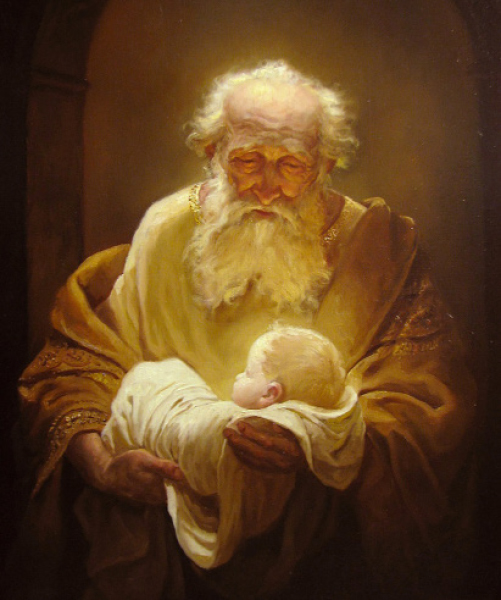
What comes after the waiting is over? Let’s ask Simeon.

Christmas gift-opening for our family is a seasonal experience of merry mayhem! The usual gathering of 16 adults and children is a large-sized event for our family room. We fill up the couches and chairs and use all the floor space as well, but still have to spill over into the dining area to accommodate everyone. I just have to keep remembering that it was my wife, Monique, who wanted this large family. But everyone knows that I, too, consider this one of our greatest blessings.

Monique has tried numerous approaches over the years for this time of giving and receiving. We started out opening only one gift at a time (and still prefer this!), but in these last years we have allowed the grandchildren to open their large Christmas bags of gifts at their own frenzied pace in order to deal with their exuberant impatience. It still seems that after the paper has found its way into the recycling bag, there are some eager ones waiting on the adults who are passing and sharing their gifts with each other. With a pile of unwrapped gifts strewn before them, our “near perfect” grandchildren can be heard pleading and even demanding, “Is that all there is?!”

There is a letdown after the last gifts are opened and all the boxes, wrappings, and bows have been processed. The tree looks lonely without packages teeming under its ornamented boughs. Adults feel relief that it is over but secretly long for the feelings of anticipation they had at the start of the season. The declaration that “Christmas is over” brings a certain disappointment with the acknowledgment.

Luke’s Gospel is rich with details surrounding the first Christmas: angelic announcements to Zechariah, Mary, and the shepherds. It is the latter who are blessed to follow the angel’s directives to Bethlehem. After finding Mary and Joseph, these lowly shepherds are the first to see the baby lying in his manger bed. With great joy that night, they return to their fields and flocks glorifying and praising God on their way.

Most families conclude the reading of the Christmas story with the shepherds’ return, but Luke, the historian, is not ready to wrap up his thrilling account. He wants all his readers to wait because the story of Christmas is far from over. The scene shifts to the temple 41 days later and focuses on two saintly seniors who, with hope-filled lives, are waiting for the coming Christ.

One of these is Simeon, who, with prophetic insights that could have only be revealed to him by God himself, sings out this part of the Christmas story to all who are waiting for more. Within this prophecy, there is a musical message of singing praise, stumbling rejection, the all-important message of salvation for everyone, and even a surprising finale of sadness and sorrow.

The Singing: A sight to celebrate
“I have seen the One who was promised!” must have startled many who witnessed the crescendo of praise from the old prophet. How many who heard the old man sing this out could have thought he was a little tipsy in his prophetic merriment? How could anyone see in this vulnerable baby boy, the son of peasant parents, the Promised Deliverer? These young parents could only afford a humble and modest sacrifice at his dedication. Israel was expecting a prominent and proud warrior who would restore glory to the nation once again. Surely, many observers concluded this baby could not be the son of David, the hoped-for Messiah of God.

Simeon was so convinced by what he saw in the child that he was now ready for the next chapter of a peaceful end to his life. The promise of God was fulfilled. He had seen the Messiah.

What would Christmas be like without music? Musical programs abound during the holidays, rekindling Christmas memories. Luke’s Gospel account has even been put to poetic harmonies. Throughout church history, liturgies have been written and chancel choirs have been singing the canticles of Mary’s Magnificat, Zechariah’s Benedictus, the angels’ Gloria and Simeon’s Nunc Dimittis (Latin for “now let your servant depart”). Community and church choral performances at this season become excellent occasions for inviting seekers to experience these Scriptural songs. More importantly, they allow these friends to hear the good news of the Christmas story.

As the mood swings with this old man’s continued prophecy, Simeon now predicts there will be a stumbling resistance in this child’s future.

The Stumbling: Rise and fall
Jesus was a polarizing figure in his time. Some would gladly welcome the Son of Man, and others would vigorously oppose him. Those rejecting him would say he was not their kind of Messiah. He challenged the assumptions of his enemies. They wanted a revolution of power to overthrow their oppressors and establish an earthly kingdom of dominance and glory for Israel. Jesus would come to rule over human hearts, live his life in selfless service, and die on a cross as a sacrificial lamb for the sins of the world. The opposition would declare, “Not my kind of Messiah!”

We live in a culture that speaks about and even practices spiritual things. However, these beliefs are more aligned with eastern religions such as Buddhism that emphasize self-help. Engaging people readily talk about their own ideas of the spiritual realm, but it is increasingly clear that many of them do not really know what Christianity is all about. It seems that too many individuals today want to design a god in their own image. They vigorously defend the need to love, respect, and accept others, but they are repelled by the God who holds them accountable and confronts their sin. More and more will even dare to claim they do not sin and don’t need a savior! Their stumbling over Christ is our cultural challenge in witnessing.

For centuries, Israel hoped for a Messiah who would deliver them from Roman oppression and restore the glory of their nation. Even Jesus’s disciples zealously shared this idea of Messiah. Many who saw in him hope for the future, however, turned against him when he spoke of suffering and death on a cross. They stumbled over what he was accomplishing in their presence. They refused to believe in him.

Simeon’s prophetic song predicted this child would be a light and salvation to the nations. He would expose the darkness of man’s unbelief and futile attempts to live without God. He would challenge assumptions and there would be resistance. But like Simeon, there would be many in the world who would accept Jesus and follow him into eternal life.

On this occasion of happiness and joy at the prophet’s celebrative praising, there follows a surprising prediction of great grief and sorrow for this young mother.

The Sorrowing: A sword
It is almost ironic that a season like Christmas, so full of joy, could also have a mix of grief and sorrow; however, everyone who has lost a loved one to death can say this is true. There is a letdown and sadness for many at this season when loved ones are no longer with us at family gatherings.

Mary must have been taken aback by Simeon’s painful pronouncement. The coming opposition to Jesus would result in a stabbing grief like a sword piercing her own heart. Mary, who had treasured and pondered many things at Jesus’ birth, no doubt would leave the temple that day thinking deeply about the perplexing prophecy of this devoutly righteous man.

It is sad to think, and reflects a very shallow understanding of Christmas, that for many this season is only a time of gift-giving and receiving. The nation’s retailers project the average American will spend around $900 this Christmas on holiday presents and candies. The Christmas season alone has become a $500-billion-dollar juggernaut of sales for the economy. These businesses with accounts in the red count on Christmas profits to put them back into the black.

It is surely time for Christians to say, “Wait a minute! There is more to this season!” The truth must be told that if this season is only about sharing material gifts, we will feel a great letdown after the credit card bills start coming in January. But there’s good news! The baby Jesus came for a greater reason. He came to forgive our sins through his suffering death on the cross and provide salvation for everyone who will put their faith and trust in him. Unless we are convinced of this, we will miss the whole point of Christmas.

The Saving: A revelation
Many of the Jewish faithful saw in the Messiah a hope only for Israel. They had no problem receiving the blessing of God to make of them a great nation. But Simeon’s prophetic song of salvation was more inclusive and offered a broader invitation to all the nations. This salvation would start in Jerusalem, but that would only be the epicenter. From this locale, the gospel would spread to the ends of the earth. The baby whom Simeon held with humble gratitude this day in the temple would grow up to be the Savior of the whole world!

During this season of giving to international missions, those of us who have received Christ know that we have a global missions mandate to share the good news of Christ our Lord with everyone on earth. The annual Lottie Moon Christmas Offering is a partnership among Southern Baptists to give to make this mandate a reality around our world by funding church planting and the making of disciples. It is projected that there are 2.8 billion in our world who have little or no access to the gospel. For an individual, this task would be impossible, but working and giving together, we can make an everlasting difference in people’s lives.

Some may not see the point of sharing the Christmas story with unchurched family and friends. Yet it remains that when we do get the message and the “reason for the season” to the forefront of our witness sharing, we see that the gospel does impact the lives of those who hear it. Simeon understood what God was doing the moment he saw the infant Jesus. Let’s give the Holy Spirit something to work with in our witness by sharing the good news with someone this season.

Who knows how God will work through an intentional spiritual conversation that simply retells how Simeon had a surprising encounter one day at the temple with a baby boy who would change the world. Through those conversations, we just might convince some friends of the need to accept Christ as Savior. Imagine what they will discover as the Lord blesses and takes charge of their lives each day!

You might find yourself thinking, as you follow Luke’s telling of the Christmas narrative through the part about the shepherds, “It would be hard to top that story!” However, Luke interrupts that thought like a stage manager in a theatre drama and directs the next actor forward to stage right, “Simeon! Tell your story!” And Simeon joyfully sings out, “I can top that! I’ve seen the Sovereign Lord’s Salvation with my own eyes! I’ve experienced him face to face!”

There will not be a Christmas letdown if we who have accepted Christ and do see him at the center of this Christmas season, say to our world, “Wait a minute! There is more to this story! Come. Experience Christ! Worship him! Share him with everyone!”

Mike Keppler served as pastor of Springfield Southern Baptist Church for 26 years. Recently retired, he is enjoying writing and grandfathering.

Sharing Christ at Christmas

Lisa Misner —  December 14, 2018

By Autumn Wall

Christmas. The season of joy. Jesus’s birthday. It’s right around the corner!

As believers, we know the real reason for the season is Jesus. This is the day we celebrate our Savior coming to earth to begin his journey to the cross which will give us freedom from sin and shame eternally. But the chaos of the season can overshadow the real reason we celebrate and distract us from the very thing we were put on this earth to do: tell his story.

This Christmas, will you be intentional to share Jesus everywhere you go? Here are some fresh ideas to keep you focused on the gospel:

• Buy some clear or blank ornaments and decorate them with your favorite Scripture verse. Keep a box of them in your car and give them away to people you encounter—at the gas station, grocery store, your kid’s school program, on a family walk, etc.

• Get a stack of invitation cards from your church (or make some yourself) to invite people to your church’s Christmas Eve service or program. So many people are willing to attend a holiday event who might never go to a “church service.” Who are you inviting?

• Host a neighborhood Christmas tea. Invite your neighbors to stop by your home just to celebrate the season together for a few minutes. Present each attendee with a small gift, card, and/or invitation to your church or small group.

• Take time to train your kids how to tell people about Jesus. It can be as simple as telling their teachers and friends that we celebrate Christmas because God came down to us and made a way for us to know him.

It’s simple in this season to share Jesus, but it’s also simple to forget to share him. How will you share him everywhere you go this Christmas season?

Autumn Wall, online at autumnwall.com, is an author, speaker, worship leader, pastor’s wife, and mom of three in Indianapolis.