Archives For November 30, 1999

pull quote_ADAMS_mayCOMMENTARY | Nate Adams

When our family went out for a celebration dinner recently, it was with a larger than normal group. In addition to my wife, Beth, and me and our three sons, we were accompanied by two grandmothers, two girlfriends, and one new daughter-in-law.

That made our party large enough for a reservation and special table at the local Olive Garden restaurant. And as the host led our tribe of 10 to its table, he asked, “So what are we celebrating tonight?”

We informed him that our middle son Noah had just graduated from college. Our host responded with congratulations, and another question, this time directed at the guest of honor: “So what was your major, son, and what comes next?”

Noah didn’t hesitate to tell the friendly man that he was a Christian Ministry major at Judson University, and that he would begin June 1 as the Youth and Associate Pastor at Calvary Baptist Church in Elgin.

Our host’s final question took me by surprise. “And do I take it that you’re going into the family business?”

I looked again, more closely this time, at our host to see if I knew him, or if perhaps he knew someone in our family, but neither was the case. I guess he just noted the pride in my smile when Noah told him what he would be doing.

That didn’t stop my mom from treating him like an old friend. “Well, I would never have thought to describe it that way, but you’re right. His grandfather, my husband, was in ministry for years. And this is my son Nate, and he’s in ministry. So yes, I guess Noah is the third generation of ministers in this family, and that’s sort of like going into the family business.”

“I thought maybe that was the case,” our host replied with a smile, and then excused himself to leave us in the hands of our server.

That brief encounter left me thinking about what it means for someone to enter “the family business” of church ministry here in Illinois. My son and I certainly aren’t the first. From time to time I meet sons, grandkids, even great-grandkids of ministers here in Illinois who are now serving as pastors or other leaders in IBSA churches.

“Maybe you know my dad,” they often say. Or sometimes, “I don’t know if you knew my grandfather or not. He’s gone to be with the Lord now, but he served churches here in Illinois for years.”

When I meet multiple-generation Illinois Baptists like that, I usually find I’m in a church that is being blessed with a deeply committed leader, one who serves out of spiritual motivation, but also with a deep sense of family heritage. Their eyes twinkle with the idea that their dad or their granddad would be proud of their church leadership. They are building on the foundation of his life’s service. And they are often raising their own children with the hope that they will lead well in the church some day too.

Not every pastor’s child chooses to go into ministry, any more than every farmer’s child or every coal miner’s child or every teacher’s child chooses to follow in their parent’s footsteps. God leads us individually in our life callings, and the world needs devoted Christians in all walks of life. But there is something unique and meaningful, something to be uniquely celebrated, when church leadership becomes the multi-generational pattern of a family’s life.

Our server at Olive Garden that night didn’t know our family personally. But somehow he sensed that what we were celebrating that night was Christian, and church-related, and multi-generational, lasting, and special. And every time it happens here in Illinois, we should all celebrate.

Nate Adams is executive director of the Illinois Baptist State Association.

Nate Adams is executive director of the Illinois Baptist State Association. Respond to his column at IllinoisBaptist@IBSA.org.

Parenting_chart_LifeWayCOMMENTARY | By Russ Rankin, LifeWay Christian Resources

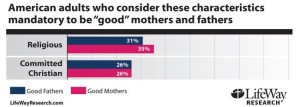
Most Americans believe good mothers and fathers must be loving, supportive and protecting, but fewer see the necessity of parents having a commitment to Christianity or religion, according to a LifeWay Research survey released May 7.

According to the survey, “Loving” is the No. 1 characteristic deemed mandatory for mothers (85 percent) and fathers (79 percent). After “loving,” four of the next five characteristics are shared, including “supporting,” “protecting,” “encouraging” and “involved.”

What Americans don’t necessarily see as mandatory traits of good mothers and fathers are religious convictions, including being a committed Christian.

Parenting_chart_2_LifeWayFor mothers (35 percent) and fathers (31 percent), being “Religious” garnered a slightly higher return than being a “Committed Christian” (26 percent for both mothers and fathers) on the survey of desired traits.

“Clearly Americans who are not Christians themselves would not be expected to value a Christian commitment among parents today,” noted Scott McConnell, director of LifeWay Research. “However, 3 out of 4 Americans indicate their religious preference is Christian, Catholic or Protestant. This means only a third of these people appear to value parents modeling a commitment to Jesus Christ to their children.

“For many who indicate a Christian type religion, this preference simply reflects something they were born with rather than something they feel they must nurture in the next generation,” McConnell explained.

Read more about the survey at LifeWayResearch.com.

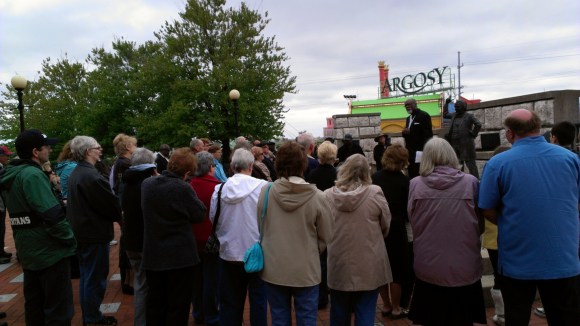
Pastor Danny Holliday leads supporters of traditional marriage in a prayer rally in Alton.

Pastor Danny Holliday leads supporters of traditional marriage in a prayer rally in Alton.

NEWS | Meredith Flynn

As people on both sides of the debate wait for the Illinois House to vote on a bill that would legalize same-sex marriage, Christian leaders continue to gather together to pray the state legislature will vote to protect a traditional definition of the institution.

Danny Holliday, pastor of Victory Baptist Church in Alton, sent out a last-minute call to pastors and church members in the area to gather for a prayer rally April 28. Despite the short notice, he said 60 people showed up at Lincoln Douglas Square to pray for Illinois representatives who could face a vote on same-sex marriage this month.

“We prayed for the individual representatives, that they would want to know the truth and find out the truth, and vote accordingly,” Holliday said. “We believe marriage has to do with God, and we prayed that the people would realize this is a religious issue, it’s a biblical issue, and it’s not an issue just based on people’s feelings.”

Read “Gay Marriage, A Civil Right?” by Southern Seminary President Al Mohler in the next issue of the Illinois Baptist, online by Friday, May 3.

After passage by the Senate in February, the “Religious Freedom and Marriage Fairness Act” narrowly passed through the House Executive Committee, and has since been awaiting vote on the House floor. Several reports indicate the bill is still as much as a dozen votes short of passage, although lobbyists are working to change the minds of representatives who favor traditional marriage. Illinois Governor Pat Quinn recently told The Windy City Times, an advocate for same-sex marriage, that he’s “optimistic we’re within striking distance” on the bill. Quinn has said he will sign it if it reaches his desk.

“Hopefully between now and the 31st of May, Greg Harris, our sponsor, will find a moment to call the bill for a roll call,” Quinn told the newspaper.

Holliday is looking toward the end of May too, when the legislature’s spring session comes to a close.

“We have to the end of May. If we can hold them off, we’ll be OK until the next term. We’re confident because we believe God is in this, but we’re not over-confident, and there’s a lot of work to be done yet.”

Famed musician George Beverly Shea passed away April 16.

Famed musician George Beverly Shea passed away April 16.

COMMENTARY | Eric Reed

There’s an ancient treasure housed in our sanctuary. It’s a Hammond organ with its Leslie speaker, a gift to the church from George Beverly Shea.

Hearing that “Bev” had died April 16, I immediately thought of the old Hammond. Long-timers at the church remember how Shea, who lived nearby, sometimes sang concerts there. On one annual visit, he noted that the church’s electronic organ had seen better days, and since he was getting a new instrument for his home, he would give them his trusty Hammond. Only half as old as 104-year-old Shea, it served faithfully him, then us for half a century. How many times must that squat brown machine with its wonderful tremolo have accompanied Billy Graham’s famed soloist.

When I first heard the organ’s history, I sat on the bench and tried to pick my way through “I’d Rather Have Jesus.” When Shea was a young man still living at home in Canada, he was facing a particular spiritual struggle. His mother sensed her son’s trouble and left a copy of the poem by Rhea Miller on their piano.

“I’d rather have Jesus than men’s applause,” young Shea read when he saw it. “I’d rather be faithful to His dear cause;
I’d rather have Jesus than worldwide fame,
I’d rather be true to His holy name.”

Shea at 20 made his choice and soon set the tune to music. He eventually gained fame not because he sought it, but because he turned to Christ. He could have been a star opera singer, but he chose the ministry instead.

Joining the Graham team in his 40s, Shea was Graham’s featured singer for more than 60 years. He produced 70 gospel albums, won a host of awards, and always sang about Jesus just before the evangelist preached. In Los Angeles and New York and Moscow and London, no matter how famous or contemporary the night’s musical guest, Shea always sang pure gospel in simple bass clef before Graham delivered the message of salvation.

I saw this in person at one of the last crusades. I crashed the choir loft. It was an accident. Arriving at the stadium early, I found myself in a line at the only open door. It was the entrance for the choir. So, intentionally, I went with the crowd.

Wedged between tenors and basses, I watched all the backstage happenings. A few moments before Dr. Graham was to preach, a golf cart brought a spry white-haired man to a special entrance. He climbed up to the pulpit and in an instant, I was singing back-up for George Beverly Shea – me and 2,000 of my closest friends.

“We should sing ‘I’d Rather Have Jesus,’” I said to our worship leader just after the old saint’s passing.

And we did.

Grateful for his musical gifts and for his enduring legacy, we could say from Shea’s example, “I’d rather have Jesus than anything 
this world affords today.”

Eric Reed is a pastor and journalist in Wheaton, Illinois. He is serving Glenfield Baptist Church in Glen Ellyn.

pull quote_MIGLIORATTICOMMENTARY | Phil Miglioratti

About halfway through my 19 years pastoring a small congregation, we had a fresh-wind experience of the Holy Spirit that changed everything.

We had spent years trying to replicate the success I had seen at a previous church. Attendance skyrocketed as people responded to what were then cutting-edge methods we borrowed from the innovative megachurches. But when nothing worked to the degree we hoped, our small church got on its knees.

We soon learned that, until our church developed leaders who championed prayer for each ministry’s strategies and activities, our results will be more about what we can do for God than what God can do through us.

As we had done repeatedly over the years, we changed many things. But only God could guide us into lasting change that would ultimately help the hurting, save the lost, and draw us all into deeper relationship with Himself and each other.

Our worship of God was the first to change, but soon our expectations of the leadership team changed too. Every person who took on a role of serving must exhibit a “first-of-all-pray” default mode when leading our ministries and activities (1 Timothy 2:1).

Until that time, our directors and workers had always prayed, but it changed from “Lord, bless what we have planned in the past hour,” to “Lord, bless us in this next hour that we may hear your voice and discern your direction for us.”

Our leaders soon had the expectation that God would guide our change, not the other way ‘round. Through prayer, we repented from thinking we had authority; we yielded to the work of the Holy Spirit, seeking the mind of Christ, then allowing Him to actually preside.

Letting the Lord lead required several shifts in our approach:

  • Everyone needs to participate. Leaders must to find ways to invite and involve the entire group into the praying, even those who say their spiritual gift seems miles away from intercession.
  • Praying means listening to the voice of the Spirit. Telling God what we desire is not adequate.
  • Leaders become active listeners to what others are praying, because it may be in one of those prayers that the Lord is speaking.

We found that the Word of God became dear to us as we often prayed through Scripture. Participants read verses as they felt led, and we received encouragement or discerned direction. God often spoke, and we weren’t pursuing our change, but His.

The changes in our ministry did not result in meteoric growth, but through prayer we did receive clear and compelling assignments, and a strong sense we were fulfilling our mission in Christ.

Phil Miglioratti heads the National Pastors’ Prayer Network and serves as IBSA’s prayer ministries consultant. This column first appeared in the Summer 2013 issue of Resource. Read it online at http://resource.ibsa.org.

pull quote_BUCHANANCOMMENTARY | Joe Buchanan

Robbie was a young man who grew up in the first church I pastored. His name has been changed but his story is true. Robbie came forward to “give his life to Jesus” and be baptized for the first time during a fall revival service when he was 10 years old. At first, he began to show spiritual fruit and experience the joy of his salvation. But within six months, Robbie started to wonder whether he was really saved.

The next spring, Robbie again came forward to “ask Jesus into His heart.” Once again he showed some initial change, but eventually began to doubt his salvation. When he came to me ask me what to do, I did what I had been taught to do since I was a kid: I shared the Gospel with him and asked if he wanted to pray the sinner’s prayer to be saved. Robbie said yes, and the next week we baptized him.

This cycle continued for the 10 years that I was his pastor. Does this sound familiar?

The sad reality is that Robbie was not the only person going through this cycle in our church. In fact, it’s being repeated in churches all across the Southern Baptist Convention, and has become so familiar that we almost think it’s normal and just part of being a believer. But in his new book, “Stop Asking Jesus into Your Heart,” J.D. Greear writes the problem may actually be the unbiblical language we use in describing how people should respond to the Gospel.

Specifically, Greear notes some ways we couch our response to the Gospel (using phrases like “ask Jesus into your heart,” or “accept Jesus as Lord and Savior,” or “give your heart to Jesus”) are not biblical. He writes, “These phrases may not be wrong in themselves, but the Bible never tells us, specifically, to seek salvation in those ways.  The biblical summation of a saving response towards Christ is ‘repentance’ and ‘belief’ in the Gospel.”

Greear continues, “Repentance and faith are heart postures you take toward the finished work of Christ. You might express the beginning of that posture in a prayer. But don’t make the mistake of equating that prayer with the posture. The sinner’s prayer is not a magic incantation or a recipe you follow to get a salvation cake. The real stuff – that stuff that matters – is the posture of repentance and faith behind the words you speak. The prayer is good only insofar as it verbalizes the posture.”

Make no mistake, Greear is not telling us to stop doing evangelism. In fact, he is inviting us to return to a biblical approach of sharing the Gospel. He reminds us that how we invite people to respond to the Good News of Jesus must be firmly grounded in the Scripture, not in tradition or pragmatism. In doing so, Greear upholds the noblest aspirations of those who hold to the authority and inerrancy of the Bible.

After reading and thinking about this book, it has occurred to me that my presentation of the Gospel is largely at fault for Robbie’s struggles. My intentions were good, but I had inherited an unbiblical and unhelpful method of explaining the response to the Gospel. This is a difficult pill to swallow, but it can go along way toward returning our churches to a healthy method and mindset of evangelism.

If I were to counsel with Robbie today, I would want to make sure that his assurance of salvation is securely grounded in the Scripture. The best way I know to do this would be to take him to some of the Scriptures that demonstrate specific changes that occur as a result of salvation. Does he love the other members of Christ’s family (1 John 2:9 and 3:14-16)? Has he experienced the desire to stop sinful behavior and obey God (1 John 2:29 and 3:6)?

And I would urge him to ask other members of the church if they have witnessed these changes in his life. This combination – Scripture and the people of God – is the best way of helping Robbie and others like him to come to the full assurance of his salvation, or to see the need to repent and believe.

Dr. Joe Buchanan is pastor of First Baptist Church, Metropolis, and author of the upcoming book “Cultivating a Gospel-Shaped Attitude”.

Serena_McDonaldsCOMMENTARY | Serena Butler

When our small mission team arrived in New Orleans, we planned to roof houses for a week. We had packed hammers, squares and other tools, but when we arrived, we were asked to hang insulation instead.

The experience took me back to a time several years earlier, when I started my first dream job – working at McDonald’s. I was 16. With great excitement, I put on my new uniform and my mom drove me to my first shift. Little did I know that much of what I would learn over the next 7½ years would be utilized as I served on mission teams.

Like flexibility. Some days I would be at the grill all day. Others, I worked the counter for a few hours and then switched to fries. Still other days I would learn a new skill. One night, ten minutes before closing time, four buses pulled into the parking lot. Even when you’re tired from a long day, put a smile on your face and serve with graciousness.

That particular lesson has certainly come in handy on mission trips. In New Orleans, we quickly shifted gears and accepted our new assignment graciously. We gathered utility knives, staplers, work gloves and masks and started to work. And we gave individual assignments to each team member so we could operate more efficiently. Some cut the lengths of insulation while others stuffed it in the walls and ceiling before stapling it into place. Others made sure the area was clean of debris. When someone needed a break from their assignment, we rotated.

Being flexible often means relying on your team, because you realize pretty quickly you can’t do everything on your own. My first assignment at McDonald’s was toasting and dressing Big Mac buns. It was fairly simple, but had to be done in exactly 2 minutes and 30 seconds. On command from the manager, place the buns in the toaster. When the buzzer sounded, remove the buns and put on the right amount of sauce, onions, lettuce, cheese, and pickles. When I fell behind, the whole grill team (and our customers) suffered.

Similarly, as we installed insulation that week in New Orleans, we knew we had to finish our task, because a drywall team was coming in behind us.

Each time I go anywhere on mission, I try to remember these hard-earned lessons from my time at the Golden Arches. When I clock in, I want to be ready to do whatever task I am asked to do that day, and play my part on the team.

As the smoke clears

Meredith Flynn —  March 14, 2013

TravelCOMMENTARY | Meredith Flynn

One member of our reporting team describes working for a newspaper when Pope John Paul II was gravely ill in 2004. “My editor called it ‘Pope Watch.’ We knew the world’s eyes were trained on the Vatican, and pope news would exceed in importance anything else we’d put in the paper.”

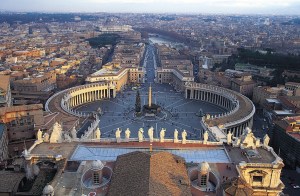
For the past few weeks, Catholics and non-Catholics alike were back on Pope Watch. From Pope Benedict’s surprise retirement announcement, to yesterday’s announcement that Argentinian Cardinal Jorge Bergoglio would assume the post, media outlets have provided extensive coverage of the search for a new leader. Software manufacturers even jumped on cultural wave, creating smart phone apps to help people more closely follow the conclave’s progress.

As the world watched for a puff of white smoke from the Vatican chimney, Southern Baptists also had occasion to consider more closely relationship to the Roman Catholic church. We are deeply divided on key doctrines, but have compatible positions on marriage and family issues and the sanctity of human life. And we share the struggle of protecting the children in our care. The Catholic church’s very public failures have forced us to ask: Are our churches doing enough to secure children’s safety?

We face many of the same challenges. A new study by Barna Research shows that is especially true when it comes to young people in the church.

Barna surveyed young Catholics (age 18-29) with a variety of faith journeys – some still attend a Catholic church, while others admit to dropping out. In fact, 56% of those surveyed say they stopped going to church at some point after attending regularly. Previous Barna research found the dropout rate among Protestants is 61%. A majority, 65%, of young Catholics also admit to being less active in church than they were at age 15, compared to 58% of Protestants.

The numbers point to a common story that seems to transcend denomination or religion: Many young people are leaving the church. Barna’s research also gives clues as to why. Of young Catholics surveyed, 60% say the church’s teachings on sexuality and birth control are out of date, and 57% say mass feels like a “boring obligation.”

Protestant church leaders – including Southern Baptists – also can attest to the tension between youth and experience, between progress and tradition. There’s anecdotal evidence aplenty that suggests denominational leadership isn’t skewing younger as a rule.

Most people of faith want to leave a legacy of belief in God – they want to pass on what is most important to them. As we seek to do so, it’s increasingly apparent that it will take more than smoke and mirrors to show younger generations the truths in the Bible, and to convince them of the value of cooperation. It will require the utmost authenticity, and we’ll have to give young people space to wrestle with issues that come naturally to older believers. It’s essential, and it’s what they’re watching for.

cherry pieCOMMENTARY | On one special day every year, the Illinois State Capitol fills with the aroma of fresh-baked pie. Dubbed “Cherry Pie Day,” the event draws homeschooling families from across the state to Springfield, where they deliver the homemade desserts to legislators. It’s their way to thank lawmakers for their service, and to “sweeten the deal” while lobbying them on behalf of homeschooling interests.

Recently, a different group of volunteer lobbyists headed to the Capitol in support of a traditional definition of marriage. As the temperature outside hovered in the mid-20s, they prayed together under the gaze of a statue of Abraham Lincoln, and then streamed into the building to lobby their legislators to vote no on HB 10, the bill that would legalize same-sex marriage in Illinois.

A few steps from the gathering, a debate rose between a handful of the rally attenders, and two lone protesters who had come in favor of same-sex marriage. The dialogue bounced back and forth, intense but not ugly. Just each side having their say.

The speakers were eloquent, and each spoke directly from his or her experience. These were obviously well thought-out opinions, and deeply rooted. And, while they answered each other so quickly that they couldn’t have been listening very well, it was the very definition of a civil disagreement.

But it was still uncomfortable, especially compared to the rousing unity of the rally. As people walked by the small debating group, most of them kept a safe distance.

This is likely true of most conflicts, and it’s certainly been on display in the same-sex marriage debate in Illinois: It’s easier to express opinions – elegantly, even – with people who agree with you. But there’s nothing as messy as staring eye-to-eye with an opponent who fully believes he or she is right, on the very topic on which you believe they’re dead wrong.

That’s what the group on the Capitol lawn was doing. Both sides stared down the uncomfortable notion of disagreement and faced into the awkwardness of expressing an opinion, when someone was waiting to refute it with their next breath.

As Christians are navigating the difficulties of same-sex marriage in Illinois, surely many have wondered how they can “sweeten the deal” when they talk to their friends and families and acquaintances about the issue. Without the comfort of cherry pie, what can they add to their argument to help others see that it’s a valid view? How can they hope to turn the cultural tide with their words, when there are so many voices saying the opposite?

The answer was on display that day on the Capitol steps: It’s clear-eyed, unwavering, thoughtful, calm, prayed-through debate. And it will require courage and humility and a willingness to examine long-held beliefs. The only chance opponents of same-sex marriage have to add any sweetness to these conversations is to actually have them. Maybe over pie.

pull quote_WARNOCKCOMMENTARY | Mark Warnock

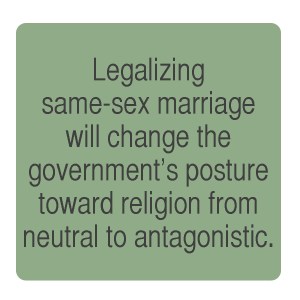
At first glance, the fight about same-sex marriage appears to be over whether to “normalize” homosexuality. But there is a more chilling danger lurking unseen: legalizing same-sex marriage will change the government’s posture toward religion from neutral to antagonistic.

Marriage is a universal, God-given institution, which is set up to provide the best environment for the nurturing of children. Marriage fuses the private interests of romance and sex with the public interest of seeing that children are cared for.

Marriage was not created by either the state or the organized church, but both administer it.  More importantly, both have long agreed on its definition: a permanent joining of a man and woman, which authorizes their sexual congress and makes them responsible to parent any children they might have.

Now, however, our government wants to usurp marriage for its own, and change it to include homosexual couples.

Many Christian churches, including Baptists, are bound by Scripture and doctrines to the original, time-honored understanding of marriage. They simply cannot recognize same-sex marriage as legitimate. Redefining marriage will put government and religion on opposite sides of an unfriendly divide.

The state will soon find it necessary to enforce its new definition of marriage, and to protect those marriages from discrimination. Churches and synagogues that refuse to recognize same-sex marriages will risk the state’s wrath. Imagine if a church secretary enters a same sex marriage and wants to add her partner to her church-funded medical coverage. Or what if a gay couple wanted to rent the facilities for their ceremony? Would the law allow a church to say yes to some non-members, but no to others?

We have already seen the government force individuals and their businesses to recognize same-sex marriage in violation of their own religious convictions. All assurances that religious people have nothing to fear are coming from advocates of same-sex marriage, who view religion as an essentially private matter. The “assurance” they offer is that religious people can think whatever they want about same-sex marriages, but will still be forced in practice to acknowledge and accommodate them.

In this contest, the state has all the power. It can legislate, fine, remove tax exemption, and seize property. If same-sex marriage becomes law, religious people and institutions will find themselves no longer in a neutral, free, protected place in our society.

This may in fact be the sinister goal of same-sex marriage legislation. Under Illinois civil union law, homosexual couples already have all the rights that marriage would confer. The only meaningful difference is that legalizing same-sex marriage will increase the government’s power over religion.

The first American freedom may be about to fade away.

Mark Warnock is associate pastor at First Baptist Church of Columbia, Ill., and is studying for his Ph.D in Christian Philosophy at The Southern Baptist Theological Seminary in Louisville, Ky.