Archives For November 30, 1999

marriage_buttonsTHE BRIEFING | Lisa Sergent and Meredith Flynn

Vote possible during fall veto session

Same-sex marriage could be on the legislative agenda this week as the Illinois General Assembly returns to Springfield for their fall veto session. Meanwhile, people on both sides of the issue plan to make their voices heard at the Capitol.

At issue is SB10, or the Religious Freedom and Marriage Fairness Act, which was passed in the Senate last spring but stalled when it wasn’t called for a vote in the House. Supporters of the bill are calling on the House to vote on it during the fall veto session or in January 2014 when the regular session begins. Due to legislative rules, if passed this fall, same-sex marriages could begin in June 2014. However, if voted on and passed in January, such marriages could begin in February 2014.

In preparation for a possible vote, groups supporting same-sex marriage will rally at the Capitol October 22 for the “March on Springfield for Marriage Equality.” The next day, the Illinois Family Institute (IFI) will host a “Defend Marriage Lobby Day” for supporters of traditional marriage. On the schedule are prayer gatherings in front of the Lincoln statue and inside the Rotunda, and an opportunity to lobby legislators on behalf of traditional marriage.

A major concern of pro-traditional marriage groups is the religious liberty of those who oppose same-sex marriage, should the bill pass in Illinois.

Earlier this month, the Chicago Tribune hosted a marriage equality debate where State Rep. Greg Harris (Chicago), sponsor of SB10, told those gathered he believed the bill protected the rights of religious institutions opposed to same-sex marriage.  But some doubt whether individuals are similarly protected.

Peter Breen, senior counsel with the Thomas More Society, countered Harris by sharing the story of Jim Walder, a bed and breakfast owner in Paxton, Ill., who is being sued for refusing to rent out his facility for a same-sex civil union ceremony. The argument against Walder is that Illinois businesses are governed by the Human Rights Act, passed in 1979, which forbids discrimination based on many factors, including sexual orientation.

The Illinois Family Institute and others argue that the Human Rights Act and SB10 protects individuals from discrimination in regard to sexual preference, but not religious conviction.

Same-sex marriage is legal in 14 U.S states and the District of Columbia. Last month, New Jersey became the latest state to allow same-sex marriage after a state judge ruled that because it already allows civil unions for same-sex couples, the state is illegally preventing them from receiving federal benefits. Same-sex marriage ceremonies officially began in New Jersey October 21.

Other news:

Illinois volunteers join flood relief efforts in Colorado

IBSA Disaster Relief teams have joined with teams from 22 other Baptist state conventions to help Colorado residents clean up their homes after they were damaged by recent flooding.

Veteran disaster relief volunteer Butch Porter called it “the worst devastation” he’s ever seen. “It seemed like a tsunami of mud came down from the mountains and destroyed everything in its path,” he said. Butch and his wife, Debbie, are members of a team from First Baptist Church, Galatia, that served for five days in Lyons, Colorado.

Debbie shared the story of one young man, Brian, who needed help removing the waist-deep mud that had settled in his garage. He and his aunt had had worked for two days shoveling out the mud, but only had a small corner cleared.

“When we pulled up and started getting out of the van he looked deflated,” the retiree laughed. “You could tell he thought, ‘All these old people, they can’t do anything.’”

The team spent two days working at his home, and removed all the mud from his garage. His aunt, a Christian, had been witnessing to him and team members continued along the same track. While he had not accepted Christ by the time they left to return home, Debbie believes he is very close.

“I told him, “Your aunt is right, she’s trying to tell you that you need to get closer to God. You need to accept Him.’ I have a feeling we made a big difference and that his aunt will finish the work.”

Read the full story in the October 21 edition of the Illinois Baptist, online here.

Bad choices dog many of us
Nearly half of Americans feel weighed down by a bad decision they made at some point, according to a new study by LifeWay Research. The survey found 47% of respondents are still dealing with the consequences of a bad decision, including 51% of self-identified born-again, evangelical or fundamentalist Christians. The better news: 84% of those surveyed believe God gives second chances. Read more at LifeWayResearch.com.

Mormon missionaries top 80,000
Relaxed age restrictions on Mormon missionaries have resulted in a drastic increase in the number of people serving around the world, according to a report on The Washington Post’s On Faith blog. The Church of Jesus Christ of Latter-day Saints announced earlier this month that 80,000 missionaries are now on the field, 22,000 more than the previous year. The number of women serving has more than doubled since the age requirement was dropped from 21 to 19 last year. Read more at the On Faith blog.

Moody drops faculty alcohol ban
Moody Bible Institute in Chicago this summer lifted a ban on alcohol and tobacco use by its 600 faculty members and employees. Marketing vice president Christine Gorz told The Christian Post, “Employees of Moody are expected to adhere to all biblical absolutes, but for behaviors that Scripture does not expressly prohibit, Moody leaves these matters to the employee’s biblically-informed conscience.” Students at the 127-year-old school are still required to abstain. Read more at ChristianPost.com.


Happy, Happy, Happy

Meredith Flynn —  October 14, 2013

dv0301212HEARTLAND | Justin Kinder

I recently started a sermon series at my church in the Beatitudes. I first asked my congregation this question: “How many of you want to be happy?” Most of them raised their hands but a few did not. I repeated the question again, just to make sure everyone had heard me. Again, there were still some who did not raise their hands. I was flabbergasted by their response. Doesn’t every person want to have joy and happiness in their life?

Maybe some of them didn’t raise their hands because they were afraid to do so. Others might have been embarrassed by my question. Or maybe there were some who didn’t want others to see that they weren’t truly happy Christians at this point in their lives.

I can understand how they feel.

Believe it or not, there was a time in my life when I was not a very happy or joyful Christian.  When I was in college, I was a grump.  I knew I was born again by the Spirit of God but I didn’t have the happiness I saw in other Christians’ lives. My roommate Luke, for example, was a very happy-go-lucky person. He would often “torture” me by asking me over and over again, “Are you a happy person?” What was his secret to happiness?

I sought the answer in God’s Word, through prayer, and through a book titled, “Happiness is a Choice.” What I discovered was that my happiness was actually quite shallow. My happiness was based on obtaining material possessions, achieving academic status, relationships with people, and the circumstances of life. But those things were constantly changing!  I needed something that could give me happiness consistently. I discovered the joy of the Lord could help me to be happy even in life’s ever changing circumstances.

You see, Jesus preached a happy, happy, happy, message in the Beatitudes. Over and over again Jesus used the word “blessed,” which has as one definition, “happy.” Happy are the poor in spirit. Happy are they that mourn. What a great message to the world and to Christians who are very unhappy!

But the happiness and blessedness Jesus talks about in the Beatitudes isn’t shallow. It has a deeper mean than we usually give the word, according the Reformation Study Bible. “It includes spiritual well-being, having the approval of God, and thus a happier destiny.”

We will never get anywhere in our search for happiness until we give up trying to find it by our own efforts.  The secret to true happiness is found in loving Jesus and following Him all the days of your life. We will not find true joy and happiness until we find it in Him.

Justin Kinder is pastor of Main Street Baptist Church in Braidwood, Ill.

COMMENTARY | Meredith Flynn

On some Wednesday evenings, if I listen really hard, I can still hear it:

Girls in action, girls in action, missions growing and mission action. Praying, giving money, so the world may know that Jesus loves…

The jaunty chorus bounced out of a third floor classroom at our church every Wednesday at 6:45 p.m., heralding the beginning of our weekly GA meeting. It was in GA’s – the aforementioned Girls in Action – that I first learned most of what I still understand about missions.

This year, as the organization created by Southern Baptist Woman’s Missionary Union celebrates its 100th birthday, I’ve been remembering the most important piece of information I received from GA’s: I could do missions.

Every week our teacher, Mrs. Briggs, led us through 45 minutes of good things: international snacks, missionary stories, and the occasional letter from an overseas pen pal. As we prayed and ate and learned and gave, missionaries became more real to us. They were our heroes, yes, but they were also normal people who even wrote us letters sometimes. So, as I grew up and became a normal person, I never questioned that if God so purposed, he could use me as a missionary.

That’s why missions education is still important, because we are far more likely to try the things we think we can do. We GA’s (and the RA’s in the boys’ class next door) heard week after week that there is always something we can do to support the advance of the Gospel. We lost the excuses of “I can’t,” or “The task is too big,” or “I’m just one person.” The ways Southern Baptists cooperate to reach the world are compelling, even to a third grader. And when we saw that we had a place within that cooperative system, the missions potential felt limitless.

Every Wednesday night now as I sit in my community group (where, sadly, we have not once had egg rolls or baklava), I’m reminded of the lessons I learned more than 20 years ago. Mrs. Briggs and her volunteers played a part in my decision to go on my first international mission trip this summer. And their counsel back then reminds me that I’m called and equipped to be on mission, here and now.

Meredith Flynn is managing editor of the Illinois Baptist newspaper.

Editor’s note: Potluck Blogger is a regular feature in the Illinois Baptist newspaper, online here. Leave a comment with your favorite fall recipe.

Layout 1

PRAYER | Frank Page

Editor’s note: This column is part of a Baptist Press series designed to follow the SBC Call to Prayer issued by Frank S. Page (photo below), president of the SBC Executive Committee, to pray for revival and spiritual awakening for our churches, our nation and our world during 2013.

Frank_PageState convention season is here!

I spoke at the Baptist Convention of New York’s annual meeting earlier this week to kick off a full season of state convention travel. My goal is to represent the Southern Baptist Convention to as many states as possible. The reason for this is simple: It is a time when I can touch the lives of a large number of pastors and church leaders.

Our cooperative ministries will only thrive when trust is strong among the churches, associations, state conventions and the SBC. I strive to encourage our state convention leaders in the common work for Christ in which we’re engaged. Trust is built when these relationships are strengthened.

Our state conventions serve as partners in many ways. First and foremost, they are involved in reaching people in their respective states with the Gospel. They also provide specialized ministries to a large number of our churches.

With more than two thirds of our churches facing slow-growth or no-growth challenges, many of our churches are hurting. In most instances, when a church needs help, it is the state convention to which it goes for training, encouragement and assistance across a wide range of needs.

State conventions also serve as partners as the conduits through which our Southern Baptist missions and ministries receive Cooperative Program funds to do the work God has entrusted to them. They have taken significant steps in forwarding a larger percentage of CP funds to these SBC ministries, for which we are grateful. Partnerships developed over the decades remain strong as we join together to do the work of God at every level.

It took me a little over a year in my current role to get to every state convention and visit with the executive directors of those conventions. I have found these men to be deeply called and passionate about winning people to Christ. Interestingly enough, most come from the states they serve and have a deep passion for their home base. They also have a clear vision for reaching the nations with the message of salvation through Jesus Christ, both here and abroad.

I have often said that if we lose the base, we have lost the battle. We need to work as partners in encouraging one another. While we have many, many churches in our state conventions, particularly in the South, we desperately need to understand the lostness that surrounds even those churches.

If there was ever a time when we need to be strengthening churches to reach the lost, it is now. Our state partners are true helpers in that needed ministry.

Join me in praying for the work of our state convention ministry partners.

— Pray for your state convention executive director.

— Pray for the church planting and other ministry specialists employed by your state convention.

— Pray for the ministry entities of your state convention.

— Pray for and participate in the missions initiatives of your state convention.

— Pray for the collegiate ministries in your state.

— Pray for me as I continue my assignment of building relationships and hopefully deepening trust as we encourage one another in the good work of our Lord.

I am thankful for our state convention partners and pray this fall will be a time of deepening resolve and commitment to the work of our Lord.

This column first appeared on BPNews.net.

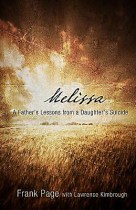
Frank Page, president of the SBC Executive Committee, wrote a book about his daughter, Melissa, his grief after her suicide, and how church leaders can help people living with the deep pain of mental illness.

Frank Page, president of the SBC Executive Committee, wrote a book about his daughter, Melissa, his grief after her suicide, and how church leaders can help people living with the deep pain of mental illness.

THE BRIEFING | Meredith Flynn

Editor’s note: This article is excerpted from the September 30 issue of the Illinois Baptist. The first part of the article headlined The Briefing last Tuesday, but this section takes a closer look at how the church, and specifically church leaders, can minister to individuals and families struggling with mental illness and suicide.

At the Southern Baptist Convention this summer in Houston, mental health and the church was a much-discussed topic, with messengers approving a resolution to “oppose all stigmatization and prejudice against those who are suffering from mental health concerns.” The resolution also called on churches to “look for and create opportunities to love and minister to, and develop methods and resources to care for, those who struggle with mental health concerns and their families.”

When it comes to mental health, “the church has had a tendency to say we’re going to leave that up to the professionals,” said Pastor Hal Trovillion, pastor of First Baptist, Manteno, Ill., and a former youth and family counselor. The problem is that for the most part, those professionals don’t take God into account.

Melissa_book_coverThe church has an opportunity to engage in the critical ministry of offering spiritual help to those in deep pain.

Jesus’ ministry did just that, Pastor James Shannon says. His church, People’s Community Church in Glen Ellyn, has sponsored several support groups (grief, divorce, substance abuse, etc.) and plans to do more in the future. An experienced and degreed counselor, Shannon is dedicated to helping hurting people find wholeness. His mission is to help people transition from “walking wounded” to “wounded healers” so that they can minister effectively to others.

“The point where a person is hurt the most is the point where God can equip them to do ministry, and I think that’s so vital for people to understand.”

The potential for those who have struggled with mental illness to be used in ministry to others with similar stories is encouraging, but the need to alleviate pain is often more pressing. What can churches do now to help people who are depressed and possibly contemplating suicide, and their families?

Frank Page has clear advice for pastors who likely are ministering or will minister to people in deep pain. Teach good theology, help people learn how to control their thoughts, and steer clear of trite advice, he counsels in his book “Melissa: A Father’s Lessons from a Daughter’s Suicide.”

“Stay quick with Scripture but sparing with human philosophy,” writes Page, whose oldest daughter took her own life almost four years ago. Currently serving as president of the Southern Baptist Executive Committee, Page was a pastor for many years and he and his wife, Dayle, raised their three daughters in the church. In the book, which includes a letter at the end of each chapter to those contemplating suicide, he says, “We were not a family whose daughter kills herself.”

Page is using his national platform to help Christian leaders understand the complexity of suicide and mental health issues. First, “be a learner,” he writes. “No one on this side of eternity can fully understand or articulate the complex nature and theological mysteries surrounding the horrible act of suicide nor of the loss of rational thought that typically leads up to it.

“Grow your observations, increase your insights, but don’t place pressure on yourself to grasp it all or to promise the absolute answer to every question.”

At the same time, Page writes, pastors should make themselves more knowledgeable about mental illness. “The church many times has been woefully inadequate in reaching out to persons who either experience mental illness themselves or are dealing with it in their families. …And when we as pastors, not in dismissiveness perhaps but at least in ignorance, give them ‘snap out of it’ advice (or something in that family of faulty counsel), we do more harm than good.

“More than ever – if you intend to serve your congregation well – you need a working knowledge of what causes mental illness and depression and how to assist its sufferers with the best kind of loving assistance.”

Read Religion News Service’s interview with Frank Page here, or watch his interview with LifeWay’s Ed Stetzer.

Senate chaplain likens government shutdown to ‘madness’
In a prayer in the U.S. Senate chamber last week, Senate Chaplain Barry Black asked God to “save us from the madness” of the ongoing government shutdown. Black, a Seventh-day Adventist minister who has served as chaplain of the Senate since 2003, also used words from Psalm 51 in his prayer. “We acknowledge our transgressions, our shortcomings, our smugness, our selfishness, and our pride,” he said. “Create in us clean hearts, oh God, and renew a right spirit within us. Deliver us from the hypocrisy of attempting to sound reasonable while being unreasonable.”

The Washington Post’s On Faith blog ran an article yesterday about the role pride is playing in the federal government’s shutdown. Read it here.

Leaders, scholars remember Chuck Smith“His impact can be seen in every church service that has electric guitar-driven worship, hip casually-dressed pastors, and 40-minute sermons consisting of verse-by-verse Bible expositions peppered with pop-culture references and counterculture slang,” sociologist Brad Christerson said of California pastor Chuck Smith, who died last week. Read Christianity Today’s story on Smith, who helped a generation of “Jesus People” find their faith.

Mississippi church apologizes for racial discrimination
First Baptist Church of Oxford, Miss., decided it’s never too late to right a wrong. This summer, the church nullified a 1968 decision to deny African Americans use of its building facilities and resources. The policy hadn’t been enacted for many years at the church, but it also had never been officially overturned. Pastor Eric Hankins and deacons wrote a resolution to repeal the earlier decision and apologize for it, and Hankins preached on corporate repentance. Read the full story at BPNews.net.

Chris Davis seeks godliness above stats
The Baltimore Orioles missed this year’s playoffs, but first baseman Chris Davis celebrated several individual achievements, winning 2013’s homerun and RBI crowns. “I just want to be known as a godly man,” he said in story on BPNews.net. “That’s more important than any legacy on the field or numbers you leave behind. Read Joshua Cooley’s profile of Davis here.

Music for your Monday

Meredith Flynn —  October 7, 2013

HEARTLAND | If you’re thinking, “I need a pick-me-up this morning,” you’re in luck! Check out this video from Rend Collective Experiment.

Editor’s note: One in five Americans report experiencing a mental illness, but an honest discussion of mental health has long been absent from many churches. Read the Sept. 30 issue of the Illinois Baptist for more on the issue, and how two Southern Baptist leaders – Frank Page and Rick Warren – are speaking out to fight the stigma associated with mental illness.

I’m glad it’s out in the open – at least a bit more than it used to be.

When I served as managing editor for a pastors’ magazine, it seemed that every few years we published an article about clergy depression. Every time we received a slough of e-mails, and a few phone calls. I took those calls. “At least I know I’m not the only one,” pastors would say.

And after some of the longer, darker calls, I responded with my own story.

My mother, the choir director, committed suicide.

I rarely talk about it, even now, and only with those who really need to hear the story. I’ve never typed it, until now. It looks odd on the screen.

Twenty years have passed, but I still wonder how a Christian who spent her whole life in the church, a woman of faith who led me to faith in Christ, could reach such a point of hopelessness. But it happened. After decades-long illness, sometimes physical, sometimes emotional, she lost hope in earthly life.

About three years afterward, I was serving a church as pastor. A deacon took his life. He couldn’t cope with the death of his wife of 50 years; antidepressants couldn’t ease his pain; a shotgun did.

I told his daughter, who had sat with her parents about eight rows from the back for most of those 50 years, my story. We cried. We hugged. We wondered to each other how Christians can lose hope. And we wondered if it could happen to us. God forbid.

I had to preach that dear old deacon’s funeral. I told how he took us seminary students under wing and drove us to nursing homes to preach on Sunday afternoons, how he shared the love of Jesus with lost souls in their last days, and rejoiced when octogenarians finally came to Jesus. But I also had to speak about his own death. That was the first time I dealt publically with the issue of Christians and suicide.

And yes, I do believe that Christians who commit suicide still go to heaven. The doctrine of eternal security is very comforting. “No one can snatch them out of my hand,” Jesus said (John 10:28). I shared that with my congregation. And I tried to offer help as we all asked the inevitable question: “What could I have done?”

Be more willing to talk mental illness. That’s what we all can do. I’m so sorry that prominent Southern Baptist families, the Warrens and the Pages, are suffering the tragic loss of loved ones. But if they can use their national platforms to rescue hurting people, then some good will come from it.

-DER

One in five Americans reported experiencing a mental illness in a single year; one in 10 takes an antidepressant.

One in five Americans reported experiencing a mental illness in a single year; one in 10 takes an antidepressant.

“…The day that I’d prayed would never happen, happened.”

In an interview last month with CNN’s Piers Morgan, Rick Warren recalled standing with his wife, Kay, in their son’s driveway in April, waiting for police to confirm their worst fears – Matthew, 27, had committed suicide after a long struggle with mental illness.

“We were sobbing. We were just sobbing,” Warren said.

The interview was the Warrens’ first since their son’s death, but the couple has been vocal on social media and from Saddleback’s pulpit about Matthew’s life and their grief. They’re also speaking out about the long-held stigma against mental illness in the church.

“It’s amazing to me that any other organ in your body can break down and there’s no shame and stigma to it,” Warren said in his first sermon back at Saddleback after a leave of absence. “But if your brain breaks down, you’re supposed to keep it a secret. …If your brain doesn’t work right, why should you be ashamed of that?”

Following Matthew Warren’s death, his parents created a fund in his name, in part to help develop resources for churches to use as they reach out to struggling families in the community and in the congregation.

There are many people in churches suffering from mental health issues, says Hal Trovillion, a former counselor and current pastor of First Baptist Church in Manteno, Ill. “The thing is that those people tend to feel as though others look at them badly, because of whatever their situation,” he says.

“The church needs to just turn that around. What many of them need is simply love and acceptance and a welcoming heart and help to deal with the issues at hand.”

Read the full cover story from latest issue of the Illinois Baptist and access the e-reader edition here.

Wife of Amish schoolhouse shooter shares hope in new book

Marie Monville’s quiet life crumbled violently in 2006, when her husband shot 10 young girls in an Amish schoolhouse in Nickel Mines, Pennsylvania. Her new book, “One Light Still Shines,” tells her story since that day, with a focus on how God sustained her family.

“Within the eye of the storm, the presence of God came and settled upon me,” Monville writes on her blog, whisperandwonder.wordpress.com. “Although I ‘knew’ God all my life, this moment of desperation propelled me to now KNOW him like never before.”

“One Light Still Shines” was released Monday, September 30, by Zondervan. Read more about on CNN’s Belief blog.

Missionary family trapped in Kenyan mall during terrorist attack

When terrorists seized a mall in Nairobi, Kenya, on September 21, a Southern Baptist missionary couple and their five children were inside. Baptist Press reports International Mission Board missionaries Chris and Jamie Suel and their kids had walked into Westgate Shopping Mall shortly before the terrorists. The Suels separated to shop before the attack began, and were reunited after five harrowing hours. The seige lasted three days and resulted in as many as 200 deaths. Read more at BPNews.net.

Jewish prayer book believed to be oldest ever found

The Green Collection, a biblical archive headed by Hobby Lobby president Steve Green, has identified what their scholars say is likely “the oldest Jewish prayer book ever found.” The manuscript is dated circa 840 C.E. and is in its original binding, the Green Collection reported in a press release. The prayer book will eventually be displayed at a Bible museum in Washington, D.C., scheduled to open in 2017. Read more at ChristianityToday.com.


Are you religious, spiritual or secular? College students weigh in

A new study found college students are pretty evenly divided on how they describe themselves spiritually, ChristianPost.com reports. The email survey was conducted by the Institute for the Study of Secularism in Society and Culture at Trinity College (Hartford, Conn.), whose researchers asked: “In general, would you describe yourself more as a religious, spiritual or secular person?” 32.4% answered “spiritual;” 31.8% said “religious;” and 28.2% identified themselves as “secular.”

The research is based on the responses of 1,873 students representing 27 states and 38 colleges. Read the full story at ChristianPost.com.

pull quote_Kinder13HEARTLAND | Justin Kinder

On January 29, 2007, at about 10:30 at night, our daughter, Melody Anne Kinder, was born into this world. She is truly a miracle and a precious gift from God. Melody changed our lives completely and from the very start, as her parents, we wanted to raise her right. We wanted her to know right from wrong and to be equipped to handle all of the moral and ethical situations she will eventually face as she grows up in this world.

It didn’t take long for these teachable moments to arrive on the scene. Melody is now six years old and we have taught her why it is wrong to lie, cheat, steal, covet, and to throw temper tantrums, just to name a few. We have taught her to tell the truth always, to be loving to all people, and most of all to love God and to put Him first. We have modeled our faith in God in front of her all of her life.

Everything that we have taught her about right and wrong and about God has come straight from the Bible. It is our moral compass in this dark and sinful world that we live in.

When you boil things down and really look at life closely, you will see that there are essentially two opposing worldviews that exist in our culture – one sees God as creator, sustainer, and as the sovereign ruler of everything and the other leaves God entirely out of the picture. The first view is obviously the Christian worldview that we as Christians embrace and the second is what this sinful world embraces.

When you leave God out of the picture, life loses its meaning. Morals are defined by what feels right, feels good, and by what the majority says is okay to do.  But just because it feels good and the majority of people say that a particular sin is okay, doesn’t make it okay. We can’t trust ourselves to know what is right and wrong because our sinful hearts will only lead us astray.

I guess it should come as no surprise then the moral decline and failure that we see in our culture. When you leave God out of the picture, the downward spiral of sin and the pushing of the envelope in what is viewed as acceptable in our society only gets worse.  A prime example of this happened very recently. Miley Cyrus, who for the longest time was known as the good girl, Hannah Montana, recently performed a provocative dance routine on MTV. Our culture responded in two ways: You either were appalled by her dance or you thought it was a great performance.

There is clearly a moral dichotomy at work here.

As a parent of a young girl, my heart goes out to Miley Cyrus and also to all the girls who look up to her. I want them to understand that what she did on that stage was wrong, and not because I said so, but because God and His Word said so. Miley Cyrus is missing that moral compass in her life – Jesus Christ – and I pray that someday she will find Him.  As for my own daughter, I will continue to pray for her and continue to teach her God’s values and precepts that are found in His Word.

The Psalmist said in Psalm 119:11, “I have stored up your word in my heart that I might not sin against you.” (ESV)  And in Psalm 119:105 it says, “Your word is a lamp to my feet and a light to my path.” I want my daughter to hide God’s Word in her heart so that when she is older and sees the world pushing the envelope of sin even further, she will know how to stand for God and for what is right.