Archives For November 30, 1999

Do you know Carol?

Meredith Flynn —  March 10, 2014

Guinea_boats_blogHEARTLAND | Meredith Flynn

Mark Emerson had spent several hours on a boat off the coast of Guinea, looking for the Mbotini people group. It was getting late, and the group would eventually have to turn around. But Emerson had a good reason to find the Mbotini.

They were Carol Stewart’s people.

Before his trip in January, Emerson talked to Stewart about the people group she and her church adopted several years ago. Stewart, a member of Lincoln Avenue Baptist in Jacksonville, Ill., had visited Africa’s west coast. But still, it was surprising how many times
Emerson heard the question:

“Do you know Carol?”

From two missionaries and a local pastor, on the other side of the world. “This Illinois Baptist is known in Guinea because she went there in representation of her church,” Emerson said.

He’s hoping others will follow her example. The International Mission Board is calling congregations to be “engaging churches” who will adopt an unreached, unengaged people
group (UUPG) and send small teams several times a year.

Reaching unreached people groups will require a long-term investment. “This was my first mission trip I’d ever participated in that we didn’t win anyone to the Lord,” Emerson said of
his time in Guinea. Referencing William Carey, he said, “We forget that these hall of fame missionaries of the past spent years before they saw anyone come to the Lord.”

When he joined IBSA’s missions team, Emerson said he had a goal to get as many Illinois Baptists to the mission field as possible. Now, “I’m thinking we need to get the Gospel
where it’s not.”

Read more Africa stories in the newest issue of the Illinois Baptist newspaper, online here.

Ronnie_Floyd_blogCOMMENTARY | Meredith Flynn

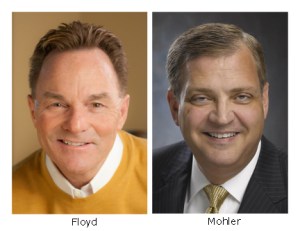
Ronnie Floyd is the first candidate to toss his hat in the ring for the next Southern Baptist Convention president. Although, in keeping with tradition, Floyd’s nominator actually did
the tossing: Southern Seminary President Al Mohler announced last month he will nominate Floyd for the convention’s top elected post at the annual meeting in Baltimore.

No one else has allowed his name to be brought forth so far. This unusual across-the-aisle nomination, and a potential single-candidate race, has several implications for Southern
Baptists:

1. The Calvinism debate doesn’t have to result in a hostile takeover for either camp. Mohler’s well-known and well-documented theological perspective is different from what is known of Floyd’s. In an open letter announcing the nomination, the seminary president and leading Reformed thinker lauded Floyd as a unifier. He specifically mentioned the theology talk that has dominated conversation over the past several years, pointing to Floyd as a leader who can move the SBC toward a common goal of reaching the world for Christ.

Mohler’s nomination of Floyd is likely the kind of unifying event SBC Executive Committee President Frank Page had in mind when he appointed an advisory committee to study how the two “sides” can work together.

2. The generation gap may be narrowing. Mohler has the ear of many young Baptists, as a seminary president and proponent of Reformed theology, whose adherents tend to skew younger. He is in the unique position of being able to steer 30-somethings toward active participation in Southern Baptist life, without being a 30-something himself. His nomination
of Floyd indicates he’s willing to guide young leaders away from a concentration on divisive issues and toward goals we can work on together.

3. With revival as the goal, Baptists are ready to rally around the Great Commission. Current SBC President Fred Luter made revival and spiritual awakening his platform during his two years of leadership, aiming to stem the decline in baptisms. “Fred Luter has led us so well as he has unified and inspired us,” Mohler wrote in his nomination letter. “Our next president needs to unify and inspire us for our next steps together.”

Floyd chaired the Great Commission Resurgence Task Force, which presented a comprehensive strategy in 2010 to push funding to areas of the country (and world) that are less churched and often more urban. More recently, he organized two prayer gatherings to guide pastors and leaders toward personal and corporate revival.

“Pastors believe the Great Commission can be fulfilled in their generation,” Floyd blogged after the prayer meeting in Atlanta. If he’s elected in June, he’ll be charged with communicating that vision to a multigenerational, theologically diverse denomination.

Meredith Flynn is managing editor of the Illinois Baptist.

The_BriefingTHE BRIEFING | Meredith Flynn

Amid much debate, Gov. Jan Brewer vetoed a bill Feb. 28 that would have allowed business owners in Arizona to deny services to same-sex couples based on their religious beliefs. New York Times columnist Ross Douthat wrote over the weekend that media coverage of the bill could signal that with the marriage battle a foregone conclusion, Christians will be increasingly marginalized for their beliefs.

…”[S]uch bills have been seen, in the past, as a way for religious conservatives to negotiate surrender – to accept same-sex marriage’s inevitability while carving out protections for dissent,” wrote Douthat, a Christian. “But now, apparently, the official line is that you bigots don’t get to negotiate anymore.

“Which has a certain bracing logic. If your only goal is ensuring that support for traditional marriage diminishes as rapidly as possible, applying constant pressure to religious individuals and institutions will probably do the job. Already, my fellow Christians are divided over these issues, and we’ll be more divided the more pressure we face.”

Christian leaders debated the Arizona bill prior to Brewer’s veto, while Michigan pastor Kevin DeYoung found counsel in the Book of Revelation. Blogging at thegospelcoalition.org, he recommended Christians look at Jesus’ letters to several churches who were “too cozy with the culture.”

“Granted, the issue in Asia Minor was not baking cakes for same-sex ceremonies,” wrote DeYoung. “We shouldn’t think Revelation 2-3 was written to solve our controversies. But we shouldn’t assume they have nothing to do with our controversies either. High pressure social obligations, rationalizing participation as only an empty gesture, popular teachers urging permissiveness, the threat of social and economic ostracism – sounds familiar. Maybe our problems aren’t so new.”

Other news:

Disney and Scouts face offThe Christian Post reports Disney has told Boy Scouts of America they will withdraw funding unless the organization allows gay troop leaders. Through Disney’s VoluntEARS program, employees can earn cash donations for non-profits they choose, but Boy Scouts will no longer be eligible beginning in 2015 unless the current policy changes. Boy Scouts voted last year to allow openly gay members, but kept its ban on gay leaders. Read more at ChristianPost.com.

Elliff asks IMB Board to find successor
Tom Elliff, president of the Southern Baptist International Mission Board since 2011, asked trustees meeting in February to begin looking for his successor. “[God’s] telling me that this is the time to leave and that if I will obey Him and ask the Board of Trustees to appoint a search team … that is the surest way to ensure a smooth transition.”

He added, “He didn’t say resign and I’m definitely not going to retire, but I do believe that the board needs to be looking for the successor and the minute they find that man…I need to join the ranks of all the other people who are holding up his hand and praying for him.”

Elliff, 70, was elected IMB President in 2011. He has said he will stay in the post until the next leader is named. Read more at BPNews.net.

Former Union Pres. Dockery to lead divinity school in Chicagoland
David Dockery has been unanimously elected as the new president of Trinity Evangelical Divinity School in Deerfield, Ill. “We are overwhelmingly grateful to God for the invitation from the Trinity Board to serve the students, staff, faculty and various institutional constituencies in the days ahead,” said Dockery, who recently transitioned out of an 18-year presidency at Union University in Jackson, Tenn. Read the full story at BPNews.net.

Noah’s pros and cons
Daunted by early reviews of the upcoming “Noah” movie? Check out EdStetzer.com for Jerry Johnson’s lists of the film’s positives (follows the basic plot from the Bible) and negatives (the main character doesn’t ring true). Johnson, president and CEO of National Religious Broadcasters, will also post on the movie’s applications for Christians and for Hollywood.

Nate_Adams_blog_callout_3HEARTLAND | Nate Adams

I’ve recently found myself in several different settings where I have been asked to help clarify what Baptists believe, and how those beliefs may be distinct or different from those of other groups. Sometimes the question comes from Christians of another faith background. Sometimes it’s from a non-Christian who wants to understand if his or her perception is accurate. Occasionally, those from a different Baptist denomination simply want to understand why all Baptists aren’t alike.

I have to admit, dialoguing with that latter group sometimes has made me wonder if we Baptists aren’t too quick to stand apart from one another, or to divide into different groups over relatively minor issues. But in most cases, looking for the reasons that we stand apart as Baptists makes me glad that we do.

Late last year, my more frequent conversations along these lines led me to set aside 18 weeks of our weekly chapel at the IBSA building, and to devote one week to each of the articles in The Baptist Faith & Message. We only have 30-45 minutes for chapel, which includes worship and prayer. So we did not do an in-depth study. But each week, I asked the staff to look at a different article from The Baptist Faith & Message, and to ask with me, “What is distinct here? How are Southern Baptists different from other groups, even other conservative, Christian groups?”

Our staff agreed it was a helpful and enlightening exercise. Often we found ourselves saying, “Well, many Christians believe that, or certainly most conservative or evangelical Christians would say something similar to that.” But every week, on almost every doctrinal topic, we also found ourselves identifying distinct beliefs or practices that make our Baptist faith and message meaningfully unique.

After the chapel series was over, I sat down with my notes and jotted my own personal summary of the Baptist beliefs that, to me, seem to differentiate Baptists from others. This list will help me summarize our Baptist identity when I am asked to do so. And, with great love and respect for my many Christian and evangelical friends from other denominations, these are the reasons I will always look for a Baptist church when I move to a new town, or when I choose to declare a doctrinal identity.

My list didn’t simply include a high view of Scripture, or faith in Jesus as the only way to salvation, or a literal resurrection and second coming, because many Christians share those beliefs. But it did include things like believer’s baptism, by immersion and symbolic. It included local church autonomy and congregational governance, combined with passionate, organized cooperation in missions. And it included belief in eternal security, biblical marriage, and personal responsibility for evangelism.

This rich discussion of “What does it mean to be Baptist, and does it really matter?” has also contributed to the creation of a new feature, beginning in this issue of the Illinois Baptist. You will find it on pages 9 and 10. This new “Baptist 101” section will help clarify and reinforce what it means today to be Baptist, not just doctrinally, but also in cooperative missions endeavors and practical church matters. In fact, I hope it will help all of us who read the Illinois Baptist become more articulate proponents of Baptist, evangelical, Christian faith.

Of course the autonomous nature of Baptist churches and people makes it impossible, even undesirable, to try and paint everyone with the same broad stroke. Baptists are a diverse group! But while we are not uniform, we are strangely, almost miraculously, unified. Our best understanding of the Bible has led us to stand, with humility and respect for others I trust, on core Baptist beliefs and practices. If we believe these are important enough to protect and
preserve for our children and grandchildren, then we must continue to understand them and articulate them for others. Across the centuries, and I believe now and into the future, Baptist faith matters.

Nate Adams is executive director of the Illinois Baptist State Association.

Marriage_Map_New

NEWS | Meredith Flynn

At the Southern Baptist Convention’s annual meeting in June, Birmingham pastor David Platt chuckled when a fellow panelist asked him to give an update on his state and same-sex marriage. Alabama was standing firm, Platt said. No one would have argued with him eight months ago.

But court rulings have fallen like dominoes across the country over the past several days, making same-sex marriage a nearing reality for even the most conservative states.

A federal judge in Kentucky today ordered officials to recognize same-sex marriages performed in other states. The state’s Attorney General has asked for a 90-day delay to determine whether to appeal a Feb. 12 ruling that overturned the state’s ban on same-sex marriage.

And Texas on Wednesday became the latest state to have its ban on same-sex marriage overturned by a federal judge. Like in Utah, Oklahoma, Virginia and Kentucky, the ruling was immediately stayed, pending appeal.

The rulings came after U.S. Attorney General Eric Holder said on Monday that state attorneys general do not have to defend laws they view as discriminatory. From the The New York Times: “Mr. Holder was careful not to encourage his state counterparts to disavow their own laws, but said that officials who have carefully studied bans on gay marriage could refuse to defend them.”

Even after the U.S. Supreme Court struck down part of the federal Defense of Marriage Act in June, the Bible belt seemed the least likely region to embrace a new definition of marriage. But the rulings in Kentucky and Texas (and traditionally conservative Utah) make one wonder where it might happen next.

PolicyMic.com asked the same question last summer, but in reverse. They listed the top 7 states least likely to support marriage equality, with Mississippi in the top spot. Sixth on the list was Utah. And at #4, Kentucky.

What a difference eight months makes.

Meredith Flynn is managing editor of the Illinois Baptist newspaper.

Eric_Reed_blog_calloutCOMMENTARY | Eric Reed

We need to learn how to talk with young people.

I must have entered some stage of fogey-dom if I feel the need to make this topic a course of personal study. But I do. We all do.

The millennial generation is making important adult life decisions now: marriage, family, and faith. So many of them have eschewed the church, but they are the generation who will turn the tide and secure the future of our denomination, if it is to happen.

But how will we bring them into the kingdom, and into the church? More specifically, how will we bring them into Southern Baptist life?

Some fresh insight on this comes from an unexpected source, a Catholic professor who studies and teaches about contemporary religions. Patricia O’Connell Killen was a conference speaker at the February meeting of Baptist newspaper editors. Many of her observations of the American religious landscape were good summations of things we’ve already heard:

  • 1 in 5 U.S. adults claims “none” as their religious preference, with people under age 30 leading the exodus.
  • Fewer than 50% of U.S. adults claim to be Protestant, making Protestantism the minority religion for the first time in our national history.
  • The resulting “open” religious environment means people are very willing to experience without the pressures of cultural and family expectations; the choices are up to individuals as never before.

But when the professor spoke of the students in her classroom, most around age 20, I heard something I think we all need to hear. Here’s my interpolation:

Today’s young adults aren’t all looking for churches that are always adapting to the latest cultural trend. They don’t want a lot of the so-called “relevance” their parents sought. They want something in their faith and in their experience of church that is solid, unchanging, immutable.

Why? Things that change too much are untrustworthy, her students have said, and they want something they can trust. (One of Dr. Killen’s observations is especially pointed: “What is tradition for children who have negotiated three-to-five sets of parents since the age of two?”)

The professor contends that this emerging generation struggles to make decisions. The millennials had more options than any generation before them. (Which of 100 channels do you want to watch on TV, baby? Which video game do you want to play? What do you want to wear today, princess? Which toy do you want in your Happy Meal?)

The parents let the kids make the choices. And the kids – by chat, text, and tweet –consulted their friends. An entire generation with nothing but options was always testing the winds to see how their crowd was leaning.

That produced a lot of indecisive people who are always changing and, ironically, are suspicious of change.

The application to church life is counter-intuitive to me. I thought a generation of choice-addicts would want churches that offer lots of choices. But the professor says, not so. The church or denomination that is always changing for the sake of relevance doesn’t meet their needs, but instead feeds their deepest fears: There’s nothing I can really hold on to.

We who have preached against “tradition” in previous generations will bless a future generation if we point out the value of some biblically sound traditions. For Southern Baptists to have meaningful conversations with young people today, we must focus on the unchanging aspects of our theology and missiology: We are people of the Book, we preach salvation in Jesus Christ and there is salvation in no other, and everyone needs the opportunity to hear that Gospel.

This is not an excuse for our churches to get stuck in the old ways. Methods may change, because methods wear out and need to be replaced. And styles may change to fit communication needs and technologies. But worship is more than singing nothing but ditties written last Thursday, discipleship grows in relationships that endure for years, and faith is based on the unchanging God, “…the same yesterday, today and forever” (Hebrews 13:8).

In today’s conversations, our starting point may not be what’s new, but what’s not.

Eric Reed is editor of the Illinois Baptist, online at http://ibonline.IBSA.org.

The_BriefingTHE BRIEFING | Meredith Flynn

Christian leaders are engaged in debate over an Arizona bill that would allow businesses to deny services to same-sex couples for religious reasons.

As the bill awaits signature by Gov. Jan Brewer, writers Kirsten Powers and Jonathan Merritt have written an article for The Daily Beast taking issue with the bill and with Christians who say they should be allowed to refuse services – such as wedding photography or cake baking – because they adhere to a biblical definition of marriage.

Powers and Merritt said the logic behind the Arizona bill only works if Christian photographers or bakers or florists examine every wedding they provide services for to make sure that it meets biblical qualifications. They also called into question advice given by Russell Moore, president of the Southern Baptist Ethics and Religious Liberty Commission, to a Christian photographer who didn’t want to affirm a same-sex wedding by agreeing to film the ceremony.

In a post on his website, Moore responded to Powers and Merritt: “…The question at hand was one of pastoral counsel. How should a Christian think about his own decision about whether to use his creative gifts in a way that might, he believes, celebrate something he believes will result in eternal harm to others.

“…It’s of no harm to anyone else if Kirsten Powers and Jonathan Merritt (both of whom I love) think me to be a hypocrite. It’s fine for the Daily Beast to ridicule the sexual ethic of the historic Christian church, represented confessionally across the divide of Catholicism, Protestantism, and Orthodoxy. It’s quite another thing for the state to coerce persons through fines and penalties and licenses to use their creative gifts to support weddings they believe to be sinful.”

Read Moore’s full response at RussellMoore.com.

Other news:

Shoring up hope in the Philippines
A team of six Illinois volunteers spent a week on Gibitngil Island in the Philippines this month, helping repair a school damaged during Typhoon Haiyan. Read about their trip here.

Parents jailed for son’s death
A Philadelphia couple was sentenced to at least three years in prison after their son died from a treatable condition, Christianity Today online reports. Herbert and Catherine Schaible, who believe in faith healing, had already lost their son, Kent, to bacterial pneumonia in 2009. His younger brother, Brandon, died last year with the same ailment. “You’ve killed two of your children,” Judge Benjamin Lerner told the Schaibles. “…Not God. Not your church. Not religious devotion. You.” Read the full story at ChristianityToday.com.

Barna: Americans link violent behavior with violent entertainment
Recent research says 57% of all adults (and 69% of practicing Christians) believe violent action is connected to playing violent videogames, according to Barna. The percentages are slightly lower for movies (51% and 67%) and song lyrics (47% and 61%). Read more at Barna.org.

Worship and hockey: ‘Only in Canada’
The Olympic gold medal hockey game was broadcast on a Sunday morning in Canada. But that didn’t stop one church in Nova Scotia from cheering on the home team, The Christian Post reported. Bedford United Church streamed the game, a 3-0 victory for Canada, in its sanctuary, causing one Twitter user to post: “That’s an ‘only in Canada’ moment!” Read the full story at ChristianPost.com.

Philippines_lead_page1

Illinois volunteers took a 20-minute boat ride every morning to Gibitngil Island, where they helped repair a school damaged by Typhoon Haiyan.

Gibitngil Island, Philippines | Father Abraham had many sons. Many sons had Father Abraham.

On a remote island in the Pacific, school children march in place to a familiar song. Grouped around a flagpole, they sing and spin along with their leader, a man wearing a bright yellow T-shirt.

It’s the morning exercise routine at Gibitngil Integrated School, and the final day in the Philippines for a group of Illinois volunteers. The team of six Disaster Relief leaders spent a week here to help repair the school, damaged during last fall’s typhoon.

With so much destruction in the wake of Typhoon Haiyan, this tiny island likely isn’t high on the government’s lengthy to-do list. But Baptist Global Response saw a need they could meet here, and have mobilized a string of volunteer teams from the U.S. to fix roofs, construct a classroom building almost from scratch, and reinstate the school’s rainwater collection system.

“We were told that for this little island, it might take the government two to three years just to get there to start the work,” said Rex Alexander, IBSA’s Disaster Relief coordinator. “We were working in what would be considered a forgotten area.”

Now, the island and some of its 4,000 residents are well documented on Facebook. They smile brightly in photographs alongside the American volunteers. They sing in cell phone videos. Gibitngil Island isn’t forgotten anymore.

During their week in the Philippines, the Illinois volunteers stayed in Medellin on the much larger island of Cebu. They took a 20-minute boat ride to work every morning. “Just enough to be fun,” Alexander said.

Once they arrived at Gibitngil’s shore, they got off the boat and waded to the beach, carrying the supplies they would need for the day. Volunteer teams have been working at the school here since December under the direction of Baptist Global Response (BGR) and Southern Baptist missionaries in the area. BGR is a partner of the International Mission Board, offering immediate relief and long-term response after disasters.

The Illinois volunteers worked mostly with Filipino nationals under contract with BGR for the school project, Alexander said. And as they worked, they had the audience of several hundred kids, from kindergarten to 12th grade.

“I expected school to be in session and I expected us to be able to communicate with kids, but I had no idea how much of a highlight that would be,” Alexander said.

Don Kragness played a special role during the week. The 35-year veteran music teacher went around from classroom to classroom, working with several grade levels on songs like “Jesus Loves Me” and “Jesus Loves the Little Children.” And “Father Abraham,” of course.

“When I came into their class, they all stood at attention and said, ‘Good morning, Sir Don. We’re glad that you’re here.’ In unison!” Kragness said, laughing at the memory.

Gibitngil Island is largely Catholic, but some of the kids are involved in a house church on the island. The freedom to talk about Jesus at school amazed the American volunteers. “…In our own country, here in Johnson City, Illinois, I could not speak Jesus in class,” Kragness said.

“Over there, I had free reign. The principal of the school is a believer, and there are religious quotations and scriptures posted on the walls and on the trees outside, and you can say anything you want to.”

Kids on the island may be familiar with Jesus, but many don’t know how to have a personal relationship with Him. George Meese was sorting lumber one day when he noticed a little boy watching him from the doorway. “…The Holy Spirit just talked to me and told me I needed to talk to him,” said the pastor of New Hope Baptist in Robinson, Ill.

Meese found out the boy’s name and age – 11. “I asked him if he knew Jesus, and he said yes, I believe in Jesus. And I said, well, have you accepted Jesus in your heart?
“And he said, well, no one’s asked.”

They got down on their knees and the boy prayed to receive Christ, then and there.

Worship by flashlight
Alexander estimates that the house was about twice the size of his office in Springfield. But around 30 people crowded in for the Thursday evening meeting of Gibitngil’s house church, run mostly by older students from the school.

Everything about the gathering would have been completely unacceptable to American Christians, Alexander said.

“First of all, there’s no electricity, so everything had to be done by flashlight. Instead of PowerPoint screens, the kids had handwritten songs and taped them on the walls.” They shone the flashlight on the walls to illuminate the songs and Scripture passages.

Light rain fell outside and in part of the house. The room was crowded. Students were in charge. But Alexander had told the group beforehand, “We need to do everything we can to get to that little meeting.”

The students aren’t alone on their island in adhering to Christian principles, Alexander said, but their belief in Jesus as Savior sets them apart.

“Part of what we do on a trip like this is to encourage Christians,”

Alexander said. “…When a group from the outside comes to their area and shows them God’s love personally, and sits down in their homes and worships with them, in the back of their minds, that helps a young person or adult say, ‘I’ve chosen correctly.’ It helps solidify decisions that they make.”

There will be opportunities for teams to serve in the Philippines for at least another year, Alexander said, and previous Disaster Relief training isn’t required. For more information, contact him at (217) 391-3134 or RexAlexander@IBSA.org.

By Meredith Flynn

Floyd, pictured here at the 2012 IBSA Pastors' Conference, is pastor of Cross Church in northwest Arkansas.

Floyd, pictured here at the 2012 IBSA Pastors’ Conference, is pastor of Cross Church in northwest Arkansas.

Nashville, Tenn. | For all who had been wondering who will succeed Fred Luter as president of the Southern Baptist Convention, we have our first nomination: Ronnie Floyd, pastor of Cross Church in northwest Arkansas, will be nominated by Southern Seminary President Al Mohler.

Describing Floyd in an open letter announcing the nomination, Mohler said, “He has unparalleled experience as a leader among us, an unquestioned commitment to the Great Commission, and he has demonstrated an unstinting urgency to unite Southern Baptists around our shared beliefs, mission, and programs.”

Floyd recently organized two gatherings for Southern Baptist ministers to come and pray together for spiritual awakening and revival.

That Mohler is nominating Floyd may signal the kind of unity that SBC Executive Committee President Frank Page had in mind when he formed a task force to study how Baptists of different theological persuasions can work together. With the 2014 convention set for Baltimore, where attendance will likely be lower but Baptist “frontiers” better represented, some had wondered if Mohler or another Reformed-thinking leader might run. But Thursday’s letter has made his choice clear:

“Southern Baptists are engaged in a healthy theological conversation, but we need leadership that can help that conversation to be directed toward energizing us to a great common (goal) for reaching the world and reaching our nation – together,” Mohler wrote.

“Fred Luter has led us so well as he has unified and inspired us. Our next president needs to unify and inspire us for our next steps together. I believe that Ronnie Floyd is the leader Southern Baptists need.”

Click here for the Baptist Press story.

wedding_bandsCOMMENTARY | Lisa Sergent

It wasn’t an exorcism, not in the way most people think of it: priests confronting the possessed with crosses and commands, the possessed responding with spinning heads and levitation. You know, like in the movies.

Instead, this was a worship service in a cathedral, led by a bishop. And its content was the rejection of Satan and his lies, affirmation of God and His truth, and repentance for the actions of our leaders in government.

The service was held at the same time Governor Quinn was signing the newly-passed same-sex marriage bill into law at an exuberant celebration in Chicago. Inside the Cathedral, it was prayerful and peaceful. A quick glance outside showed only a few protesters. And while the service was well attended by Catholics and some conservative Christians who had fought legalization of same-sex marriage, it went mostly unreported outside Illinois.

Until now.

It was one year ago last week, on February 14, 2013, that the State Senate passed SB 10. The succeeding flurry of rallies and legislative maneuverings produced a roller coaster of emotions for people on both sides, until the House passed the bill on November 5, 2013. Same-sex marriages will begin in Illinois on June 1.

Until then, what remains are the questions: How will churches respond when same-sex couples seek use of their facilities for wedding ceremonies?

Will churches allow the threat of lawsuits to have a chilling effect on other outreach ministries to their communities?

Will Christians remember the actions of their local legislators when they enter the voting booths in March and November?

And how long will mainstream media continue to depict people who hold to a biblical definition of marriage – Protestants and Catholics alike – as intolerant and extremist?

In answer to the last question: For a long time to come.

In January, Salon.com published excerpts of an interview with Springfield Bishop Thomas John Paprocki, calling the November event “a massive exorcism.”

“Certainly the redefinition of marriage is an opposition to God’s plan for married life,” the Bishop explained. “So I thought that would be a fitting time to have that prayer, really for praying for God and his power to drive out the Devil from his influence that seems to be pervading our culture.”

Now, three months later, Paprocki equates his actions with parenting: “Perhaps it’s the permissiveness of our society that people think…that you’re somehow being hateful, if you don’t give them what they want. But sometimes, like any good parent will tell you, that sometimes you have to discipline your child, sometimes you have to say no.”

Lisa Sergent is IBSA’s director of communications.