Archives For November 30, 1999

By Heath Tibbetts

I was supposed to die on a Tuesday in 1977. My 15-year-old mother had been scheduled to have an abortion despite her objections, leading her into the high school counselor’s office the Monday before that dreaded appointment. After hearing my mother’s story, Mr. Sheets called her mother attempting some mediation away from abortion, but to no avail. He hung up the phone and asked my mom two questions.

“You plan to keep this baby, correct? You know you may not be going home tonight?”
To both questions the brave 15-year-old responded, “Whatever it takes.”

Mom lived in a few foster homes around town for the next several months before and after my birth. She continued to go to school and wrestled with the idea of adoption. As the due date drew closer, she had decided to keep her baby and to be able to support herself within a year, which she did. Many people claimed my arrival would ruin her future, but she couldn’t bring herself to end an innocent life to correct a previous mistake. My mom wasn’t a Christian then, but she had no difficulty recognizing her unborn child as a life.

Leading on life
Moses concluded his leadership of Israel by giving them a final call to pursue God diligently. He gives the people two choices: “I have set before you life and death, blessing and curse. Therefore choose life, that you and your offspring may live” (Deut. 30:19). As leader to the people, he called them to choose life for their sake and the sake of future generations.

Our leadership today pales in comparison on the issue of life. In our state and across the country, officials work toward the expansion of abortion rights, like the law passed recently in New York that allows abortion up until birth. What leads people to applaud such a law? They have forgotten the value of human life.

America has long struggled to properly apply that wonderful statement from our Declaration of Independence: “We hold these truths to be self-evident, that all men are created equal, that they are endowed by their Creator with certain unalienable rights.” If this truth was self-evident, how did we refuse rights to the thousands of black slaves already spread throughout the colonies? The short answer is convenience. It was more convenient to exclude any mention of slavery from the Declaration, and later the Constitution, in order to unite the various states in one nation.

Issues of convenience continue to devalue life today. Abortion advocates regularly declare their concern for the health of the mother, but the top reasons for abortion in 2013 (as published by the National Center for Biotechnology Information) were “not financially prepared” and “bad timing.” Abortion is too often a procedure of convenience.

But the emotional scars carried by men and women who make this choice are anything but convenient. For years I couldn’t understand why I was my grandmother’s favorite grandchild. I’m not being a narcissist; everyone knew it was true. Only later did I learn Mom’s story and my grandmother’s role in it. My grandmother dealt with the guilt of even suggesting an abortion for decades after I was born, trying to make it up to me my whole childhood. Being able to tell her as an adult that I forgave her was probably the best gift she’s ever received from me.

“Pro-life” is being rebranded by opponents as “anti-choice,” but nothing could be further from the truth. I support every women’s right to choose avoiding sex if she’s not ready for a child. Children are rarely convenient. Even the married couple intentionally trying to bring children into their family quickly finds the dynamics of life and relationship have changed. Yet any parent will tell you these little lives are worth it.

The rest of the story
My mom was able to introduce me to her former high school counselor, Mr. Sheets, in 2002. I found myself imagining how his Monday changed when Mom walked into his office. What if he had been out sick that day or had decided not to get involved in a messy family situation? Mr. Sheets was the advocate that encouraged her to choose life, a life that became the first in my mother’s family to go to college, partnered to create the three coolest kids ever and has been used to impact lives, souls, and churches.

I often thank God for allowing me to escape the abortionist that Tuesday in 1977. My hope is to be an advocate for every unborn life in some way, attempting to convince people that every pregnancy is a creation of the Creator. I was not a choice. I am a life and every life matters.

Heath Tibbetts pastors First Baptist Church, Machesney Park.

By IBSA Staff

Illinois Baptist churches celebrated 3,676 baptisms in 2018, an increase of 6.8% over the previous year. The increase is one highlight of the Annual Church Profile (ACP) reports completed by 97% of IBSA churches, a new record high.

Other indicators measured by the ACP reports are leading IBSA staff to focus increasingly on church revitalization and next generation ministry strategies, alongside the priorities of evangelism and leadership development, said IBSA Executive Director Nate Adams.

“We are clearly in a time and a culture, especially here in Illinois, where just having church services is not enough to sustain a church’s health, much less reach the lost,” Adams said. “Churches that survive and thrive in these days are intentionally looking for ways to reengage their neighborhoods, and to provide relevant ministries that can lead to gospel conversations, and invitations into a loving, local community of believers.”

Church plant statsIn 2018, IBSA churches engaged a statewide strategy focused on evangelism and baptism. One GRAND Sunday resulted in hundreds of reported baptisms during the Easter season. (Churches are invited to participate in One GRAND Month later this spring) One of the four Pioneering Spirit challenges, issued in 2017 and adopted by churches last year, also called for a new commitment to evangelism.
“We were encouraged to see baptisms increase by almost 7% in 2018, after four years of gradual decline,” Adams said. “I sense a renewed passion for evangelism among many churches, as evidenced by the 223 churches that committed to “Engage New People” as part of the Pioneering Spirit challenge, and by the 671 baptisms reported during last Easter season’s One GRAND Sunday.”

Missions giving was another area of growth in 2018. IBSA churches gave $5,991,634 through the Cooperative Program (CP), the Southern Baptist Convention’s main channel for financial support of missions and ministry. However, the Mission Illinois Offering, collected annually to support missionaries and ministries in the state, fell by 4.1% to $349,507.

Adams pointed out that while CP giving increased by 1%, 2018 missions giving was still about 10% below its peak levels back in 2009. With that increase, per capita missions giving in churches is actually higher, even though other key indicators, including worship attendance and Bible study participation, were lower last year.

“There simply aren’t as many attenders or givers in church as there were 10 years ago,” Adams said. “Many churches are now finding a need to focus on intentional revitalization strategies, and our IBSA staff is eager to help with those efforts.”

IBSA hosted more than 200 ministry leaders at the Illinois Leadership Summit Jan. 22-23, featuring teaching from experienced church revitalization veteran Mark Clifton. A second summit will be held March 15-16 in Chicagoland, with large-group sessions led by former Chicagoland pastor Jonathan Hayashi and J.J. Washington, a pastor and church revitalizer in Atlanta.

“Holding the Illinois Leadership Summit in Chicagoland allows us to design our conference to match the context of our churches,” said Mark Emerson, IBSA’s associate executive director for the Church Resources Team. “Our guest speakers are two men who have had success developing leaders and growing churches in an urban context like Chicago.”

The Chicagoland meeting is at Brainard Avenue Baptist Church in Countryside and will also include breakout sessions designed to help leaders reach the next level of leadership potential. For more information or to register, go to IBSA.org/Summit.


By Nathan Carter

Like a growing number of churches, The Summit Church in Raleigh, N.C., cancelled services the Sunday after Christmas. Pastor J.D. Greear took some heat on social media for the decision, but should he? What’s wrong with skipping a lightly attended service and giving everyone a break after the holidays? What about the growing practice of occasionally cancelling a Sunday service in order to send the people into the community for outreach projects? Should we ever cancel “church”?

In order to answer the question, there are at least two prior questions we must settle in our minds:

First, is a weekly gathering on Sunday commanded by God? Regular Sunday services are a firmly established part of the Christian tradition. There is strong historical warrant for gathering on Sundays, but is it a biblical requirement?

The answer to that question depends largely on whether we believe the Old Testament commandment about Sabbath-keeping teaches an inherent seven-day rhythm to time and the setting aside of one day in seven for special use. Some Christians will point out that the fourth commandment is the only one that is not explicitly repeated in the New Testament. Others will argue that it was never explicitly annulled.

Is it OK to cancel services now and then?

It is clear that Christians are commanded not to forsake assembling together (Heb. 10:25). And there is an assumption throughout the New Testament that believers come together for meetings (see 1 Cor. 11, 14; James 2:2). But where did we get the idea that this expectation applies to every Sunday at the very least?

Well, Christ rose from the dead on the first day of the week and met with his gathered disciples that evening (John 20:19) and again on the next Sunday (John 20:26). In Acts 20 we read that Paul was in Troas for seven days and it was on the first day of the week that the believers all gathered together. 1 Corinthians 16:1-2 says to collect an offering “on the first day of every week.” Are these examples prescriptive, or merely descriptive? That’s an interpretative decision. Wherever we land, we must at least admit that the case for first day observance cannot be easily dismissed.

The second question we must consider is this: What is the purpose of the Sunday gathering?

We’ve all probably wrestled at some point with whether Sundays are for the saints to be edified or outsiders to be evangelized. I think we must answer, “Both!” Paul envisioned unbelievers having an encounter with God after walking in on Christians worshiping and ministering to each other (1 Cor. 14:23-25).

Even more fundamentally, however, we must reckon with the very essence of what it means to be the church. Most scholars agree that the word “church” (ekklesia) means “assembly.” This would imply that when the church assembles it is being most true to its identity.

So is gathering together simply one (among many) practical means of achieving edification and/or evangelization? Or is holding a public meeting a declaration of what it means to be the church, sinners reconciled to God and each other through the blood of Christ? These are important questions church leaders must resolve in their minds before calling off a corporate gathering.

My conviction is that there is something sacred to Sundays, not as a legalistic box to check to be right with God, but as a time for the church to gather as the people of God and be regularly reminded of what indeed makes us righteous and what alone has the power to save—the work of Christ. If workers need a break, find temporary replacements or schedule a simpler service. Cancel Christmas Eve, but stick with Sundays. And if only two or three show up, his presence is still among us.

Nathan Carter pastors Immanuel Baptist Church in Chicago.

What churches need

Lisa Misner —  February 4, 2019

By Nate Adams

Mel Gibson and Helen Hunt once starred in a box office hit that bore the simple but provocative title, “What Women Want.” The movie’s premise, of course, is that men can be notoriously oblivious to understanding what women want. But after Gibson’s character receives an accidental shock from a hairdryer, he finds he can hear what the women around him are thinking. And that makes all the difference.

One of the serious take-aways from this romantic comedy is that we would all better understand what others want or need if we would just ask, and listen. None of us can hear one another’s thoughts, and most people are reluctant to talk openly about what they really need, at least until someone asks directly.

That’s one reason IBSA remains committed to an annual survey of churches each fall. It’s our way of asking churches what they really need, and hoping they will tell us, so we can help.

Our annual survey finds we have a lot in common.

Of course, Illinois Baptist churches are diverse, as we rediscover every year. From north to south and large city to rural community, each church’s size, setting, age, leadership, worship style, and culture make it unique, and deserving of individual consideration and attention.

At the same time, we found again this year that a handful of key needs appear consistently in many churches. For example, when asked what kind of assistance a church needs most, evangelism consistently again led the list of responses, followed by leadership development, and then spiritual renewal.

When asked what age groups churches need most assistance trying to reach, respondents consistently say they need help reaching college age and young adults, followed by students or youth. When asked about missions, churches ask for more help engaging in missions opportunities nearby, in Illinois, compared with international or North American mission fields.

We also ask in the survey how churches prefer to receive assistance or communication. Not surprisingly, churches prefer personal contact when possible, followed by e-mail and then phone. And recently, churches’ reported use of digital communications such as IBSA’s website or social media channels have actually slightly surpassed print communication channels, though both are still valued.

Every year we read and digest carefully this input from hundreds of churches. We seek to set our priorities and budget, and even hire and structure our staff, around the needs churches express. Here are two “take-aways” from this year’s survey I would like to communicate to every IBSA church:

First, you are not alone. Your church’s needs and even its frustrations are shared by many other churches. So don’t allow those needs to make you feel isolated. Use them as an opportunity to reach out and connect with other churches and leaders who have experienced the same needs, and who can advise or help.

Call IBSA for a connection or a consultation. Ask us to recommend a church that has found a way to meet the kind of need you have.

Second, choose to face your needs. Don’t just agonize over or lament them. Throughout the Bible, when God sees a need or hears a cry for help, he raises up a person, and that person leads others in a process that meets the need. Just ask Moses, or Gideon, or Solomon, or Nehemiah, or Jesus’ disciples, or the early church apostles. Paul promised the Philippian church, and us, that God would supply all their needs through his own riches in glory in Christ Jesus.

So what person and what process might God use to help meet your church’s greatest needs this year? He actually can read your mind. But he loves it when we admit our needs, and humbly ask for his help.

Nate Adams is executive director of the Illinois Baptist State Association. Respond at IllinoisBaptist@IBSA.org.

Start with ‘One’

Lisa Misner —  January 28, 2019

Baptists mobilize for year-long emphasis

By Meredith Flynn

pajak one

IBSA’s Pat Pajak (left in this IB file photo) will help Illinois Baptists engage with “Who’s Your One,” an initiative to help people share their faith in 2019.

Southern Baptist Convention President J.D. Greear is encouraging Southern Baptists to answer a simple question in 2019: Who’s your one?

The question is at the center of an evangelism and prayer emphasis Greear introduced last year to his own congregation, Summit Church in Raleigh-Durham.

“We asked each member of our congregation to identify one person they could pray for and seek to bring to Christ over the year,” Greear wrote in SBC Life. “The phrase we kept repeating was, ‘Who’s your one?’”

The idea isn’t complicated, Greear continued, but the intentional focus on evangelism worked. Summit Church baptized 700 people last year. Now, Greear is inviting churches across the SBC to participate in “Who’s Your One?” this year.

“Intentional evangelism has always been a defining characteristic of Southern Baptist mission,” Greear said. “And rightly so, because evangelism is the primary tool by which we fulfill the Great Commission.”

He will join Johnny Hunt, the North American Mission Board’s senior vice president of evangelism and leadership, to train associational leaders in the strategy during a simulcast Jan. 31. They’ll also introduce a kit designed to help pastors lead a multi-week emphasis in their churches encouraging every member to become more focused and intentional about evangelism.

“Associations have always served as a valuable partner in cooperation, mobilizing churches together,” Greear told Baptist Press. “It only seemed natural for every association in the country to work together.” There are 1,000-plus local associations, or networks, of churches across the SBC.

Prayer is at the core of the emphasis, said IBSA’s Pat Pajak, associate executive director of evangelism. “Every Illinois Southern Baptist is encouraged, challenged really, to begin praying for one person in 2019. As they pray for that person, we believe the Lord will begin to touch their heart to witness to them. We believe God will open an opportunity to share their testimony and a gospel conversation, allowing them to present the gospel sometime in 2019.”

He has used the phrase “each one reach one” to describe a one-by-one strategy to reach people with the gospel. “Who’s Your One?” is built on the same idea. There are more than 8 million people in Illinois who haven’t trusted Christ, Pajak said. It’s an overwhelming number, but strategies like “Who’s Your One?” could have a huge impact.

“There are 114,359 resident members in IBSA churches in Illinois,” Pajak said. “Can you imagine the impact we could have on our state if each active church member began praying daily for a relative, friend, neighbor, or coworker, and then looked for an opportunity to share the truth about the death, burial, and resurrection of our Savior?”

For more information about evangelism training, resources, and this year’s “Who’s Your One?” emphasis, contact Pajak at (217) 391-3129 or PatPajak@IBSA.org. You may also visit gospelaboveall.com to register and receive additional information about “Who’s Your One?”

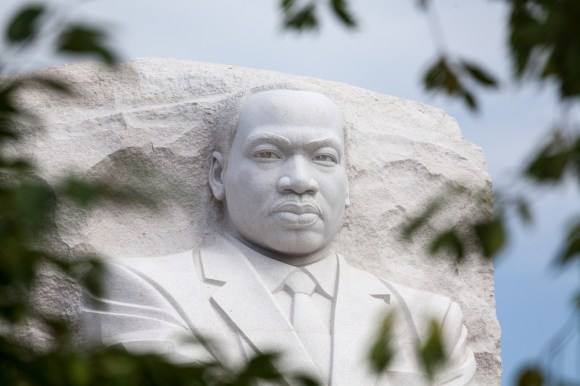
Dr. King’s mountaintop

Lisa Misner —  January 21, 2019

By J.D. Greear

mlk day 2019

Our Declaration of Independence put forth a lofty ideal about the equality of races, one of the most eloquent and profound any government had ever made: “We hold these truths to be self-evident, that all men are created equal.” Yet many of the framers would return home to their slaves.

Our country has always had high aspirations of equality, but we’ve never been able to achieve them. Not during the century of our birth, when imported African slaves were bought and sold as subhuman property. Not after the Civil War, when Jim Crow laws kept newly liberated African Americans from the full rights of citizenship. Not today, when there are still disparities between the black experience of America and the white experience.

Sometimes I get discouraged with our lack of progress. But when I listen to the words of Dr. Martin Luther King Jr., I don’t hear the voice of defeat or discouragement. I hear the voice of someone who has seen something — something that, in God’s power, is possible; something God wants to give.

The mountaintop is where we see the world as God meant it to be, the world that Jesus died to recreate.

“We’ve got some difficult days ahead,” Dr. King said. “But it really doesn’t matter with me now, because I’ve been to the mountaintop. And I’ve looked over. And I’ve seen the Promised Land.”

The mountaintop is where we see the world as God meant it to be, the world that Jesus died to recreate. Multi-racial harmony is a preview of God’s eternal Kingdom, and God wants to display it first through His church. What our society has been unable to produce through its laws, God creates through the Gospel.

The Gospel teaches us that all men are created equal because they are each alike, made in the image of God. All races suffer from a common problem of sin and look toward a common hope in Jesus. The Gospel creates a new humanity, a redeemed race made up of all colors, in Christ’s image. God created the races to display His glory like a multi-splendored diamond, and we ought to see that glory first reflected in the church.

Dr. King looked ahead and boldly declared that God’s desire for racial harmony was possible. As we look to our future, would you join me in asking God to give us the courage to speak — and live — a similar word of counter-cultural, racially diverse, bold and unified faith?

I believe that God has appointed this moment in the world for the church to rise up and demonstrate the unity that the world searches for in vain. From that mountaintop we continue to dream; toward that promised land we continue to strive.

J.D. Greear is president of the Southern Baptist Convention and pastor of The Summit Church in Durham, N.C. This article first appeared at BPNews.net.

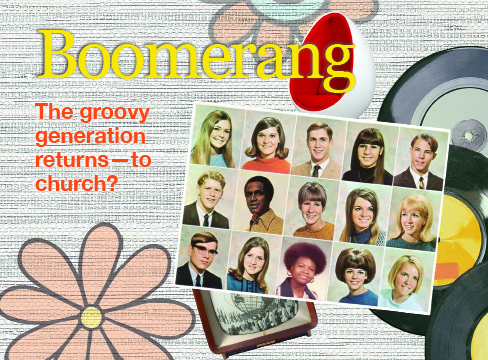
The generation that changed everything is changing its mind. Growing numbers of Boomers are interested in church again.

By Meredith Flynn

boomerang

The Boomers are coming! The Boomers are coming! Thom Rainer exclaimed as he reported new research showing that one-in-five Baby Boomers are more interested in spiritual things than they were earlier in their lives. One-in-five Baby Boomers represents about 19 million people, the president of LifeWay Christian Resources noted—presenting the church with a huge opportunity for growth and new ministry.

But the trend also means an increase in needs—for evangelism, discipleship, and intentional relationship-building. Many Boomers aren’t coming back to church as fully-formed Christians ready to participate in outreach ministries. They have questions. They can be skeptical.

Chaplain Matt Crain led a multi-generational church in southern Illinois before becoming a chaplain at Shawnee Christian Village in Herrin. At his church, Crain said, it was the Boomers who acknowledged, “I’ve been out of church for 20 years. And I’ve got a friend that said I really ought to try this.

“But I want you to know, pastor, I may not be back.”

Boomers may not be coming back to church in big waves yet, Crain said, but they have renewed interest and “they want to see if anything’s changed.”

The children of the 60s who fought hard for social change are also held responsible for the  ballooning the national debt. They’re “tanned and healthy and living way past average life expectancy,” Philadelphia Magazine reported. They also face financial and health crises avoided by the generation before them, Crain said.

“There is just under the surface an undertow current of ‘Wow, I see my own mortality now, and my health is beginning to fade,’” Crain said. “Am I going to have any legacy? Will it matter that I was here?”

Helping Boomers answer those questions is the church’s challenge—and an historic opportunity.

Prodigal generation
Boomers fill an interesting middle ground in American culture. Most were raised with a foundation of values straight out of Mayberry. But the tumult of their formative years took them far away from the comfort of Aunt Bea’s kitchen. In ways physical and spiritual, they moved away from what they knew as children, and raised their own families (which many started later in life than their predecessors) with new values.

But as they reach the later stages of their lives (the first Boomers turned 65 in 2011), they’re thinking about what really matters. And in some cases, they’re returning to a form of the faith they were raised with—although it may be more about personal spirituality than organized religion.

“We have seen some Boomers thinking more about eternity and about what really matters most in life,” said Doug Munton, pastor of First Baptist Church in O’Fallon. Boomers have the same spiritual needs as other generations, he said—a personal relationship with God through Christ, forgiveness of their sin, and meaning and purpose for their lives.

“They want to know what matters most deeply and how they can find that,” Munton said.
The research that showed Baby Boomers might be returning to their spiritual roots highlighted three reasons for the shift: more time on their hands, a realization of the brevity of life, and an awareness of life’s fragile nature. There are currently more than 70 million Baby Boomers, but data from the U.S. Census Bureau shows the group will shrink to 16.6 million by 2050.

It’s in this environment that the church can help meet practical needs of Boomers, as well as spiritual ones, Crain said. The simple things a church does to help a Boomer improve his or her quality of life can build relationships that can lead to gospel conversations. Encourage physical health, diet, and exercise, Crain suggested, or offer to take someone to a doctor’s appointment.

And when Boomers do come to your church, he added, they may be surprisingly nostalgic. “They are OK with singing some hymns,” Crain said. “They might put it to a new beat and add a couple of instruments…remember, they are children of the 60s.” In other words, don’t forsake “The Old Rugged Cross,” but jazz it up.

Ready to invest
At 62, Pastor Bob Dickerson is on the younger end of the Baby Boomer spectrum. But he identifies with a generation closer to the end of their lives than the beginning, and wanting to use their time well.

“I want to finish well,” said Dickerson, pastor of First Baptist Church in Marion. “I’m not going to accept just ‘doing stuff,’ because I don’t have enough time left to just do stuff.” Dickerson, and many fellow Boomers, want to see results from the things they do. They want what they undertake to matter.

At FBC Marion, retirees minister at the local homeless shelter. They’re involved in Disaster Relief. The church’s JOY choir of 70-80 older adults put on their first Christmas concert this year for an audience of more than 400. (JOY stands for “Just Older Youth.”)

Crain cited North American Mission Board church planting specialists who have noted the similarities between Boomers and their children. “Baby Boomers and Millennials are alike in the sense that they’re concerned with acts of love, kindness, justice, and mercy,” he said. “They want to know: What are you doing for our community? What are you doing for someone who can’t repay you?”

Even before they’re believers in Christ, Crain said, “they will jump into an opportunity to bless someone.” And once they’re in the church, their need for meaningful action is a warning for church leaders. “I can’t just make them ushers,” Crain said. “That’s not going to scratch that itch. They want to know, ‘When are we going to help somebody?’ That’s really important to them.”

My generation, and yours
The sheer number of Baby Boomers makes them a force to be reckoned with, especially for churches tasked with the Great Commission to make disciples of all nations (and ages within them). But they’re not the only generation in need of Jesus. Reaching them may provide churches with new potential for multi-generational worship and discipleship.

“Most of your Baby Boomers long for cross-generational experience,” Crain said. “They may not have learned how to do it, but they want to do it.” He encouraged churches to look for ways to connect people of different generations that are less about programming and more about building friendships.

Boomers are worried about their children and grandchildren, Dickerson noted. FBC Marion encourages opportunities for older adults to interact with youth, and to serve as surrogate grandparents to kids in need of them.

Amy Hanson is the author of “Baby Boomers and Beyond: Tapping the Ministry Talents and Passions of Adults Over 50.” She noted the similarities between Boomers and Millennials (generally, adults born 1981-1996) in an 2017 interview with the National Association of Evangelicals.

“They both care about social justice issues and making a difference with their lives,” Hanson said. “Both have an entrepreneurial spirit and are not afraid to try new things. Both groups are technologically savvy, and both are interested in strong friendships that cross generational lines.

“Focus on these things. Don’t be afraid to put people together and see what happens.”
The potential of a Baby Boomer boom in churches is a reminder of the call to reach all people with the gospel, regardless of age. Especially when presented with so great an opportunity, Thom Rainer urged leaders.

“Please, church leaders, don’t take this information lightly,” he wrote. “I can’t recall a generation in my lifetime potentially returning to church in such numbers.” The opportunities are incredible, Rainer said, “maybe they are groovy.”

By Leah Honnen

Editor’s note: January 20 is Sanctity of Human Life Sunday.

I never thought I would be so moved while attending my first IBSA Annual Meeting, but when we voted as the church to be compassionate toward those experiencing infertility, I melted.

Messengers to the meeting in Maryville last November voted to acknowledge the many trying aspects of infertility for couples, and the church’s appropriate response to such a struggle. They recognized that infertility is a result of the first sin, and that the medical routes couples take to overcome it do not go against God, based on Scripture.

The resolution encourages the church to do all they can so these couples are not left out of church life because of their infertility, and urges churches to help those who yearn to be parents through the struggles, decisions, and heartbreaks they will undoubtedly encounter. Finally, the resolution asks the church to surround these couples as the family of God, reminding them that all of these problems can be overcome through Christ.

They need to know they’re not alone.

As a woman, wife, and hopeful mother who has struggled with infertility for the past two years, this resolution did my heart good. At last! The most pressing problems my husband and I have faced in our marriage had been acknowledged in a public forum…in the one place I struggled to find clear support for us as a couple.

Please don’t misunderstand me—our church family has loved us through our problems, but in many ways, the church is lacking empathy for those living the childless-not-by-choice life. It’s not necessarily the regular churchgoer’s fault. I believe our biggest issue in searching for support through our infertility has been educating those around us.

If people have never faced trouble growing their family, they simply don’t know what to think, so they say whatever platitude comes to mind, unintentionally resulting in deeper emotional wounds for those building their family non-traditionally, rather than tenderly nursing those wounds as Jesus did.

I’m not here to bash the church. I grew up in the church. I’m a pastor’s kid who looks at her time in ministry as a blessing, and I love my past and current church family dearly. They have blessed me in ways I never saw coming—and I only hope I can serve my church family in kind through our time together. Instead, could I share some ways the church can learn to care for those in the infertile world?

1. Listen. Many couples struggle privately—which is their choice and right. But I believe many couples would choose not to struggle alone if they felt their church family would be receptive listeners, rather than inexperienced advice-givers.

2. Don’t give advice. Unless you have lived through infertility, and even sometimes if you have, please do not make suggestions to couples struggling to grow their family. The endless replies of “just relax” and “why don’t you just adopt?” are not helpful when someone is in this stressful place. More often than not, these couples will be up to their ears learning new medical jargon, procedures, and options—both traditional and unconventional. Believe me, they are informed.

3. Educate yourself. Maybe this includes hosting a class for your church leadership. If a couple is open about their infertility experience, perhaps they would like to share their personal story in order to help others understand. If no couple is available, you could reach out to a nearby infertility specialist or infertility counselor and ask them to give a presentation at your church. Either way, search online; there are plenty of resources, including Moms in the Making and Sarah’s Laughter, both of which have given me hope over the years.

4. Offer support. Similar to the way your church family would support a member who is grieving the death of a loved one, support those struggling through infertility. They are mourning the picture of life they dreamed of for years. They are floundering through so many hard decisions they must make to pursue a family, whether biological or adoptive. They need your love. They need your care. They need to know they are not alone.
Not every couple that experiences infertility chooses to pursue treatment. These couples need support too. Don’t forget them.

As I write this, our struggle to conceive has ended for now. My husband and I are due to have our baby in June 2019. Praise the Lord! This is not our first pregnancy, though. We lost our first child to miscarriage on Dec. 3, 2017. Please pray that we may still find joy throughout this pregnancy, and that we can trust God no matter what tomorrow brings.

Leah Honnen is the administrative assistant for IBSA’s Church Communications Team and an active member of Lincoln Avenue Baptist Church. She and her husband, John, live in Jacksonville.

What’s trending in 2019

Lisa Misner —  January 16, 2019

Key issues in culture

IB Media Team Report

Gaining ground on old divides
The last few years have seen an increase in the number of public conversations Baptists are having about race. Sparked in large part by shootings of unarmed black men by law enforcement, churches have been confronted by an urgent question: How does the Bible call us to respond, both in the short-term and going forward?

In 2018, several state conventions answered by adopting resolutions on racial harmony. Missouri Baptists denounced the 1857 Dred Scott decision by the U.S. Supreme Court, which determined a freed slave was not an American citizen. In Charleston, S.C., South Carolina Baptists held one session of their annual meeting in the African-American church where nine people were killed by a self-proclaimed white supremacist in 2015. The meeting’s theme, “Building Bridges,” spoke to the convention’s commitment to healing racial divides.

In Illinois, IBSA President Adron Robinson urged Baptists in the state to overcome “growing pains” and feelings of superiority that can result in division. “Salvation has never been about race,” he preached, “but it’s always been about grace.”

Especially in the Southern Baptist Convention, conversations around race tend to land on leadership. Are SBC committees and trustee boards truly representative of the entire SBC family, when recent estimates show about one-fifth of SBC churches have non-Anglo majority memberships?

SBC leadership made an effort last year to increase minority representation on boards and committees. Another key area to watch in 2019: the filling of presidential vacancies at four Southern Baptist entities.

Debate raises larger questions
At face value, “social justice” doesn’t read like a particularly controversial term. It can ruffle feathers in church life, though, especially when connected to a social gospel that downplays repentance.

After the Ethics and Religious Liberty Commission convened an April conference commemorating the life and legacy of Martin Luther King, Jr., some Baptists expressed their opposition to social justice causes they said could water down the gospel. After that, well-known non-Southern Baptist John MacArthur and other leaders released a statement expressing concern “that values borrowed from secular culture are currently undermining Scripture in the areas of race and ethnicity, manhood and womanhood, and human sexuality.”

Baptist reaction to the statement was mixed. With race and gender poised to remain key areas of challenge for the forseeable future, the opportunity for churches is to dive deep into a difficult question: How do we stay biblically faithful and still engage our community, and the larger culture?

Faith in peril
Christians remain one of the most persecuted religious groups in the world, according to watchdog group Open Doors. On average, 255 are killed every month, 160 are imprisoned, 104 are abducted, and 66 churches are attacked.

In 2018, more Christians were displaced by violence in Nigeria. In China, the government intensified its crackdown on churches. American awareness of persecution was heightened by the murder of John Allen Chau, a young missionary killed while trying to share the gospel on North Sentinel Island.

Chau’s death sparked a variety of responses among Christians regarding evangelism and appropriate missiology. While his approach was debated, his commitment to take the gospel to a difficult place served as a reminder of the call to pierce darkness with the light of Christ.

In letters before their arrests in early December, Chinese church leaders Li Yingqiang and Wang Yi encouraged their church to remember the words of Paul and rejoice in the midst of persecution, and not to count it strange. The letters also assured the church that “civil disobedience” is acceptable in order to “never stop testifying to the world about Christ.”

Their words, and Chau’s example, challenge American Christians to pray for the persecuted and to take a new look at their own calling in Christ.

To save a life

Lisa Misner —  January 14, 2019

A Michigan church is fighting to prevent abortions, and build lasting relationships with families.

By Grace Thornton

Justin Phillips.jpg

Justin Phillips holds a baby saved from abortion.

Editor’s note: January 20 is Sanctity of Human Life Sunday.

Justin Phillips said it’s the best and worst thing he’s ever done with his life. Every day, he stands across the strip mall parking lot from a door marked simply G-3422. It’s sandwiched between two dollar stores.

Every week, 20 to 30 babies are aborted there.

“We’re out there pleading with moms and dads to have mercy on their child, and we’ll help,” said Phillips, a full-time missionary with ONElife for Life, a ministry of ONElife Church in Flint, Mich.

Since ONElife for Life began in May 2016, dozens of babies that they know of have been saved out of G-3422. And the ministry has grown, said Eric Stewart, pastor of ONElife Church and president of ONElife for Life. They’ve acquired a building next to the strip mall that will be a pregnancy resource center and they’ve been given a bus that will be used as a mobile ultrasound.

They’ve also expanded their reach to conversations outside a second abortion clinic in town.

It’s been slow growth. Stewart’s big-picture goal is for Christians to have a presence outside each of the nation’s 720 abortion clinics. Right now, ONElife for Life is covering two.

Stewart and Phillips have been speaking in churches in recent months trying to awaken a desire to pick up the mantle. When he speaks, Stewart said the first thing he does is ask the church he’s visiting to repent with him.

“For years, I did nothing, but if it’s really murder, then we have to face that reality,” Stewart said. “If someone drove into our town and wiped out an entire kindergarten class every week, we wouldn’t sit idly by and say, ‘It’s not affecting me.’”

The story of the Good Samaritan demands the liability of the bystander, he said.

Stewart said he thinks about it all the time, ever since he heard a story about how one particular church in Nazi Germany would sing louder on Sundays so they wouldn’t have to hear the trains chugging by on the way to the concentration camps.

“We hear that story, and do we not wish that there would have been Christians who went to the point of injustice and said, ‘No, we can’t let this happen,’” Stewart said. “We have our opportunity now. We are living in the American holocaust and we have the opportunity to [speak] in Christ’s name.”

For churches interested in being involved, Stewart and Phillips can provide training in how to start a ministry like ONElife for Life and have conversations with people outside abortion clinics. They aren’t there to protest, Stewart said. They’re simply there to show love and offer mothers the help they need to bring a baby full term.

“We want to equip the church. We’ve learned how to train people to do this kind of ministry—we’ve learned from our own mistakes and would love to pass that along so that people don’t have to reinvent the wheel,” Stewart said. “We’ve thrown our lives into this, and we would love to duplicate it all over the place. We need gospel-saturated missionaries to confront the darkness and abolish the evil of abortion. It really is a life-or-death situation.”

There’s an emotional toll to the ministry of standing at a “modern-day concentration camp,” Stewart said. There at their tent across the parking lot, Phillips and volunteers from the church have conversations with anyone who will talk to them. They offer to adopt the baby or cover any financial needs the parents might have for the baby’s first three years of life. They remind each mother that God knows the baby in her womb.
Sometimes those babies are still aborted.

“But we’re compelled to go because we’re told to go to orphans in their distress, and these children have been disowned by their parents,” Phillips said.

And at least 85 have been saved. It could be more. They only know about it if a tearful mother meets them there on the edge of the parking lot and tells them she’s decided not to go through with it, or if the parents later choose to swing back by and let them meet the baby.

“Every month we have people who come back and say, ‘Hey, I never said anything, but here’s my baby,’” Stewart said. “So we know there’s probably more.”

God is at work there, shining light into the darkest of places, Phillips said. “We just stand there and watch him move. It’s all him. He brings people to us and saves babies all the time.”

One woman told Phillips that she didn’t want to talk to him, but her legs just walked her over there. After talking with him, she chose not to go through with it.

“It’s a battlefield all the time, and it’s an honor to stand there proclaiming a message of hope,” Phillips said. “We do that, and God does the rest. We can’t change hearts, but he can.”

It hasn’t been without pushback. Sometimes the clinic will have people posted in the parking lot to “shepherd” women into the building so they won’t have conversations with Phillips. Other times people have approached him with threats.

But in Christ, Phillips said he knows he goes out victorious already.

“It’s a horrible ministry, horrible to watch it every day,” he said. “But at the same time, to be able to lay down our lives in that way on behalf of Christ and his love for these babies is incredible.”

For more information about ONElife for Life, visit onelifeforlife.org.

Grace Thornton is a writer in Birmingham, Ala. This article is originally from Baptist Press, online at BPNews.net.