Archives For December 31, 2017

Dr. Doug Munton, Senior Pastor of First Baptist Church of O’Fallon, IllinoisHaving practiced daily devotions for many years, I spend some time each day (mornings usually work best for me) reading my Bible and praying. I read a certain number of chapters of the Bible, underlining as I go. And I spend time praying by praising and thanking God, confessing sin, asking for my needs and praying for the needs of others.

I will tell you that sometimes I don’t feel much like doing that. But feelings are terribly fickle.

I rarely feel like exercising or eating healthy or all kinds of things that need to be done. I like the phrase “spiritual disciplines.” I am to discipline myself in my devotional life.

But I will also tell you that feelings often follow discipline. I am glad I exercise and eat right when I do. And I feel especially glad that I regularly spend time in God’s Word and in prayer.

The longer I’ve practiced daily devotionals the more I’ve recognized its value, including:

1. It reorders priorities.

It is easy for me to prioritize the wrong things. Getting my relationship with God at the top of my list helps the rest of my list fall into proper alignment. We need to “seek first the kingdom of God and his righteousness” (Matthew 6:33). Spending time with the Lord in His Word and in prayer is a reminder of what matters most and helps all the rest of my life to realign.

2. It promotes truth.

God’s Word is true and it leads us in the way of truth. Listen to enough commercials and you can begin to think the truth is that the world is to revolve around what you want or think you need. The lies of the world are everywhere. We need the truth of what God says. Our time with God helps us to know and remember what is true and real and lasting.

3. It teaches lessons.

By reading the Bible for yourself you begin to take personal responsibility for your spiritual growth. By all means, learn in a Bible-believing church and get in a small group Bible study. But read for yourself. Time alone with God in prayer allows you to learn lessons of faith and thankfulness and dependence upon God.

4. It changes perspectives.

A devotional life helps you to begin to think like Jesus thinks and see life from God’s perspective. It encourages you to see the big picture of faith and to deal with adversity in a proper manner. It discourages self-centered living and promotes greater dependence on the Lord’s strength for life.

5. It deepens our relationship with God.

The more I read God’s Word given to me, the more I see the kind of relationship God wants me to have with Him. I see the beauty of His grace and the riches of the Christian life. The more I pray, the more I connect with the heart of God. We talk to those we love. God talks with us through His Word and the Holy Spirit. We talk with God through prayer.

I want to encourage you to begin or expand a devotional life. Spend some time reading God’s Word. If you haven’t yet read the entire New Testament, start there. Keep a pen and paper handy to underline or note things that especially stand out to you. And then spend some time in prayer. Praise and thank God. Confess sin. Pray for your needs and the needs of others. Consider keeping a prayer list of specific people you are praying for.

Spending time with God makes all the difference in the depth and joy of our spiritual lives.

Doug Munton, online at dougmunton.com, is senior pastor of First Baptist Church in O’Fallon, Ill., and a former first vice president of the Southern Baptist Convention.

This article appeared at BPnews.net.

The 8 people Americans trust more than their pastor
Less than half of the country—just two out of every five Americans—believe clergy are honest and have high ethical standards, a recent Gallup poll found. Pastors are now seen as less trustworthy than judges (43%), day care providers (46%), police officers (56%), pharmacists (62%), medical doctors (65%), grade school teachers (66%), military officers (71%), and nurses (82%).

The new pro-life generation
High-school students are organizing and engaging in the fight for life, despite sharp opposition from some administrators and peers. Many are members of Students for Life of America, best known for its work with college students, which now has 604 high-school chapters—334 at religiously affiliated schools and 270 at public campuses.

Churches can now get direct FEMA funding after disasters
Houses of worship damaged during natural disasters will be able to rebuild using federal funds from the Federal Emergency Management Agency, the Trump administration announced, a shift traditional faith groups have been requesting from presidents for decades without success.

Ancient DNA said to support Bible’s Babel account
A study published Jan. 3 in the journal Nature claims DNA extracted from the remains of an infant girl buried in central Alaska suggests an ancient migration of people from East Asia, across a frozen land bridge, to North America. Nathaniel Jeanson, a Harvard-trained research biologist with Answers in Genesis (AiG), said some details of the find corroborate the account in Genesis 11 of mass human migration following attempted construction of the Tower of Babel.

The salvation of ‘Napalm Girl’
Kim Phuc Phan Thi was the subject of a Pulitzer Prize-winning photograph during the Vietnam War in 1972 where she was pictured at age 9, running along a puddled roadway with arms outstretched, naked and screaming, with the dark contour of a napalm cloud billowing in the distance. Kim writes how she came to faith in Christ.

Sources: Christianity Today, World Magazine, Washington Post, Baptist Press, and Wall Street Journal

Beloved camp integral to spiritual growth for current church leaders, and those yet to come

Every summer, Judy Halter takes a busload of elementary schoolers from Anna, Ill., to Lake Sallateeska Baptist Camp, where they spend a week learning about Jesus and what it means to tell other people about him.

She even got her commercial driver’s license so she could drive the bus. Halter understands well the value of investing in young lives.

“I was saved when I was six years old,” said Halter, a member of Anna Heights Baptist Church. “But finally, at eight or nine years old, after I came to Lake Sallateeska and the missionaries came and spoke to us, I finally got it. I understood the Great Commission, and that we were called to go, and not just stay when we follow Christ.

“And it was life-changing at that point for me.”

Halter’s “favorite place in the world” turns 75 this year. As Lake Sallateeska marks the milestone anniversary, children and students and adults across Illinois continue to stream to the IBSA-owned retreat. They go for the scenery, the activities, the friendships, and the opportunity to grow closer to Jesus and his mission.

“This place has housed missionaries. This place has birthed missionaries,” Halter said. “And hopefully it will continue to birth tomorrow’s missionaries and send them out into all the world as our Lord commanded.”

Lake Sallateeska dining hall

Volunteers completed much of the work during a recent round of renovations at Lake Sallateeska that included a new façade for the game room.

Transformation place
In 1928, Illinois Woman’s Missionary Union (WMU) began holding youth camps at a lake outside of Pinckneyville owned by Dr. F.B. Hiller. In 1942, WMU bought the 40-acre property for $4,800.

The camp was dedicated on July 7 of that year, and later renamed after a visiting missionary from Oklahoma explained the meaning of her name, “Sallateeska.” The word, which means “keep looking up,” gave the camp its name.

Over the past 75 years, the camp has expanded to 163 acres. Cabins on the campground can sleep 200 people, and the Sallateeska Inn, added in 2000, offers 16 rooms of hotel-style lodging. More recent renovations nearly doubled the size of the dining hall, among other improvements.

Lake at Lake Sallateeska

Long-time camp attenders and staff speak of the camp’s value as a retreat, a place to get away from distractions and get closer to God.

“I think the camp is a place where you can get away from your normal routine,” said Mark Lee, pastor of Beaucoup Baptist Church in Pinckneyville and a former manager of Lake Sallateeska. “You just get to come out here, and your thoughts are a little different, because you’re not thinking about everyday pressures, and everything that’s going on around you. And you can focus on the Lord, your relationship with him.

“You generally sit under preaching every night and teaching. There’s singing. There seems to be more freedom to worship sometimes here [for] kids. I think it just gets people away from that normal routine, and gives [them] an opportunity to get closer to God.”

Conference Center

For many campers who experienced a getaway at Sallateeska, the camp is where they first met Christ.

“I remember being a little girl, and for the first time going to camp being really, really nervous,” recalled Lyndee Joe. “That was the year when I was 10 years old that I was saved.”

Joe, who grew up at Chatham Baptist Church, later served at Lake Sallateeska as a counselor, a program manager, and a camp missionary. She guided others as they made the same commitments she made at camp. She remembered one such story of transformation that happened in Sallateeska’s swimming pool. A young girl came up to her and said, “I need Christ in my life.”

“And she was saved at that pool, right there on the spot,” Joe said. “She didn’t care that we were all swimming around and the kids were goofing off around her.”

Nate Adams attended Royal Ambassador (RA) Camp at Lake Sallateeska when he was eight or nine years old. “It was a week of transformation,” said IBSA’s executive director, who credits his church RA leader, Ray, with getting him to go to camp.

“It was all the things we had been talking about week after week—missions and spiritual growth and what it means to be a godly Christian boy and man,” Adams said. “And in that week at Lake Sallateeska, it all came together, and it was a time of spiritual change for me.

“And I think Lake Sallateeska has been a place of spiritual transformation for many, many, many people like that since then.”

Just the beginning
For many campers, the initial commitment to Christ made at camp is just the beginning. Philip Hall has managed Lake Sallateeska since 2008, but his experience with the camp started years ago. The son of an RA leader, Hall grew up going with his dad to take the big kids to camp.

When he became a big kid and camper himself, God used Sallateeska to confirm his call to ministry. Now, he’s deeply invested in running the camp in such a way that the next generation of pastors and missionaries and Sunday school teachers can hear from God while they’re at camp.

Boating

“I don’t get to be the one sharing the gospel every time,” Hall said. “I’m not necessarily the one preaching every time. But our ministry is just to clear the path of distractions. It’s the whole purpose that they come out to the country anyway.”

Lake Sallateeska is hallowed ground for those who have experienced a new understanding of God, and have sensed a call to join him in his mission. Judy Halter’s days as a camper sparked a missions calling that has taken her on short-term trips to Botswana, Jamaica, and the Dominican Republic. For Lyndee Joe, her time at Sallateeska has helped her come full circle in her walk with Christ—from meeting him, to learning to love his Word, to learning to share it with other people.

“We’re seeing people come from this camp who are giving their life to Christ, giving their life to go on the mission field,” said Joe, who served as an International Mission Board Journeyman missionary to South Africa. “We’re seeing people who are going to this camp as a child, and then turning around, getting to high school age and starting Christian clubs in their schools.

“I think [Lake Sallateeska] is vital in the life of Southern Baptists in the state of Illinois because it’s giving our students a passion for the gospel. And they’re taking that passion and they’re running with it.”

As the Lake Sallateeska team embarks on their next season of ministry, Hall said their goal is to continue the commitment and legacy that started 75 years ago.
“My hope for the future is that we just continue to hear from the Lord [and] be faithful with what we have. It’s a stewardship, a talent,” he said, referencing Jesus’s parable in Matthew 25.

“I truly hope, when my time is over, to pass on a facility and a ministry that’s better than it was when I got it, to the next runner, to carry out this race.”

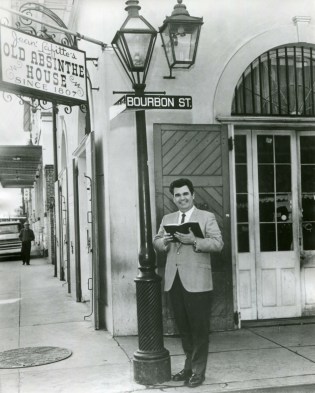
Bob-Harrington---BourbonStreet

Famed New Orleans evangelist Bob Harrington, known by many as “the Chaplain of Bourbon Street.”

Forgiveness is a significant theme in God’s Word.

The Bible tells us: “As far as the east is from the west, so far has He removed our transgressions from us” (Psalm 103:12). “I, even I, am He who blots out your transgressions for My own sake; and I will remember not your sins” (Isaiah 43:25). “He [Jesus] was delivered up because of our offenses, and raised because of our justification” (Romans 4:25). “If we confess our sins, He is faithful and just to forgive us our sins and to cleanse us from all unrighteousness” (1 John 1:9).

Scripture is clear; God’s forgiveness is for all, but each one of us must receive His forgiveness personally.

Our family has experienced forgiveness in a clear and visible way. My dad, Bob Harrington, was dramatically converted on April 15, 1958, when I was only 6 years old. He attended a revival meeting in his hometown of Sweet Water, Ala., to find some insurance prospects, and instead he found the Lord. During the fifth stanza of “Just As I Am,” Dad was forgiven of his sin and saved by the grace of God.

He preached his first sermon three days later and led his parents to faith in Jesus Christ. My mother, sister and I followed Dad in faith and became active in church. The Lord called my dad to ministry and led him to attend New Orleans Baptist Theological Seminary.

In a chapel service, then-NOBTS President Leo Eddleman presented a challenge to students: “Any pocket of sin is a mission field, and the closest Christian to it is a missionary.” Dad responded to that call and began a ministry in the French Quarter of New Orleans. In 1962, he was proclaimed by the mayor “The Chaplain of Bourbon Street.”

His ministry expanded in the 1960s and 1970s from the second block of Bourbon Street to nationwide crusades and national television. Many people were converted and called to the ministry through his personal soul-winning and powerful preaching. God used Bob Harrington to share His gift of forgiveness with thousands of others.

At the peak of Dad’s ministry, “the devil threw him a pass and he ran for defeat” (drawing from his own words). He left the Lord, left the ministry, left my mother and left our family. What a painful time for each of us.

God immediately spoke to me about forgiveness. I needed to forgive my dad even though he did not ask for forgiveness. Initially I did not want to forgive him, but later I chose to obey God’s clear command. We prayed faithfully for Dad’s restoration for 17 years before he returned to the Lord. What a time of rejoicing for our family! We were a part of his redemption story as Dad sought forgiveness from each of us.

After Dad returned to the Lord, he again had “fun being saved” and became “happy in the Lord.” He was bold in his witness and called to preach to others like him who had left the Lord and needed to get right with Him. He titled his message on prodigals, “Loving the Left Back Right.” What a beautiful picture of forgiveness!

In his later years, Dad had dementia. He was completely at peace in his condition. He spent his days sitting in his big red chair watching television.

As I walked into his little house one afternoon, God gave me a vivid example of total forgiveness. A divorced couple on the Jerry Springer program was screaming at each other. Dad looked up at me and said, “Isn’t it wonderful that no one in our family has ever been divorced? We all love each other.” Wow! Who would have ever thought that such truth could come from a Jerry Springer moment? Dad himself had been divorced twice, but God had forgiven him and taken his sin out of his conscious thoughts. What a perfect picture of forgiveness! When God forgives, our sin is completely removed.

My sister and I rejoice in the forgiveness of God which allowed our family to be reunited and our dad to have joy until his last breath. To our knowledge, Dad had no memory of the time he was away from the Lord. He talked often about our family years ago and remembered many amazing days of ministry. When once asked by a reporter what led him back to the Lord, Dad sincerely replied, “I have never left the Lord. I have always loved Him.” God literally removed his sin and blotted it from his memory, so he remembered it no more. I will always be grateful for being a part of a real-life story of forgiveness!

This article first appeared at BPnews.net.

Sylvan-Kathy-Knobloch-Mark-Emerson

Mark Emerson (right) led prayer for Sylvan Knobloch and his wife, Kathy, during a retirement celebration in November. Knobloch said he’s not certain exactly what shape life after retirement will take, other than he “wants to be a good grandparent.” The Knoblochs have two adult children and six grandkids.

Sylvan Knobloch, currently the Illinois Baptist State Association’s longest-tenured employee, will retire at the end of this year after 38 years in the areas of campus ministry, church health, and leadership development.

Knobloch was honored at a Nov. 27 retirement dinner in Springfield, where friends and co-workers celebrated his work over the years—and the nearly one million miles he has traveled as a consultant for IBSA churches.

Bob Dickerson, pastor of First Baptist Church, Marion, and a one-time co-worker of Knobloch’s at IBSA, spoke during the dinner and cited the familiar passage in Matthew—“Well done, good and faithful servant.”

A native of Waterloo, Ill., Knobloch was working as a pastor and volunteer campus minister in Bowling Green, Ohio, when he met then-IBSA campus ministry director Bob Blattner at a missions conference. A few months later, Blattner asked him to consider leading student ministry at Eastern Illinois University. Knobloch, who had been looking for a full-time campus ministry position, sensed God was opening a door.

He worked in Charleston from 1979 until 1988, when he moved with his wife, Kathy, and their two children to Carbondale to direct ministry at Southern Illinois University. In 1993, then-IBSA Executive Director Maurice Swinford offered Knobloch the opportunity to join the Springfield-based staff as director of discipleship, singles ministry, and senior ministry, a job move that later morphed into a long stint in the areas of church/minister relations and church health. In those capacities, Knobloch helped churches and pastors navigate conflict, negotiation, and reconciliation.

He helped establish a severance process by which churches can ease a difficult transition for their pastor. He also aided individual ministries through Rekindling the Call retreats designed to refresh and renew pastors and their spouses.

In 2016, he took on the area of leadership development and helped IBSA continue to establish processes to help churches identify emerging leaders and equip current leaders by making available a spiritual gift and personality profile.

On the eve of his retirement, Knobloch talked to the Illinois Baptist about the joys of 38 years of ministry, the challenges still facing Illinois Baptists, and the journey toward true understanding between pastors and churches.

Illinois Baptist: What have been the greatest joys of your years of ministry in Illinois?

Sylvan Knobloch: One of the most significant joys from my years of campus ministry has been seeing the numerous students from the Baptist Student Union continue to serve faithfully in their respective churches across Illinois.

Another great joy is witnessing church growth and renewal in congregations that I worked with over the years. It is gratifying to know I played a small part in their transition.

IB: How have you seen churches and communities in Illinois change over the past 38 years, as far as how churches do ministry?

SK: There is more diversity in both the types of pastoral leadership and the types of churches. A growing number of pastors today simultaneously serve two churches, while other churches have more than one campus.

The single-staff pastor is not a new phenomenon, but many of these pastors today are serving in declining and aging congregations. Often these churches are resistant to the changes needed to reach younger families.

IBSA is meeting this challenge by encouraging ministers to build relationships with other pastors and to support each other through cohorts.

IB: What are some other challenges facing IBSA leaders today?

SK: Pastors need relationships. Pastors and staff today often are not going away to one of the six SBC seminaries for education like they did 38 years ago. Today’s minister often chooses to take advantage of online seminary degrees; a decisive advantage is the minister remains in Illinois serving their churches. But on the negative side, these pastors miss out on the relationships that develop naturally on the seminary campus.

IB: If you could tell church members one thing about their pastor, what would it be?

SK: I would ask search committees to spend time getting to know their pastoral candidate before calling him. He will be doing life with you; therefore, consider the iceberg. Don’t merely look at what is above the waterline, but consider what is below, the unseen: character, ministry goals, and dreams. Church leaders should ask the new pastor how they can help him succeed.

IB: If you could tell a pastor one thing about his church, what would it be?

SK: I would encourage him to spend time with church leaders to understand their dreams and goals, both for their church and for their own lives. Pray for ways you can enable each leader to become all he/she is called to be.

The prerequisite for this is for the pastor to have self-awareness, to understand his emotions and their impact on others. In this way, he will become an effective leader.

The Briefing

Court rules against bakers
Sweet Cakes by Melissa shut down after a heavy fine was levied against its owners for not participating in a same-sex wedding ceremony. Aaron and Melissa Klein took their case to court, but on Dec. 29, the bakers lost in the Oregon Court of Appeals.

Former fire chief gets partial court victory
Kelvin Cochran, the former Atlanta fire chief terminated for writing a devotional book in which he advocated a biblical view of marriage and sexuality, won a partial victory in court Dec. 20, when a judge decided the city rules under which he was fired are unconstitutional. In other religious liberty issues related to the case, however, the judge ruled against Cochran, Baptist Press reports.

Kasich approves Down syndrome abortion ban
Ohio Gov. John Kasich signed a law Dec. 22 prohibiting abortions in cases where prenatal tests reveal Down syndrome or if there’s “any other reason to believe” the genetic condition exists. North Dakota and Indiana have similar laws, although the Indiana measure has been blocked by a federal judge, CNN reports.

New data explores evangelical diversity
One in three people who identify as evangelical is nonwhite, according to 2017 research. The numbers rises to four in 10 of those who are evangelical by belief, reports Christianity Today in its analysis of research on diversity and the church.

The year’s most popular passages
The most popular Bible verse around the world in 2017 was a command to be strong and courageous, according to Bible app YouVersion. Joshua 1:9 was the most shared, bookmarked, and highlighted verse by the global YouVersion community, The Christian Post reports, while in the U.S., Romans 8:28 topped the list.

Meeting Of Bible Study Group

The month-long prayer emphasis “In All Things Pray” opens 2018 on the Southern Baptist Convention calendar, encouraging churches to pray corporately for 60 minutes at least weekly in January.

Standing on Acts 1:8 and 2 Chronicles 7:14, In All Things Pray encourages 10 minutes of Scripture reading, public leadership and worship; 20 minutes of vocalized prayer requests, and 30 minutes of guided prayer in each hour-long service, event organizers said.

“We are hopeful churches will use the 10-20-30 corporate prayer model in at least one of their weekly gatherings during January,” said Roger “Sing” Oldham, SBC Executive Committee vice president for convention communications and relations. “The 10-20-30 model is very interactive and is ideal for a midweek prayer service.”

Oldham represents the Executive Committee on PrayerLink, a national organization of prayer ministry leaders that helped the Executive Committee develop this year’s prayer focus.

“We think people will be refreshed by spending a complete hour in focused prayer,” Oldham said, “and encouraged at how quickly a one-hour time of prayer will pass, perhaps spurring them on in their personal times of prayer at home.”

Four categories of prayer concerns drawn from Acts 1:8 are offered among resources at InAllThingsPray.net for suggested use, all or in part.

Family and friends

Target this group by creating a prayer list of family members to pray for daily. Using the CrossRoads Prayer Evangelism ministry referenced at InAllThingsPray.net, encourage congregants to list five friends and track their prayer and outreach targeting the individuals. Ask church members to write on note cards the names of unchurched and lost family members, bring the cards to the altar and place them before the Lord.

Church and community:

Lead church members in praying specifically for evangelistic events on the first half of the church’s 2018 calendar, such as Vacation Bible School, revivals or special music programs. The church’s continued health, ministry teams and committees are among other suggested prayer concerns.

The United States and its peoples:

Read 1 Timothy 2:1–6 aloud during the morning worship service and encourage prayer for the nation. Mention the names of elected officials during the pastoral prayer. Ask the Lord to call from within your congregation members who will serve as pastors, missionaries and church planters. Pray for the different ethnicities living within the nation and for the racial reconciliation that is possible only through salvation in Jesus Christ.

The world and its people groups:

During the pastoral prayer, petition the Lord on behalf of those within the congregation who may be sensing a call to international ministry. Ask the Lord to give International Mission Board trustees and leaders divine wisdom and guidance in challenging Southern Baptists to be on mission with God. Ask for wisdom and mercy for international missionaries working in dangerous locations.

PrayerLink is composed of prayer coordinators from Southern Baptist entities and the Executive Committee, the Woman’s Missionary Union, state Baptist conventions, and Southern Baptist ethnic and language fellowships. PrayerLink collaborates with groups represented in its membership to foster a Great Commission prayer mindset among Southern Baptists and other Christ-followers, and to promote Great Commission prayer ministries for Southern Baptist churches.

Additional resources and promotional materials are available at InAllThingsPray.net.

This article first appeared at BPnews.net.