Archives For September 30, 2015

COMMENTARY | Eric Reed
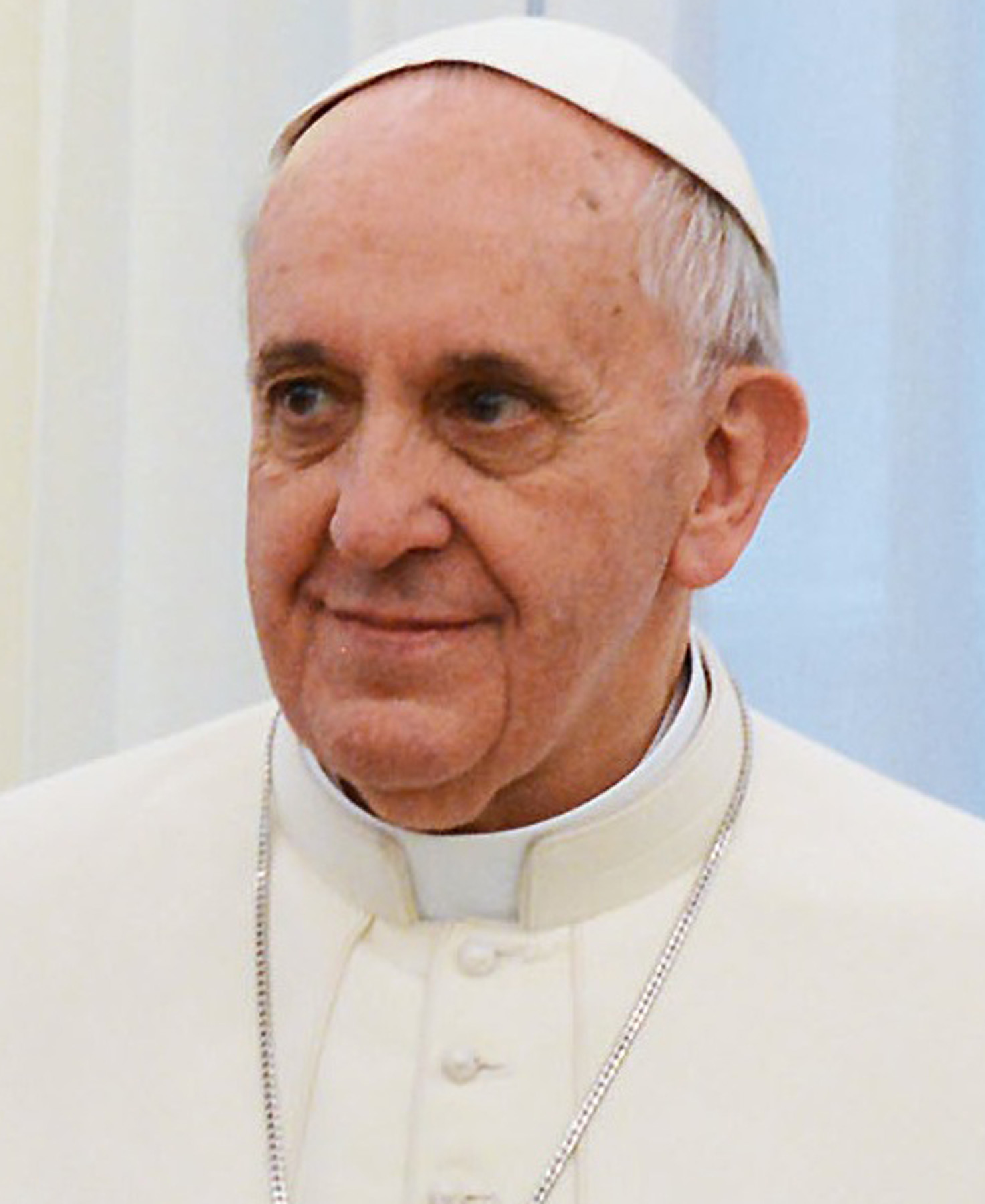
Pope FrancisAs Pope Francis hugged a disabled child, MSNBC’s Chris Matthews said, “What power this man has to make people feel good.” And it’s true. Even I, with all my Baptist objections to the papacy, got a catch in my throat at that scene on the Philadelphia airport tarmac when Francis stopped the car and got out to bless the child in the wheelchair. Yes, he makes people feel good.

Why else would millions line the streets for an eight-second glimpse of the pontiff waving from the back seat as his tiny Fiat passed by?

But CBS’s Jericka Duncan, to bishops at a press conference following the Philadelphia visit, was more pointed: Why didn’t Francis publicly tell people how he feels about the family, starting with the marriage of one man and one woman?

Francis has a history of making statements that, broadly interpreted, could make homosexuals, divorced people, those who allow for abortion, and even “women religious” believe there’s an open door for them in mainstream Catholic life and leadership. But Francis isn’t going to change his church’s doctrines on marriage, protection of the unborn, a male only priesthood. He can’t: 2,000 years of church history, conservative Catholics in the global south, and the College of Cardinals won’t let him.

So why make gestures that soothe postmoderns and liberal Americans, but don’t really change anything? Perhaps because, as Chris Matthews puts it, he wants people to feel good.

But that isn’t speaking the truth in love. Sure, Francis’s approach is long on love. Don’t we all see Christ exemplified in his embrace of the homeless and handicapped? But the more loving response to people struggling with sin and its effects is to tell the truth: We love you, but the church can’t embrace your beliefs when they are outside orthodoxy. That’s the lesson I’m taking from Francis’s visit.

Church leaders do no favors when we let people think some doctrinal issues are open for debate when they’re really not. I have witnessed this accommodation of feelings in conversations with non-Baptists and Millennial evangelicals pressured by the current wave of cultural liberalization. (“Why can’t my brother marry his boyfriend?” “You won’t accept my sister’s application for lead pastor?” No, sorry.)

We want to approach these conversations in love, but they must be grounded in truth. Letting people think what they want because we’d rather not hurt their feelings isn’t being loving—or honest. Love is grounded in truth, not feelings.

Read this and other articles in the 10/12 issue of the Illinois Baptist.

The BriefingA 26-year-old man who killed nine and injured perhaps nine others at an Oregon community college reportedly targeted Christians in the attack, said a Southern Baptist pastor whose granddaughter was shot and survived.

“The shooter asked a question, ‘Are you a Christian?’ And if they said yes, he said, ‘Good, because you’re going to see God in a second,’ and he shot them. My granddaughter hid and got a bullet through the leg,” Howard A. Johnson, founding pastor of Bethany Bible Fellowship (SBC) in Roseburg, told Baptist Press. “That’s pretty traumatic.” Read the entire story at BPnews.net.


ERLC goes to the dogs, cats, hamsters, birds…

The Ethic and Religious Liberty Commission of the SBC and the Clapham Group, released the Evangelical Statement on Responsible Care for Animals Sept. 30. “Our treatment of animals is a spiritual issue,” said ERLC President Russell Moore. “The Bible is clear that our being created in the image of God does not lessen our responsibility to steward the physical world well, but heightens it. This statement is a reminder that the gospel transforms our use and care of animals as we see all of God’s glory reflected in his good creation.” Read the statement at EveryLivingThing.com.


Southern Baptist Disaster Relief heading to South Carolina

The North American Mission Board mobilized two semi-trucks with supplies for South Carolina flood victims Oct. 5. NAMB will also deploy two recovery trailers as soon as roads in the areas are open. Like so many other facilities, the South Carolina Baptist Convention office building is nearly cut off at this time with flooded roads. Pray for the people of South Carolina and the disaster relief volunteers who will be sent to minister to them.


CP surpasses budget projection for fiscal year

The Southern Baptist Convention ended its fiscal year $1.1 million over its 2014–2015 budgeted goal and $2.5 million over the previous year’s Cooperative Program allocation budget gifts, according to Frank S. Page, president and CEO of the SBC Executive Committee.


Barna: Concerns over religious freedom have increased since 2012

A new study from the Barna Group reveals a significant rise in Americans’ belief that religious freedom is worse today than 10 years ago (up from 33% in 2012 to 41% today). The increase is the most marked by marked among Gen-Xers (29% to 42%) and Boomers (38% to 46%). While 34% of Millennials say religious freedom is worse today than it was 10 years ago, up from 25% in 2012.

Sources: Baptist Press, Barna Group, ERLC, EveryLivingThing.com

Lifetree CafeHEARTLAND | Morgan Jackson

Every Tuesday and Thursday night, First Baptist Church in Waterloo hosts what Pastor Steve Neill calls “a scheduled hour of stories and conversations to feed the soul.” The weekly meeting around coffee and discussion, called Lifetree Café, resulted from the church’s dedication to use a new building to reach their community.

“Whether you go to a church or not, you’re always welcome at Lifetree,” said Cyndi Antry, a member of the team responsible for setting up the café each week.

The ministry probably wasn’t on anyone’s radar nearly three years ago, when an official press release announced the church’s plans to begin construction on “The Beacon.” The congregation had been envisioning the new building for quite some time, with an original goal to build an extra 8,000-square-feet onto their pre-existing building to accommodate more space for classrooms and activities.

The congregation had spent a year on the planning, development, and funding of the proposed building, when they realized a former nursing home connected to the church’s property was just sitting there…vacant.

The church purchased the 24,000- square-foot space at an unbelievably low price, said Lisa Dean, co-leader of The Beacon’s logistics planning team. And after 15 months, more than 80,000 hours of work, and help from over 700 volunteers from 40 churches across 18 states, The Beacon was finally completed.

The new building contains a fellowship hall, kitchen and dining room, entertainment stage, café, children’s education center, youth wing, recreation area, basketball court, and a capacity of 400 people. And its presence on Market Street offers great access to and for the community.

The Beacon is now home to a number of outreach programs for children and adults, and Lifetree Café has especially captured the community’s attention. The “conversation café” is a nationwide ministry with multiple sites in the United States and Canada. It is designed to be a safe place for people to explore their spiritual questions and to share their stories.

Discussion revolves around a specific topic each week—usually something spiritually and culturally relevant like prayer, loneliness, health, ADHD, guilt, life after death, justice, race, immigration, relationships, other world religions, stem cell research, and countless others.

A host team and friendship team run each session; the friendship team is in charge of setting up coffee and snacks, and one of six hosts leads the conversation.

Each Lifetree meeting lasts an hour and typically includes a short film, as well as small and large group discussion. People are also given helpful tips and applications they can take home and practice in their everyday lives—often printed handouts containing information on the week’s topic, as well as online links to learn even more.

No two meetings are the same, Antry said. “Some are very emotional. Some are very lighthearted.” It just depends on the week, the topic, and who God brings through the door.

FBC Waterloo’s Facebook page advertises “food for thought” as the main entrée at LTC. Pastor Neill says Lifetree is “sort of like a live, local talk show—with an inspirational twist.”

The ministry’s ultimate purpose is to help those who attend grow closer to God, but no one there is trying to “sell” people on a certain church or religion. Rather, the goal is to offer a place where individuals can come and ask questions, talk freely, and explore life. If God wants to work during a discussion and convict someone’s heart, he will, Antry said.

Lifetree just helps create a space where people can experience the Lord’s power.

“Here at Lifetree we have certain things we value,” said David Batts, chairman of the building committee for The Beacon. “Your thoughts are welcome, and your doubts are welcome. We’re all in this together.”

Chicago, IllinoisCOMMENTARY | While many college students were using summer break to relax and catch up on some much-needed sleep, one group of undergrads dedicated their downtime to proclaiming the name of Jesus throughout the city of Chicago, one of our country’s biggest mission fields.

The North American Mission Board started a program a few years ago called Generation Send. They identified 32 cities in great need of laborers and then sent students out to work in them. This past summer almost 400 youth showed 16 of these cities the love of Christ as they learned what it meant to live a life on mission in an urban context.

Students from Georgia, Texas, Louisiana, and Tennessee were excited to come and serve in the unique and diverse community of Chicago. They arrived at the beginning of the summer with few expectations for the coming months but to see Christ glorified.

Chicago contains 77 neighborhoods filled with people from across the world. It is the third largest city in the U.S., but less than 10 percent of the population is involved with an evangelical church. They are in desperate need of the gospel and for people to come and serve in the name of Christ.

Two of the student leaders through Generation Send, known as mobilizers, were returning to Chicago for the second summer in a row. They had become extremely burdened for the city and wanted to continue sharing that passion with others. Looking beyond all the glitz and the glamour, Chicago is still a place where people have real needs and individuals are desperately lacking gospel truth. Realizing this firsthand has a way of leaving an imprint on one’s heart.

Four mobilizers led teams of 3-10 people in four of the 77 Chicago neighborhoods. Students engaged business owners, college students, young professionals, different ethnic groups, families, and many others for the gospel.

Every week a Generation Send student would encounter someone who needed to hear God’s truth. And many times they were receptive to it. Less than halfway through the summer, students couldn’t bear the thought of going home and leaving these people behind.

In July when it was time to say goodbye, one team had the privilege of leaving Bibles with a Muslim family who owned a restaurant that they visited several times a week. Another team came alongside a church planter and his family and helped them prepare for their first Sunday preview service. In a matter of only six weeks, these students from Georgia, Texas, Louisiana, and Tennessee were completely broken for this place that desperately needs Jesus.

One mobilizer has now made the commitment to move to Chicago. In September she will move from her quiet, small town in Louisiana to the chaos of the Windy City, all to further the gospel. Another student is also praying about becoming a church planter there in the coming years. Many others have already committed to bringing teams back next summer and will continue to pray for Chicago throughout the year.

All throughout scripture we see God’s people burdened for cities that were in need of Him. In the book of Nehemiah we encounter a man who asked his King to return to Jerusalem, a city he once called home. He was so burdened for the people of Israel and for the city of Jerusalem that he wanted to make new again what was destroyed. The task was not easy and the burden was not light, but he was determined to obey and honor what God had called him to do.

This theme of being burdened for God’s cities continues today. God is calling his people back into the cities so that the gospel may go forth. Cities are considered the heart of our country and we need the people who live in them to have repentant hearts and put their faith in Jesus Christ. Please pray for Chicago and for students preparing to join the mission field there.

And he said to them, “The harvest is plentiful, but the laborers are few. Therefore pray earnestly to the Lord of the harvest to send out laborers into his harvest” Luke 10:2 (ESV).

Carrie Campbell is a teacher in Beardstown. She has served as coordinator for NAMB’s Generation Send summer missions program in Chicago for two years.