Archives For August 31, 2014

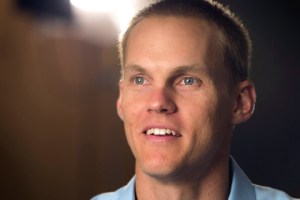
David Platt, 36, was elected president of the Southern Baptist International Mission Board on Aug. 27.

David Platt, 36, was elected president of the Southern Baptist International Mission Board on Aug. 27.

COMMENTARY | Eric Reed and Meredith Flynn

one_blogThe first time I saw David Platt was at the SBC pastors conference in 2012, explaining fervently why he questions use of the sinner’s prayer. In his preaching, Platt marries Reformed theology with a passion for missions.

The first time I heard of David Platt, he had just been called to pastor a megachurch in Birmingham, Alabama—at age 26. Leaders of the church were promising they would surround their new pastor and guide him through a ministry that would challenge a man with three times his experience. Platt had completed three degrees at New Orleans Baptist Theological Seminary and served as assistant professor and dean of the chapel. Truly, he was a wunderkind.

He still is.

But at 36, it’s fair to ask if he’s ready for the enormous responsibility of leading a $300-million-dollar-a-year missions enterprise with 5,000 employees. His church’s record of bypassing the Cooperative Program for most of its giving to IMB and international missions has been reported. And Platt comes to office with many mission trips to his credit, but this position will be his first as a career missionary.

Still, we could be seeing the start of a long and remarkable tenure such as those of the giants who helmed our missions endeavors in the days of our greatest Gospel advance.

Let us pray so.

-Eric Reed

two_blogThe first words I ever heard David Platt speak weren’t his own. At a collegiate conference several years ago, he walked on stage and started preaching through the first half of Romans. Paul’s actual words.

After the audience frantically paged through their Bibles to find where he was, they sat in rapt attention. It was an urgent message, one that clearly challenged these early 20-somethings to listen, respect the Word, and understand it in a new way.

The most exciting news about David Platt’s election as the new president of the International Mission Board may well be his ability to challenge young people to a deeper understanding of Scripture, and a more intentional following of God’s will for believers.

Several years later on a Good Friday, a slightly older group gathered for several hours of teaching during one of Platt’s “Secret Church” simulcasts. As they scrambled to fill in hundreds of outline blanks during his rapid-fire message, the challenge again was clear: focus, listen, learn. And, let’s all do whatever it takes to get the gospel to more people around the world.

Right after IMB trustees elected Platt last month, a group of young missionaries reportedly gathered around to congratulate him and thank him for the influence his messages and the book “Radical” have had on their lives. These newly appointed missionaries have followed God’s call to the ends of the earth.

Let’s pray many, many more will accept the challenge.

-Meredith Flynn

THE BRIEFING | InterVarsity Christian Fellowship will lose its current access to all 23 schools in the California State University system because the ministry requires their leaders to affirm Christian doctrines, reports Christianity Today. IVCF’s policy is in violation of a university rule, adopted in 2012, that requires recognized groups to accept all students as potential leaders.

The_Briefing“While we applaud inclusivity, we believe that faith-based communities like ours can only be led by people who clearly affirm historic Christian doctrine,” reads a statement on IVCF’s website.

The ministry received a one-year exemption from the policy for the 2013-14 school year, but will now lose privileges including free meeting space and access to campus activity fairs.

On his blog, LifeWay’s Ed Stetzer examines the ramifications: “The bigger, and ongoing, issue is the continual sanitization of unacceptable religious voices from universities.”

State marriage cases likely to land in high court
Recent rulings on marriage by federal judges and circuit courts have advocates on both sides of the debate looking toward the U.S. Supreme Court to decide the issue. On Sept. 4, 32 states—15 that allow same-sex marriage and 17 that don’t—asked the high court to settle it once and for all, reported the Associated Press.

Same-sex marriages in Illinois officially began June 1, although some counties issued licenses earlier. The state’s General Assembly approved “The Religious Freedom and Marriage Fairness Act” last fall.

‘Elevate Marriage’ scheduled for Oct. 16
The Illinois Baptist State Association will host an “Issues & Answers” event in Springfield, Ill., to help churches address cultural shifts on marriage. The Oct. 16 conference for pastors and church leaders will feature Kevin Smith, The Southern Baptist Theological Seminary; Andrew Walker, Ethics and Religious Liberty Commission; and Jill Finley, Bethel Baptist Church, Troy, Ill. Lunch is included, and registration is required; go to www.IBSA.org/Marriage.

Chick-Fil-A founder Truett Cathy dies at age 93
Christian leaders and fans of Chick-Fil-A mourned the loss of S. Truett Cathy, who died early Monday morning. Cathy built the chain—known for its chicken sandwiches—from one store in 1946 to more than 1,800 restaurants currently operating in 40 states and Washington, D.C. He was known for his Christian faith and Chick-Fil-A’s “closed on Sundays” policy. Read more at BPNews.net.

Osteen answers criticism
Megachurch co-pastor Victoria Osteen said that church-goers at Lakewood Church in Houston, Texas, understood her recent controversial comments about why people ought to obey God. “When you come to church, when you worship Him, you’re not doing it for God really,” Osteen said during a Lakewood service Aug. 31. “You’re doing it for yourself, because that’s what makes God happy.” The video went viral, garnering much criticism on social media. Osteen told The Blaze she could have been more articulate, but she stands by her point. “I did not mean to imply that we don’t worship God; that’s ridiculous, and only the critics and cynics are interpreting my remarks that way.”

Al Mohler, president of The Southern Baptist Theological Seminary, blogged that the message preached by Osteen and her husband, Joel, “is the latest and slickest version of Prosperity Theology.” Read Mohler’s commentary here.

Our Midwest state

Meredith Flynn —  September 8, 2014

HEARTLAND | Nate Adams

Recently, IBSA hosted a Midwest regional meeting that included the state executive directors, missions directors, evangelism directors, and church health directors from ten Baptist state conventions. Our main purpose was to finalize plans for the 2015 Midwest Leadership Summit that will be hosted here in Springfield next January. 

But it was also an interesting time to compare notes on Baptist work throughout our Midwest region. Here are four observations about what “all” Midwest state conventions seem to be experiencing, and then also about where we in Illinois find ourselves these days.

Nate_Adams_Sept8First, there was a shared desire to keep fewer ministry resources within our churches and region, and to share more with the vast mission fields outside our states, especially internationally.  

Here in Illinois, our Cooperative Program giving that goes beyond the state is the fifth highest percentage among all 42 state conventions. The past two years, we have sent extra year-end gifts that made those CP percentages the highest in IBSA’s history.  

A second observation is that most Midwest state conventions are feeling a tight “squeeze” between the North American Mission Board’s lower and more designated funding (for church planting exclusively), and generally flat to lower giving from churches through the Cooperative Program.  

Here in Illinois, NAMB funding shifts have necessitated that we absorb full responsibility for our state WMU and Women’s Ministry Director, for other missions positions and initiatives that are not specifically church planting, and for funding that assists local associations. We have also received notice that areas such as collegiate ministry, urban ministry centers, and disaster relief coordination will not be funded by NAMB in future budget years.  

A third observation is that among our group of Midwest Baptist leaders we are experiencing a noticeable amount of transition and turnover. My personal sense is that the combination of financial pressures and feelings of not being appreciated are taking their toll on a lot of good people that help a lot of small to medium-sized churches, especially.  

Here in Illinois, we have been seeking to manage a gradual downsizing and restructuring of our IBSA staff without necessitating traumatic changes for either personnel or ministries. However, I sense among some of our staff the same uneasiness about the future security of existing ministries.  

Finally, even in the midst of these challenges, I observed state convention leaders that continue to believe strongly in their ministries of strengthening and starting local churches in their Midwest contexts. They—we—are trusting the Lord into the future, but also appealing more and more intentionally and urgently to the faithful churches in our respective states to validate, value, and directly support state missions.  

MIO_blogHere in Illinois, the most direct and supportive way your church can do that is through the Mission Illinois Offering. Most churches receive that offering in September, but you can contribute through the MIO any time in the year, and 100% of that offering goes to support our state missionaries and state missions efforts among churches right here in Illinois.  

Across the Midwest, Baptist state conventions, most of which are smaller than Illinois, are facing pressures and decisions that may soon be ours, at a time when our culture needs the Gospel more than ever, and our churches need assistance more than ever. If we want our Midwest state of Illinois and its churches to remain strong and advance the Gospel here, we must all take responsibility for our Illinois mission field, and give our most generous offerings to the Mission Illinois Offering this year.

Nate Adams is executive director of the Illinois Baptist State Association.

COMMENTARY | Jarvis J. Williams

Editor’s note: Jarvis J. Williams is associate professor of New Testament interpretation at Southern Baptist Theological Seminary in Louisville, Ky. This column appeared on BPNews.net, the website of Baptist Press.

On Aug. 9, Michael Brown, an unarmed 18-year-old African American, was shot six times by Darren Wilson, a white Ferguson, Mo., police officer. His family has called for justice in his shooting while urging residents of Ferguson to abstain from violence, but many African Americans and some whites have taken their anger to the city’s streets in protest.

As an African American Christian, my first reaction to this sad story of a young man’s life cut short consists of anger and sadness as yet another African American family grieves the death of a son. However, I am not surprised by this tragic event or the subsequent events in the aftermath of Brown’s shooting and death.

Jarvis_WilliamsThe reason is simple: Adam’s transgression has enduring effects on the human race to the present day.

In Genesis 2:17, God warned of a universal curse of judgment if Adam disobeyed His command in the Garden of Eden. As soon as Adam disobeyed, the curse of sin and death fell upon all of creation (Genesis 3:14-19; Romans 5:12). Once sin’s lethal fangs sank its teeth into God’s good creation through Adam’s transgression, the entire creation became subject to sin’s tyrannical power. Sin first manifested its malevolent bent toward violence when Adam’s son Cain murdered his brother Abel (Genesis 4:1-8).

Creation’s futility stemming from Adam’s transgression is now being manifested in Ferguson, just as Adam’s transgression manifested itself in Cain’s murder of his brother. Unfortunately, creation will continue to be subject to the power of sin and death until God emancipates it from its current futility (Romans 8:19-25).

The problem in Ferguson, Mo., is not merely an African American problem, nor is it uniquely an American problem. Fundamentally it is a spiritual problem; that is, a sin problem. Adam’s transgression has created death within every human heart, and every human heart (regardless of race) rebels against God and against his fellow man (Genesis 3:8-9; Romans 3:9-18).

The Bible presents the Gospel of Jesus Christ as the solution to the enduring effects of Adam’s transgression on humans and their relationships, including race relations (Galatians 2:11-21; Ephesians 2:11-22). God offered His Son, Jesus Christ, to die on the cross and to resurrect from the dead to reverse the universal curse of Adam’s transgression and to reconcile sinners both to Himself and to one another (John 3:16; Romans 3:21-26, 5:6-21; Ephesians 2:11-22).

The Gospel teaches that the only way to defeat sin’s weapon of violence and to reconcile race relations in places like Ferguson is with the blood-bought, resurrection-empowered and reconciliatory Gospel of the Lord Jesus Christ. It proclaims a message of hope to individuals of all races even during this dark time in American history.

In their quest for justice, many African American citizens in Ferguson have chosen another path, one that ignores the reconciling power of the Gospel. Various media outlets have shown their fierce protests in the streets as they press for justice. Some protests have erupted into violence, causing even more suffering for many African Americans in the community.

Unfortunately, because of the enduring effects of Adam’s transgression on race relations, Brown’s story will not be the last report of a policeman gunning down an unarmed African American under questionable circumstances.

No human or natural effort or device will be able to stop these enduring effects of Adam’s transgression — neither marches nor protests, neither laws nor policies, neither arrests nor police brutality, neither tear gas nor guns, neither programs nor propaganda, and neither campaigns nor inspiring speeches from famous leaders.

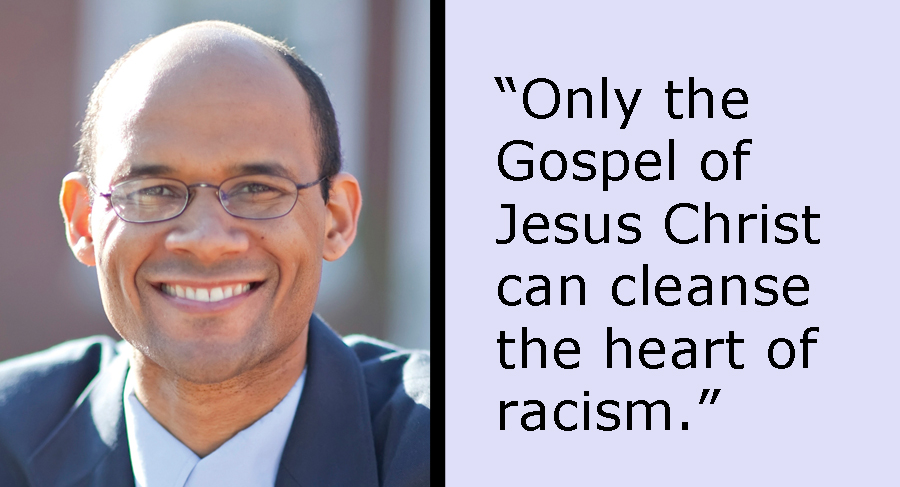
Only the Gospel of Jesus Christ can cleanse the heart of racism; only the Gospel of Jesus Christ can create love where there is hate; and only the Gospel of Jesus Christ can once and for all end the transgression that continues to show its ugly face in violence facing African Americans in Ferguson and elsewhere.

Christians who want to see racial tensions subside must believe, proclaim and live the Gospel of Jesus Christ; they must allow it to move them to Gospel-action in the church and in society. Christ-followers must preach the biblical Gospel that centers on the death and resurrection of the Messiah who died on the cross to save sinners from every tongue, tribe, people and nation. And Christians must become engaged in the various racial problems that face their communities, acting out the Gospel in their churches and in society.

Though we cannot put to death the enduring effects of Adam’s transgression, we can create pockets of reconciliation and oases of hope for all who come to God through faith in Jesus Christ — until that Day when Jesus will make all things new.

THE BRIEFING | Meredith Flynn

New International Mission Board President David Platt said his head was “still kind of spinning” the morning after his Aug. 27 election by IMB trustees. “It’s good, though,” he told IMB global correspondent Erich Bridges. Their interview touched on mobilizing the next generation of missionaries, and the value of traditional Christian institutions in penetrating spiritual lostness.

“That’s the beauty in what God has created, even in the Southern Baptist Convention on a large scale – 40,000-plus churches working together, and the IMB keeping that coalition focused on reaching unreached peoples with the Gospel. The key is [building] strategies and structures and systems that help fuel a movement, that don’t inhibit the movement or cause churches to abdicate their responsibility in mission.”

Chicagoland pastors, planters share ministry challenges with SBC leaders
Frank Page
, president of the Southern Baptist Convention’s Executive Committee, was in Chicago last month for two “listening sessions” with leaders where the discussions touched on church size, diversity, church planting, and the challenges of urban ministry. Read the story from the Illinois Baptist here.

Seminary eyes new campus, new name
Golden Gate Baptist Theological Seminary has signed a purchase agreement for its new campus in southern California, President Jeff Iorg announced in August. The school, currently located in Mill Valley near San Francisco, plans to relocate to the 153,000-sq.-foot building and adjoining property in Ontario, Ca., by June 2016.

Iorg also said the seminary will request that the Southern Baptist Convention approve a new name—Gateway Seminary of the Southern Baptist Convention. “The new name connects to our heritage, frees us from geographic designations, allows for developing a more global identity, and acknowledges our Baptist distinctive.”

Pastors call Driscoll to step down
Nine pastors at Mars Hills Church have called for Pastor Mark Driscoll to step down from ministry for a year in the wake of charges of verbal abuse and ungodly leadership. A 4,000-word letter from the pastors was circulated two days before Driscoll announced he would take a six-week leave of absence while the charges were investigated, Christianity Today reported.

In reponse to the letter, which was leaked online, a newly formed Board of Elders for Mars Hill responded with their own message to Mars Hill members, asking them not to “react in fear or anxiety” or “pronounce judgment before the time.” Read more at ChristianityToday.com.

Barna studies Christians and public schools
New research from Barna found 95% of Protestant pastors believe Christians should be involved in helping public schools, and more than 8-in-10 church-going Christians agree. While 65% of people who regularly volunteer at public schools are church attenders, Barna said, there are some factors holding Christians back. 44% say they don’t have children in public school, 18% don’t think public schools want religious people to help, and 17% are unsure how to help.

Church planter Scott Venable (second from right) shares about the process of starting Mosaic Church in Wicker Park, during a listening session hosted by SBC Executive Committee President Frank Page.

Church planter Scott Venable (second from right) shares about the process of starting
Mosaic Church in Wicker Park, during a listening session hosted by SBC Executive Committee
President Frank Page (photo below).


NEWS | Frank Page
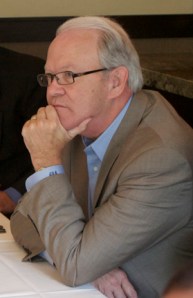
is president of the Southern Baptist Convention’s Executive Committee, but he also carries the title CEO, which he has often said means “chief encouraging officer.” Operating in that role, Page joined pastors and church planters in northern Illinois for two “listening sessions” in August.

Throughout the year, Page has met with leaders in several states. In Chicagoland, he and members of his staff hosted church planters at a luncheon in Edgewater to discuss specific ministry challenges related to planting in the city. They also were at Broadview Missionary Baptist Church for a session with more than 50 leaders.

“I think the key is building relationships and building trust,” Page told SBC Life about the listening sessions. “It’s time to build some momentum on correct relationships.”

Broadview Pastor Marvin Parker said he was impressed Page “is taking the time to go around the country, to hear what SBC pastors are talking about.” In the Chicago sessions, Page and leaders addressed several issues:

Page_blogChurch size and diversity. Page previously has called small churches the “backbone” of the convention. In the session at Broadview, he told leaders that a large majority of Southern Baptist churches run 100 people or less, said Pastor Don Sharp. “And to me, that’s a story that needs to be told over and over and over again,” said Sharp, pastor of Faith Tabernacle Baptist Church in Chicago.

“…We hear these stories of people coming in places and [the] membership’s quadrupled and the baptisms are off the board, so to speak, but it doesn’t speak to many of us” pastors of small churches, Sharp said. Faced with the comparisons, leaders can fall into fear that they’re the reason their church doesn’t measure up.

“If nothing else, I came out of that meeting with a sense of, ‘Keep doing what you’re doing, and leave room for God to do the rest.’”

The group also discussed diversity in the SBC, and the need for more ethnic groups to be represented in convention leadership, Sharp said. He paraphrased Page’s words: “The election of Fred Luter (as the SBC’s first African American president) should not be an anomaly…it shouldn’t take another 30 or 40 years for something like that to happen again.”

Cooperative Program education. The CP is Southern Baptists’ main method of supporting missions around the world, but it doesn’t have a Lottie Moon or Annie Armstrong to help promote it. “One of the keys for the future is to somehow put a face on the Cooperative Program,” said IBSA’s Dennis Conner during the Edgewater meeting of church planters. “We are deep into a cultural shift where people want to know the people they support.”

That challenge is something his team deals with every day, Page said, asking for ideas. The planters suggested using social media or daily news briefs to connect Southern Baptists with missionaries they support through the Cooperative Program.

The Executive Committee’s Ashley Clayton suggested a more foundational plan to help communicate the importance of CP giving in the next generation. “Perfunctory” support for CP has been tailing off for several decades even among older Baptists, Clayton said. There’s a need to elevate again Baptists’ core values, like international missions, reaching unreached people groups, planting churches, and theological education.

“These are core values, that when you say it in a room full of pastors, they nod their heads, they’re in agreement, they go, ‘Yeah, I’ll support that.’”

The Chicago challenge. Also in Edgewater, Page heard from Chicagoland church planters about how long it often takes to grow a church. Michael Allen, city coordinator for Send North America: Chicago, said he tells planters, “When you come to Chicago to plant a church, buy a cemetery plot.”

“In other words, don’t come to Chicago thinking I’m going to try this church planting thing and see if it works out….Many [church planters] who start do not last, and I think primarily they didn’t realize just how hard the ground is, and how much gumption you have to have.”

Page told the leaders around the lunch table that he understands the role of a sponsoring church pastor, but hasn’t had personal experience as a church planter. “I don’t even pretend to understand what you might be going through,” he said.

“I will tell you that what I hear, what I’ve seen in the past four to five years, is that things are changing across our nation….Even in the deep south, we’re seeing an encroaching lostness in some areas that is profoundly more than what you might think.”

The planters and Page discussed the temptation church planters have to move to a new place with the hope of winning the city, but without really understanding its culture and context.

Page said he was praying for “an indigenous move of God, that native Chicagoans will be able to reach the city for Christ, in addition to those that God does bring in from the outside that has called, and equipped, and [that] have the staying power to get it done.”

HEARTLAND | Nathan Knight

It doesn’t take long when reading the Bible to see that God is impassioned for the plight of His people, such as this passage in Exodus:

“Then the Lord said, ‘I have surely seen the affliction of my people who are in Egypt and have heard their cry because of their taskmasters. I know their sufferings, and I have come down to deliver them….'” (Exodus 3:7-8).

Nathan_Knight_Sept1In the face of an ever-increasing worldwide persecution of Christians, we would be wise to cultivate practices in our churches that might more readily reflect this notion of God’s nature. I would like to note three ways you can implement this in the life of your church that will, eventually, lead to three rewards.

Three practices:
1. Apply biblical truth locally by using what is happening globally. Every pastor labors to try and faithfully apply the truths of the Bible in a way that will assault his people and spur them on toward faithfulness. They do that by considering their own context and using aspects of it to illustrate or apply that particular truth.

However, considering a different context will help your congregation identify with the plight of God’s people around the world. For example, when preaching or teaching through 1 Peter, don’t limit the illustrations and applications of persecution only to homosexuality or other American problems. Take them to the checkpoint just outside of Mosul where they are walking with their family and will have to answer for their faith in Christ. Bring them into the homes of those who just received word of the mock crucifixions of converted Christians in Syria.

Occasionally sprinkling in ideas like these will serve to strengthen faithfulness in our more immediate contexts.

2. Pray frequently, specifically and experientially. If we pray for the plight of God’s people in our public services, it is often done in short order or in a sort of peripheral way that does not resonate with the actual circumstances of the world. Don’t just pray for the persecuted church when it is on the calendar; pray for them often so as to engrain it into the minds and hearts of the people.

Praying continually will help your church understand that persecution is going on continually and will model the realities of our brothers and sisters in other countries. And when you do pray, pray for specific people in specific places. This will serve to put a face on otherwise formless peoples.

Also, genuinely pray in the mood of the situation. If I asked you to breathe life into the lungs of a victim the same way I asked you to pick up some milk at the store, we would rightly think something has gone awry in my soul. Likewise, consider the situation and pray in a manner that reflects it.

3. Be meaningfully involved in the nations. Appropriating 10 percent of your monies toward international missions is a good thing but it is not sufficient to build a fervency among your congregation for the people of God around the world. As a church, we have adopted a couple of communities around the world, and we have people who travel and work in others.

By sending people and resources to Christians in various communities, we make the people at our church more familiar with situations that might have just been another story on the evening news.

As you apply these practices to the particular church you pastor, you’ll probably begin to notice the culture of your congregation changing. Here’s what I believe you’ll joyfully reap.

Three Rewards:
1. Outsiders will be more warmed to your church. You don’t make an international church by simply putting “international” in your name. Making the nations a regular diet of your service will engender internationals to feel more at home. Also, the lost will see that you are not trying to hide yourself from the world and paint it with rose-colored glasses, but instead, you are broken by its brokenness. This will often pleasantly surprise the lost and possibly have them listen to your answers.

2. You will prepare your people for suffering. Paul told Timothy that “all those who desire to live a godly life will be persecuted” (2 Timothy 3.12). We pampered American evangelicals have been living a dream for a while. But the normal experience of Christians in history is to suffer for what they believe. We are not entering into a strange time of history, but a more normal one (see 1 Peter 4.12).

Bringing the realities of the world to the fore of God’s people will only serve to help believers in their own navigation of an increasingly hostile world.

3. Your church will grow into another facet of Christ-likeness. Let’s not forget that Christ understood Saul to be persecuting Himself when Saul was assaulting the church (Acts 9.4). The more we knead into the dough of church life — the realities of God’s people all over the world, both the good and the bad — the more we will come to understand all that it is to be in Christ.

Nathan Knight is pastor of Restoration Church in Washington, D.C. This column from Baptist Press first appeared at the website of the Southern Baptist Convention’s Ethics & Religious Liberty Commission, http://www.erlc.com.