Archives For December 31, 2013

Thom Rainer, president of LifeWay Christian Resources

Thom Rainer, president of LifeWay Christian Resources

THE BRIEFING | Posted by Meredith Flynn

Thom Rainer, president of LifeWay Christian Resources of the Southern Baptist Convention, shared his “broken heart” over the denomination’s loss of passion for people who don’t know Christ.

In an open letter at ThomRainer.com, the leader of the convention’s publishing arm asked, “Where is the passion in most of our churches to reach the lost? Where is the passion among our leaders, both in our churches and in our denomination?

“Jesus told those at the church at Ephesus that they had sound doctrine, that they hated evil (Revelation 2:1-7). But He also told them they had lost their first love. When we truly love Jesus with all of our hearts, we can’t help but tell others about Him. We can’t help but share the good news.”

Rainer’s letter echoed the theme of a resolution passed by messengers to the November 2013 annual meeting of the Illinois Baptist State Association. The resolution on repentance and evangelism encouraged Illinois Baptists to repent of failure to share the Gospel regularly and faithfully, and to commit to do so.

As for Rainer’s letter, “I have no proposal. I have no new programs for now. I simply have a burden,” he wrote. And, he added, renewal must start with him. And with pastors.

“Evangelism must be as natural to me as breathing,” Rainer blogged.

“Pastors, will you join me in this plea? Will you be an evangelistic example for the churches God has called you to serve? Laypersons, will you pray for evangelistic hearts in your own lives? I must make that prayer a part of my life every day.

“Have we lost our first love? Is that love reflected in how we share the gospel of Christ every day?

“May God break me until I am all His, telling others about His Son every day.”

Read the full text of Rainer’s letter at ThomRainer.com.

New podcast answers ethical questions
The Southern Baptist Ethics and Religious Liberty Commission launched a new podcast series this week to address ethical and cultural questions submitted by listeners. Russell Moore, president of the ERLC, hosted the first episode January 13. The inaugural “Questions and Ethics” podcast focused on the question: When should you ask your potential spouse about their sexual history and how much should you know?

“‘Questions & Ethics’ allows us to answer the more difficult moral and ethical questions of our day in a short, accessible format,” said Dan Darling, ERLC’s vice president for communications, in a written release. “This podcast allows Dr. Moore to answer a variety of questions people are asking or should be asking.'” Read more at BPNews.net and listen to the first episode of “Questions and Ethics” at ERLC.com.

Hobby Lobby gets its day in court
The U.S. Supreme Court has set a date for oral arguments in a case pitting craft retailer Hobby Lobby against the Department of Health and Human Services. The Christian Post reports the high court will hear from Hobby Lobby on March 25, as the craft retailer argues business owners should be able to exercise religious freedom by objecting to the abortion/contraceptive mandate in President Obama’s healthcare reform package. Hobby Lobby has been one of the businesses at the center of the dispute over the mandate, which requires employers to cover abortion-inducing drugs in their employee health care plans.

“This legal challenge has always remained about one thing and one thing only: the right of our family businesses to live out our sincere and deeply held religious convictions as guaranteed by the law and the Constitution,” Hobby Lobby founder David Green said in a written release in November. “Business owners should not have to choose between violating their faith and violating the law.”

Read more at ChristianPost.com.

Pastors praying today for spiritual awakening

A group of Baptist pastors and leaders are meeting this week in Atlanta to pray together for revival and spiritual awakening. This is the second prayer meeting called by Arkansas pastor Ronnie Floyd. The gathering “is time for us to pray in an extraordinary way, to seek the God of heaven to revive His church and awaken our nation,” Floyd, senior pastor of Cross Church in northwest Arkansas, told Baptist Press.

The meeting raises a question, says Illinois Baptist editor Eric Reed: What can believers do to bring spiritual awakening to a nation lulled to disinterest by its tolerance of sin? Read his feature story on the next great awakening in the current issue of the IB, and read more about the prayer meeting at BPNews.net.

Baltimore_blogCOMMENTARY | Eric Reed

The calendar says the season is winter, and the snow bank outside your house would seem to confirm it, but there’s another we must consider: it’s SBC presidential nomination season.

Somewhere today in a church office or study, there’s a man praying about nominating his friend for the presidency of the Southern Baptist Convention. And somewhere else, that possible candidate is asking God whether he should allow his friend to make that nomination public. Rarely does one nominate himself to run for SBC President. It is the work of prayerful men, considering the needs of the convention, and the qualifications of their closest friends to lead to meet the needs of the time. As with the committee that selected Paul and Barnabas (“It seemed right to the Holy Spirit and to us”), nomination is a work of the Holy Spirit and prayerful men.

It’s also a function of geography.

For example, Fred Luter was elected SBC president in his hometown, New Orleans, in 2012. Orlando’s Jim Henry presided over a convention in Orlando. And in Houston, favorite son Ed Young, Jr., was re-elected to a second term.

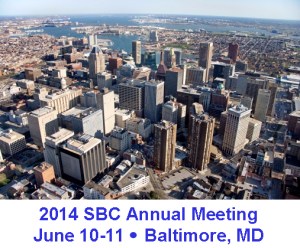
Consider the location of the 2014 Southern Baptist Convention. It’s in Baltimore.  Not since 1910 has the annual convention been held in Baltimore.

On the East coast, 40 miles from Washington D.C., a Baltimore convention is likely to draw a different crowd of messengers than if it were held in Texas or Florida. For one thing, there’s no “Six Flags over Baltimore” to draw the messenger who likes to pair the convention with a vacation. The serious-minded will travel to Baltimore. (Forgive us, Baltimore, if we underestimate the drawing power of crab cakes and historical sites, but without Shamu, how shall we entertain the children?)

And consider the nearest neighbors to Baltimore: the closest SBC seminaries are Southern in Louisville, Kentucky, and Southeastern in Wake Forest, North Carolina. Many of the churches in the region surrounding Baltimore have their pastors and leaders supplied by these schools. They are likely to be very well represented at the meeting in June.

While we don’t know yet who will run, we should note that it has been three years since there was a contested election for SBC president. Any match-up that pairs a Reformed candidate against one who identifies himself as a “traditionalist” – the labels used in the Calvinist theology debate of recent years—will likely test the peace loosely stitched by leaders of those camps just before the 2013 convention.

A cursory tour of the blogosphere shows no suggestion that Baltimore 2014 will be for Calvinists what Houston 1979 was for Conservatives – opportunity to bolster their leadership role in the denomination with thousands of close-by voters. But with strong centers of Reformed theology in neighboring states and many adherents in the region, Baltimore may be the best location for a Reformed candidate to mount a campaign.

Study kits are great tools, but they don’t make disciples

COMMENTARY | Heath Tibbetts

Discipleship doesn’t come in a box. Lessons come in boxes, neatly packageHeath_Tibbettsd with DVDs and participant guides. And for years, discipleship to me was the newest lessons from great teachers. It was all I had ever known, until God called me to a church outside the Bible Belt.

Our Southern Baptist church in Pennsylvania was mainly comprised of former Catholics, Methodists, or unchurched people. Many in our congregation
came from a background where they had never been encouraged to read the Bible. One former Catholic who joined told me, “Our priest said if we ever needed to know something from Scripture, he’d tell us.” It became quickly apparent that doing discipleship the same old way wasn’t going to work.

And then I began to ask myself a tougher question: Did it ever work?

Much of our discipleship today fails because of a lack of biblical literacy. We have assumed for so long that those within our congregations are having a personal devotional time of some sort because they’re Christians. The reality is that many lack this important time with the Lord, not because they don’t love God, but because they were never discipled on how to do it.

So we scrapped our random discipleship efforts in Pennsylvania. We canceled all the classes, not because the subjects or teachers were bad, but because there was no fruit. Our pastoral staff and wives established discipleship groups. We didn’t promote them in the bulletin, but as individual leaders we identified potential future disciple makers. We established these as regular groups, meeting at least on a monthly basis. We prayed together, ate  together, and studied the Bible together. As group leaders, we did this to make disciples who would make disciples.

When God called our family to northern Illinois this year, I had the opportunity to step back and look at my group. Corey had been silent and plagued with guilt over his lack of depth as a believer. He’s now the leader of the group, and a new deacon in the church. Matt was becoming serious about studying the Bible, but often unwilling to commit. He’s now leading the youth ministry since my departure and learning to be a doer. And after two years, another man finally left the comfort of those friends to invest in a new group, where he will pass along the lessons of personal discipleship he learned.

Jesus’ earthly ministry over a three-year stretch was marked by twelve disciples. That ministry would barely register a blip on the radar of many church leaders today because of its humble beginnings. But as a result of Jesus’ personal investment in those men, churches were started, the Gospel spread, and many were saved. Jesus gave us a simple model: love them then lead them. This is the lesson I am now living out.

Here at First Baptist Church in Machesney Park, Ill., there are many dreams I have for our church. I dream of a church that is debt-free. I dream of a church that is focused outside of our walls. I dream of a church where our people live in a passionate relationship with their Savior. And all those dreams are tied to personal discipleship.

Disciples will give, disciples will go, and disciples will grow. But for these dreams to become reality, I must set the example as pastor. So I will invest in the lives of our people, finding those who can be grown not only as disciples, but disciple makers. It will grow our First family closer to God and each other.

Christ called us in Matthew 28:19 to “Go therefore and make disciples.” Andy Stanley and Beth Moore are great teachers, but they can’t make disciples for you. Discipleship requires personal investment that a box cannot provide. I challenge you to examine discipleship in your church. How can you personally invest in the lives of your church family such that you will make disciples who make disciples?

Heath Tibbetts is pastor of FBC Machesney Park, Ill.

Tuesday_BriefingTHE BRIEFING | Meredith Flynn

“The reason I am here is because I don’t want to have to rescue you.” 

Tajuan McCarty stood in front of more than 100 teenage girls and their leaders in November, pulling no punches as she told her story. Speaking in short, unflinching sentences, she explained how she was pushed into prostitution at age 15, and trafficked into every state except Hawaii and Alaska over the next 11 years.

“I am a survivor of trafficking.”

McCarty is founder and director of The Wellhouse, a ministry that rescues women trapped in the same kind of life that once enslaved her. Headquartered in Birmingham, The Wellhouse is in a prime location to fight trafficking along I-20, known as the sex trafficking superhighway. She also helps raise awareness about the global problem that is deeply entrenched in the United States.

McCarty has been a Christian for four years, so her message begins with this: All women are beautiful, because they’re made in God’s image.

“If you walk away from here thinking prostitution is a choice and/or she’s doing it because she’s on drugs, I have not done my job,” McCarty told a captivated audience at AWSOM, an annual missions event for young women in Illinois. Drugs are only a symptom of the problem, she added.

“At The Wellhouse, what we try to do is reach the core of the problem. And yes, we introduce them to Jesus because that is the only way to heal people.”

Read more in the new Illinois Baptist, online at http://ibonline.IBSA.org.

Other news:

New missions housing opens in Chicagoland
The new home of the Chicago Metro Baptist Association also has room for volunteers serving in the city. The Rockwell Street building’s 9,000 square feet on three floors have been remodeled into several large spaces for mission teams to stay, plus a chapel/meeting space, and in the basement a large dining hall and full commercial kitchen. And nine showers. At $15 per mission tripper per night, “it’s a clean, affordable, functional place,” said Jay Noh, “and I am prayerfully optimistic that many more churches will be able to bring groups to minister in the city.” Read more here, and check out page 6 of the newest Illinois Baptist for information about another mission housing opportunity in the Chicago suburb of Plainfield.

Rainer blogs 14 trends for 2014
LifeWay President Thom Rainer’s predictions for 2014 include more megachurches, downsized denominations, smaller worship centers and a stronger focus on small groups. Read more of his 14 predictions for churches at ThomRainer.com. (Note: Predictions are split into two posts.)

Creation Museum president vs. Science Guy in evolution debate
The president of a museum dedicated to creationism will soon debate Bill “the Science Guy” Nye on evolution. Ken Ham, president of the Creation Museum in Petersburg, Ky., and Nye will engage in a sold-out public debate at the museum on Feb. 4. “It is an important debate to have as we deal with the question, ‘Is creation a viable model of origins in today’s modern scientific era?'” Ham posted on his blog.

Nye, host of TV’s “Bill Nye the Science Guy” in the mid-1990s, made headlines last year with a YouTube video calling creationism inappropriate for kids. A recent study by Pew Research found 60% of Americans believe in evolution. Read more about the survey here, and go to anwersingenesis.org for more about the debate, which also will be live streamed.

Most popular Scripture passages of 2013
According to analysis shared on ChristianityToday.com, Philippians 4:13 was the most popular verse on the YouVersion Bible app last year, followed by Isaiah 40:31, Matthew 6:13, Joshua 1:9, and Philippians 4:6. Read YouVersion’s top 10 shared verses of 2013 at ChristianityToday.com.

200255412-001HEARTLAND | Meredith Flynn

I got stuck in a shopping center right before Christmas. My ride wasn’t coming for another hour, and I had already been in every store. I pulled out my phone, hit the round button and…nothing. Dead battery.

Without anything else to do, and almost an hour of free time stretching out in front of me, I decided to think.

For 45 whole minutes. (It took me 15 minutes to decide to think in the first place.)

It was an idea that had been percolating for a few weeks. In my work, and probably every other job, good ideas are essential. Creativity is key. And I had been out of both for a while. Maybe if I think – just think – for a few minutes, I’ll have some good ideas, I thought.

So I did. And as I thought – in my case, going through the next issue of our newspaper page by page – thinking quickly turned into praying:

What feature story should go on page 11?

Which columnists should we use on page 5?

What headline will catch people’s attention on page 1?

When my husband pulled into the parking lot, I didn’t have any big answers. But I did have some ideas. And I felt calmer after having turned over some of my concerns to God, who understands the value of creativity.

That’s why one of my New Year’s resolutions is to think. For at least half an hour every day. I admit, I’ve already failed; it will be a difficult discipline for me. But its value extends to areas outside of work too. If I thought a little more – about how I could give more generously, speak more lovingly, or live more joyously – I’m sure God will be faithful to show me how.

I know what you’re thinking – this is less about thinking than it is about praying. It’s basically a resolution to pray more, which lots of Christians probably make every year. All true. But I find that resolving to pray more often ends up in me staring at the ceiling, thinking about all I need to do.

I’m a list maker. Maybe you are too. As the lists get longer of everything I need to do, I can get too busy to think or pray about what I’m doing. But what if I resolved to take seriously the charge in Philippians 4:6? “…Through prayer and petition with thanksgiving, let your requests be made known to God.”

So, I’ll think in 2014. My prayer life depends on it.

Be it (still) resolved

Meredith Flynn —  January 1, 2014

Scott_Kelly_blogCOMMENTARY | Scott Kelly

At this time of year, it’s likely that someone may ask us this question: “Do you have any New Year’s resolutions?” And when asked, we usually answer: “Lose weight,” or “Read the Bible more,” or something like that. Our culture’s common thinking on resolutions tends to be individualized thinking about our own personal goals. That’s normal, right?

Not if you’re an Illinois Baptist. Our family of churches makes resolutions together. We make these resolutions not as individuals, but as a gathering of Christians from hundreds of Illinois Baptist churches. And we make these large-group resolutions at a strange time, in early-to-middle November, not on January 1. These resolutions are part of our Annual Meeting every year.

My dear Illinois Baptist family, now that the New Year has come, I must gently ask: Do we even remember our resolutions from our annual meeting this past November? The messengers from our churches enthusiastically approved resolutions about marriage, religious freedom, human trafficking, and state-sponsored gambling. As we gather in our churches for our first prayer meetings of 2014, let’s remember our resolutions and keep praying about these things that we were so resolved about on those days in November.

I left our annual meeting very encouraged by what God is doing through our Great Commission work in Illinois. As I boarded the last Amtrak train out of Springfield a few hours after our last meeting session had ended, I was still affected by the last-minute resolution that one of our brothers proposed regarding repentance and evangelism.

The wording of the resolution was both convicting and inspiring – and repentant. We resolved we should “repent of our unfaithfulness to God and beg for His mercy, grace and forgiveness because at times we have all failed to faithfully and regularly share the Gospel.”

Furthermore, we said, “All members of Illinois Baptist State Association churches are encouraged to regularly pray for God to give His people the ability to speak HIS message with boldness and clarity by the power of the Holy Spirit, and regularly pray for all to receive Jesus Christ as their Lord and Savior.”

Illinois Baptists, let’s keep repenting and sharing the Gospel in 2014, so that we may truly grow as churches together advancing the Gospel.

And may God receive all the glory!

Scott Kelly is pastor at Evanston Baptist Church and director of the Baptist Collegiate Ministry at Northwestern University.